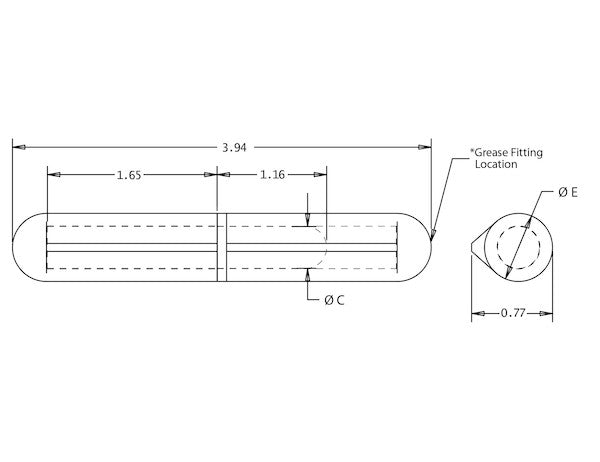
Buyers Products Steel Weld-On Bullet Hinge (also known as a lift-hinge) is ideal for trailer doors/gates and tool cabinets. The hinge is constructed from steel with a brass pin and bushing. They are available in multiple sizes to fit your application. Please contact Customer Service for further information.
Specifications
| Bushing Material | Brass |
|---|---|
| Diameter (in.) | 0.63 |
| Hinge Length (in.) | 3.94 |
| Pin Diameter (in.) | 0.39 |
| Pin Length A (in.) | 1.65 |
| Pin Length B (in.) | 1.16 |
| Pin Material | Brass |
| Thickness (in.) | 0.77 |
| With Grease Fitting (y/n) | No |
Advanced Engineering and Application of the Steel Weld-On Bullet Hinge with Brass Pin and Bushing (0.77 x 3.94 Inch)
The Buyers Products Steel Weld-On Bullet Hinge, precisely dimensioned at 0.77 x 3.94 inches, is a meticulously engineered solution for demanding industrial, commercial, and heavy-duty vehicular applications. Often referred to as a lift-hinge for its easy door removal capability, it features robust steel construction with a superior brass pin and bushing system. Its design prioritizes durability, smooth operation, and secure, permanent weld-on attachment, making it an indispensable choice for critical access points like trailer doors/gates, utility body compartments, tool cabinets, and various agricultural or construction equipment enclosures.
Design Philosophy and Material Selection: The Core of Durability
The Steel Body: Unyielding Strength and Weldability
The primary structural component of this bullet hinge is its steel body. Steel, an alloy of iron and carbon, is chosen for its exceptional tensile strength, yield strength, and toughness. The specific grade of steel is carefully selected for its optimal balance of strength, ductility, and weldability, typically a low-carbon steel (e.g., AISI 1018, A36). This ensures excellent amenability to welding processes, forming a strong, permanent bond with the parent material of the door, gate, or cabinet. The substantial 0.77-inch thickness of the hinge body critically contributes to its structural integrity, providing robust resistance against bending, twisting, and shear forces common in heavy-duty applications. This substantial cross-section prevents the hinge from becoming the weakest link, even under significant dynamic or static loads. The steel body's inherent rigidity ensures precise alignment and minimizes deflection, promoting smooth, consistent operation over its lifespan. Its high modulus of elasticity guarantees the hinge's return to original shape after temporary deformation, preventing fatigue and premature failure. Post-welding, surface treatments like priming or painting are often applied to enhance corrosion resistance, extending operational life in demanding environments.
The Brass Pin and Bushing System: Optimized for Low Friction and Longevity
The selection of brass for both the hinge pin and bushing is a deliberate engineering decision to maximize operational efficiency and longevity. Brass, a copper-zinc alloy, offers a unique combination of physical and mechanical properties highly suitable for bearing applications. Unlike typical steel-on-steel contact, which often causes galling and rapid wear, the brass-on-steel or brass-on-brass interface provides superior tribological characteristics. The 0.39-inch diameter brass pin offers ample shear strength and fits precisely within the brass bushing. Pin Length A (1.65 inches) and Pin Length B (1.16 inches) define critical segments for load distribution and retention within the hinge leaves, ensuring stability and preventing dislodgement. The 3.94-inch hinge length accommodates these dimensions, providing adequate leverage for heavy loads.
- Low Coefficient of Friction: Brass inherently has a lower coefficient of friction when sliding against itself or steel compared to steel-on-steel. This reduces the torque required to operate the hinge, resulting in smoother door or gate movement and less wear on the pivot points.
- Excellent Wear Resistance: Brass exhibits superior resistance to wear, particularly in applications involving continuous or frequent articulation. Its ability to form a thin, protective oxide layer contributes to its durability.
- Corrosion Resistance: Compared to plain carbon steel, brass offers significantly enhanced resistance to corrosion, especially in moist or chemically aggressive environments. This is crucial for exterior applications on trailers, agricultural equipment, or marine enclosures, where exposure to elements is common.
- Self-Lubricating Properties: While not truly self-lubricating in the same way as certain polymers, brass does possess marginal self-lubricating qualities due to its composition. This characteristic helps prevent seizing and reduces the need for frequent external lubrication, particularly in environments where maintenance might be overlooked. The absence of a grease fitting, as indicated in the specifications, underscores the reliance on these inherent material properties for sustained performance.
- Galling Resistance: Galling, a form of adhesive wear that occurs when two surfaces slide against each other under pressure, causing material transfer, is significantly mitigated by using dissimilar materials like brass and steel. This prevents seizure and ensures consistent operation.
- Thermal Conductivity: Brass has good thermal conductivity, which helps dissipate heat generated by friction during operation, further reducing wear and extending the life of the hinge components.
Weld-On Installation: A Superior Method for Permanent Security
The designation "Weld-On" is central to the superior performance and security offered by this bullet hinge. Unlike bolt-on or screw-on alternatives, welding creates a metallurgical bond between the hinge and the parent structure, forming a joint that is often stronger than the base materials themselves. This method is particularly advantageous for applications requiring high structural integrity, vibration resistance, and tamper-proof security.
Advantages of Weld-On Installation:
- Unrivaled Strength: A properly executed weld joint provides maximum shear and tensile strength, capable of withstanding significant dynamic loads, impacts, and torsional stresses without loosening or failing.
- Permanent Attachment: Once welded, the hinge becomes an integral part of the structure, eliminating the risk of loosening due to vibration, fatigue, or deliberate tampering. This provides superior security for valuable contents in tool cabinets or cargo in trailers.
- Clean Aesthetic: Weld-on hinges often present a cleaner, more streamlined appearance compared to bolted alternatives, as there are no visible fasteners or protruding bolt heads.
- Reduced Stress Concentration: Welding distributes stress more evenly across the joint area compared to discrete bolt holes, which can act as stress concentrators and points of fatigue failure.
- Customization and Flexibility: Weld-on hinges offer greater flexibility in positioning and alignment during installation, allowing for precise fitment on irregular surfaces or for achieving specific opening angles.
Welding Process Considerations:
Proper installation requires skilled welding practices. Common welding methods suitable for attaching these steel hinges include:
- MIG (Gas Metal Arc Welding): Favored for its speed, ease of use, and versatility, MIG welding produces clean, strong welds with minimal splatter. It's ideal for production environments and offers good penetration.
- TIG (Gas Tungsten Arc Welding): Known for its high-quality, precise welds and excellent control, TIG welding is suitable for applications where aesthetic finish and critical structural integrity are paramount. It's often used on thinner materials but provides superior results on thicker steels as well.
- Shielded Metal Arc Welding (SMAW / Stick Welding): A robust and versatile process, stick welding is effective for outdoor applications and on materials with some surface contamination. It's a common choice for heavy fabrication and repair work.
Regardless of the chosen method, critical steps include thorough surface preparation (cleaning, grinding), proper fixturing for alignment, and adherence to recommended welding parameters (amperage, voltage, travel speed). Pre-heating and post-weld cooling may be necessary for very thick sections or specific steel alloys to prevent cracking and ensure optimal metallurgical properties. Post-weld inspection for defects (e.g., porosity, undercut, lack of fusion) is crucial for attachment integrity.
Dimensional Analysis and Engineering Implications
The hinge's specified dimensions—0.77 x 3.94 inches—are carefully chosen to optimize performance for heavy-duty applications. The overall 0.77-inch thickness (approx. 19.56 mm) provides substantial material for welding integrity and load-bearing capacity. This thickness ensures the hinge leaves effectively transfer shear and bending loads from the door or gate to the frame without plastic deformation. The 3.94-inch length (approx. 100 mm) provides an adequate moment arm for distributing forces, enhancing overall stability and reducing localized stress concentrations.
Further breakdown of the critical dimensions:
- Diameter (in.): 0.63 - This likely refers to the overall outside diameter of the bullet hinge barrel, providing a robust housing for the pin and bushing system.
- Hinge Length (in.): 3.94 - As discussed, this length contributes to structural stability and load distribution.
- Pin Diameter (in.): 0.39 - A substantial brass pin diameter (approximately 9.9 mm) is crucial for resisting shear forces. The shear strength of the brass pin is a primary factor determining the hinge's ultimate load capacity.
- Pin Length A (in.): 1.65 / Pin Length B (in.): 1.16 - These distinct pin lengths suggest a design that either allows for specific installation configurations (e.g., one part of the pin embedded in the top hinge half, the other in the bottom) or facilitates a "lift-off" function where the door can be simply lifted off the pin once open to a certain angle. The combined length of the active pin segments dictates the effective bearing surface.
- Thickness (in.): 0.77 - This is the thickness of the hinge body material, directly impacting its resistance to deformation.
These precise measurements allow engineers and fabricators to accurately design and integrate the hinge into their structures, ensuring proper fitment and performance according to their specific load and operational requirements. The manufacturing process for these hinges involves precision machining and fabrication to maintain tight tolerances, ensuring that all components fit together perfectly for smooth articulation and long-term reliability.
Application Versatility and Performance in Demanding Environments
The Steel Weld-On Bullet Hinge is engineered for a broad spectrum of demanding applications where reliability, security, and durability are paramount. Its robust construction and material choices make it suitable for environments prone to heavy usage, vibration, impact, and exposure to environmental stressors.
Key Application Areas:
- Trailer Doors and Gates: From enclosed cargo trailers to utility trailers and livestock trailers, these hinges provide the necessary strength for heavy doors and ramps, resisting the constant vibrations and stresses of road travel. Their lift-off capability can also be advantageous for temporary removal of doors for oversized loads or maintenance.
- Tool Cabinets and Equipment Enclosures: Industrial tool cabinets, field service truck compartments, and large equipment enclosures require hinges that can withstand frequent opening/closing cycles and protect valuable contents. The weld-on attachment provides superior security against forced entry.
- Agricultural Machinery: Tractor hoods, implement access panels, and storage compartments on farm machinery are exposed to harsh conditions, including dirt, moisture, and impact. The corrosion-resistant brass components and robust steel body are well-suited for such environments.
- Construction Equipment: Access doors on excavators, loaders, and other heavy equipment benefit from the strength and durability of these hinges, ensuring operational integrity in rugged construction sites.
- Commercial and Industrial Doors: Heavy-duty gates, access panels for HVAC units, electrical enclosures, and machinery guards in manufacturing facilities often utilize weld-on bullet hinges for their permanent, high-strength attachment.
- Custom Fabrication Projects: For bespoke metalwork, custom vehicles, or specialized industrial equipment, these hinges offer a versatile and robust solution that can be seamlessly integrated into fabricated designs.
In all these applications, the hinge's ability to resist high shear loads, operate smoothly despite environmental particulate ingress, and maintain structural integrity over extended periods of heavy use is critical. The design inherently minimizes catch points, reducing the likelihood of damage in congested operational spaces. Its compact "bullet" profile is also beneficial in applications where space is at a premium or where a low-profile aesthetic is desired.
Maintenance and Longevity Considerations
While the steel and brass combination offers inherent durability and wear resistance, enhanced by brass's favorable tribological properties, proper maintenance extends the hinge's service life. The specification "With Grease Fitting (y/n): No" indicates no dedicated port for regular lubrication. This design relies on the inherent low-friction and wear-resistant qualities of the brass pin and bushing, complemented by initial assembly lubrication.
Recommendations for Enhanced Longevity:
- Periodic Inspection: Regularly inspect the hinges for any signs of wear, deformation, or corrosion, particularly in harsh environments. Pay attention to the articulation points and the integrity of the weld.
- Cleaning: In dusty, dirty, or abrasive environments, periodic cleaning of the hinge area can prevent abrasive particles from entering the bearing surfaces, which could accelerate wear.
- External Lubrication (Optional): While not designed with a grease fitting, a high-quality, water-resistant grease or lubricant can be manually applied to the gap between the hinge leaves and around the pin/bushing interfaces during routine maintenance. This is especially beneficial in high-cycle applications or environments with extreme temperatures or corrosive agents. Choose lubricants compatible with brass and steel.
- Corrosion Protection: For the exposed steel body, particularly in outdoor or marine environments, applying a durable paint or coating after welding (if not factory pre-finished) will provide an essential barrier against rust and corrosion, preserving the structural integrity of the hinge.
By implementing these simple maintenance protocols, users can significantly enhance the operational lifespan and reliability of the Steel Weld-On Bullet Hinge, ensuring consistent performance even under the most challenging conditions.
Quality Assurance and Manufacturing Excellence
The reliability of a critical component like a hinge hinges (pun intended) on stringent quality assurance throughout its manufacturing process. Reputable manufacturers like Buyers Products adhere to rigorous standards, from raw material sourcing to final inspection. This includes:
- Material Certification: Ensuring that the incoming steel and brass materials meet specified chemical compositions and mechanical properties.
- Precision Machining: Utilizing advanced CNC (Computer Numerical Control) machining centers to achieve the tight dimensional tolerances required for the pin, bushing, and hinge body, ensuring smooth operation and proper fit.
- Welding Quality Control: If any sub-assembly welding is performed internally, strict adherence to welding procedures and inspection for weld integrity is paramount.
- Component Assembly: Careful assembly of the brass pin and bushing into the steel body, often involving interference fits or other retention methods, to prevent play and ensure durability.
- Final Inspection: Comprehensive checks for dimensions, finish, articulation smoothness, and overall quality before packaging and shipment.
Such dedication to manufacturing excellence ensures that each Steel Weld-On Bullet Hinge consistently meets the high expectations for performance and longevity in the field.
Conclusion: A Benchmark in Heavy-Duty Hinge Technology
The Buyers Products Steel Weld-On Bullet Hinge with Brass Pin and Brass Bushing, with its precise dimensions of 0.77 x 3.94 inches, stands as a testament to intelligent engineering and material science applied to a seemingly simple mechanical component. Its robust steel construction provides an unyielding foundation for permanent weld-on attachment, delivering unparalleled strength and security. The carefully selected brass pin and bushing system introduces superior tribological properties, ensuring low-friction articulation, exceptional wear resistance, and robust corrosion protection—even in the absence of a dedicated grease fitting. This combination of materials and design principles results in a hinge that is not only highly durable and reliable but also capable of withstanding the most severe operational stresses encountered in heavy-duty commercial, industrial, and mobile equipment applications. For engineers, fabricators, and end-users prioritizing long-term performance, security, and minimal maintenance in challenging environments, this bullet hinge offers an optimal, expertly crafted solution.