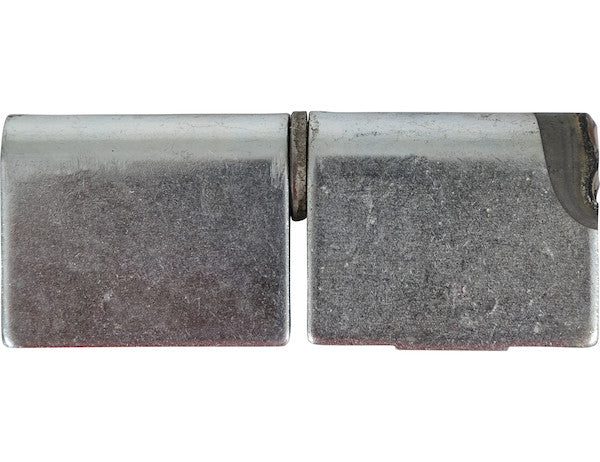
Buyers Products Zinc Plated Steel Butt Hinge has a flush-mounted wing style and a single end weld for a left-or-right-handed mount. The steel hinge is zinc-plated for corrosion resistance and has a stainless steel pin. Hinges are available with either a 3/8 in. or 1/2 in. pin.
Specifications
| Finish | Plain |
|---|---|
| Hinge Length (in.) | 4.00 |
| Material | Steel |
| Open Width (in.) | 1.25 |
| Pin Diameter (in.) | 1/2 |
| Pin Retention | Single End Weld |
Advanced Technical Overview: Steel Weld-On Butt Hinge with Superior Corrosion Resistance and Robust Pin Mechanism
The Steel Weld-On Butt Hinge, meticulously engineered by Buyers Products, represents a pinnacle of durable and reliable articulation hardware designed for demanding industrial and commercial applications. This specific model, measuring 1.25 x 4 inches and featuring a substantial 1/2-inch stainless steel pin, is fortified with a zinc-plated finish to deliver exceptional resistance against environmental degradation. Its inherent design, characterized by a flush-mounted wing style and a strategic single end weld for pin retention, ensures optimal structural integration and operational longevity across a spectrum of heavy-duty uses, including vehicular access points, heavy equipment enclosures, industrial gates, and custom fabrications requiring permanent, high-strength connections. This technical exposition delves into the material science, design principles, protective finishes, and application advantages that position this hinge as a superior choice for professional-grade installations.
Material Science: The Foundation of Strength and Durability
The primary structural component of this hinge is high-grade steel, selected for its formidable mechanical properties. Steel, an alloy predominantly composed of iron with a small percentage of carbon, offers an unparalleled balance of tensile strength, yield strength, and ductility, making it an ideal material for components subjected to dynamic loads and cyclical stress. For a hinge of this caliber, the steel typically falls within the low to medium carbon range, ensuring excellent weldability without compromising its inherent rigidity and load-bearing capabilities. The choice of steel provides a robust foundation, enabling the hinge to withstand significant shear forces, bending moments, and torsional stresses inherent in its operational environment.
The specific properties that make steel indispensable for hinge construction include its high modulus of elasticity, which minimizes deflection under load, and its excellent fatigue strength, crucial for applications involving frequent opening and closing cycles. Furthermore, steel's capacity to be accurately formed and machined ensures precise component dimensions, vital for smooth and reliable hinge articulation. The selection of steel is a deliberate engineering decision to guarantee the long-term structural integrity and functional performance of the hinge, providing a secure and stable pivot point for movable panels and components. Its inherent hardness contributes to resistance against abrasive wear, particularly at the hinge knuckles, although the primary wear protection for the pivot mechanism is provided by the stainless steel pin and proper lubrication.
Advanced Corrosion Protection: Zinc Plating Technology
To augment the inherent strength of steel with critical environmental resilience, this butt hinge undergoes a comprehensive zinc plating process. Zinc plating, often referred to as electrogalvanization, is a widely adopted method for applying a protective zinc coating to steel surfaces. This process involves immersing the steel hinge components in an electrolyte solution containing zinc ions and applying an electric current, which causes the zinc to deposit uniformly onto the steel surface. The resulting zinc layer serves as a sacrificial anode, a fundamental principle of galvanic corrosion protection.
In corrosive environments, when both steel and zinc are present and exposed to an electrolyte (such as moisture), the zinc, being more electrochemically active than steel, preferentially corrodes. This means the zinc coating will corrode first, effectively "sacrificing" itself to protect the underlying steel from rust and oxidation. This active protection mechanism ensures that even if the zinc coating is scratched or superficially damaged, the steel beneath remains protected until a significant portion of the zinc is consumed. The zinc-plated finish provides a substantial barrier against common corrosive agents found in outdoor, industrial, and transportation settings, including road salts, atmospheric moisture, and mild chemical exposures. This protective layer significantly extends the service life of the hinge, reducing the need for premature replacement and associated maintenance costs. While the finish is described as "Plain" in specifications, this refers to its utilitarian, unadorned appearance rather than a lack of protective coating; it is indeed zinc-plated for maximum functionality and longevity, presenting a consistent, non-reflective gray metallic look suitable for industrial applications where aesthetics are secondary to performance.
The Articulation Core: The Stainless Steel Pin and Retention Mechanism
Central to the hinge's function is the 1/2-inch diameter stainless steel pin, a critical component that defines the pivot point and sustains the majority of the shear and torsional loads during operation. The selection of stainless steel for the pin is a deliberate engineering decision based on its superior material properties compared to standard carbon steel. Stainless steel, characterized by a minimum chromium content of 10.5%, forms a passive, self-repairing oxide layer on its surface, providing inherently excellent corrosion resistance. This is particularly crucial for the pin, as it is constantly exposed to friction and potential wear, which could compromise a less robust protective coating.
The 1/2-inch diameter of the pin is a key specification indicating its capacity to handle significant loads. A larger pin diameter translates directly to a greater cross-sectional area, thereby increasing its shear strength and resistance to bending under heavy loads. This robust pin is designed to minimize wear at the pivot point, ensuring smooth and consistent operation over extended periods. The use of stainless steel also contributes to a lower coefficient of friction when interacting with the steel knuckles of the hinge, thereby reducing wear on both components and mitigating the potential for binding or seizing, even under challenging environmental conditions. This material choice is pivotal in ensuring the hinge's long-term reliability and reducing the likelihood of premature failure due to pin degradation or corrosion.
Pin retention is achieved through a "Single End Weld" mechanism. This design choice ensures that the pin is permanently secured within one of the hinge leaves, preventing axial migration or dislodgment. The welding process creates a metallurgical bond between the pin and the hinge leaf, providing an exceptionally strong and tamper-resistant fixation. Unlike removable or staked pins, a welded pin offers enhanced security and structural integrity, crucial for applications where the hinge must withstand vibration, impact, or unauthorized removal attempts. This method guarantees that the hinge maintains its assembly and functional alignment throughout its operational lifespan, even under arduous conditions, thereby contributing significantly to the overall reliability and safety of the system it supports.
Precision Engineering: Design, Geometry, and Orientation
The Steel Weld-On Butt Hinge exhibits a meticulously engineered design, characterized by its "flush-mounted wing style" and precise dimensions of 1.25 inches open width by 4.00 inches in length. A butt hinge is a fundamental hinge type, consisting of two leaves (or wings) joined by a pin, designed to be mortised or surface-mounted to the abutting surfaces of a door and its frame. In this weld-on variant, the leaves are specifically configured for direct integration onto metal structures via welding.
The "flush-mounted wing style" implies that the hinge leaves are designed to sit flush with the surfaces they are attached to, presenting a clean, low-profile aesthetic and minimizing protrusions. This design is particularly advantageous in environments where clearances are tight, or where external projections could snag or interfere with other components. The flush mounting also contributes to a more robust connection, as the entire surface area of the hinge leaf is in direct contact with the substrate, optimizing load distribution across the weld joint.
The hinge's length of 4.00 inches is a critical dimension that dictates the mechanical advantage and stability of the hinge. A longer hinge provides a greater moment arm, distributing forces over a wider area and reducing localized stress on the mounting points. This extended length enhances the hinge's ability to support heavier loads and provides increased resistance to racking and twisting, particularly beneficial for taller or wider panels. The open width of 1.25 inches refers to the overall dimension of the hinge when fully extended, which, in conjunction with the leaf thickness (not explicitly stated but inferred from robust construction), contributes to its load-bearing capacity and structural rigidity.
While the hinge design itself with a single end weld allows for a "left-or-right-handed mount," meaning the installer can orient it to function as either a left-hand (LH) or right-hand (RH) hinge depending on the application and desired swing direction, this specific product is designated as "RH" (Right-Hand). In hinge terminology, a "Right-Hand" designation typically means that when standing on the exterior side of the door/panel and pushing it open, the hinges are on the right side. However, for a weld-on hinge with a symmetrical leaf design, the handedness is often determined at the point of installation and subsequent use. The designation helps streamline ordering for specific assembly line requirements or established construction standards, ensuring consistency in projects requiring uniform component orientation.
Installation and Application: The Weld-On Advantage
The "weld-on" nature of this butt hinge distinguishes it from its bolt-on or screw-on counterparts, offering distinct advantages in terms of strength, security, and permanence. Weld-on hinges are designed for direct fusion with metal substrates, creating a monolithic, metallurgical bond that becomes an integral part of the structure. This method of attachment eliminates the need for fasteners, holes, or external hardware, resulting in a cleaner aesthetic and significantly enhanced tamper resistance. The absence of fasteners also means there are no points for loosening due to vibration or cyclical stress, guaranteeing a consistently secure attachment over the long term.
The installation process requires skilled welding techniques, typically using methods such as shielded metal arc welding (SMAW), gas metal arc welding (GMAW/MIG), or gas tungsten arc welding (GTAW/TIG), depending on the specific application and material thickness of the parent structure. Proper preparation of both the hinge leaves and the mating surfaces is crucial for achieving a strong and reliable weld. This includes ensuring surfaces are clean, free of contaminants, and properly beveled if necessary. Weld-on hinges are exceptionally strong because the load is transferred directly through the solid weld joint to the parent material, distributing stress across a larger area than typical fastener points. This makes them ideal for applications requiring maximum structural integrity and resistance to extreme forces, such as heavy-duty doors on utility trailers, semi-trucks, agricultural equipment, industrial machinery access panels, and security gates.
The inherent advantages of weld-on hinges include superior shear strength, resistance to pull-out forces, and resilience against prying or vandalism. They are particularly favored in environments where components are subjected to high vibration, shock loads, or where a permanent, maintenance-free connection is desired. Furthermore, the weld-on design allows for greater flexibility in hinge placement and integration into custom fabrications, providing engineers and fabricators with maximum design freedom without the constraints of pre-drilled holes or standardized mounting patterns. The flush-mounted aspect further enhances their suitability for scenarios where a seamless, integrated appearance and maximum clearance are paramount.
Operational Performance and Uncompromising Durability
This Steel Weld-On Butt Hinge is engineered for exceptional operational performance and long-term durability, even in the most demanding environments. Its robust construction materials – steel for the body and stainless steel for the pin – combined with the protective zinc plating, ensure resistance to a broad range of operational stressors. The carefully chosen 4.00-inch length provides an optimal lever arm for load distribution, enhancing the hinge's capacity to support heavy panels and resist dynamic forces without excessive strain on the pivot mechanism or the welded joints.
The 1/2-inch stainless steel pin, securely retained by a single end weld, offers superior wear resistance and maintains consistent articulation, minimizing the potential for sag or misalignment over extended periods of use. This robust pin design, coupled with the inherent strength of the steel leaves, contributes to a high cycle life, meaning the hinge can withstand tens of thousands of opening and closing movements without significant degradation in performance. Its resistance to environmental factors such as temperature fluctuations, humidity, and exposure to various contaminants is significantly bolstered by the zinc plating, which forms a resilient barrier against atmospheric corrosion and chemical attack.
From extreme cold to intense heat, the materials are selected to maintain their mechanical properties and structural integrity. The precise manufacturing tolerances ensure smooth operation with minimal friction, which not only prolongs the life of the hinge but also contributes to user comfort and safety. In applications where constant exposure to the elements or rigorous operational cycles are the norm, the durability of this hinge translates into reduced downtime, lower maintenance requirements, and a superior total cost of ownership over its lifespan. It is designed to be a "set-it-and-forget-it" component, reliably performing its function day after day, year after year.
Quality Assurance and Manufacturing Standards
Buyers Products is renowned for its commitment to engineering excellence and manufacturing quality, and this Steel Weld-On Butt Hinge is a testament to those standards. Each hinge is produced under stringent quality control protocols, beginning with the meticulous selection of raw materials. The steel and stainless steel components are sourced to meet specific metallurgical compositions and mechanical property requirements, ensuring consistency in performance across all units.
Manufacturing processes, including precision cutting, forming, welding, and zinc plating, are carefully monitored to adhere to tight dimensional tolerances and surface finish specifications. This attention to detail ensures that each hinge not only fits perfectly into its intended application but also performs reliably from the moment of installation. Compliance with relevant industry standards for material strength, corrosion resistance, and manufacturing accuracy is paramount, guaranteeing that the hinge meets or exceeds the expectations for heavy-duty industrial hardware. The robust design and careful execution reflect a commitment to delivering components that contribute significantly to the safety, functionality, and longevity of the systems they are integrated into. This dedication to quality ensures that the hinge will withstand the rigors of its application, providing a dependable and long-lasting solution for critical articulation needs.
Conclusion
The Steel Weld-On Butt Hinge with a 1/2 Stainless Pin, measuring 1.25 x 4 inches and finished with protective zinc plating, represents a state-of-the-art solution for demanding industrial and commercial applications. Its synergistic combination of high-strength steel, advanced zinc plating, and a durable stainless steel pin, all integrated through a robust weld-on design, ensures superior structural integrity, exceptional corrosion resistance, and enduring operational reliability. This hinge is an investment in long-term performance, offering unparalleled durability and security for critical access points and movable components across a diverse range of heavy-duty fabrications and equipment.