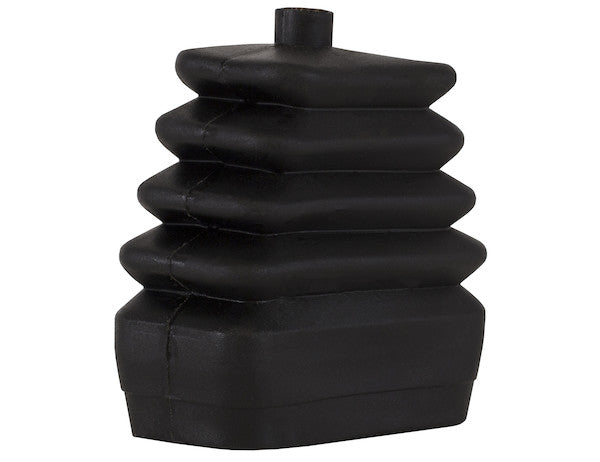
Buyers Products Rubber Boot Cover For B206301 Single Axis Remote Valve Control.
Specifications
| Color | Black |
| Material | Rubber |
| Use WIth | B206301 |
| FInish | Plain |
The Buyers Products Rubber Boot Cover, specifically engineered for the B206301 Single Axis Remote Valve Control, represents a critical component in maintaining the operational integrity and longevity of hydraulic control systems. This technical description will delve into the nuanced design, material properties, functional benefits, and installation considerations of this essential protective accessory, emphasizing its role in demanding industrial and mobile applications.
Precision Engineering for Enhanced System Durability
The B206301 Single Axis Remote Valve Control is a robust mechanical device designed to provide precise, single-axis proportional control over hydraulic valves. Such controllers are often deployed in harsh environments, exposed to elements such as moisture, dust, dirt, debris, chemicals, and extreme temperatures. Without adequate protection, these environmental factors can lead to premature wear, corrosion, and ultimately, failure of the control mechanism. The Rubber Boot Cover is meticulously designed to counteract these challenges, acting as a primary barrier against external contaminants.
Material Science: The Choice of Rubber
The selection of rubber as the primary material for this boot cover is not arbitrary; it is based on a comprehensive understanding of material science and application requirements. Rubber, a broad term encompassing various elastomers, offers a unique combination of properties that make it ideal for protective covers. Key properties include:
- Elasticity and Flexibility: Rubber's inherent elasticity allows the boot to stretch and conform to the contours of the B206301 control, providing a tight, secure fit while accommodating the full range of motion of the control lever. This flexibility is crucial for maintaining unhindered operation of the valve control.
- Chemical Resistance: Depending on the specific formulation, rubber can exhibit excellent resistance to various chemicals commonly found in industrial and agricultural settings, including hydraulic fluids, oils, greases, solvents, and cleaning agents. This resistance prevents material degradation, swelling, or hardening, ensuring the boot maintains its protective properties over time.
- Environmental Resilience: Rubber compounds can be formulated to withstand extreme temperatures, both hot and cold, preventing embrittlement in freezing conditions or softening in high-heat environments. Furthermore, certain rubber types offer UV resistance, protecting against degradation from prolonged sun exposure, which is critical for outdoor applications.
- Abrasion Resistance: In environments where the control might be subject to physical wear from friction with debris or accidental impacts, the abrasion resistance of the rubber material prolongs the lifespan of both the boot and the underlying control mechanism.
- Vibration Damping: While not its primary function, the rubber material can also contribute to minor vibration damping, protecting the internal components of the control from excessive mechanical stress induced by operational vibrations.
The "plain" finish specified suggests a utilitarian, non-textured surface, optimized for sealing performance and ease of cleaning rather than aesthetic embellishment. The black color is standard for many industrial rubber products, often indicating carbon black as a reinforcing filler, which enhances UV resistance, tensile strength, and overall durability.
Functional Imperatives: Sealing and Protection
The core function of the Rubber Boot Cover is to provide a robust seal around the critical articulation points of the B206301 Single Axis Remote Valve Control. This sealing action is paramount for several reasons:
- Contaminant Exclusion: The boot effectively prevents ingress of particulate matter such as dust, dirt, sand, and other abrasive debris. These contaminants, if allowed to enter the control mechanism, can lead to increased friction, accelerated wear of moving parts, and eventual binding or failure of the control.
- Moisture and Water Protection: A primary threat to electrical and mechanical components is moisture. Water ingress can lead to corrosion of metallic parts, short-circuiting of electrical contacts (if present in the control's design, though less common for purely mechanical valve controls), and degradation of lubricants. The boot cover acts as a waterproof barrier, ensuring that the internal components remain dry and functional, even in washdown scenarios or exposure to rain and splashes.
- Lubricant Retention: By sealing the internal mechanisms, the boot helps to retain any factory-applied lubricants, ensuring smooth operation and reducing the need for frequent maintenance. This also prevents environmental contaminants from mixing with and degrading the lubricant.
- Prevention of Ice Buildup: In cold weather operations, ice formation on exposed moving parts can restrict motion or even cause damage. The boot provides a flexible barrier that prevents ice from directly forming on critical components, allowing for continued operation.
Integration with the B206301 Single Axis Remote Valve Control
The design of this rubber boot cover is specifically tailored for the B206301. This precise compatibility is crucial for optimal performance:
- Exact Fit: The boot is molded to the precise dimensions of the B206301, ensuring a snug fit that eliminates gaps where contaminants could enter. This custom fit is superior to generic covers, which may not provide adequate sealing or may interfere with the control's operation.
- Operational Clearance: The design accounts for the full range of motion of the B206301's lever. It flexes and stretches without impeding the operator's ability to achieve precise control over the hydraulic valve. The internal volume of the boot is carefully calculated to avoid 'pumping' or 'ballooning' effects that could create undue stress on the material or dislodge the boot during rapid movements.
- Attachment Mechanism: While not explicitly detailed in the specifications, typical attachment methods for such boot covers involve a secure fit over flanges or grooves on the control body, possibly supplemented by clamping bands or integrated retention features to ensure it remains in place under dynamic operational conditions.
Applications and Operational Environments
The B206301 Single Axis Remote Valve Control, and by extension its protective boot cover, finds application in a multitude of heavy-duty and precision control scenarios, including but not limited to:
- Construction Equipment: Excavators, loaders, backhoes, and other heavy machinery where hydraulic functions like bucket control, boom articulation, or blade angling are crucial. These environments are notoriously dusty, muddy, and often involve exposure to harsh weather.
- Agricultural Machinery: Tractors, harvesters, and sprayers utilize hydraulic controls for implements such as plows, cultivators, and boom extensions. Agricultural settings expose equipment to soil, fertilizers, pesticides, and varying weather conditions.
- Utility Vehicles: Service trucks, snowplows, and refuse vehicles that depend on hydraulic power for lifts, plows, and compaction mechanisms. These vehicles operate in urban, rural, and extreme weather conditions.
- Marine Applications: Though not exclusively, some marine equipment might utilize such controls for winches, cranes, or steering systems, where saltwater exposure is a significant corrosive factor.
- Industrial Machinery: Stationary hydraulic presses, material handling systems, and assembly line equipment in factories and warehouses, where dust, lubricants, and occasional spills are common.
In all these applications, the Rubber Boot Cover significantly contributes to the overall reliability and reduced downtime of the equipment. It transforms the B206301 from a component susceptible to environmental degradation into a more resilient and long-lasting control unit.
Maintenance and Replacement
Despite its robust design, a rubber boot cover is a wear-and-tear item, particularly in highly demanding environments. Regular inspection is recommended to identify any signs of:
- Cracking or Tearing: Due to continuous flexing, UV exposure, or chemical attack, the rubber can develop cracks, compromising its sealing integrity.
- Hardening or Softening: Changes in material properties due to extreme temperatures or chemical exposure can indicate degradation.
- Punctures or Abrasions: Physical damage from sharp objects or constant rubbing.
- Loss of Elasticity: If the boot no longer returns to its original shape or provides a snug fit, its protective capabilities are diminished.
Proactive replacement of a damaged boot cover is a cost-effective preventive maintenance measure. The cost of a new boot is negligible compared to the potential repair costs and operational downtime resulting from a contaminated or failed valve control. The simplicity of its design typically allows for quick and straightforward replacement, minimizing service disruption.
Environmental and Safety Considerations
From an environmental perspective, the use of a durable rubber compound contributes to product longevity, reducing the frequency of replacements and thus the consumption of new materials. While rubber is a petroleum-derived product, its extended service life can offset its initial environmental footprint by minimizing the need for replacement parts and the associated manufacturing and transportation impacts.
In terms of safety, by ensuring the consistent and reliable operation of hydraulic controls, the boot indirectly contributes to a safer working environment. Malfunctioning controls due to contamination can lead to unpredictable machine behavior, posing risks to operators and surrounding personnel. By maintaining optimal control functionality, the boot helps to prevent such scenarios.
Technical Specifications in Detail
Revisiting the provided specifications:
- Color: Black: As discussed, this is a common and practical choice for industrial rubber components, often indicative of carbon black reinforcement for enhanced durability and UV resistance.
- Material: Rubber: This broad classification points to an elastomeric polymer selected for its flexibility, sealing properties, and resistance to environmental factors relevant to mobile hydraulic applications. The specific type of rubber (e.g., EPDM, Neoprene, Nitrile, SBR) would be chosen based on the precise chemical and temperature exposure anticipated, balancing performance with cost. Given the likely exposure to oils and greases, a Nitrile (Buna-N) or Neoprene blend would be a strong candidate due to their oil resistance, while EPDM excels in weather and ozone resistance.
- Use With: B206301: This explicit declaration of compatibility underscores the custom-engineered nature of the boot, ensuring perfect fit and function with the specific single-axis remote valve control. This is a critical piece of information for procurement and inventory management, preventing misapplication.
- Finish: Plain: A plain finish generally means a smooth, untextured surface. This contributes to better sealing against the control body, ease of cleaning, and reduced accumulation of dirt compared to textured surfaces. It also suggests that the manufacturing process, likely compression molding or injection molding, prioritizes functional integrity over intricate surface aesthetics.
Conclusion
The Buyers Products Rubber Boot Cover for the B206301 Single Axis Remote Valve Control is far more than a simple accessory; it is a meticulously engineered protective component vital for the sustained performance and longevity of critical hydraulic control systems. Its design, material selection, and functional attributes are all geared towards creating a robust barrier against the myriad environmental threats encountered in heavy-duty mobile and industrial applications. By effectively preventing the ingress of contaminants, moisture, and debris, this rubber boot ensures the B206301 control maintains its precision, reliability, and extends its operational lifespan, ultimately contributing to reduced maintenance costs, minimized downtime, and enhanced overall equipment efficiency and safety. For any operator or owner of equipment utilizing the B206301, integrating and regularly inspecting this specific boot cover is a prudent and essential practice in preventative maintenance.