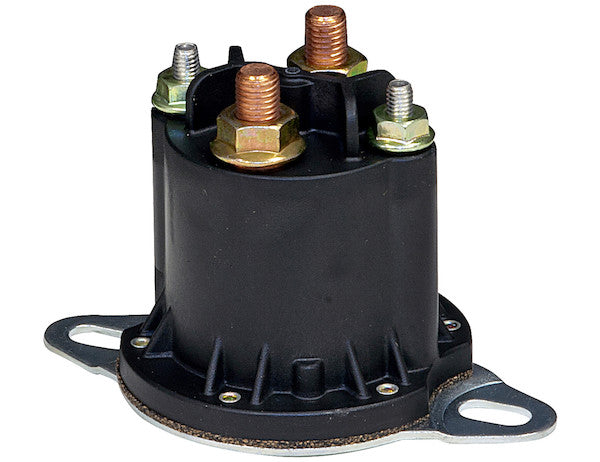
The continuous duty 12 Volt Plastic Case Solenoid from Buyers Products will not overheat when you are operating your plow or spreader, keeping you out of the cold. Its low-input, high-output operation is ideal for 12V vehicle starters, cranes, lift gates, snow plows, and salt spreaders that require heavy duty electric motors. Available in a continuous motor relay and an intermittent 150A motor relay option, the waterproof, sealed design will keep your engine starting reliably all season.
Specifications
| Compares To | Western 56131K-1 |
|---|---|
| Current Rating | 150 |
| Duty | Continuous |
| Housing Material | Polymer |
| Mount Style | Flat |
| Number of Terminals | 4 |
| Switch Style | 4 Post |
Advanced Technical Overview: 12 Volt Plastic Case Insulated Solenoid Continuous Duty Motor Relay
The 12 Volt Plastic Case Insulated Solenoid Continuous Duty Motor Relay represents a critical component in the reliable operation of heavy-duty 12V electrical systems. Engineered for sustained performance under demanding conditions, this motor relay is meticulously designed to manage high current loads inherent in applications such as vehicle starting mechanisms, hydraulic lift gates, specialized crane operations, and the arduous environments associated with snow plows and salt spreaders. Its core functionality is to serve as an electromechanical switch, enabling a low-current control signal to actuate a high-current power circuit, thereby safeguarding delicate control systems and ensuring robust power delivery to electric motors.
Fundamental Principles of Solenoid Operation in Motor Relays
At its heart, this device operates on the principle of electromagnetism. A solenoid, in this context, consists of a coil of wire wound around a movable ferromagnetic core, often referred to as a plunger. When a relatively small electrical current is applied to the coil (the "input" or "control" circuit), it generates a magnetic field. This magnetic field, in turn, draws the plunger into the coil. The mechanical movement of the plunger is then harnessed to close a set of robust electrical contacts. These contacts form the "output" or "power" circuit, completing the high-current path required to energize a motor or other heavy electrical load.
The 4-post switch style, as specified for this relay, signifies its typical configuration: two smaller terminals (posts) for the activation coil and two larger terminals for the main power contacts. The coil terminals receive the 12V control signal, which might originate from an ignition switch, a control panel button, or a safety sensor. Upon activation, the internal mechanism swiftly connects the two larger terminals, allowing the full 150 Amp current to flow from the power source (e.g., vehicle battery) directly to the heavy-duty motor. This "low-input, high-output" operation is paramount, as it isolates the high-current demands from the vehicle's sensitive electronic control units and wiring, thereby preventing damage and simplifying system design.
Unpacking the Continuous Duty Rating: A Pillar of Reliability
A defining characteristic of this solenoid is its "Continuous Duty" rating. This designation is not merely a feature but a testament to its robust engineering. Unlike intermittent duty solenoids, which are designed for short bursts of operation followed by significant cooling periods, a continuous duty solenoid is constructed to remain energized indefinitely without experiencing detrimental thermal buildup or performance degradation. This is crucial for applications where the motor may need to run for extended durations, such as maintaining hydraulic pressure for a lift gate, operating a snow plow's power angle system continuously during a storm, or controlling a salt spreader's conveyor motor over long routes.
Achieving continuous duty performance necessitates specific design considerations. The coil winding typically employs heavier gauge wire and often features improved insulation and thermal dissipation pathways to manage the continuous resistive heating (I²R losses). The internal contact materials are selected for their ability to withstand prolonged arcing and high-current flow without excessive wear or welding. Furthermore, the overall construction ensures that the magnetic circuit remains stable and efficient even after extended periods of energization. This attention to thermal management and material science directly translates into enhanced reliability, extended operational lifespan, and consistent performance, preventing unexpected failures and costly downtime in critical applications.
Optimized for 12 Volt Systems
The specific 12 Volt operating voltage aligns this solenoid perfectly with the predominant electrical architecture found in a vast array of vehicles and mobile equipment, from light trucks to heavy-duty commercial machinery. The standardization around 12V systems simplifies integration and ensures compatibility with existing power sources and control interfaces. While managing 12V, the solenoid is designed to effectively switch currents up to 150 Amperes, making it suitable for a wide range of DC motors that typically power the heavy-duty auxiliary equipment specified. The robust internal contacts and wiring paths are optimized to minimize voltage drop across the relay itself, ensuring that maximum available power is delivered to the motor, which is vital for maintaining optimal motor performance and efficiency, especially under heavy loads.
The Advantage of the Polymer (Plastic) Case and Insulated Design
The choice of a polymer housing, or "Plastic Case," for this solenoid provides several significant engineering and operational advantages, contributing to its overall durability and safety profile. Polymer materials offer inherent electrical insulation properties, effectively isolating the internal high-current components from the external environment and potential grounding points. This insulation is critical for preventing electrical shorts and enhancing operator safety, particularly in environments where components might come into contact with conductive surfaces or moisture.
Beyond electrical insulation, the polymer housing delivers superior corrosion resistance compared to traditional metal enclosures. In environments where snow plows and salt spreaders operate, exposure to road salts, de-icing chemicals, moisture, and extreme temperature fluctuations is commonplace. A polymer case is impervious to rust and many chemical degradation processes, ensuring the integrity of the internal components is maintained over time. This leads to a substantially longer service life and reduced maintenance requirements. Furthermore, modern engineering polymers are selected for their excellent mechanical strength, impact resistance, and UV stability, allowing the solenoid to withstand physical shocks, vibrations, and prolonged exposure to sunlight without degradation.
The "Waterproof, Sealed Design" further enhances the solenoid's resilience. This encapsulation technique prevents the ingress of dust, dirt, moisture, and other contaminants into the sensitive electromechanical components. By preventing internal corrosion, short circuits caused by moisture, and wear from abrasive particles, the sealed construction ensures reliable operation regardless of the prevailing environmental conditions. This meticulous sealing process is a cornerstone of the product's ability to maintain reliable engine starting and auxiliary equipment function "all season," from the frigid, wet conditions of winter to the dusty, humid environments of summer.
High Current Rating: Powering Demanding Motors with 150 Amperes
With a robust current rating of 150 Amperes, this solenoid is precisely engineered to manage the substantial electrical loads generated by heavy-duty electric motors. Electric motors, especially those used in applications like vehicle starters, hydraulic pumps for lift gates, and snow plow articulation systems, exhibit significant inrush currents upon startup. This initial surge of current can be several times higher than the motor's nominal running current. The 150A rating signifies that the solenoid's internal contacts and conductive pathways are dimensioned and constructed to safely handle these high instantaneous currents without excessive heating, arcing, or welding of the contacts.
The materials employed for the main contacts are typically silver alloys or copper alloys, chosen for their superior electrical conductivity and resistance to arc erosion. Arc erosion occurs as the contacts separate or close under load, generating an electrical arc that can degrade contact surfaces over time. The design of this 150A continuous duty solenoid incorporates features to mitigate this, such as rapid contact closure/separation and optimized contact geometry, ensuring longevity even with frequent switching cycles. This high current capacity is paramount for ensuring consistent, powerful operation of motors, preventing undervoltage conditions at the motor terminals, and ultimately contributing to the efficiency and lifespan of the entire electrical system.
Diverse Applications: Engineering for Performance in Critical Scenarios
The versatility and robust specifications of this solenoid make it indispensable across a spectrum of demanding applications:
- Vehicle Starters: In vehicle starting systems, the solenoid's role is critical. When the ignition key is turned, a small current from the battery activates the solenoid coil. This in turn closes the main contacts, allowing a massive surge of current (hundreds of amps momentarily) to flow directly from the battery to the starter motor. The 150A continuous duty rating ensures that even in vehicles with high-compression engines or those operating in cold climates where starter motors draw more current, the solenoid performs reliably, minimizing strain on the electrical system and ensuring prompt engine turnover.
- Cranes: Mobile and industrial cranes utilize electric motors for various functions, including hoisting, luffing, and slewing. These operations often require precise control and the ability to sustain motor operation under significant load. The continuous duty aspect of this solenoid is invaluable here, ensuring that the crane's motor controls remain responsive and reliable during complex and prolonged lifting sequences, enhancing operational safety and efficiency.
- Lift Gates: Hydraulic lift gates on commercial vehicles rely on electric motors to power the hydraulic pump that raises and lowers the platform. These motors operate under high pressure and often run for extended periods during loading and unloading cycles. The continuous duty 12V 150A solenoid is ideally suited to manage these sustained power demands, ensuring smooth and consistent operation of the lift gate, which is vital for efficient logistics and worker safety.
- Snow Plows: The operating environment for snow plows is exceptionally harsh, characterized by extreme cold, moisture, ice, and corrosive road salts. Snow plows utilize electric motors for hydraulic pump operation (raising/lowering the blade, angling it) and often for auxiliary functions like lighting or spreaders. The continuous duty rating is paramount as plows can operate for many hours without interruption during snow events. The plastic case, sealed design, and high current capacity ensure that the solenoid remains operational and corrosion-free, providing reliable control over critical plow functions when temperatures drop and conditions become severe.
- Salt Spreaders: Similar to snow plows, salt spreaders are exposed to highly corrosive materials and extreme weather. Electric motors power the auger or conveyor system that moves salt to the spinner, and another motor drives the spinner itself. These motors often run continuously for the duration of a salting route. The 12V 150A continuous duty solenoid is specifically designed to handle these sustained loads in such hostile conditions, guaranteeing consistent material dispersion and preventing system failures that could impact road safety.
Installation and Mounting Considerations
The "Flat Mount Style" simplifies installation and ensures stable securement within the vehicle or equipment's electrical enclosure. This common mounting configuration allows for easy integration onto flat surfaces, such as bulkheads, battery boxes, or control panels. Proper installation, including the use of appropriate fasteners and attention to torque specifications, is essential to ensure that the solenoid remains securely attached, even under conditions of vibration and shock. The 4-post switch style necessitates proper wiring: two terminals for the low-current coil activation and two larger terminals for the high-current power circuit. Using correctly gauged wire, high-quality crimp terminals, and ensuring all connections are clean, tight, and corrosion-free are paramount for optimal performance and safety, minimizing resistance and heat generation in the high-current path.
Reliability, Durability, and Long-Term Value
The engineering philosophy behind this 12 Volt Plastic Case Insulated Solenoid emphasizes long-term reliability and durability. By combining a continuous duty rating, a robust polymer housing, a sealed waterproof design, and a high current capacity, the product is built to significantly reduce the likelihood of premature failure. This translates directly into minimized equipment downtime, reduced maintenance costs, and increased operational efficiency for the end-user. The ability to perform consistently in adverse conditions, year after year, makes it a highly cost-effective investment, far outweighing the initial component cost through its extended service life and reliable performance in mission-critical applications.
Comparison and Technical Specifications Elaboration
The reference "Compares To Western 56131K-1" indicates direct interchangeability and comparable performance characteristics to an established industry standard. This provides confidence to technicians and system integrators regarding fit, form, and function. The explicit specifications further reinforce its technical prowess:
- Current Rating: 150 Amperes: This is a critical parameter, signifying the maximum continuous current the main contacts can safely carry without overheating or degradation. It confirms the solenoid's suitability for motors with peak operating currents up to 150A.
- Duty: Continuous: As detailed, this means the solenoid is designed for indefinite operation, capable of remaining energized for hours or days without adverse effects, a stark contrast to intermittent options.
- Housing Material: Polymer: Specifies the use of advanced plastic compounds, chosen for their dielectric strength, chemical resistance (especially to salts and automotive fluids), UV stability, and mechanical toughness, superior to conventional metal housings in many applications.
- Mount Style: Flat: A practical design choice ensuring straightforward and secure installation on a wide variety of surfaces.
- Number of Terminals: 4 (4 Post Switch Style): Confirms the standard configuration of two smaller terminals for the activation coil (control voltage) and two larger terminals for the main power circuit (load voltage and current). This facilitates easy and standardized wiring practices.
Conclusion: An Unyielding Solution for Demanding 12V Motor Control
In conclusion, the 12 Volt Plastic Case Insulated Solenoid Continuous Duty Motor Relay is not merely a component; it is a meticulously engineered solution for the rigorous demands of modern 12V heavy-duty electrical systems. Its continuous duty capability, combined with a 150A current rating, robust polymer housing, and sealed waterproof design, ensures unparalleled reliability and longevity. From enabling critical engine starts in extreme cold to sustaining the operation of hydraulic systems on snow plows, salt spreaders, cranes, and lift gates, this solenoid stands as an indispensable element, guaranteeing consistent performance, enhanced safety, and superior operational efficiency across a diverse range of challenging applications. Its technical superiority and durable construction position it as the preferred choice for professionals seeking uncompromising motor control solutions.