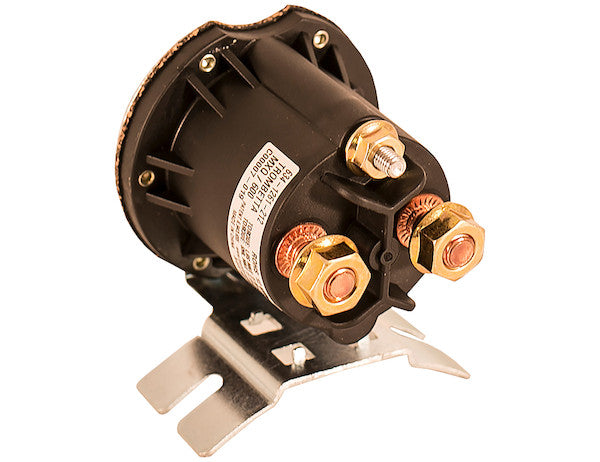
Buyers Products Replacement Solenoid to fit PU3593.
Specifications
| Mounting Style | Motor |
|---|---|
| OEM Primary Brand | Monarch?? |
| OEM Primary Part Number | PU3593 |
| Posts | 3 |
The 3-Post Solenoid 12V Start, specifically engineered as a direct replacement for OEM part number PU3593, represents a critical component in the intricate starting systems of a wide array of industrial, commercial, and heavy-duty vehicles. This highly specialized electromagnetic switch is designed to bridge the gap between a low-current ignition signal and the significantly high current demands of a starter motor, ensuring reliable and efficient engine ignition. Its robust construction, precise technical specifications, and adherence to stringent quality standards make it an indispensable part for maintaining optimal operational continuity in challenging environments. The solenoid’s fundamental role is to act as a remote, high-current relay, safeguarding the ignition switch from the damaging effects of excessive electrical loads while effectively delivering maximum power to the starter motor. This detailed technical description will delve into the solenoid's design principles, operational mechanics, material science, installation considerations, and the overarching benefits of selecting a premium-grade replacement part for critical applications.
The Crucial Role of the Start Solenoid in Vehicle Electrical Systems
At its core, a start solenoid functions as an essential intermediary in the vehicle's starting circuit. When the ignition key is turned to the "start" position, a relatively low-amperage current flows from the battery, through the ignition switch, and to the solenoid's control terminal. This low-current signal activates an electromagnet within the solenoid. The energized electromagnet then mechanically engages a plunger, which, in turn, closes a set of heavy-duty contacts. These contacts create a direct, high-current path from the battery's main positive terminal to the starter motor's primary power input. This bypasses the ignition switch from carrying the extreme currents (often hundreds of amperes) required to crank the engine, thereby preventing damage to the switch and associated wiring. Without a properly functioning solenoid, the starter motor, which requires immense electrical power to overcome engine compression and inertia, would be unable to receive the necessary current, resulting in a failure to start the engine. The precise timing and robust electrical connection provided by the solenoid are paramount for instantaneous and reliable engine initiation, particularly in heavy-duty applications where reliability directly impacts productivity and operational efficiency.
Technical Specifications Deep Dive: 12V Operation and Current Handling
The specification of a 12V operating voltage for this solenoid indicates its design for compatibility with standard automotive, light truck, and many heavy-duty vehicle electrical systems. The 12-volt direct current (DC) system is ubiquitous due to its balance of power delivery and safety. While the solenoid itself operates at 12V, its true engineering challenge lies in its capacity to handle substantial current flow. Starter motors, especially those in larger engines, can draw anywhere from 100 to over 1000 amperes during engine cranking. The solenoid must be capable of momentarily switching and sustaining these extremely high currents without experiencing significant voltage drop, overheating, or contact welding. This necessitates contacts constructed from highly conductive and arc-resistant materials, typically silver alloys or copper-nickel compositions, engineered for minimal electrical resistance. The internal windings of the electromagnet must also be designed with appropriate wire gauge and insulation to create a strong magnetic field efficiently without generating excessive heat, ensuring consistent activation even after multiple start cycles. A solenoid's ability to manage these peak currents reliably is a direct measure of its quality and suitability for demanding operational environments.
Understanding the 3-Post Configuration
The "3-Post" designation refers to the electrical terminals present on the solenoid, each serving a distinct and critical function in the starting circuit. Understanding these posts is key to proper installation and troubleshooting:
- Battery Terminal (Input): This is the primary high-current input terminal, designed to connect directly to the positive (+) terminal of the vehicle's battery. It is typically a large, robust stud, often labeled "BAT" or with a "+" symbol. This post is continuously supplied with full battery voltage and must be capable of carrying the maximum current the battery can deliver to the solenoid's internal contacts. The connection to this post must be exceptionally secure and free from corrosion to minimize resistance and voltage drop during high-current draw.
- Starter Motor Terminal (Output): Also a large, robust stud, this terminal connects directly to the primary power input terminal of the starter motor. When the solenoid is activated, the internal contacts close, creating a direct electrical path between the battery terminal and this starter motor terminal, thereby delivering the necessary high current to engage and power the starter motor. This post is often labeled "M" (for Motor) or "S" (for Starter). Like the battery terminal, its connection quality is paramount for efficient power transfer.
- Ignition/Switch Terminal (Control): This is typically a smaller terminal compared to the other two, often labeled "S" (for Switch/Start) or "I" (for Ignition). It receives the low-current activation signal (12V) from the ignition switch or a starter relay. When this terminal receives voltage, it energizes the solenoid's internal electromagnetic coil. This coil draws a relatively small amount of current (typically 1-5 amps), sufficient to generate the magnetic force required to pull in the plunger and close the main high-current contacts. This design protects the ignition switch from having to carry the very high amperage required by the starter motor.
Motor Mounting Style: Precision and Reliability in Placement
The specification "Motor Mounting" indicates that this solenoid is designed to be installed directly onto or in very close proximity to the starter motor itself. This mounting style offers several significant engineering and operational advantages. Firstly, it minimizes the length of the high-current cabling between the solenoid and the starter motor. Shorter cable runs reduce electrical resistance, which translates to a lower voltage drop and more efficient power delivery to the starter motor. This is crucial for maximizing cranking power, especially in cold weather or with high-compression engines. Secondly, motor mounting provides a mechanically secure and stable attachment point, minimizing the impact of vibrations and shocks inherent in heavy-duty vehicle operation. By integrating the solenoid directly into the starter motor assembly, manufacturers can often simplify the overall wiring harness, enhance protection against environmental contaminants such such as road spray, dirt, and debris, and improve heat dissipation. The design for motor mounting also implies specific physical dimensions, bolt patterns, and electrical terminal orientations to ensure a precise, OEM-like fit with the designated starter motor assembly, such as that requiring the PU3593 part number. This ensures not only functional compatibility but also structural integrity and ease of service.
Construction, Materials, and Durability for Demanding Applications
The longevity and reliability of a 3-post 12V start solenoid in heavy-duty applications are directly attributable to its robust construction and the judicious selection of materials. The internal components are engineered for extreme durability:
- Electromagnetic Coil Windings: These are typically made from high-purity copper wire, precisely wound to create an electromagnet of sufficient strength. The windings are insulated with high-temperature enamel or varnish to prevent short circuits and resist thermal degradation, which can occur during prolonged cranking or in high ambient temperatures.
- Heavy-Duty Contacts: The main contacts that switch the high current are the most critical components. They are typically oversized and constructed from specialized alloys, such as silver-cadmium oxide, silver-tin oxide, or copper-tungsten. These materials are chosen for their excellent electrical conductivity, high melting points, and exceptional resistance to arc erosion and welding under extreme current loads. The contact surfaces are often designed for maximum surface area to distribute the current and heat effectively.
- Plunger/Armature: The movable ferromagnetic core (plunger or armature) is designed for smooth, precise movement within the coil. It is typically made from hardened steel or similar durable material, often plated for corrosion resistance and reduced friction.
- Return Spring: A robust compression spring, often made from high-tensile spring steel, is integral to the solenoid's operation. It ensures that the plunger quickly retracts and the main contacts open when the control signal is removed, preventing continuous starter motor engagement and potential damage.
- Housing: The exterior housing is designed to protect the internal components from the harsh operational environment. It can be made from high-grade metals (e.g., steel, aluminum) for superior strength and heat dissipation, or from advanced engineering plastics (e.g., glass-filled nylon, high-temperature composites) that offer excellent resistance to impacts, chemicals, moisture, and extreme temperatures. Metallic housings are often coated or plated for superior corrosion resistance.
- Sealing and Gasketing: To withstand exposure to moisture, dust, oil, and road chemicals, the solenoid is meticulously sealed. This involves durable O-rings, gaskets, and sometimes potting compounds around the coil and terminals, ensuring an IP (Ingress Protection) rating suitable for exposed vehicle locations.
- Terminal Studs and Nuts: The external terminal studs are typically made from brass or copper-plated steel, chosen for their conductivity and strength, ensuring secure and low-resistance electrical connections. They are designed to accommodate heavy-gauge battery cables and are often supplied with self-locking or high-strength nuts to prevent loosening due to vibration.
Operational Principles: Electromagnetism in Action
The operation of the 3-post solenoid is a classic demonstration of electromagnetism. When the ignition switch sends a 12V signal to the control terminal (the smaller post), current flows through the solenoid's internal coil windings. This current generates a strong magnetic field around the coil. Within this magnetic field, a ferromagnetic plunger (often part of a core assembly) is situated. The magnetic force attracts the plunger, causing it to move axially. As the plunger moves, it mechanically pushes a bridging contact bar or disk. This contact bar then physically connects the two large high-current terminals – the battery input terminal and the starter motor output terminal. This action effectively closes the high-current circuit, allowing the massive current required by the starter motor to flow directly from the battery. When the ignition switch is released (or the engine starts and the key returns to the "run" position), the 12V signal to the control terminal is interrupted. The magnetic field in the coil collapses, and a robust return spring instantaneously pushes the plunger back to its original position, separating the high-current contacts. This opens the circuit to the starter motor, preventing it from remaining engaged and potentially over-speeding or burning out. This elegant, fail-safe mechanism ensures precise control over the immense power delivered to the starter motor, protecting both the electrical system and the mechanical components of the engine.
Applications and Compatibility: Tailored for Performance
This specific 3-Post Solenoid 12V Start is engineered as a direct replacement for OEM part number PU3593, which corresponds to a Monarch component. Monarch Hydraulics is a prominent manufacturer of hydraulic power units and components, frequently utilized in a wide range of heavy-duty applications. Consequently, this replacement solenoid is typically found in:
- Commercial Trucks: Especially medium to heavy-duty trucks where hydraulic systems are used for liftgates, snow plows, dump beds, or other auxiliary functions.
- Construction Equipment: Including skid steers, excavators, loaders, and other machinery that rely on hydraulic power for their primary functions or attachments.
- Agricultural Machinery: Such as tractors, combines, and various implements that incorporate hydraulic systems for steering, lifting, or operating attachments.
- Utility Vehicles: Including municipal service vehicles, tow trucks, and other specialized vehicles equipped with hydraulic implements.
- Marine Applications: Certain marine vessels may utilize hydraulic power units for steering, trim tabs, or other auxiliary systems, necessitating a robust starting solenoid.
Benefits of a Premium Replacement Solenoid
Investing in a high-quality replacement solenoid, such as this 3-Post 12V Start unit from Buyers Products, offers several compelling advantages over lesser-quality alternatives:
- Unwavering Starting Reliability: A premium solenoid provides consistent and powerful engagement of the starter motor every time the ignition is activated. This eliminates frustrating intermittent starting issues, which can significantly impact productivity and lead to unexpected downtime in commercial or industrial settings.
- Extended Operational Lifespan: Constructed from superior materials and subjected to rigorous manufacturing processes, a quality solenoid is designed to withstand millions of operating cycles. This translates to a longer service life, reducing the frequency of replacements and the associated labor costs.
- Optimal Electrical Performance: High-grade contacts and windings ensure minimal voltage drop and efficient current transfer. This means the maximum available power from the battery reaches the starter motor, allowing it to operate at peak efficiency and crank the engine effectively, even in challenging conditions.
- Protection of the Starter Motor and Battery: By ensuring clean, crisp engagement and disengagement, a well-engineered solenoid protects the starter motor from harmful over-cranking or prolonged engagement, which can lead to overheating and premature failure. It also safeguards the battery by preventing excessive drain due to inefficient power transfer.
- Enhanced Electrical System Integrity: Robust insulation, secure terminals, and proper sealing prevent electrical shorts, current leakage, and ingress of contaminants. This maintains the overall integrity of the vehicle's electrical system, mitigating risks of component damage or fire hazards.
- Minimization of Downtime and Maintenance Costs: The superior durability and reliability of a premium solenoid reduce the likelihood of unexpected breakdowns. This leads to less unscheduled maintenance, lower repair costs, and significantly improved operational uptime for essential machinery and vehicles.
- Adherence to OEM Standards: As a direct replacement for PU3593, this solenoid is designed to meet or exceed OEM specifications. This ensures compatibility, performance, and safety standards are met, providing peace of mind to operators and maintenance personnel.
Installation Best Practices and Maintenance Considerations
Proper installation and routine maintenance are critical to maximizing the lifespan and performance of any start solenoid. When installing this 3-Post Solenoid 12V Start, adherence to best practices is essential:
- Safety First: Always disconnect the vehicle's battery (negative terminal first) before beginning any electrical work to prevent accidental short circuits or electrical shock.
- Clean Connections: Ensure all terminal posts and cable ends are thoroughly cleaned of corrosion, dirt, or grease. Use a wire brush or battery terminal cleaner to expose bright, bare metal. Corroded connections create resistance, leading to voltage drop and heat buildup, which can prematurely damage the solenoid and reduce cranking power.
- Secure Mounting: Mount the solenoid securely to its designated location (motor-mounted or chassis-mounted as per design) using appropriate fasteners and torque specifications. Loose mounting can lead to vibration damage and unreliable operation.
- Correct Wiring: Double-check that each of the three posts is connected to its corresponding wire: the battery cable to the battery post, the starter motor cable to the starter motor post, and the ignition/switch wire to the control post. Incorrect wiring can lead to non-operation or severe electrical damage.
- Proper Torque: Tighten all terminal nuts to the manufacturer's specified torque. Overtightening can strip threads or damage terminals, while undertightening can result in loose connections, resistance, and arcing.
- Cable Inspection: Inspect the battery and starter motor cables for signs of wear, fraying, or damage. Replace any compromised cables as they can contribute to poor starting performance even with a new solenoid.
Quality Assurance and Trust: The Buyers Products Standard
As a product offered by Buyers Products, this 3-Post Solenoid 12V Start for PU3593 is backed by a legacy of commitment to quality, durability, and performance in the heavy-duty equipment sector. Buyers Products is renowned for manufacturing a comprehensive range of truck, trailer, and contractor equipment, where reliability under extreme conditions is paramount. This solenoid undergoes rigorous quality assurance protocols to ensure it meets or exceeds the specifications of the original equipment manufacturer. These processes typically include:
- Material Verification: Ensuring that all raw materials, from copper for windings to alloys for contacts, meet stringent purity and composition standards.
- Component Testing: Individual components are tested for dimensional accuracy, electrical conductivity, and mechanical strength before assembly.
- Assembly Line Inspections: Multiple checkpoints during the assembly process verify correct component placement, secure connections, and proper sealing.
- Electrical Performance Testing: Each finished solenoid is subjected to electrical tests, including coil resistance, contact resistance, pull-in voltage, hold-in voltage, and current handling capacity, across a range of temperatures.
- Durability and Life Cycle Testing: Representative samples are put through accelerated life cycle tests, simulating thousands, if not millions, of start cycles, along with vibration, shock, thermal cycling, and environmental exposure tests (e.g., salt spray, humidity) to validate long-term reliability.
Conclusion
The 3-Post Solenoid 12V Start, specifically designed to fit the PU3593 OEM specification, is far more than a simple electrical switch; it is a meticulously engineered component critical to the reliable operation of heavy-duty vehicles and equipment. Its sophisticated design, robust material construction, and adherence to precise technical standards enable it to efficiently manage the vast power differentials between a low-current control signal and the high-current demands of a starter motor. As a motor-mounted unit, it benefits from optimized power delivery and enhanced mechanical protection. For industries relying on consistent performance and minimal downtime, selecting a premium, direct-fit replacement like this Buyers Products solenoid ensures not only seamless compatibility but also enduring reliability and superior electrical system integrity, proving to be an invaluable investment in operational continuity and efficiency.