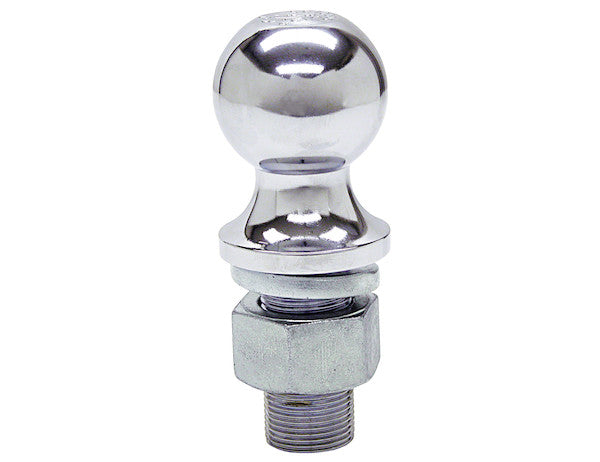
Chrome Hitch Balls from Buyers Products are available in all standard sizes to handle virtually any towing application. All hitch balls feature wear-resistant chrome plating for durability and style. They are packaged individually.
Specifications
| Ball Diameter (in.) | 2-5/16 |
|---|---|
| Ball Finish | Chrome |
| M.G.T.W. (lbs) | 7,500 |
| Material | Carbon Steel |
| Shank Diameter (in.) | 1.00 |
| Shank Length (in.) | 2.125 |
Advanced Technical Overview: 2-5/16 Inch Chrome Hitch Ball with 1 Inch Shank x 2-1/8 Inch Long
The hitch ball stands as a critical component in any towing system, serving as the primary mechanical interface between a towing vehicle and its coupled trailer. Its integrity, dimensional accuracy, material composition, and surface finish are paramount to ensuring safe and reliable operations. This comprehensive technical description delves into the specific attributes of the 2-5/16 inch chrome hitch ball, featuring a 1 inch shank diameter and a 2-1/8 inch shank length, manufactured by Buyers Products. Engineered for robust performance and designed to meet stringent industry demands, this hitch ball represents a fusion of material science, precision engineering, and practical functionality.
Dimensional Precision: Ball Diameter, Shank Diameter, and Shank Length
The precise dimensional specifications of a hitch ball are not merely numerical values but critical parameters that dictate compatibility, load distribution, and overall system safety. Each dimension plays an integral role in the seamless and secure integration of the hitch ball into a towing assembly.
2-5/16 Inch Ball Diameter: Coupling Compatibility and Load Distribution
The specified 2-5/16 inch (approximately 58.74 mm) ball diameter is a standard size widely utilized across a broad spectrum of medium-duty towing applications. This specific diameter is engineered to provide an optimal fit within trailer couplers designed to accommodate this dimension, minimizing free play and thus reducing dynamic stresses during acceleration, braking, and cornering. An improperly sized hitch ball—one that is too small for the coupler—can lead to excessive movement, accelerated wear on both the ball and coupler, increased noise, and, most critically, a significant risk of disengagement under load or during abrupt maneuvers. Conversely, a ball that is too large will prevent proper coupling altogether. The precise spherical geometry of the 2-5/16 inch ball ensures uniform contact area with the coupler socket, distributing vertical and horizontal loads efficiently and reducing localized stress concentrations that could otherwise compromise the integrity of the towing connection. This dimension is typically chosen for trailers such as larger utility trailers, boat trailers, some travel trailers, and light-duty commercial equipment, offering a balance between size and substantial load-bearing capacity.
1 Inch Shank Diameter: Structural Integrity and Ball Mount Integration
The 1 inch (25.4 mm) shank diameter is a fundamental element for the secure attachment of the hitch ball to the ball mount. This dimension dictates the required bore size in the ball mount platform. A precise fit between the shank and the ball mount hole is essential to prevent relative movement, which could lead to premature wear, fatigue cracking in the ball mount, or loosening of the retaining nut. The shank diameter is directly related to the hitch ball's ultimate tensile strength and its ability to withstand the shear and bending forces exerted during towing. A 1-inch shank is robust enough to support the 7,500 lbs M.G.T.W. rating, ensuring that the critical connection point within the ball mount is adequately fortified. Engineering standards dictate specific material properties and manufacturing tolerances for shanks of this diameter to guarantee the load-bearing capacity and fatigue life required for safe towing operations.
2-1/8 Inch Shank Length: Optimal Thread Engagement and Ball Mount Versatility
The 2-1/8 inch (approximately 53.975 mm) shank length is a critical specification that ensures adequate thread engagement when securing the hitch ball to the ball mount with a retaining nut and washer. Sufficient thread engagement is paramount for maintaining the clamp load necessary to keep the hitch ball rigidly affixed to the mount, preventing loosening due to vibration and dynamic forces encountered during towing. This specific length is designed to accommodate ball mounts of varying platform thicknesses, providing enough threaded shaft to pass through the mount and allow for several threads of the nut to engage fully beyond the washer. Insufficient shank length can result in inadequate thread engagement, compromising the nut's ability to maintain torque and potentially leading to catastrophic failure. The 2-1/8 inch length typically provides ample clearance for the proper installation of a lock washer and retaining nut, ensuring a secure, high-strength connection that resists loosening under extreme operational conditions.
Material Science: Carbon Steel Composition and Mechanical Properties
The selection of carbon steel as the base material for this hitch ball is a deliberate engineering choice, predicated on its exceptional balance of strength, ductility, and cost-effectiveness. The performance characteristics of the hitch ball are intrinsically linked to the metallurgical properties of this material.
High-Strength Carbon Steel for Demanding Applications
Carbon steel, specifically selected for its high tensile and yield strength, forms the core structural integrity of this hitch ball. This material undergoes specific heat treatment and forging processes during manufacturing to refine its grain structure and enhance its mechanical properties. Key mechanical properties relevant to towing applications include:
- Tensile Strength: The maximum stress the material can withstand before fracturing. For hitch balls, high tensile strength ensures resistance to pulling forces exerted by the trailer.
- Yield Strength: The stress at which the material begins to deform plastically. A high yield strength is critical to prevent permanent deformation of the hitch ball under maximum rated loads, ensuring it maintains its original geometry and functionality.
- Fatigue Resistance: The ability of the material to withstand repeated cycles of loading and unloading without fracturing. Towing involves continuous cyclic stresses, and high fatigue resistance is essential for the long-term durability and safety of the hitch ball.
- Hardness: The material's resistance to localized plastic deformation, such as indentation or scratching. While chrome plating primarily provides surface hardness, the underlying carbon steel also contributes to overall wear resistance.
- Ductility: The ability of a material to deform plastically before fracturing. A certain degree of ductility is desirable to allow the material to absorb energy and deform somewhat under extreme loads before brittle fracture, providing a margin of safety.
The specific grade of carbon steel chosen is meticulously selected to meet or exceed industry standards for towing components, ensuring it can endure the significant dynamic and static loads, impacts, and vibrations inherent in trailer towing without compromising structural integrity.
Surface Engineering: Wear-Resistant Chrome Plating
The application of a wear-resistant chrome plating to the hitch ball is not merely an aesthetic enhancement but a crucial engineering solution that significantly extends the product's service life and operational reliability. This surface treatment addresses several critical challenges faced by towing components.
Corrosion Resistance and Environmental Durability
Chrome plating provides an exceptionally robust barrier against environmental degradation. The underlying carbon steel, while strong, is susceptible to oxidation (rust) when exposed to moisture, road salts, de-icing chemicals, and atmospheric pollutants. The dense, non-porous layer of chrome acts as an impervious shield, preventing these corrosive agents from reaching the base metal. This superior corrosion resistance ensures that the hitch ball maintains its structural integrity and aesthetic appeal even after prolonged exposure to harsh weather conditions and challenging road environments, thereby prolonging its functional life and reducing the frequency of replacement.
Enhanced Wear Resistance and Reduced Friction
Beyond corrosion protection, chrome plating imparts significantly increased surface hardness to the hitch ball. This enhanced hardness provides exceptional wear resistance, minimizing material loss and surface degradation that would otherwise occur from the constant friction and abrasive contact with the trailer coupler during towing. The smooth, low-friction surface of chrome also facilitates easier coupling and uncoupling operations. It reduces the wear rates on both the hitch ball and the interior surfaces of the coupler, preserving the precise fit and reducing the potential for premature failure of either component. This reduction in friction also contributes to smoother towing by minimizing mechanical binding between the ball and coupler.
Aesthetic Appeal and Maintenance
The bright, polished appearance of chrome plating provides a visually appealing finish that complements the aesthetics of modern vehicles and trailers. This "style" aspect, while secondary to functional performance, signifies a commitment to quality and attention to detail. Furthermore, the smooth chrome surface is inherently easier to clean and maintain, resisting the accumulation of dirt, grime, and minor surface imperfections that can compromise the functionality and appearance of untreated steel components. Regular cleaning and inspection of the chrome finish are recommended to ensure its longevity and to detect any signs of damage that could compromise its protective qualities.
Load Rating: Maximum Gross Trailer Weight (M.G.T.W.) of 7,500 lbs
The Maximum Gross Trailer Weight (M.G.T.W.) rating of 7,500 lbs is a critical safety specification that defines the maximum permissible total weight of the trailer (including its cargo) that this hitch ball is engineered to safely tow. This rating is not an arbitrary number but a meticulously calculated value based on a complex interplay of engineering factors.
Engineering Basis for M.G.T.W.
The 7,500 lbs M.G.T.W. rating for this hitch ball is derived from comprehensive design analysis, material strength testing, and adherence to industry standards. Factors contributing to this rating include:
- Material Strength: The specific grade of carbon steel and its heat treatment process directly determine the ultimate tensile strength, yield strength, and fatigue limit of the hitch ball under various loading scenarios.
- Geometric Design: The dimensions of the ball (2-5/16 inch), shank (1 inch diameter, 2-1/8 inch length), and the fillet radius at the junction of the ball and shank are optimized to distribute stresses effectively and minimize stress concentrations.
- Manufacturing Quality: The integrity of the forging, machining, and chrome plating processes ensures that the final product consistently meets design specifications and is free from defects that could compromise its strength.
- Safety Factors: Engineering design incorporates substantial safety factors to account for dynamic loads, potential impact forces, uneven weight distribution, and other unforeseen stresses that can occur during real-world towing operations. These factors ensure that the hitch ball can safely operate even when subjected to loads approaching its nominal rating, providing a crucial margin of safety.
Implications of Exceeding M.G.T.W.
It is imperative that the M.G.T.W. rating of the hitch ball is never exceeded. Overloading can lead to:
- Plastic Deformation: Permanent bending or stretching of the shank or ball.
- Fatigue Failure: Premature cracking and fracture of the material due to repeated stress cycles beyond its design limit.
- Catastrophic Failure: Sudden and complete separation of the hitch ball, leading to the detachment of the trailer.
Furthermore, the hitch ball's M.G.T.W. rating must always be considered in conjunction with the towing vehicle's towing capacity, the hitch receiver's rating, the ball mount's rating, and the trailer's Gross Vehicle Weight Rating (GVWR). The lowest rated component in the entire towing system dictates the maximum safe towing capacity of the combination. This 7,500 lbs M.G.T.W. rating positions this hitch ball for a wide array of medium-duty towing tasks, providing reliable performance when matched with appropriate towing equipment.
Design and Engineering Philosophy: Buyers Products Quality Assurance
Buyers Products is renowned for its commitment to engineering excellence and manufacturing robust solutions for demanding applications. The design and production of this 2-5/16 inch chrome hitch ball reflect this philosophy through stringent quality control and adherence to industry best practices.
Robust Design and Manufacturing Processes
Each hitch ball is meticulously engineered, often utilizing advanced CAD/CAM software for precise design and simulation to optimize stress distribution. The manufacturing process typically involves:
- Precision Forging: High-quality carbon steel billets are hot-forged to create the basic shape of the hitch ball, aligning the grain structure of the steel for maximum strength and fatigue resistance. This process is superior to casting for high-stress components.
- CNC Machining: Subsequent CNC (Computer Numerical Control) machining ensures accurate dimensions for the ball diameter, shank diameter, and shank length, adhering to tight tolerances critical for safe coupling and secure mounting.
- Heat Treatment: Controlled heat treatment processes are applied to achieve the desired material hardness, strength, and ductility, optimizing the mechanical properties of the carbon steel.
- Electroplating: The final stage involves advanced electroplating techniques to apply a uniform, durable, and corrosion-resistant layer of chrome, rigorously controlled for thickness and adhesion.
Adherence to Industry Standards and Testing
Buyers Products components are designed to meet or exceed relevant industry standards for towing equipment, such as those established by the Society of Automotive Engineers (SAE). This commitment ensures that the hitch ball can withstand rigorous testing protocols, including static load tests, dynamic fatigue tests, and corrosion resistance evaluations. This comprehensive approach to design, manufacturing, and testing provides end-users with a product that delivers consistent, reliable performance and exceptional longevity.
Installation and Operational Best Practices
Proper installation and regular maintenance are crucial to maximizing the safety and lifespan of the hitch ball. Adherence to best practices ensures the integrity of the towing connection.
Installation Procedure
- Verify Compatibility: Ensure the 1 inch shank diameter of the hitch ball matches the bore hole on your ball mount and that the 2-5/16 inch ball diameter matches your trailer coupler.
- Clean Surfaces: Ensure the shank, ball mount hole, and all hardware (washer, nut) are clean and free of grease, dirt, or debris.
- Insert Shank: Insert the hitch ball shank through the appropriate hole in the ball mount platform.
- Position Washer and Nut: Place a lock washer (if included or recommended) onto the shank, followed by the retaining nut.
- Torque to Specification: Crucially, tighten the retaining nut to the manufacturer's specified torque setting. This typically requires a high-capacity torque wrench. Insufficient torque can lead to loosening and failure, while excessive torque can damage the threads or deform the components. For a 1-inch shank, torque values are often in the range of 200-250 ft-lbs, but always refer to the specific recommendations for your ball mount and hitch ball.
- Final Check: Visually inspect the installation to confirm the nut is fully seated and the hitch ball is securely affixed without any movement.
Maintenance and Inspection
- Regular Cleaning: Keep the chrome finish clean to prevent corrosive build-up and maintain its aesthetic appeal.
- Pre-Tow Inspection: Before each towing trip, inspect the hitch ball for any signs of wear, cracks, pitting, rust, or deformation. Check for any looseness in the retaining nut.
- Lubrication: Apply a thin layer of automotive grease to the surface of the hitch ball to reduce friction and wear between the ball and coupler.
- Post-Tow Inspection: After towing, perform another visual inspection to identify any issues that may have developed during operation.
- Replacement: If any signs of damage, excessive wear, or structural compromise are detected, the hitch ball must be replaced immediately. Hitch balls are wear components and should be replaced periodically based on usage and condition.
Safety and Regulatory Compliance
The operation of a towing system carries inherent risks if components are improperly selected, installed, or maintained. This hitch ball, designed to rigorous standards, contributes significantly to overall towing safety when integrated correctly.
Adherence to Safety Standards
The design and construction of this hitch ball are intended to facilitate compliance with national and international towing safety regulations, which often mandate specific load ratings, dimensional tolerances, and material requirements for towing apparatus. Utilizing a hitch ball that meets these standards is fundamental to ensuring the safety of the towing operator, other road users, and the integrity of the cargo.
Preventative Measures
Beyond the product itself, comprehensive towing safety involves:
- Weight Distribution: Ensuring proper tongue weight and overall trailer weight distribution.
- Trailer Brakes: Confirming functional trailer brake systems where required.
- Safety Chains: Proper attachment of adequately rated safety chains.
- Lighting: Verifying all trailer lights are operational.
- Driver Training: Ensuring the operator is experienced and knowledgeable in safe towing practices.
Applications and Versatility
The 2-5/16 inch chrome hitch ball with a 1 inch shank and 2-1/8 inch length is engineered for versatility across a range of medium-duty towing applications, offering reliable performance in diverse operational environments.
Typical Use Cases
This specific hitch ball configuration is ideally suited for:
- Utility Trailers: Capable of hauling heavy loads of landscaping materials, construction debris, or general cargo.
- Boat Trailers: Supporting a variety of boat sizes, from medium-sized fishing boats to larger recreational vessels.
- Travel Trailers and RVs: Appropriate for many types of smaller to medium-sized travel trailers and pop-up campers.
- Equipment Trailers: Towing smaller construction equipment, ATVs, or compact machinery.
- Light-Duty Commercial Applications: Used by contractors, small businesses, and municipalities for various hauling needs.
Its robust construction and chrome finish ensure reliable operation in environments ranging from daily road use to more demanding off-road or construction site conditions, where exposure to elements and abrasive materials is common.
Conclusion
The 2-5/16 inch chrome hitch ball with a 1 inch shank diameter and 2-1/8 inch length from Buyers Products is a meticulously engineered component designed to deliver uncompromising performance and safety in medium-duty towing applications. Its precise dimensions ensure optimal coupling, while the high-strength carbon steel construction provides superior load-bearing capacity and fatigue resistance. The wear-resistant chrome plating offers crucial protection against corrosion and abrasion, extending the product's lifespan and enhancing its operational reliability. With an M.G.T.W. rating of 7,500 lbs, this hitch ball is a robust and dependable choice for professionals and enthusiasts alike who demand the highest standards of safety and durability from their towing equipment. Its integration into a properly matched and maintained towing system ensures secure, efficient, and long-lasting performance, solidifying its position as a critical investment in safe towing infrastructure.