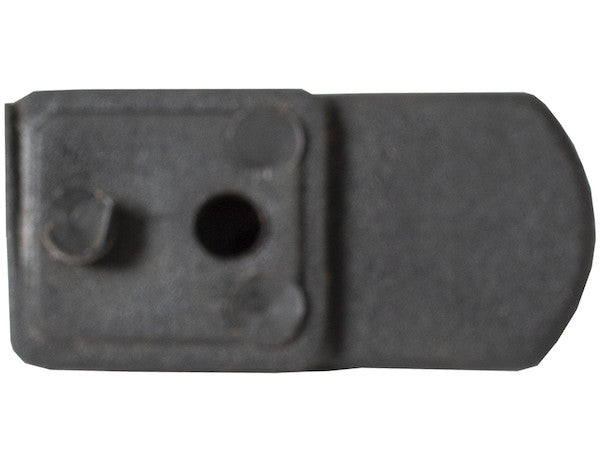
Specifications
| Color | Black |
|---|---|
| Holds Max Dia. (in.) | - |
| Holds Min Dia. (in.) | - |
| Primary Material | Rubber |
The Critical Role of the Replacement Restrictor Clamp: An Engineering Perspective
The Replacement Restrictor Clamp represents a deceptively simple yet critically engineered component vital to maintaining the operational integrity and efficiency of a vast array of mechanical, fluid, and air handling systems. Its fundamental purpose is to precisely control or limit the flow, movement, or vibration of a connected element, thereby ensuring system parameters remain within specified tolerances. From intricate automotive fluid lines to robust industrial process piping and sensitive medical apparatus, the reliability of a restrictor clamp impacts system performance, safety, and longevity. As a replacement part, its function extends beyond mere component substitution; it is about restoring original equipment manufacturer (OEM) specifications, mitigating accumulated wear, and preempting potential failures that could arise from the degradation of the original component. This detailed exposition delves into the material science, engineering principles, application diversity, and critical performance attributes that define a high-quality replacement restrictor clamp, emphasizing its indispensable contribution to systemic reliability.
Functional Engineering: Mechanisms of Restriction and Diverse Applications
The mechanism by which a restrictor clamp operates is predicated on controlled compression and securement. Primarily, it functions by applying a predetermined force to an enclosed conduit or component, inducing a constriction that either limits volumetric flow, dampens vibrational energy, or physically immobilizes the element. For fluid and air systems, this constriction is carefully calibrated to achieve a specific flow rate or pressure drop, crucial for maintaining optimal operating conditions within a circuit. In vibration dampening applications, the elastomer's inherent viscoelastic properties absorb and dissipate kinetic energy, preventing resonance and mitigating material fatigue in adjacent components. As a securement device, it provides a stable anchor point, preventing dislodgement or excessive movement of hoses, cables, or small pipes under dynamic loads or thermal expansion/contraction cycles.
The applications for such a precise component are remarkably broad and diverse across multiple industries. In the automotive sector, restrictor clamps are integral to various systems: they regulate fluid flow in fuel lines to ensure precise fuel delivery to injectors, control coolant circulation within engine cooling systems to maintain optimal operating temperatures, manage vacuum lines for brake boost and emissions control, and secure exhaust system components to prevent dislodgement and reduce noise. Within HVAC systems, they might restrict refrigerant flow or secure ducting and wiring. In industrial manufacturing, restrictor clamps are employed on process lines, hydraulic systems, and pneumatic circuits, where accurate flow control and leak prevention are paramount for operational efficiency and safety. They are found in domestic appliances, such as washing machines and dishwashers, where they secure water inlet/outlet hoses and internal wiring harnesses, preventing leaks and reducing operational noise. In more specialized fields like medical equipment, meticulously designed restrictor clamps ensure precise fluid delivery rates in IV lines or secure sensitive tubing, where even minor variations can have significant patient implications. Each application demands specific performance characteristics, underscoring the necessity for materials and designs capable of meeting stringent operational requirements, thereby ensuring the efficiency, safety, and longevity of the interconnected systems.
Material Science Deep Dive: Rubber as the Primary Medium
The specification of "Primary Material: Rubber" is paramount, signifying a deliberate engineering choice driven by the unique elastomeric properties essential for effective restriction and sealing. Rubber, in its various compounded forms, offers an unparalleled combination of flexibility, resilience, vibration dampening, and chemical resistance, making it ideally suited for these demanding applications. The choice of specific rubber type is critical and is dictated by the operational environment and functional requirements.
- EPDM (Ethylene Propylene Diene Monomer): Renowned for its exceptional resistance to weathering, ozone, UV radiation, and high temperatures, EPDM is ideal for outdoor or automotive engine bay applications. It also exhibits excellent resistance to hot water, steam, polar solvents, and mild acids/alkalis. Its good electrical insulation properties can also be beneficial in certain contexts.
- Nitrile (Buna-N): This copolymer of butadiene and acrylonitrile provides superior resistance to petroleum-based oils, fuels, greases, and hydraulic fluids. It is a workhorse in automotive, aerospace, and industrial fluid power systems where hydrocarbon contact is prevalent. Its temperature range is moderate compared to silicone or EPDM.
- Neoprene (Polychloroprene): Offering a balanced set of properties, Neoprene provides good resistance to ozone, weathering, and moderate oils and chemicals. It also exhibits good physical toughness, abrasion resistance, and and flame retardancy, making it a versatile choice for general-purpose industrial and consumer applications.
- Silicone: Distinguished by its extreme temperature range (both high and low) and excellent flexibility across this range. Silicone also boasts high resistance to UV radiation, ozone, and many chemicals, and is largely inert, making it suitable for medical and food-contact applications. However, its tensile strength and abrasion resistance are generally lower than other rubbers.
- Butyl Rubber: Known for its excellent impermeability to gases, making it ideal for vacuum applications, and its superior vibration dampening characteristics. It offers good resistance to heat, ozone, and polar chemicals.
The performance of these elastomers is further optimized through sophisticated compounding processes. Reinforcing fillers, predominantly carbon black, are blended into the rubber matrix. Carbon black not only imparts the characteristic "Black" color, as specified, but more importantly, it significantly enhances the material's mechanical properties, including tensile strength, abrasion resistance, tear strength, and hardness (Shore A). Furthermore, carbon black provides excellent UV stability, protecting the clamp from degradation due to sunlight exposure, and improves thermal aging resistance, extending the component's service life in high-temperature environments. Other additives include antioxidants to combat oxidative degradation, plasticizers to adjust flexibility, and vulcanizing agents (e.g., sulfur or peroxides) which cross-link the polymer chains, transforming the material from a sticky, plastic-like substance into a stable, elastic rubber with permanent shape memory – a crucial property for a restrictor clamp maintaining consistent pressure over time. Careful selection and compounding of these materials directly dictate the clamp's ability to maintain restrictive and sealing function under challenging operational conditions.
Dimensional Considerations: Navigating the "Holds Max/Min Dia. (-)"
The absence of specific numerical values for "Holds Max Dia. (in.)" and "Holds Min Dia. (in.)" in the specifications underscores a critical aspect of restrictor clamp selection: the precise dimensional fit. While generic classifications exist, the effectiveness of any restrictor clamp is inherently tied to its exact compatibility with the outside diameter of the component it is intended to restrict or secure. This placeholder suggests that the specific sizing information for this particular replacement clamp is either determined at the point of sale based on a specific application, or it represents a universal or highly adjustable design where the effective diameter range is subject to the installation method or accompanying hardware. Regardless, the importance of accurate sizing cannot be overstated.
An improperly sized clamp poses significant operational risks. If the clamp is too small for the component, installation becomes difficult, potentially leading to overstressing the rubber material beyond its elastic limit, causing premature cracking, tearing, or permanent deformation. This compromises the material's integrity and reduces its effective lifespan. Conversely, if the clamp is too large, it may not achieve the necessary compression or securement force. This could result in insufficient flow restriction, ineffective vibration dampening, or the loosening and dislodgement of the clamped component, leading to leaks, reduced system efficiency, or outright failure. In critical fluid transfer systems, even a minor discrepancy in diameter can lead to hazardous leaks, while in dynamic mechanical systems, it can result in increased noise, accelerated wear, and structural damage.
For clamps with fixed diameters, precision manufacturing to tight tolerances is paramount. The internal diameter of the rubber component must match the external diameter of the target component with a calculated interference fit to ensure adequate compression without overstressing. For adjustable clamps, often utilizing a band or buckle mechanism, the design must provide a robust and secure locking feature capable of maintaining the desired compression force over time, resisting stress relaxation and vibration. Engineers utilize statistical process control (SPC) to ensure consistent dimensional accuracy. Proper measurement protocols for the target component and clear guidance on clamp sizing are indispensable for optimal performance and safety, ensuring seamless integration and restoration of original operational parameters.
Advanced Design and Manufacturing Principles
Beyond material selection, the geometric design and manufacturing precision of a restrictor clamp are pivotal to its efficacy and longevity. The internal contour of the clamp, for instance, is often not a simple circle but may incorporate specific sealing lips, ribs, or grooves designed to enhance grip, distribute pressure evenly, or create multiple sealing points, thereby improving resistance to leakage and blow-off. The external geometry is configured to facilitate ease of installation and ensure compatibility with any external clamping mechanisms (e.g., metal bands, bolted assemblies, quick-release latches). Stress analysis during the design phase, often employing Finite Element Analysis (FEA), helps predict how the clamp will deform and distribute forces under various operational loads, preventing localized stress concentrations that could lead to premature failure. This ensures that the clamp maintains its structural integrity and functional performance over its intended service life.
Manufacturing processes for these rubber components typically involve precision molding techniques such as injection molding or compression molding. These methods allow for the creation of complex geometries with high dimensional accuracy and consistent material density. Quality control throughout the manufacturing process, including visual inspection, dimensional checks, and material property testing, is crucial to guarantee that each replacement clamp meets stringent performance specifications. The synergy between advanced material science, intelligent geometric design, and precise manufacturing processes results in a restrictor clamp that not only performs its primary function effectively but also contributes significantly to the overall durability and reliability of the system it serves.
Rationale for Replacement and Lifecycle Management
The need for a Replacement Restrictor Clamp typically arises from the inevitable degradation of the original component due to environmental exposure and operational stresses. Rubber, despite its robust properties, is susceptible to various forms of aging. Chemical attack from fuels, oils, coolants, or cleaning agents can cause softening, hardening, swelling, or embrittlement. Thermal cycling and sustained high temperatures accelerate molecular degradation, leading to a loss of elasticity and increased compression set. Exposure to UV radiation and ozone, particularly for clamps in outdoor or engine bay environments, induces surface cracking (ozone cracking) and a progressive loss of mechanical strength. Mechanical fatigue, resulting from constant vibration, pressure pulsations, or repeated clamping/unclamping cycles, can also lead to micro-fractures and eventual failure. Creep, the slow deformation of material under prolonged stress, and compression set, the inability of the rubber to fully return to its original thickness after compression, further diminish the clamp's ability to maintain a consistent seal or restrictive force.
Visible signs indicating the need for replacement include surface cracks, hardening, excessive softening or stickiness, visual deformation (bulging or flattening), and any evidence of leakage or diminished system performance (e.g., reduced fluid pressure, increased vibration, or audible air leaks). Implementing a preventative maintenance schedule, including regular inspection and proactive replacement, is crucial for avoiding unexpected system failures, reducing downtime, and ensuring continuous, reliable operation.
Quality Assurance, Standards, and Performance Validation
The efficacy and safety of a replacement restrictor clamp are inextricably linked to rigorous quality assurance protocols and adherence to established industry standards. Reputable manufacturers comply with specifications such as ASTM D2000, which classifies rubber materials based on their physical properties and resistance to environmental factors, ensuring that the chosen elastomer meets application-specific demands. Beyond material standards, comprehensive testing methodologies are employed, including accelerated aging tests in environmental chambers to simulate long-term exposure to heat, cold, UV, and ozone; pressure cycling tests to evaluate sealing integrity under fluctuating loads; and tensile/elongation tests to verify mechanical strength. Such meticulous validation ensures that each replacement clamp will perform reliably, maintaining its functional properties throughout its expected service life, thereby safeguarding the integrity of critical systems.
Conclusion: Investing in System Reliability
In summary, the Replacement Restrictor Clamp, while often perceived as a minor component, holds a position of significant technical importance in countless systems. Its effective functioning is a direct consequence of sophisticated material science, precise engineering design, and stringent manufacturing quality. Investing in a high-quality replacement is not merely a transactional purchase; it is a strategic decision to restore and enhance the operational integrity, safety, and longevity of complex equipment. By understanding the underlying technical specifications and the critical role of each design choice, users can make informed decisions that prevent costly failures, minimize downtime, and ensure sustained, optimal performance across all applications.