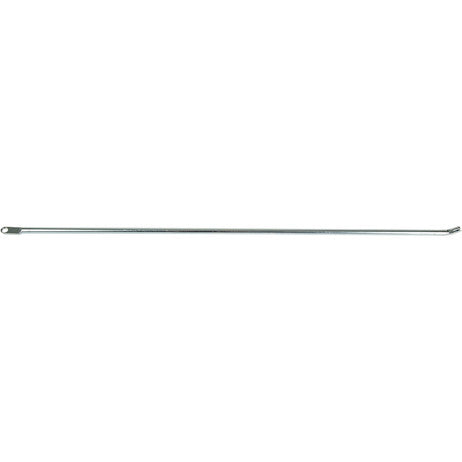
3-Point locking systems upgrade the security in applications like Service Bodies, Truck Boxes, Trailers, and Cabinets. The zinc-plated steel rods are designed for use with the Buyers Products LL90003 compression latch. Available in a variety of lengths and sold individually. Select the right quantity and length for your application.
Specifications
| Description | 22.6" inch rod |
|---|---|
| Finish | Zinc Plated Clear |
| For Use With | 48" inch doors and enclisures |
| Material | Carbon Steel |
Advanced Enclosure Security: The Critical Role of the 22.60" Actuating Rod in 3-Point Latch Systems
In the demanding environments of commercial and industrial applications, the integrity and security of enclosures are paramount. Whether securing valuable tools in a truck box, safeguarding sensitive equipment in a service body, protecting cargo in a trailer, or maintaining the operational parameters of an industrial cabinet, the locking mechanism serves as the first line of defense. The traditional single-point latch system, while suitable for some applications, often falls short in providing the requisite security, rigidity, and environmental sealing demanded by modern standards. This is where the advanced engineering of a 3-Point Latch system distinguishes itself, offering a superior solution for robust enclosure security. At the heart of such a system lies the actuating rod, a critical component that translates the mechanical input from a central latch into distributed locking action. This document details the technical specifications, operational advantages, material science, and application versatility of the 22.60" individual rod, specifically designed for seamless integration into 3-Point Latch systems for 48" enclosures, particularly in conjunction with the Buyers Products LL90003 compression latch.
Deconstructing the 3-Point Latch Mechanism: Engineering for Enhanced Security and Stability
A 3-Point Latch system operates on a fundamental principle of distributing locking forces across three distinct points along the perimeter of an enclosure opening. This mechanism typically consists of a central latch or handle, which, upon actuation, simultaneously engages and moves two interconnected rods. These rods extend vertically (or horizontally, depending on configuration) from the central latch to dedicated locking points, usually at the top and bottom edges of the door frame. When the central latch is secured, these rods extend or retract, engaging strikes or cams at each of the three points – the central latch itself, and the ends of the two rods. This creates a highly secure and stable closure.
Compared to single-point latch systems, the advantages of a 3-point configuration are substantial. Firstly, it provides significantly enhanced anti-pry resistance. With locking engagement at multiple points, a prying tool applied at any single edge meets resistance not just locally, but also from the remote locking points, making forced entry considerably more difficult and time-consuming. Secondly, the distributed locking force ensures a more even compression of the door against its frame. This uniform pressure is critical for maintaining effective environmental seals, preventing ingress of dust, moisture, and even sound, which is particularly beneficial in applications requiring IP (Ingress Protection) ratings or sound dampening. Lastly, the inherent structural rigidity imparted by a 3-point system helps to mitigate door warping or misalignment over time, especially in large or heavily used enclosures subjected to constant vibration and dynamic loads.
The Precision Engineering of the 22.60" Actuating Rod: Dimensions and Fitment
The specific dimensions of the actuating rod are not arbitrary but are the result of precise engineering calculations tailored to ensure optimal performance within the designated enclosure size. The 22.60-inch length of this individual rod is meticulously designed for use in a 3-Point Latch system installed on a 48-inch high door or enclosure. This specific length ensures that when the rod is connected to the central latch and extends to its corresponding locking point, it provides the ideal engagement and disengagement stroke without excess play or insufficient reach. In a typical vertical 3-point configuration for a 48-inch door, two such rods would be employed, one extending upwards from the central latch and one extending downwards. The 22.60-inch length is critical for establishing the correct geometric relationship between the central latch's pivot point, the rod guides, and the terminal locking mechanism (e.g., a cam or a bolt) at the enclosure’s edge.
The integrity of the entire 3-point system is highly dependent on the dimensional accuracy of its components. An actuating rod that is even slightly too long could bind, prevent full latch engagement, or put undue stress on the system components. Conversely, a rod that is too short would result in incomplete locking, excessive play, or a compromised seal, thereby negating the security and environmental benefits of the 3-point system. Therefore, the 22.60-inch specification is not merely a measurement; it represents a precise mechanical interface designed for optimal functionality and longevity within a 48-inch enclosure system. Being sold as an "individual rod" offers significant advantages in terms of modularity, allowing for precise customization based on specific enclosure designs and facilitating straightforward replacement if a single rod is damaged or requires servicing, rather than necessitating the replacement of an entire locking kit.
Material Science and Surface Technology: Carbon Steel with Zinc Plated Clear Finish
Carbon Steel: The Foundation of Strength and Durability
The choice of material for the actuating rod is fundamental to its performance, especially given the stresses it undergoes during repeated operation and in potentially harsh environments. This 22.60" rod is manufactured from carbon steel, a material renowned for its excellent mechanical properties and cost-effectiveness. Carbon steel, primarily an alloy of iron and carbon, offers a compelling balance of high tensile strength, ductility, and impact resistance. These properties are crucial for a component that must withstand both the cyclic fatigue of thousands of operations and potential forces from attempted intrusions or external impacts. Typical grades of carbon steel used for such applications often fall within the low to medium carbon range (e.g., AISI 1018, 1020), which allows for good weldability and machinability while still providing ample strength. The manufacturing process for these rods typically involves processes like cold drawing, which refines the grain structure, enhances surface finish, and improves the steel's strength and dimensional accuracy, ensuring a consistent and reliable product.
Zinc Plated Clear Finish: Advanced Corrosion Protection
While carbon steel provides the necessary structural integrity, it is inherently susceptible to corrosion, particularly in outdoor or moisture-prone environments. To counteract this, the rod features a zinc plated clear finish. This surface treatment is not merely aesthetic; it is a sophisticated electrochemical process designed to provide robust corrosion protection through a mechanism known as sacrificial protection. In this process, a thin layer of zinc is electrodeposited onto the steel substrate. Because zinc is more electrochemically active than steel, it preferentially corrodes when exposed to corrosive elements (like oxygen and moisture), thereby sacrificing itself to protect the underlying steel. This provides a durable barrier that significantly extends the service life of the component.
The electroplating process typically involves several stages: meticulous cleaning of the steel substrate to remove oils and contaminants, an acid dip to remove oxides, the electrodeposition of zinc from an electrolytic bath, and finally, a chromate conversion coating. The "clear" aspect refers to the specific type of chromate conversion layer applied, which provides additional corrosion resistance and can impart a bright, aesthetically pleasing finish without altering the metallic appearance. This clear chromate layer is typically a trivalent chromium solution, replacing older hexavalent chromium processes for environmental and health reasons, while still offering excellent performance. The benefits of this finish are multi-fold: significantly extended resistance to rust and oxidation, enhanced resistance to environmental factors such as salt spray (often tested to industry standards like ASTM B117), humidity, and mild chemicals, and an improved appearance that maintains its integrity over time. The zinc plating also offers galvanic protection when the rod is used in conjunction with other dissimilar metals, minimizing localized corrosion that can occur at contact points. Maintaining the integrity of this finish is key; while robust, deep scratches or abrasions can expose the underlying steel, potentially compromising the protective layer. Therefore, proper handling and installation practices are recommended to preserve the finish and ensure long-term corrosion resistance.
Seamless Integration: The 22.60" Rod with Buyers Products LL90003 Compression Latch
The effective operation of the 22.60" actuating rod is predicated on its seamless integration with a compatible central latch, specifically the Buyers Products LL90003 compression latch. Understanding the function of a compression latch is crucial here. Unlike standard latches that merely hold a door shut, a compression latch actively "draws" the door panel tightly against its frame, compressing any gasket material installed between the door and the frame. This action provides multiple engineering advantages: it creates a superior environmental seal against dust, water, and air, often enabling enclosures to achieve higher IP ratings; it significantly reduces vibration and rattling, which is vital in mobile applications; and it can even contribute to noise reduction. The LL90003 model likely incorporates a cam or lever mechanism that, upon rotation or actuation, engages the actuating rods.
The mechanical interface between the rod and the compression latch is a critical design element. The rod is engineered with specific end fittings or connection points designed to mate precisely with the operating mechanism of the Buyers Products LL90003. This could involve a flattened end with a pre-drilled hole for a clevis pin, a threaded section, or a specialized hook-and-slot design that allows for secure, yet flexible, attachment. Proper alignment during installation is essential to ensure that the latch's rotational or linear motion is efficiently transferred along the rod to the distant locking points without binding or undue friction. Within the enclosure, rod guides or retainers are typically used along the length of the rod to prevent bowing and ensure smooth, consistent operation. When the LL90003 is engaged, it not only secures the door at the central point but also simultaneously drives the 22.60" rods to extend their respective locking bolts or cams, firmly securing the enclosure at all three points. This combined action of compression and multi-point locking offers an unparalleled level of security, sealing, and structural integrity.
Diverse Applications and Operational Environments
The robust design and multi-point locking capability of this rod system make it exceptionally well-suited for a variety of demanding applications where security, durability, and environmental protection are non-negotiable.
Service Bodies: Utility and emergency vehicles often incorporate service bodies with multiple compartments. These compartments house expensive tools, critical equipment, and sensitive instruments. A 3-point system with 22.60" rods ensures these compartments remain securely locked against theft and are protected from road debris, moisture, and temperature fluctuations encountered during routine operations and emergency responses.
Truck Boxes: From commercial trucks carrying vital cargo to personal vehicles outfitted with toolboxes, security is paramount. Truck boxes are constantly exposed to harsh elements including road salt, moisture, direct sunlight, and significant vibrations. The zinc-plated carbon steel rods offer the necessary corrosion resistance and mechanical strength to endure these conditions, ensuring that contents remain safe and dry.
Trailers: Enclosed cargo trailers, utility trailers, and even some recreational trailers benefit immensely from the enhanced security of a 3-point system. Whether securing goods in transit or protecting stored items, the distributed locking points deter forced entry while the compression feature ensures a tight seal, crucial for protecting contents from weather and highway dust.
Cabinets: Industrial control cabinets, electrical enclosures, outdoor equipment housings, and secure storage cabinets demand rigorous protection against unauthorized access, dust, and moisture. The 22.60" rod, as part of a 3-point system, provides a reliable and compliant solution for safeguarding sensitive electronics, control mechanisms, or valuable inventory in both indoor and outdoor settings.
In all these environments, the actuating rod and the overall 3-point system must withstand constant vibration, potential impacts, wide temperature extremes, UV exposure, and sometimes exposure to corrosive chemicals. The careful selection of carbon steel for strength and zinc plating for corrosion resistance ensures that the 22.60" rod maintains its operational integrity and contributes to the long-term reliability of the entire enclosure system, minimizing downtime and replacement costs.
Installation, Maintenance, and Longevity Considerations
Proper installation is paramount to leveraging the full benefits of the 22.60" actuating rod and the 3-point latch system. During installation, meticulous attention must be paid to the alignment of the rods with the central latch mechanism and the end-point strikes or cams. The rods must move freely within any guides or retainers, without binding or excessive play. Incorrect alignment can lead to increased friction, premature wear of components, difficulty in latch operation, or even incomplete locking. Professional installation, often following manufacturer guidelines, ensures optimal performance, correct engagement of all locking points, and effective compression of the door seal. Adjustments may be necessary to fine-tune the system, ensuring smooth action and secure closure.
Once installed, the robust construction of the carbon steel rod with its zinc-plated clear finish demands minimal maintenance. The inherent durability of the materials means that these rods are designed for an extended service life under typical operating conditions. Periodic inspection for signs of wear, deformation, or corrosion, particularly in high-cycle applications or extremely harsh environments, is recommended. While the zinc plating provides significant corrosion resistance, any deep scratches that penetrate to the bare steel should be addressed to prevent localized rust formation. Lubrication of the rod's connection points to the latch and end bolts, as well as any rod guides, with an appropriate lubricant (e.g., silicone or lithium grease) may be beneficial in maintaining smooth operation and extending component life, particularly in environments prone to dust or extreme temperatures. The availability of this component as an "individual rod" significantly simplifies maintenance and repair; should a rod become damaged, it can be replaced without the need to purchase an entire latch kit, reducing both cost and downtime.
Quality Assurance, Compliance, and System Reliability
The manufacturing process for a critical component like the 22.60" actuating rod adheres to stringent quality assurance protocols. These typically include meticulous checks on dimensional accuracy to ensure precise fitment within 48" enclosures, verification of material composition to guarantee specified strength and durability (e.g., carbon steel grade verification), and rigorous inspection of the surface finish for consistent zinc plating and chromate conversion quality. Performance testing may include cycle testing to simulate thousands of opening and closing operations, load testing to ensure the rod can withstand specified forces without deformation, and corrosion resistance testing, such as salt spray tests conducted to ASTM B117 standards, to confirm the longevity of the zinc-plated finish in corrosive environments. These tests and quality controls ensure that each rod meets high industry specifications for mechanical integrity and environmental resilience.
By integrating this high-quality actuating rod into a 3-point latch system, manufacturers and end-users alike contribute significantly to the overall reliability and safety of their enclosures. Compliance with relevant industry standards for security and environmental protection is often a key consideration for OEMs, and robust components like this rod facilitate meeting those requirements. The reliance on proven materials and manufacturing processes translates directly into enhanced system reliability, reducing the risk of equipment damage, theft, and operational failures, thereby delivering peace of mind and protecting valuable assets.
Conclusion: The Unsung Hero of Enclosure Security
The 22.60" individual rod for use in 3-Point Latch systems may appear as a simple component, but its role in advanced enclosure security is profoundly significant. It is an engineered precision part, meticulously crafted from durable carbon steel with a protective zinc-plated clear finish, designed for seamless integration with high-performance compression latches like the Buyers Products LL90003. Its specific length and robust construction ensure optimal function within 48-inch enclosures across a spectrum of demanding applications—from service bodies and truck boxes to trailers and industrial cabinets. By transforming a central latch's action into distributed locking at three critical points, this rod enhances security, improves environmental sealing, and adds structural rigidity. Investing in such technically superior components is not merely a choice for better hardware; it is an investment in the long-term integrity, security, and operational efficiency of critical assets and equipment.