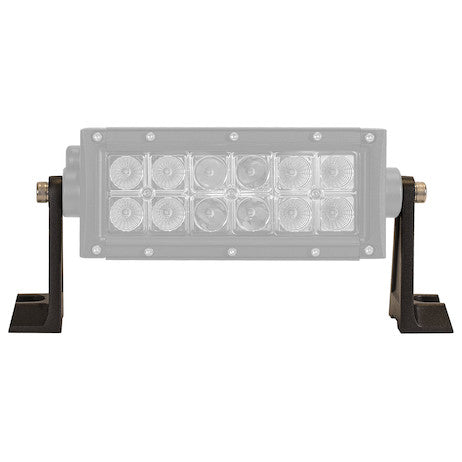
Side Mounting Legs for 1492160/1492170 Series Light Bars are sturdy and adjustable. Sold in pairs.
Specifications
| For Use With | 1492160 and 1492170 series light bars |
|---|---|
| Hardware Included (y/n) | Y |
| Material | Aluminum |
| Mount Position | Side |
Advanced Engineering and Performance of Side Mounting Legs for 1492160/1492170 Series Light Bars
The Side Mounting Legs for the 1492160/1492170 Series Light Bars represent a pinnacle of precision engineering, designed to provide a robust, reliable, and highly adaptable mounting solution for critical illumination systems. This accessory is not merely a bracket; it is a meticulously crafted component integral to the optimal performance and longevity of high-output light bars in demanding operational environments. Understanding the technical specifications and design philosophy behind these mounting legs is crucial for professionals seeking uncompromised stability and functionality for their vehicular or industrial lighting setups.
Precision-Engineered Compatibility: Tailored for 1492160 and 1492170 Series Light Bars
These side mounting legs are purpose-built for seamless integration with the 1492160 and 1492170 series light bars. This dedicated compatibility ensures that every design parameter, from bolt pattern and mounting channel dimensions to load bearing capabilities, is perfectly matched to the specific mechanical and structural characteristics of these high-performance light bars. Generic mounting solutions often introduce compromises in fit, stability, and vibration resistance, which can lead to premature failure, light bar damage, or diminished operational effectiveness. In contrast, the bespoke design of these legs guarantees an exact, vibration-free coupling, thereby maximizing the lifespan of both the mounting system and the light bar itself. This precision integration is fundamental to maintaining optimal light beam alignment, preventing fatigue fractures in the light bar housing, and ensuring consistent illumination performance under dynamic conditions. The specific interface geometry is engineered to distribute forces evenly across the light bar's mounting points, mitigating stress concentrations that could otherwise compromise the integrity of the light bar's enclosure or internal components.
Superior Material Selection: The Advantages of Aluminum Construction
At the core of these mounting legs' exceptional performance lies the strategic selection of high-grade aluminum as the primary construction material. Aluminum, particularly alloys optimized for structural applications, offers an unparalleled combination of properties critical for this application:
- High Strength-to-Weight Ratio: Aluminum provides significant structural rigidity and load-bearing capacity while maintaining a remarkably low mass. This characteristic is vital in vehicular applications where minimizing added weight contributes to fuel efficiency, maintains vehicle dynamics, and reduces overall stress on the mounting surface. The engineering balance achieved ensures the legs are robust enough to withstand significant dynamic loads without contributing excessively to the vehicle's unladen mass.
- Exceptional Corrosion Resistance: One of aluminum's most significant advantages is its inherent resistance to corrosion, especially when exposed to atmospheric conditions, moisture, road salts, and various industrial chemicals. This natural passivation layer, often enhanced by anodization or powder coating in industrial applications (though specific finish details are not provided, the base material offers superior protection), safeguards the mounting legs against rust and degradation, ensuring long-term aesthetic and structural integrity in harsh outdoor and marine environments.
- Durability and Fatigue Resistance: Modern aluminum alloys are engineered for high fatigue resistance, allowing them to endure millions of stress cycles without material degradation. This property is crucial for components subjected to constant vibration, shock, and thermal expansion/contraction cycles inherent in vehicular operations, ensuring the mounting legs retain their structural integrity over an extended operational life.
- Thermal Stability: Aluminum exhibits good thermal conductivity, which, while not directly impacting the light bar's heat dissipation in this application, reflects its stability across a wide range of operating temperatures. The material maintains its mechanical properties from sub-zero conditions to elevated temperatures encountered in engine bays or direct sunlight, preventing material embrittlement or softening that could compromise the mount's security.
- Machinability and Formability: Aluminum's excellent machinability allows for complex geometries and tight tolerances to be achieved during the manufacturing process, resulting in components with precise dimensions and smooth finishes. This precision is essential for ensuring accurate alignment and secure attachment of the light bar.
By leveraging these properties, the aluminum construction of these side mounting legs delivers a solution that is not only strong and reliable but also lightweight and exceptionally resistant to environmental degradation, making it ideal for the most demanding applications.
Dynamic Adjustability: Optimizing Light Bar Positioning
The inherent adjustability of these side mounting legs is a critical feature, providing installers with the flexibility required to achieve optimal light bar positioning and beam alignment. This adjustability typically manifests through precisely engineered slotted mounting points and/or pivot mechanisms. The ability to fine-tune the light bar's vertical, horizontal, and angular orientation offers several key benefits:
- Precise Beam Aiming: Different operational scenarios require varied illumination patterns. Adjustable mounts allow for precise aiming of the light bar's beam to maximize visibility in specific zones, whether it's long-range spot illumination, wide-angle flood lighting, or a combination. This capability is paramount for applications where precise light distribution directly impacts safety and operational efficiency.
- Accommodation of Vehicle Contours: Vehicles feature diverse body panels, rooflines, and bumper designs. Adjustable legs enable the light bar to be mounted effectively on a wider range of vehicles or specific mounting locations, compensating for slight variations in surface angles or clearances, ensuring a clean, professional installation without custom fabrication.
- Mitigation of Obstructions: In some installations, auxiliary equipment, vehicle components, or pre-existing structures might partially obstruct the light bar's output. Adjustability allows for minor repositioning to clear such obstructions, ensuring an unhindered light path and maximum lumen projection.
- Enhanced Aesthetics: Beyond functionality, precise adjustability contributes to the overall aesthetic integration of the light bar with the vehicle or structure. A perfectly aligned light bar not only performs better but also enhances the professional appearance of the installation.
The adjustment mechanism is designed for secure locking once the desired position is achieved, utilizing robust fasteners that resist loosening under vibration and dynamic loads, ensuring that the light bar maintains its set orientation over time.
Strategic Mount Position: Advantages of Side Mounting
The designation of "Side Mounting" is a deliberate design choice offering distinct advantages over other mounting methodologies, such as bottom or flush mounting:
- Enhanced Structural Support: Side mounting often allows for a more direct and robust connection to the light bar's main housing or end caps, distributing the load across a wider area of its primary structure. This method can offer superior resistance to torsional forces and vertical deflection compared to mounts that only engage a narrow bottom channel.
- Optimized Clearance and Integration: Side mounts can facilitate greater clearance above or below the light bar, making them ideal for installations where the light bar needs to be positioned within a specific recess, above a windshield, or integrated into an existing rack system without interfering with other components.
- Ease of Access for Adjustment and Maintenance: With side mounts, the mounting hardware and adjustment points are often more accessible from the front or sides of the light bar, simplifying installation, adjustment, and any future maintenance without requiring extensive disassembly.
- Aesthetic Flexibility: Side mounting can sometimes offer a cleaner, more integrated look, particularly when the light bar is recessed or designed to appear as an extension of the vehicle's existing lines.
The "side" orientation is carefully chosen to provide an optimal balance of structural integrity, installation flexibility, and aesthetic integration, enhancing the overall utility of the 1492160/1492170 series light bars.
Comprehensive Hardware Inclusion: Facilitating Seamless Installation
The inclusion of all necessary mounting hardware (Y) is a significant advantage, streamlining the installation process and ensuring that installers have access to components specifically selected for this application. This typically comprises:
- High-Tensile Bolts and Fasteners: Crafted from materials like stainless steel or zinc-plated steel, these fasteners are chosen for their superior strength, resistance to shear forces, and long-term corrosion resistance. They are designed to withstand the torque specifications required for secure mounting without stripping or fatigue.
- Lock Washers and Lock Nuts: Crucial for maintaining fastener integrity under vibration, lock washers (e.g., split-ring, external-tooth) and prevailing torque lock nuts prevent loosening over time, even in high-vibration environments common in vehicular applications. This ensures the light bar remains securely affixed, minimizing the risk of dislodgement or damage.
- Grommets or Spacers (if applicable): Depending on the specific design, these may be included to provide vibration dampening, protect mounting surfaces, or ensure proper spacing for optimal fit.
The provision of a complete hardware kit eliminates the need for installers to source individual components, guaranteeing compatibility and performance matched to the mounting legs and light bar specifications. This also reduces potential issues arising from using incorrect or subpar hardware, which could compromise the entire system's reliability and safety.
Operational Resilience and Longevity
The design and material selection of these side mounting legs prioritize exceptional operational resilience. They are engineered to endure:
- Vibration and Shock: Constant exposure to road vibration, sudden impacts, and off-road jostling necessitates a mounting solution that can absorb and distribute these forces without degrading. The robust aluminum construction and secure fastening system work in concert to minimize resonant frequencies and prevent material fatigue, safeguarding both the mount and the light bar.
- Environmental Extremes: From scorching deserts to freezing arctic conditions, and from torrential rain to heavy snowfall, these mounts are built to perform reliably. The corrosion-resistant aluminum ensures that environmental exposure does not lead to structural compromise.
- UV Radiation: Prolonged exposure to ultraviolet (UV) radiation can degrade many plastics and painted surfaces. While aluminum itself is UV-stable, any coatings applied are typically designed to resist UV degradation, preserving both the aesthetic and protective qualities of the mount.
- Chemical Exposure: The legs are resistant to common automotive fluids, cleaning agents, and road salts, ensuring their integrity is not compromised by regular vehicle maintenance or harsh road conditions.
Streamlined Installation Process and Maintenance Considerations
Despite their robust construction, the Side Mounting Legs are designed for a straightforward installation process. While specific instructions would accompany the product, a typical procedure involves:
- Preparation: Identifying the optimal mounting location on the vehicle or structure and ensuring the surface is clean and structurally sound.
- Attachment to Light Bar: Securely fastening the mounting legs to the designated points on the 1492160/1492170 series light bar using the provided hardware.
- Mounting to Surface: Aligning the light bar and legs with the intended mounting surface, marking pilot holes if necessary, and securely fastening the assembly using appropriate hardware (which may include drilling and sealing if mounting to a vehicle body, adhering to manufacturer guidelines).
- Adjustment and Final Tightening: Utilizing the adjustability features to achieve the desired light bar angle and orientation, followed by torquing all fasteners to the manufacturer's specified values to ensure maximum security and vibration resistance.
Maintenance for these aluminum mounting legs is minimal, primarily involving periodic inspection of fasteners for tightness and visual checks for any signs of wear or damage. Cleaning can be performed with mild soap and water to remove dirt and debris, maintaining the integrity of the material and any protective finishes.
Conclusion: An Indispensable Component for High-Performance Illumination
The Side Mounting Legs for 1492160/1492170 Series Light Bars are far more than simple accessories; they are a critical investment in the reliability, performance, and longevity of your light bar system. Their technical superiority, derived from precision engineering, high-grade aluminum construction, dynamic adjustability, and strategic side mounting position, ensures unparalleled stability, environmental resistance, and ease of installation. By providing a secure, vibration-resistant, and finely adjustable platform, these mounting legs enable the 1492160 and 1492170 series light bars to deliver their full potential, offering optimal illumination in the most challenging conditions. For professionals who demand uncompromising quality and performance from their lighting solutions, these side mounting legs are an indispensable component, guaranteeing that your high-performance light bar remains precisely where it's needed, illuminating the path ahead with unwavering reliability.