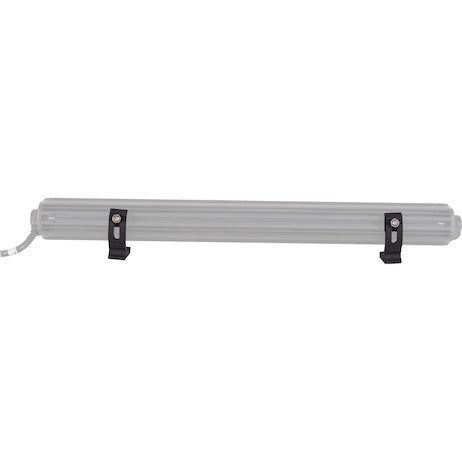
Rear Mount Mounting Legs for 1492180 Series Light Bars are sturdy and adjustable. Sold in pairs.
Specifications
| For Use With | 1492180 series light bars |
|---|---|
| Hardware Included (y/n) | Y |
| Material | Aluminum |
| Mount Position | Rear |
Precision-Engineered Rear Mount Mounting Legs for 1492180 Series Light Bars: A Technical Deep Dive
In the demanding environments where visibility and signaling are paramount, the reliability of ancillary equipment is as crucial as the primary device itself. The Rear Mount Mounting Legs, specifically designed for the 1492180 Series Light Bars, embody this principle through meticulous engineering and robust material selection. These mounting legs are not merely support structures; they are integral components designed to ensure the optimal performance, longevity, and secure deployment of high-value light bar systems across a diverse range of applications. Sold in pairs, this offering provides a complete, balanced, and secure mounting solution, reflecting a commitment to comprehensive system integrity.
System Integration and Purpose-Built Design
The primary function of these mounting legs is to provide a steadfast mechanical interface between the 1492180 Series Light Bar and the host vehicle or mounting surface. Their design is a direct response to the specific structural and operational requirements of this particular light bar series. This precision compatibility ensures that the light bar’s weight distribution, aerodynamic profile, and vibration characteristics are optimally managed. Generic mounting solutions often introduce compromises, leading to issues such as increased vibration, premature wear, or even structural failure. By contrast, these rear mount legs are purpose-built, guaranteeing a seamless fit that leverages the full potential of the light bar's performance envelope.
The ‘rear mount’ designation signifies a deliberate choice in installation methodology. This configuration often offers specific advantages, including a potentially lower overall profile, reduced exposure to frontal impacts or debris for the mounting hardware itself, and sometimes a more aesthetically integrated appearance depending on the vehicle’s design. From an engineering perspective, rear mounting can simplify cable management and provide a more stable platform by leveraging structural points closer to the vehicle’s center of mass or chassis elements, minimizing cantilevered forces that can induce unwanted oscillations in dynamic environments.
Advanced Material Science: The Advantage of Aluminum
The selection of aluminum as the primary construction material for these mounting legs is a critical engineering decision driven by a precise balance of mechanical properties and environmental resilience. Aluminum offers a suite of advantages that are indispensable for high-performance automotive and industrial applications:
- Exceptional Strength-to-Weight Ratio: Aluminum alloys provide significant structural strength while being considerably lighter than steel counterparts. This weight reduction is crucial in vehicular applications, contributing to overall fuel efficiency, reduced strain on vehicle suspension components, and minimized impact on vehicle handling dynamics. For a light bar, lighter mounting hardware reduces the overall mass at an elevated position, which is beneficial for maintaining a lower center of gravity and reducing inertial forces during vehicle movement.
- Superior Corrosion Resistance: One of aluminum's most significant advantages is its inherent resistance to corrosion, particularly oxidation. When exposed to air, aluminum naturally forms a thin, dense layer of aluminum oxide that acts as a protective barrier, preventing further corrosion. This characteristic is vital for components exposed to the elements, including rain, snow, road salt, industrial pollutants, and UV radiation. The use of aluminum ensures long-term structural integrity and maintains aesthetic appeal without the constant need for extensive maintenance. While not explicitly stated, it is common for such components to undergo further surface treatments like anodization, which enhances the natural oxide layer, increasing hardness, scratch resistance, and even allowing for aesthetic coloring while providing additional protection against environmental degradation.
- Durability and Fatigue Resistance: Modern aluminum alloys are engineered to withstand repetitive stress cycles and dynamic loads, making them highly resistant to fatigue failure. In the context of vehicle-mounted equipment, the mounting legs are subjected to continuous vibration, shock loads from uneven terrain, and aerodynamic forces. The robust aluminum construction ensures that these legs maintain their structural integrity over the lifespan of the vehicle and the light bar, preventing cracks or deformation that could compromise safety and performance.
- Thermal Conductivity: While not a primary function, aluminum's excellent thermal conductivity can contribute to the overall thermal management of the system by dissipating any localized heat build-up that might occur, although this is more relevant for the light bar itself than the mounting legs.
The specific grade of aluminum used is meticulously chosen to meet the application's rigorous demands. Often, alloys such as 6061-T6 are employed, known for their excellent combination of strength, weldability, and corrosion resistance, ensuring that the mounting legs perform reliably under the most challenging operational conditions.
Structural Integrity: The "Sturdy" Design Philosophy
The description "sturdy" is an understatement for the meticulous engineering principles applied to these mounting legs. A sturdy design in this context implies:
- Optimized Geometric Configuration: The cross-sectional profiles and overall dimensions of the legs are not arbitrary. They are calculated to provide maximum resistance to bending, twisting, and shear forces. This often involves employing specific wall thicknesses, internal ribbing, or strategic material distribution to reinforce critical stress points. Finite Element Analysis (FEA) is typically used in the design phase to simulate various load conditions, ensuring the structure can safely withstand static weight, dynamic accelerations, braking forces, and impact loads without yielding or fatiguing.
- Load Distribution: The design ensures that the forces generated by the light bar and external factors are efficiently distributed across the mounting legs and transferred effectively to the vehicle's mounting points. This prevents localized stress concentrations that could lead to premature failure of either the legs or the vehicle's attachment structure.
- Vibration Dampening Characteristics: While aluminum is rigid, the overall design and choice of attachment hardware (discussed below) contribute to minimizing resonant frequencies and dampening vibrations. Excessive vibration can lead to fasteners loosening, accelerated wear on the light bar's internal components, and compromised beam stability, especially critical for warning or scene lights. The inherent rigidity and mass of the aluminum legs, combined with precision manufacturing, work to mitigate these issues.
- Impact Resistance: In environments where minor impacts or accidental brushes can occur, the sturdy design provides a degree of protection, ensuring the legs do not easily deform or fail, thereby safeguarding the light bar from potential damage.
The Precision of Adjustability
The inclusion of "adjustable" as a key feature highlights a critical functional aspect, offering significant benefits for installation and optimization. Adjustability in mounting legs serves multiple engineering and practical purposes:
- Optimal Light Beam Alignment: The primary benefit is the ability to precisely angle the light bar to achieve the desired beam pattern and coverage area. Whether it's for forward illumination, wide-angle scene lighting, or specific warning light visibility, fine-tuning the tilt and sometimes the rotation ensures maximum effectiveness of the light bar. This is particularly important for vehicles that operate on varied terrains or perform diverse tasks where a fixed angle might be suboptimal.
- Accommodation of Vehicle Variations: Even within the same vehicle model, minor manufacturing tolerances or aftermarket modifications can create slight variations in mounting surfaces. Adjustable legs provide the flexibility to compensate for these discrepancies, ensuring a perfectly level and secure installation without the need for shims or custom fabrication.
- Ease of Installation: By allowing for minor positional corrections during installation, adjustable legs significantly streamline the mounting process, reducing installation time and the potential for errors. This translates to reduced labor costs and faster deployment of vehicles.
- Customization for Specific Applications: Different operational scenarios may require different light bar angles. For instance, a light bar used for off-roading might need to be tilted slightly upwards to illuminate distant terrain, while one used for roadside assistance might benefit from a flatter angle to maximize ground coverage. Adjustability allows for this versatility.
- Secure Locking Mechanism: For the adjustability to be practical and reliable, the adjusted position must be securely locked into place. This is typically achieved through robust fastening systems, such as serrated interfaces, high-strength bolts, or precision-machined slots that, once tightened, create a friction lock capable of withstanding significant operational forces without slipping. The integrity of this locking mechanism is paramount to maintaining the light bar's desired orientation over extended periods of use.
Comprehensive Hardware Inclusion for Seamless Installation
The explicit mention that "Hardware Included (y/n): Y" is a testament to a complete product offering. This seemingly minor detail carries significant implications for professional installers and end-users:
- Guaranteed Compatibility: The included hardware is specifically selected to be compatible with both the mounting legs and the 1492180 Series Light Bar. This eliminates guesswork regarding bolt sizes, thread pitches, and material grades, ensuring a perfect match for optimal mechanical fastening.
- Optimized Performance: Fasteners are not generic components. The included hardware will be of an appropriate grade (e.g., Grade 8 for high strength applications) and material (e.g., stainless steel for corrosion resistance) to match the performance requirements of the mounting legs and the light bar. This ensures the entire assembly can withstand the specified loads and environmental conditions without premature failure. Locking mechanisms, such as lock washers or nylon-insert nuts, are typically included to prevent loosening due to vibration, a common issue in vehicle-mounted applications.
- Simplified Procurement and Installation: Having all necessary components supplied together streamlines the procurement process and simplifies installation. There is no need for separate sourcing of fasteners, reducing potential delays and ensuring that the correct, high-quality hardware is always used.
- Manufacturer-Recommended System: By providing the hardware, the manufacturer endorses a specific installation methodology, ensuring that the light bar and mounting legs perform as intended when installed with the recommended components.
Installation Best Practices and Maintenance Considerations
While the mounting legs are designed for robustness, proper installation is paramount to achieving their full potential and ensuring the long-term reliability of the light bar system. Key considerations include:
- Surface Preparation: Ensure the vehicle's mounting surface is clean, flat, and free from debris or corrosion. If drilling is required, use appropriate tools and techniques to prevent damage to the vehicle's structure or finishes.
- Torque Specifications: Adhere strictly to any provided torque specifications for all fasteners. Over-tightening can strip threads, deform components, or induce stress concentrations, while under-tightening can lead to loosening, vibration, and eventual failure. A calibrated torque wrench is an indispensable tool for this process.
- Thread Locking Compounds: Depending on the application and vibration levels, the use of thread-locking compounds (e.g., Loctite) on critical fasteners may be recommended to further enhance resistance to vibrational loosening.
- Cable Management: Plan for secure and neat routing of the light bar's power and control cables to prevent chafing, pinching, or snagging, which could compromise electrical integrity.
- Periodic Inspection: Regular inspection of the mounting legs and all fasteners is recommended. Check for any signs of loosening, corrosion, fatigue cracks, or damage. Re-torque fasteners as necessary and replace any compromised components promptly to prevent more significant issues.
Performance Assurance and Application Versatility
These Rear Mount Mounting Legs are engineered for environments where failure is not an option. Their robust construction and specific design for the 1492180 Series Light Bars translate directly into enhanced operational performance:
- Enhanced Safety: A securely mounted light bar maintains its position and functionality, ensuring critical warning signals or illumination are always optimally deployed. This is vital for emergency services, construction, and utility vehicles where reliable lighting directly impacts personnel and public safety.
- Extended Equipment Lifespan: By minimizing vibration and providing stable support, the mounting legs reduce mechanical stress on the light bar itself, potentially extending the lifespan of its internal electronics, LEDs, and optical components.
- Operational Continuity: Reliable mounting means less downtime for repairs or adjustments, ensuring vehicles remain operational and effective in their critical roles.
-
Broad Application Spectrum: These legs are suitable for a wide array of demanding applications, including but not limited to:
- Emergency Vehicles: Police, Fire, EMS for secure overhead warning light deployment.
- Utility and Service Trucks: Providing stable platforms for work area illumination or warning signals.
- Construction and Mining Equipment: Withstanding harsh vibrations and impacts in heavy-duty environments.
- Off-Road and Recreational Vehicles: Ensuring auxiliary lighting remains secure during challenging terrain navigation.
- Commercial Fleet Vehicles: Enhancing visibility and safety for transportation and delivery services.
Conclusion: An Investment in Reliability and Performance
The Rear Mount Mounting Legs for 1492180 Series Light Bars represent a thoughtful fusion of advanced material science, precision engineering, and practical design. Their aluminum construction offers an optimal balance of strength, lightweight properties, and unparalleled corrosion resistance, essential for longevity in harsh operational conditions. The "sturdy" and "adjustable" attributes are underpinned by detailed engineering considerations that ensure both steadfast support and precise alignment capabilities, respectively. Coupled with the convenience and assurance of included, compatible hardware, these mounting legs provide a comprehensive, high-performance solution that protects your investment in the 1492180 Series Light Bars.
Choosing these purpose-built mounting legs is not just acquiring a component; it is an investment in the reliability, safety, and operational efficiency of your entire vehicle lighting system. They are meticulously designed to deliver consistent, dependable performance, allowing the 1492180 Series Light Bar to function at its peak, irrespective of the environmental or operational challenges encountered.