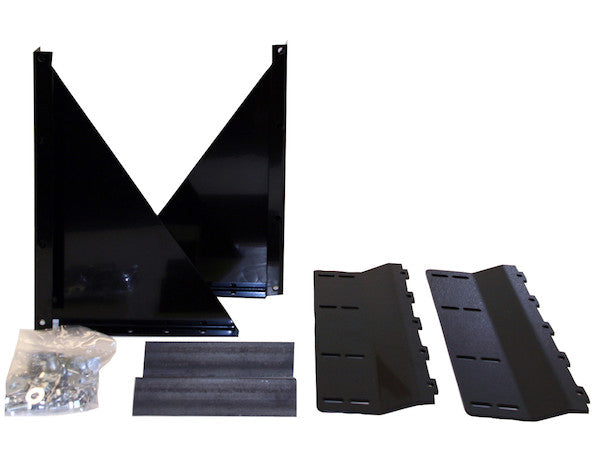
Buyers Products LiftDogg???Mounts are make/model specific.
Specifications
| Application Specific (Y/N) | Yes |
|---|---|
| Application Summary | Ford F-250 HD & F-350 HD 1997/Ford F-150, F-250 & F-350 1973-1996 |
| Color | Black |
| Finish | Powder-Coat |
| Height | 17.740 |
| Length | 15.000 |
| Material | Carbon Steel |
| Platform Length | - |
| Platform Width | - |
| Vehicle Type | Domestic Pickup Trucks |
Technical Overview: LiftDogg™ Lift Gate Mounting Systems for Ford F-Series Trucks (1973-1997)
The integration of a hydraulic lift gate onto a commercial or heavy-duty pickup truck significantly enhances its utility, transforming a standard cargo vehicle into a robust material handling platform. This functionality is contingent upon the secure and structurally sound attachment of the lift gate mechanism to the vehicle's chassis. The LiftDogg™ Lift Gate Mounts by Buyers Products are engineered specifically to provide this critical interface for a wide range of Ford F-Series pickup trucks manufactured between 1973 and 1997, encompassing models such as the F-150, F-250, F-350, and their Heavy Duty (HD) variants.
Application-Specific Engineering for Optimal Integration
The cornerstone of the LiftDogg™ mounting system's efficacy lies in its application-specific design. Unlike universal mounting kits that require extensive modifications, custom fabrication, or compromise on structural integrity, these mounts are meticulously engineered to align with the distinct frame geometries and attachment points of specific Ford F-Series model years. This 'make/model specific' approach ensures an optimal fit, facilitating a direct, bolt-on installation that preserves the structural integrity of both the truck's frame and the lift gate assembly.
The engineering philosophy behind application-specific mounts is rooted in several critical considerations:
- Precision Fitment: Each mount is designed with precise dimensions (Height: 17.740 inches, Length: 15.000 inches) to perfectly match the chassis contours and pre-existing mounting locations of the designated Ford F-Series trucks. This eliminates the need for drilling new holes in critical frame members, which could weaken the chassis or void vehicle warranties.
- Optimized Load Distribution: By utilizing factory-designed load paths, the LiftDogg™ mounts distribute the dynamic and static loads imposed by the lift gate and its cargo efficiently across the vehicle's frame. This prevents localized stress concentrations that could lead to frame fatigue, distortion, or premature failure, ensuring the long-term structural health of the truck.
- Enhanced Safety and Reliability: A secure and properly integrated mounting system is paramount for the safe operation of any lift gate. The application-specific design minimizes potential points of failure, ensuring that the lift gate operates reliably under its rated load capacity, reducing risks associated with movement, vibration, or structural compromise during operation or transit.
- Streamlined Installation: The pre-engineered nature of these mounts significantly reduces installation time and complexity. Professional installers can achieve a proper, secure installation more efficiently, which translates into reduced labor costs and faster vehicle deployment for end-users.
- Compatibility Assurance: Specificity guarantees compatibility, eliminating guesswork and potential ordering errors. Users can be confident that the purchased mounts are indeed designed for their particular Ford F-Series truck within the specified model years.
Robust Material Selection: Carbon Steel for Unyielding Strength
The selection of material is a critical determinant of a component's durability, strength, and resistance to operational stresses. LiftDogg™ Lift Gate Mounts are fabricated from high-grade carbon steel, a material renowned for its exceptional mechanical properties and cost-effectiveness in demanding applications. Carbon steel offers an optimal balance of tensile strength, yield strength, and ductility, making it an ideal choice for components subjected to significant static and dynamic loads, as well as vibrational forces inherent in truck operation.
Key properties and benefits of using carbon steel in this application include:
- High Tensile Strength: Carbon steel possesses a high resistance to being pulled apart, a crucial characteristic for components that anchor heavy lift gates and their payloads. This ensures the mounts can withstand the forces exerted during lifting, lowering, and transport without deformation or fracture.
- Excellent Yield Strength: This property defines the maximum stress a material can withstand before permanent deformation occurs. For lift gate mounts, a high yield strength is essential to prevent bending or warping under the heavy loads of a lift gate, ensuring it maintains its structural integrity and alignment over time.
- Fatigue Resistance: Truck-mounted components are constantly exposed to vibrations and cyclical loading. Carbon steel's inherent fatigue resistance helps it endure countless cycles of stress and release without developing cracks or weakening, contributing to the long service life of the mounts.
- Weldability: Carbon steel is highly amenable to various welding processes, which is crucial for fabricating complex structural components like these mounts. The ability to form strong, reliable welds ensures the integrity of the overall assembly.
- Impact Resistance: In the event of minor impacts or sudden shifts in cargo, carbon steel can absorb energy and resist brittle fracture, providing an additional layer of robustness.
Advanced Surface Protection: Powder-Coat Finish for Longevity
To ensure the extended operational life and aesthetic preservation of the carbon steel mounts, each LiftDogg™ unit is treated with a durable powder-coat finish in black. Powder coating represents a superior alternative to traditional liquid painting, offering enhanced protection against environmental degradation, mechanical abrasion, and chemical exposure.
The powder coating process involves:
- Pre-treatment: The carbon steel components undergo thorough cleaning and pre-treatment, often involving phosphating or chromating, to remove contaminants and create an optimal surface for adhesion.
- Electrostatic Application: Finely ground particles of pigment and resin are electrostatically charged and sprayed onto the electrically grounded mounts. The electrostatic charge ensures that the powder particles adhere evenly to all surfaces, including complex geometries.
- Curing: The coated components are then placed in a curing oven, where the powder melts, flows out, and forms a uniform, solid skin. The heat initiates a chemical cross-linking reaction within the powder, creating a highly durable and resistant finish.
The benefits of a powder-coat finish are significant:
- Superior Corrosion Resistance: The dense, continuous film formed by powder coating provides an excellent barrier against moisture, oxygen, and corrosive agents such as road salts, chemicals, and industrial pollutants, which are common in environments where commercial trucks operate. This significantly mitigates rust and other forms of corrosion.
- Enhanced Abrasion and Impact Resistance: Powder-coated surfaces are notably more resistant to scratches, chips, and general wear and tear compared to liquid paints. This durability is critical for components that might experience incidental contact or exposure to road debris.
- UV Stability: The finish is formulated to resist fading and degradation from ultraviolet (UV) radiation, ensuring the black color remains consistent and the protective qualities are maintained over years of outdoor exposure.
- Environmental Friendliness: Powder coating processes typically emit zero or near-zero volatile organic compounds (VOCs), making them a more environmentally responsible finishing option.
- Aesthetic Appeal: The uniform, smooth black finish provides a professional and integrated appearance that complements the vehicle's existing components.
Extensive Compatibility: Ford F-Series Generations (1973-1997)
The LiftDogg™ mounts are specifically designed to cater to a broad spectrum of Ford F-Series trucks, spanning over two decades of production. This period encompasses several distinct generations of Ford's iconic pickup line, each with specific frame designs and chassis configurations. The application summary specifies compatibility with:
- Ford F-150, F-250 & F-350 from 1973-1996
- Ford F-250 HD & F-350 HD from 1997
To provide a deeper context, this period covers significant evolution in Ford F-Series design:
- Sixth Generation (1973-1979): Known for their robust "dentside" styling and durable frame-on-body construction, these trucks established Ford's reputation for ruggedness. The LiftDogg™ mounts are engineered to integrate with the sturdy ladder frames characteristic of this era, accommodating the chassis changes across various wheelbase and cab configurations.
- Seventh Generation (1980-1986): This generation introduced a more aerodynamic design and improved suspension systems, though still retaining a heavy-duty frame foundation. The mounts ensure seamless integration with the chassis modifications and varying frame widths that might have been introduced during this period.
- Eighth Generation (1987-1991): Characterized by updated styling and further refinements in powertrain and chassis technology, these trucks continued to rely on a robust frame. LiftDogg™ mounts account for any subtle changes in frame geometry or attachment points in these models.
- Ninth Generation (1992-1997): The final iteration before the radical redesign of 1997 for the F-150. This generation maintained the traditional body-on-frame architecture for its heavy-duty variants. Specifically, the F-250 HD and F-350 HD models of 1997 are included, acknowledging their distinct frame characteristics compared to the redesigned F-150 of the same year. The distinction for "HD" models in 1997 is crucial, as the F-150 underwent a significant platform change while the F-250/F-350 (often referred to as the "heavy-duty" or "old body style" trucks) continued on the ninth-generation platform for that year before the introduction of the Super Duty line.
The meticulous engineering for each of these generations, including the nuances between standard and Heavy Duty models, underscores the commitment to precision fitment and maximum performance across the designated vehicle types: Domestic Pickup Trucks. This broad compatibility within a specific historical range ensures that owners of these classic yet highly functional work trucks can equip them with modern lift gate capabilities, extending their operational lifespan and utility.
Structural Dimensions and Functional Role
The stated dimensions of Height (17.740 inches) and Length (15.000 inches) are indicative of the structural footprint and leverage arms engineered into the mounts. These dimensions are not arbitrary; they are optimized to:
- Provide Adequate Clearance: Ensure the lift gate mechanism clears existing vehicle components (e.g., fuel tank, exhaust system, spare tire carrier) while maintaining proper ground clearance.
- Facilitate Mechanical Advantage: The length and height contribute to the mechanical advantage required to securely transmit the forces from the lift gate to the chassis, minimizing stress points.
- Maintain Vehicle Dynamics: By positioning the lift gate in an optimal location, the mounts help maintain the vehicle's center of gravity and overall stability, which is especially important when operating with heavy loads.
The absence of specified "Platform Length" and "Platform Width" indicates that these mounts are integral frame-to-gate attachment points rather than a flat platform on which the lift gate rests. They are the critical connection components that provide the rigid interface between the vehicle's chassis and the lift gate's primary structural members.
Operational Enhancement and Investment Value
By providing a robust and precisely engineered foundation for lift gate installation, LiftDogg™ mounts significantly enhance the operational capabilities of Ford F-Series trucks. This transformation enables businesses and individuals to:
- Improve Efficiency: Expedite the loading and unloading of heavy, bulky, or numerous items, reducing manual labor and turnaround times.
- Increase Safety: Minimize the risk of injuries associated with manual lifting and handling of heavy cargo.
- Expand Service Offerings: Companies in delivery, construction, landscaping, and other service industries can handle a wider range of goods and equipment, thereby expanding their market reach.
- Extend Vehicle Utility: These mounts breathe new life into older, well-maintained Ford F-Series trucks, allowing them to perform tasks typically reserved for newer, more expensive vehicles, thus maximizing the return on investment in the vehicle itself.
The investment in LiftDogg™ Lift Gate Mounts is an investment in durability, operational efficiency, and long-term reliability. Their application-specific design, superior carbon steel construction, and resilient powder-coat finish collectively ensure that these mounts will provide a secure and stable foundation for heavy-duty lift gate operations for years to come, upholding the rigorous standards expected in commercial and industrial applications.
In conclusion, the LiftDogg™ Lift Gate Mounts for Ford F-Series models (1973-1997) represent a meticulously engineered solution for integrating hydraulic lift gates. Their design reflects a deep understanding of vehicle mechanics, material science, and the demanding operational environments of domestic pickup trucks. By focusing on application-specific fitment, robust material selection, and advanced protective finishes, these mounts deliver unparalleled structural integrity, ease of installation, and long-term value, empowering users to leverage their Ford F-Series trucks for enhanced material handling capabilities.