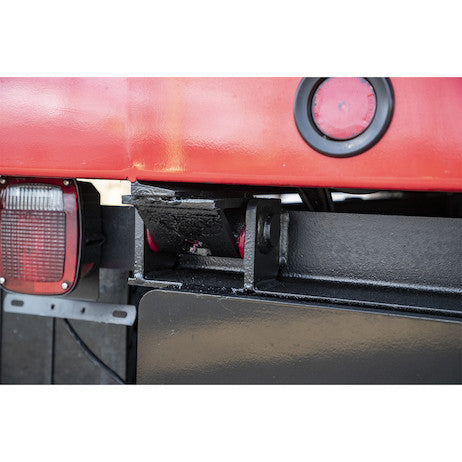
The Rear Dump Hinge keeps your dump body aligned with the truck frame rails as the hoist raises and lowers the dump body. Commonly used by OEM fabricators, TEDs, and weld shops to replace corroded, worn-out hinges on old dumps or when manufacturing new dump trucks and trailers. The hinge typically gets welded to a structural steel angle at the back of the dump truck or trailer frame, one on each side. The bracket side of the hinge faces forward towards the front of the dump, and the swing bracket side of the hinge faces the back. The longitudinal dump frame rails get welded to the top of the swing bracket, thus keeping the body aligned with the truck frame. 1/4" A36 carbon steel construction.
Specifications
| "L" Pin Finish | - |
|---|---|
| Bracket Finish | Plain |
| Cotter Pin Diameter | - |
| Grease Fitting | Yes |
| Height (in.) | 3.50 |
| Length (in.) | 5.50 |
| Lower Hinge Assembly | - |
| Pin Diameter (in.) | 1 |
| Pin Length | 5 |
| Use With | - |
| Width (in.) | 5.31 |
Advanced Engineering and Application of the Rear Dump Hinge
The Rear Dump Hinge represents a critical mechanical interface in the operation of dump trucks and trailers, acting as the primary pivot point for the dump body. Its design and robust construction are paramount to ensuring the safe, efficient, and extended service life of heavy-duty material handling equipment. This component is not merely a connection point but an engineered system designed to manage substantial dynamic loads, facilitate precise kinematic motion, and withstand the harshest environmental and operational stresses inherent in the construction, mining, agriculture, and waste management industries. The fundamental role of this hinge is to maintain stringent alignment between the dump body and the truck's chassis rails throughout the entire cycle of elevation and lowering, a crucial factor for preventing structural distortion, minimizing wear on hydraulic components, and ensuring predictable material discharge.
Precision Kinematics and Load Management
The intricate mechanics of a dump body hinge involve complex load management. As the hoist mechanism lifts the dump body, significant shear, tensile, and compressive forces are exerted on the hinge components. The specified 1-inch diameter pin, crafted for optimal shear strength, acts as the central pivot, distributing these forces effectively across the hinge brackets. The design ensures that the rotational axis remains stable and true, which is vital for preventing binding or uneven wear across the pivot points. Misalignment, even minor, can lead to exacerbated wear on the pivot pin and bushings (if present, though the direct metal-on-metal contact of plain hinges is common for durability), premature failure of hydraulic cylinders, and torsional stresses on the truck frame and dump body substructure. By facilitating precise kinematic alignment, the Rear Dump Hinge contributes directly to the operational longevity and structural integrity of the entire vehicle system.
Material Science: The Strength of A36 Carbon Steel
The selection of 1/4-inch A36 carbon steel for the construction of this Rear Dump Hinge is a deliberate engineering choice, balancing strength, weldability, and cost-effectiveness. A36 is a widely recognized structural steel, characterized by its excellent mechanical properties suitable for demanding applications. It possesses a minimum yield strength of 36,000 psi (250 MPa) and a tensile strength ranging from 58,000 to 80,000 psi (400 to 550 MPa). These properties ensure that the hinge can competently resist the significant static and dynamic loads encountered during operation, including the weight of the dump body, the payload, and the forces generated by the hydraulic hoist. The 1/4-inch thickness provides ample cross-sectional area to manage stress concentrations effectively, mitigating the risk of localized deformation or fracture under peak loads. Furthermore, A36 steel exhibits excellent weldability, a critical factor for components that are intended to be permanently integrated into structural frames. Its low carbon content allows for straightforward welding procedures using common methods such such as Shielded Metal Arc Welding (SMAW), Gas Metal Arc Welding (GMAW), or Flux-Cored Arc Welding (FCAW) without requiring extensive pre-heating or post-weld heat treatment in most typical fabrication scenarios. This ease of fabrication is highly valued by OEM fabricators, custom truck builders (TEDs), and repair weld shops, streamlining production and maintenance processes while ensuring robust, lasting connections.
Optimized Design for Robust Integration
The physical dimensions of the hinge, including its 3.50-inch height, 5.50-inch length, and 5.31-inch width, are engineered to provide a substantial mounting footprint and structural rigidity. These dimensions ensure that the hinge can be securely welded to a robust structural steel angle at the rear of the truck or trailer frame, providing a stable and immovable base. The deliberate orientation, with the fixed bracket facing forward and the swing bracket facing rearward, is fundamental to its functional geometry. The longitudinal dump frame rails are designed to be welded directly to the top of the swing bracket. This configuration ensures that as the dump body pivots, its structural rails remain in perfect alignment with the main chassis, preventing lateral shift or binding. This precise alignment minimizes wear on other critical components, such as the hydraulic cylinder linkages and the main truck frame, enhancing overall system reliability and reducing maintenance overhead. The plain finish of the bracket is intentional, allowing for optimal metal-to-metal fusion during welding. A plain, un-coated surface facilitates superior penetration and adhesion for various welding processes, ensuring the strongest possible bond between the hinge and the vehicle's structural elements. Post-fabrication, the entire assembly can be treated with appropriate primers and topcoats to provide corrosion protection tailored to the specific operational environment and customer requirements, offering flexibility in finishing while prioritizing structural integrity.
The Imperative of Lubrication: Grease Fitting Integration
A critical feature for the long-term performance and maintenance of this Rear Dump Hinge is the inclusion of a grease fitting. This seemingly small detail has significant engineering implications for wear prevention and operational efficiency. The constant rotational movement of the 1-inch diameter pin within its housing creates friction, which if unchecked, leads to wear, heat generation, and eventually component failure. The grease fitting provides a convenient and effective means to introduce lubrication into the critical bearing surfaces of the hinge. Proper lubrication creates a protective film between the pin and the bracket, significantly reducing the coefficient of friction, minimizing metal-to-metal contact, and preventing galling and abrasive wear. Regular application of suitable grease, typically a heavy-duty lithium complex or calcium sulfonate-based grease with extreme pressure (EP) additives, is essential. This not only extends the life of the pin and hinge body but also ensures smoother operation, reduces operational noise, and minimizes the power required from the hydraulic system to actuate the dump body. Establishing a routine preventative maintenance schedule for greasing these pivot points is a foundational practice for operators seeking to maximize equipment uptime and minimize repair costs. The presence of a dedicated grease fitting underscores the product's design commitment to maintainability and prolonged operational efficacy in demanding environments.
Applications and Versatility Across Industries
The robust design and universal adaptability of this Rear Dump Hinge make it an indispensable component across a broad spectrum of heavy-duty applications. Its primary market includes Original Equipment Manufacturers (OEMs) who integrate these hinges into their new production dump trucks and trailers, valuing the component's reliability, consistent quality, and ease of integration into their fabrication processes. Trailer and Equipment Dealers (TEDs) utilize these hinges for custom builds, modifications, and significant repair projects where standard components may be insufficient or unavailable. Independent weld shops and fleet maintenance operations are also key beneficiaries, using these hinges for critical repairs to replace corroded, worn, or damaged hinge assemblies on existing equipment, restoring functionality and safety to aging fleets. Furthermore, in the realm of new construction or specialized vehicle fabrication, the hinge provides a robust foundation for building custom dump bodies, agricultural trailers, refuse vehicles, or other applications requiring a heavy-duty pivoting mechanism. Its weld-on design offers significant flexibility for fabricators to customize the mounting structure to suit various chassis designs and body configurations, ensuring a secure and durable attachment irrespective of the specific vehicle architecture.
Durability, Safety, and Regulatory Considerations
The inherent durability of the 1/4-inch A36 carbon steel construction is central to the safety profile of the dump mechanism. A failure in the rear hinge system during operation, especially when the dump body is elevated and loaded, can lead to catastrophic consequences, including structural collapse, equipment damage, serious injury, or even fatalities. The robust design of this hinge, engineered to withstand the specified loads and environmental conditions, plays a crucial role in preventing such failures. Adherence to industry best practices for material selection, fabrication, and installation is paramount. While this product is a component, its proper integration contributes significantly to compliance with various safety standards and regulations governing commercial vehicle operation and heavy equipment, such as those related to load securement and operational stability. Regular inspection of the hinge for signs of wear, deformation, or corrosion, coupled with timely lubrication, ensures that the safety margins designed into the component are maintained throughout its operational life. The ability to replace a worn hinge with a high-quality, readily available component like this one is vital for maintaining fleet readiness and regulatory compliance.
Detailed Technical Specifications Explained
Each specification item for the Rear Dump Hinge is meticulously defined to provide fabricators, engineers, and maintenance personnel with the precise data required for integration and longevity planning:
-
Bracket Finish: Plain
As previously elaborated, the plain finish is a strategic choice. It means the steel bracket is provided without any surface coating (e.g., paint, galvanization). This unadulterated surface is ideal for welding applications, ensuring direct metal-to-metal contact and optimal penetration for the weld bead. This facilitates the strongest possible structural bond. Once welded, the entire assembly can be prepped and coated (e.g., primer, paint, powder coat) according to the vehicle's overall protective scheme and aesthetic requirements, offering maximum flexibility for the end-user. -
Grease Fitting: Yes
The inclusion of a grease fitting signifies a commitment to component longevity and ease of maintenance. This zerk fitting allows for the periodic injection of lubricant into the pivot mechanism, significantly reducing friction, heat buildup, and wear between the pin and its bushings/housing. Regular lubrication prevents galling, extends the lifespan of the hinge, and ensures smooth, consistent operation of the dump body, reducing strain on the hydraulic system and prolonging overall equipment life. -
Height (in.): 3.50
This dimension refers to the vertical extent of the hinge assembly when installed. A height of 3.50 inches contributes to the structural rigidity of the hinge, providing sufficient leverage and surface area for effective load distribution when welded to the support structure. It also influences the overall profile of the dump body's pivot point, which is critical for clearance and articulation angles during the dumping cycle. -
Length (in.): 5.50
The 5.50-inch length provides a substantial horizontal footprint for robust attachment to the structural steel angle of the truck or trailer frame. This extended length enhances the stability of the welded connection, distributing static and dynamic stresses over a larger area, thereby minimizing localized stress concentrations and improving the fatigue life of the joint. -
Width (in.): 5.31
The width dimension of 5.31 inches defines the overall lateral span of the hinge assembly. This measurement is crucial for ensuring proper spacing and alignment with the longitudinal dump frame rails. The generous width contributes to the hinge's ability to resist torsional loads and lateral forces, maintaining the dump body's alignment and preventing excessive side-to-side play during operation. -
Pin Diameter (in.): 1
The 1-inch pin diameter is a critical specification dictating the hinge's load-bearing capacity and resistance to shear forces. A larger diameter pin offers greater shear strength and rigidity, making it suitable for heavy-duty applications where significant loads are anticipated. This robust pin diameter ensures a secure pivot point, capable of withstanding the immense weight and dynamic forces associated with fully loaded dump bodies. -
Pin Length: 5
The 5-inch pin length is engineered to provide sufficient engagement within both hinge brackets, ensuring full support across the pivot point. This length accounts for the thickness of the hinge components and often includes sufficient extension for retaining mechanisms like cotter pins or snap rings (though specific retaining hardware is not detailed here, standard practices would apply). Adequate pin length prevents excessive lateral movement of the hinge components, maintains alignment, and ensures maximum load transfer capability.
These detailed specifications underscore the deliberate engineering and material selection that defines the Rear Dump Hinge. Each aspect contributes to a component that is not only robust and reliable but also designed for practical integration, ease of maintenance, and enduring performance in the most challenging industrial environments. Investing in such a meticulously engineered hinge ensures the sustained operational efficiency, safety, and longevity of your heavy-duty dumping equipment.