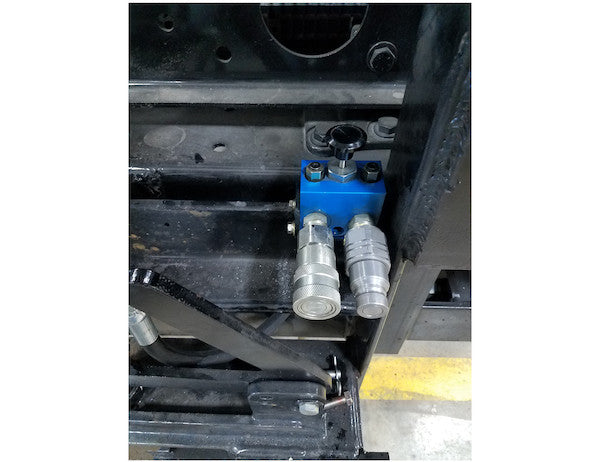
Specifications
| Material | Aluminum |
|---|---|
| Maximum Flow Rate | - |
| Maximum Pressure | - |
| Maximum Relief Pressure Setting | - |
| Number of Ports | - |
| Port Size | - |
The Plow Coupler Drain Valve optimizes the performance, longevity, and maintainability of hydraulic systems in heavy-duty snowplows and similar vehicular attachments. In the rigorous operational environments encountered by municipal, commercial, and private snow removal fleets, hydraulic fluid integrity is paramount. This specialized valve facilitates controlled, efficient hydraulic fluid draining directly from the plow coupler, enabling essential maintenance, fluid replacement, and troubleshooting without contaminants or undue mess. Its integration into the hydraulic circuit streamlines critical fluid management, significantly reducing downtime and extending the operational lifespan of expensive hydraulic components.
Hydraulic systems transmit power through incompressible fluids, enabling a snowplow's controlled blade articulation—lifting, angling, and down-pressure application. The coupler serves as the vital connection point, allowing quick and secure attachment or detachment from the vehicle's hydraulic power unit. However, hydraulic fluid degrades over time due to thermal stress, oxidation, and ingress of moisture or particulate matter. These contaminants compromise lubricating properties, increase viscosity, and accelerate wear on pumps, cylinders, hoses, and seals. Without an effective, accessible drain point, fluid changes become cumbersome, risky, and often incomplete, leading to suboptimal system performance and premature component failure. The Plow Coupler Drain Valve directly addresses this, providing a dedicated, clean, and efficient evacuation pathway.
Functionally, the drain valve provides a simple, manually operable conduit for hydraulic fluid to exit the coupler or an isolated circuit section. Typically, it incorporates a robust valving mechanism, such as a quarter-turn ball valve or a needle valve, designed for reliable sealing when closed and unrestricted flow when open. High-quality valve selection is crucial to prevent leakage during operation and ensure complete closure post-draining. When fluid replacement or system diagnostics are required, the valve is opened, allowing fluid collection in an appropriate receptacle. This controlled release minimizes environmental spillage and operator exposure to potentially hazardous hydraulic fluids. Furthermore, by providing a localized drain point at the coupler, it simplifies the process, often negating the need to disconnect multiple lines or maneuver the vehicle for draining.
A defining characteristic of this Plow Coupler Drain Valve is its aluminum construction. The choice of aluminum offers numerous technical advantages, directly translating into superior field performance and extended product life. Aluminum is renowned for its exceptional strength-to-weight ratio, providing robust structural integrity without significant mass addition to the hydraulic assembly. In snowplow applications, where every ounce affects vehicle weight and fuel efficiency, aluminum's lightweight nature is a distinct benefit. Beyond weight, aluminum exhibits excellent corrosion resistance, vital considering the harsh environmental conditions snowplows operate in. Exposure to road salts, de-icing chemicals, moisture, and fluctuating temperatures can rapidly degrade less resilient materials. Aluminum forms a passive oxide layer protecting against these corrosive elements, ensuring the valve remains functional and aesthetically sound over many operational cycles.
Aluminum’s thermal conductivity is a beneficial property, dissipating heat more effectively than some other metals. While the drain valve isn't a primary heat exchanger, its integration into a heat-generating hydraulic system means components with good thermal properties contribute to overall system stability. Aluminum's machinability also allows for precise manufacturing tolerances, critical for tightly sealing valve seats and intricate port geometries. This precision is fundamental to preventing leaks, ensuring smooth operation, and maintaining hydraulic system pressure integrity. The inherent durability of aluminum, combined with proper engineering, results in a drain valve that withstands mechanical stresses, vibrations, and thermal cycling without compromising operational efficacy.
Although specific technical parameters are not numerically specified, their conceptual importance to the Plow Coupler Drain Valve's design and application warrants thorough discussion. The Maximum Flow Rate capability is critical for efficient and timely fluid evacuation. An insufficient flow path or restrictive internal geometry would prolong draining, increasing maintenance time and potentially leading to incomplete fluid removal. Conversely, an optimally sized flow path ensures fluid can be quickly and thoroughly drained, reducing labor costs and minimizing equipment downtime. Engineers design these valves to balance rapid flow with controlled operation, considering typical hydraulic fluid viscosity at various temperatures. The internal bore diameter and valving mechanism design (e.g., full port ball valve) are primary determinants of flow rate.
The valve's ability to withstand Maximum Pressure is a foundational design parameter. Hydraulic systems in heavy equipment can operate at very high pressures, often ranging from 2,000 psi to 5,000 psi or higher, particularly during peak loads or when relief valves activate. The Plow Coupler Drain Valve, though primarily used for depressurized draining, must robustly integrate into the high-pressure side when closed. This necessitates materials and structural designs capable of withstanding these forces without deformation, leakage, or catastrophic failure. The integrity of the valve body, sealing mechanisms (O-rings, gaskets, seats), and fastening points must be engineered to exceed maximum anticipated system pressure, providing a substantial safety margin. A relief pressure setting typically applies to a relief valve; for a drain valve, the focus is on holding system pressure when closed and allowing controlled depressurization during draining.
The Number of Ports and Port Sizes are vital for integration into existing hydraulic systems. A typical drain valve might feature two ports: an inlet connecting to the plow coupler's hydraulic circuit and an outlet for fluid discharge. However, more complex configurations might exist, perhaps integrating a test port or a vacuum assist connection. Port Size, typically specified by nominal pipe size or thread type (e.g., SAE, NPT, BSPP, JIC), dictates compatibility with standard hydraulic hoses, fittings, and adapters. Precise port sizing and threading are essential for creating leak-free connections, critical in hydraulic systems to maintain pressure, prevent fluid loss, and avoid environmental contamination. Proper port size selection ensures the valve can be readily installed without extensive plumbing modifications, simplifying upgrades and replacements.
Beyond technical specifications, the Plow Coupler Drain Valve's design emphasizes robust engineering for longevity and user convenience. This encompasses durable, gloved-hand-operable actuation mechanisms, robust resistance to vibration fatigue, and sealing technologies maintaining efficacy over thousands of cycles across wide temperature ranges. Surface treatments and anodization of the aluminum can further enhance its resistance to abrasion and chemical exposure, contributing to a prolonged service life in demanding applications.
The drain valve's application spectrum extends beyond conventional snowplows. Any heavy-duty machinery or vehicle utilizing hydraulic power to operate an interchangeable front, rear, or side-mounted implement via a coupler system can benefit. This includes agricultural tractors with front loaders and specialized blades, construction equipment such as skid-steers or compact track loaders fitted with plows or similar hydraulic tools, and utility service vehicles. In all scenarios, the ability to quickly, cleanly, and safely manage hydraulic fluid at the point of attachment significantly enhances operational efficiency and maintenance protocols. It allows for proactive maintenance, enabling operators or technicians to regularly inspect fluid quality, flush systems, and replace old fluid with new, high-performance lubricants. This proactive approach minimizes costly catastrophic hydraulic failures and substantial operational interruptions.
Installing a Plow Coupler Drain Valve is straightforward for trained personnel but requires adherence to proper hydraulic system procedures. The system should always be depressurized before installation or maintenance. The valve typically threads into a designated port on the plow coupler or an adjacent hydraulic line. Proper thread sealants or PTFE tape should be used to ensure a leak-proof connection, and torque specifications strictly followed to prevent overtightening (thread damage) or undertightening (leaks). Once installed, the valve becomes an integral system part, ready for immediate use. For maintenance, routine visual inspections are recommended for leakage signs around the valve body, port connections, or stem seal. The actuation mechanism should be periodically checked for smooth operation; resistance or stiffness may indicate internal wear or contamination and should be addressed promptly.
Integrating a high-quality Plow Coupler Drain Valve yields substantial economic impact. By facilitating regular fluid maintenance, it directly extends the lifespan of critical hydraulic components like pumps, motors, cylinders, and control valves. These components represent a significant portion of a hydraulic system’s overall cost. A small investment in a drain valve can thus prevent much larger expenditures on major repairs or replacements. Furthermore, reduced maintenance time directly translates into increased equipment uptime, maximizing the productivity of valuable assets during peak operational seasons, such as winter for snow removal. The ability to perform quick fluid changes also means equipment can be prepared for different environmental conditions or specific operational demands more efficiently, ensuring optimal performance consistently.
Environmental stewardship is a critical aspect supported by the Plow Coupler Drain Valve. Uncontrolled draining of hydraulic fluids can lead to soil and water contamination, posing significant ecological risks and incurring hefty fines for non-compliance. The valve provides a controlled outlet, allowing all drained fluid to be captured in designated containers for proper recycling or disposal. This commitment to responsible fluid management not only protects the environment but also enhances the reputation of fleet operators and organizations. It demonstrates a proactive approach to operational best practices, reinforcing a culture of safety and environmental consciousness.
In conclusion, the Plow Coupler Drain Valve is far more than a simple fitting; it is a meticulously engineered component that serves as a cornerstone of efficient hydraulic system management for snowplows and analogous heavy equipment. Its construction from high-grade aluminum ensures durability, corrosion resistance, and lightweight performance in the most challenging operational scenarios. By providing a reliable, accessible, and controlled means for hydraulic fluid drainage, it directly supports optimized fluid integrity, extends the service life of expensive hydraulic components, enhances operational safety, and promotes environmental responsibility. The strategic integration of this valve into a hydraulic system represents a tangible investment in the long-term reliability, performance, and cost-effectiveness of heavy machinery, ensuring that equipment remains operational and productive when it matters most.