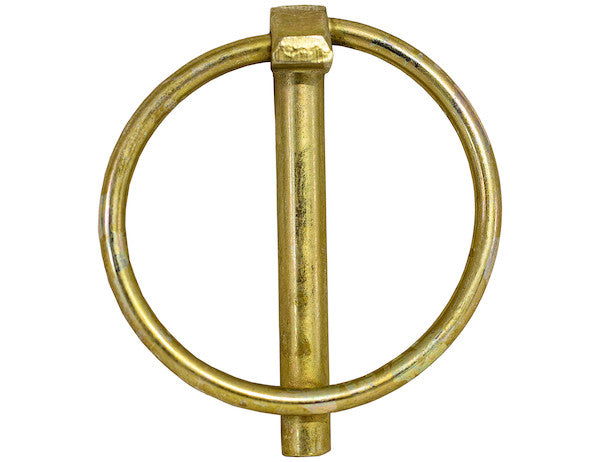
Buyers Products Linch Pin is ideal for utility trailers, cargo trailer doors and windows, and lawn equipment. The linch pin is yellow zinc-plated for corrosion resistance and is available in several sizes to fit your application.
Specifications
| (A) Pin Diameter in. | .44 |
|---|---|
| (B) Pin Length in. | 1.97 |
| (C) Useable Length in. | 1.50 |
| Finish | Zinc Plated Yellow |
| Material | Carbon Steel |
Yellow Zinc Plated Linch Pin - Precision Engineering for Reliable Fastening
The Yellow Zinc Plated Linch Pin, meticulously engineered with a 7/16-inch diameter and an overall length of 1-31/32 inches, complete with an integral ring, represents a superior fastening solution designed for an expansive range of industrial, agricultural, commercial, and recreational applications. This specific component is a testament to the confluence of material science, precision manufacturing, and practical design, delivering a reliable, quick-release mechanism that prioritizes both security and operational efficiency. Crafted from robust carbon steel and finished with a durable yellow zinc plating, this linch pin is optimized for challenging environments where corrosion resistance and sustained performance are paramount.
Comprehensive Design and Dimensional Analysis
Understanding the precise specifications of this linch pin is critical for ensuring optimal application and performance. The product's technical data provides a foundational insight into its capabilities:
- (A) Pin Diameter: .44 inches (7/16 inch): This dimension refers to the diameter of the pin shaft that inserts into the receiving component. A 7/16-inch (or 0.4375 inch, precisely specified as 0.44 inch for manufacturing tolerances) diameter is a common standard, ensuring compatibility with a wide array of pre-drilled holes and mounting brackets across various equipment types. The precision of this diameter is crucial for achieving a snug fit, minimizing play, and preventing premature wear on both the pin and the receiving component. A proper fit is essential for absorbing shear forces and maintaining the structural integrity of the fastened connection.
- (B) Pin Length: 1.97 inches (1-31/32 inch): This measurement indicates the total linear extent of the linch pin, from the head to the tip of the shaft. An overall length of 1-31/32 inches (approximately 1.96875 inches, specified as 1.97 inch for clarity) is designed to accommodate a range of material thicknesses while providing sufficient length for the spring-loaded ring mechanism to securely engage. This length ensures the pin can pass through components and still have adequate protrusion for secure locking.
- (C) Usable Length: 1.50 inches: The usable length is arguably the most critical dimension for practical application. It defines the maximum thickness of material or combined components that the linch pin can effectively secure. At 1.50 inches, this linch pin is capable of passing through and firmly holding assemblies up to one and a half inches thick. This dimension is calculated from the underside of the pin head to the point where the spring-loaded ring can securely latch, preventing the pin from dislodging. Specifying usable length helps users select the correct pin for their particular fastening needs, avoiding issues where the pin is either too short to engage the ring or too long, resulting in excessive play.
- Finish: Zinc Plated Yellow: The yellow zinc plating is a multi-functional surface treatment that significantly enhances the linch pin's performance and longevity. Beyond its distinctive aesthetic, this finish provides robust corrosion resistance, protecting the underlying carbon steel from rust and environmental degradation. The yellow hue is indicative of a chromate conversion coating applied over the zinc, which further boosts its protective capabilities and often serves as a visual identifier for enhanced corrosion protection.
- Material: Carbon Steel: The choice of carbon steel as the base material is deliberate, offering a superior balance of strength, ductility, and cost-effectiveness. Carbon steel, known for its high tensile strength and resistance to deformation, is ideal for components subjected to shear, bending, and axial loads. Its inherent durability ensures the linch pin can withstand the rigors of repeated use and harsh operational conditions without compromising its structural integrity.
The Science Behind Yellow Zinc Plating
The yellow zinc plating applied to this linch pin is a sophisticated electrochemical process designed to provide superior corrosion protection. This multi-layered coating system involves two primary stages:
- Electrogalvanization (Zinc Plating): In this initial stage, the carbon steel linch pin is immersed in an electrolyte solution containing zinc ions. An electric current is then passed through the solution, causing the zinc ions to deposit onto the surface of the steel. This creates a uniform layer of pure zinc that acts as a sacrificial barrier. Zinc is electrochemically more reactive than steel, meaning it will corrode preferentially when exposed to corrosive elements, thereby protecting the underlying steel from rust.
- Chromate Conversion Coating (Yellow Chromate): Following zinc plating, the pin undergoes a chromate conversion process. This involves treating the zinc-plated surface with a chromate solution, which reacts with the zinc to form a passive, amorphous layer. The "yellow" color is achieved by specific chemical formulations containing hexavalent or, more commonly in modern applications, trivalent chromium compounds. This chromate layer significantly enhances the corrosion resistance of the zinc coating itself, sealing microscopic pores, inhibiting further zinc oxidation, and providing a self-healing property for minor scratches. The yellow chromate also offers improved adhesion for subsequent coatings (though not typically needed for linch pins) and provides a distinct, professional appearance.
The synergy between the zinc layer and the yellow chromate conversion coating results in a fastener that can endure exposure to moisture, chemicals, and varying atmospheric conditions far better than unplated steel. This protection is critical for equipment frequently used outdoors or in demanding industrial settings, extending the operational life of both the pin and the assemblies it secures.
Robust Carbon Steel Construction
The foundation of this linch pin's strength and resilience lies in its carbon steel composition. Carbon steel is an iron-carbon alloy containing up to 2.1% carbon by weight. For fasteners like linch pins, typically low to medium carbon steels are employed due to their excellent balance of:
- Tensile Strength: The ability to withstand pulling forces without breaking. This is crucial for preventing the pin from fracturing under tension or shear loads.
- Yield Strength: The point at which the material begins to deform permanently. High yield strength ensures the pin maintains its shape and integrity even when subjected to significant stress.
- Hardness: Resistance to localized plastic deformation, such as indentation or scratching. This helps the pin resist wear and maintain its dimensional accuracy over time.
- Ductility: The ability to deform under tensile stress without fracturing. This property allows the pin to absorb shock and resist brittle failure, which is especially important in dynamic applications.
- Fatigue Resistance: The capacity to withstand repeated cycles of stress without failure. Linch pins often experience constant vibration and intermittent loading, making fatigue resistance a key performance indicator.
The inherent properties of carbon steel, combined with precise manufacturing processes such as cold forming or machining, ensure that each linch pin meets stringent structural requirements, providing a dependable and long-lasting fastening solution.
The Ingenuity of the Linch Pin Mechanism
The linch pin's design, characterized by a straight shaft and a distinctive spring-loaded ring, offers unparalleled ease of use and security. The operational mechanism is straightforward yet highly effective:
- Insertion: The pin shaft is inserted through the aligned holes of the components to be secured.
- Engagement: Once the pin passes through the final component, the integrated spring-loaded ring is pivoted over the end of the shaft. The tension of the spring steel ring holds it firmly in place, effectively locking the pin into position.
- Security: The positive locking action of the ring prevents the linch pin from vibrating loose or accidentally dislodging, even under dynamic conditions or significant movement.
- Quick Release: To remove the pin, the user simply disengages the ring by lifting it away from the shaft, allowing for swift and tool-free disassembly. This quick-release functionality makes linch pins ideal for applications requiring frequent setup, adjustment, or removal of components.
The ring itself is typically manufactured from high-tensile spring steel, often heat-treated and similarly protected with a corrosion-resistant finish, ensuring its resilience and consistent spring tension over countless cycles of engagement and disengagement.
Expansive Application Spectrum
The versatility of the Yellow Zinc Plated Linch Pin, with its specific dimensions of 7/16-inch diameter and 1.50-inch usable length, allows it to be deployed across an extensive array of sectors and equipment, building upon its core utility in:
- Utility Trailers: Essential for securing trailer ramps in both deployed and stowed positions, fastening tailgate mechanisms, hitch components, safety chains, and various auxiliary attachments. Their quick-release nature simplifies loading and unloading operations.
- Cargo Trailer Doors and Windows: Utilized as robust keepers for securing side or rear cargo doors, ensuring they remain closed during transit. They can also serve to prop open windows or vents, providing secure ventilation.
- Lawn and Garden Equipment: Indispensable for securing attachments to riding lawnmowers and garden tractors, such as aerators, dethatchers, spreaders, and small trailers. They also find use in adjusting the height of mower decks, securing implement hitches, and various quick-attach mechanisms.
- Agricultural Machinery: Crucial for numerous fastening tasks on farm equipment, including securing various implement attachments to tractors, adjusting the settings on cultivators, planters, and sprayers, and providing quick-release mechanisms for access panels or protective guards. Their ease of use facilitates efficient field adjustments and equipment changes.
- Construction Equipment: While generally for lighter-duty applications than heavy construction, these linch pins are suitable for securing access panels on compact utility loaders, fastening temporary guards, or holding components on small mixers, scaffolding bracing (non-load bearing critical points), and tool organization systems on job sites.
- Recreational Vehicles (RVs) and Camping Gear: Used to secure support legs for awnings, stabilize components of pop-up campers, fasten storage compartment doors, or act as quick-release pins for leveling jacks and accessories on travel trailers and fifth wheels.
- Marine Applications (Freshwater/Protected): While not stainless steel, the yellow zinc plating offers adequate protection for freshwater marine environments or areas with intermittent exposure to saltwater, provided it is regularly cleaned. Applications include securing boat covers, retaining small access hatches, or fastening adjustable components on boat trailers.
- Material Handling Equipment: For securing casters on industrial carts, locking adjustable components on hand trucks, or retaining pins in light-duty racking systems where frequent adjustments are required.
- Automotive Applications: Securing tailgate latches on utility trucks, fastening trailer hitches that use a pin-and-clip system (where the linch pin replaces a standard cotter pin), or temporary holding of components during vehicle maintenance.
- DIY and Workshop Projects: An invaluable fastener for custom jigs, fixtures, and various quick-change setups in home workshops, offering flexibility and reliability for prototype construction and specialized tooling.
The 7/16-inch diameter and 1.50-inch usable length specifically address a sweet spot for medium-duty fastening requirements, bridging the gap between smaller clips and heavier-duty clevis pins, making it an exceptionally versatile choice for professionals and enthusiasts alike.
Advantages and Performance Attributes
Choosing the Yellow Zinc Plated Linch Pin brings a multitude of operational and longevity benefits:
- Unmatched Ease of Use: The defining characteristic of a linch pin is its tool-free operation. Installation and removal are accomplished in seconds, significantly reducing downtime for adjustments, equipment changes, or maintenance tasks. This translates directly to increased productivity and efficiency.
- Superior Security: The spring-loaded ring mechanism provides a positive lock that is highly resistant to vibration, shock, and accidental disengagement. This robust locking feature ensures that components remain securely fastened, enhancing operational safety and preventing costly damage or loss of equipment.
- Exceptional Durability: The combination of high-strength carbon steel and the protective yellow zinc plating results in a fastener built to last. It resists bending, shearing, and fatigue, even under continuous use in demanding environments.
- Advanced Corrosion Resistance: The yellow zinc plating provides a formidable barrier against rust and corrosion from moisture, road salts, agricultural chemicals, and general atmospheric exposure. This extended protection dramatically prolongs the lifespan of the pin and maintains its functional integrity and appearance.
- Reliable Performance: Engineered to precise specifications, each linch pin offers consistent and dependable performance. The uniform diameter, optimal length, and robust locking mechanism ensure reliable fastening every time, minimizing the risk of failure in critical applications.
- Cost-Effectiveness: Given its extended lifespan, superior protective qualities, and versatile application, this linch pin offers an excellent return on investment. Its durability reduces the need for frequent replacements, contributing to lower operational costs over time.
- Visual Identification and Professional Finish: The distinctive yellow chromate finish not only signifies enhanced corrosion protection but also provides a professional and easily identifiable aesthetic, allowing for quick checks of component status.
Manufacturing Excellence and Quality Assurance
The production of a high-quality linch pin involves stringent manufacturing processes and adherence to quality control standards. Manufacturers of industrial fasteners, like the Yellow Zinc Plated Linch Pin, typically employ:
- Precision Cold Forming or Machining: Carbon steel is precisely shaped through processes that ensure consistent dimensions and optimal material properties. Cold forming enhances the steel's strength and surface finish, while machining guarantees tight tolerances for critical dimensions like diameter and usable length.
- Heat Treatment: Depending on the specific carbon steel alloy, heat treatment processes (e.g., quenching and tempering) may be applied to further enhance the pin's mechanical properties, such as hardness and strength, without compromising ductility.
- Advanced Plating Facilities: State-of-the-art electroplating lines ensure uniform thickness and adherence of the zinc coating, followed by precise chromate conversion for the yellow finish. These processes are often conducted in compliance with environmental regulations regarding chemical usage and waste disposal.
- Rigorous Quality Control: Each batch of linch pins undergoes comprehensive quality checks. These include dimensional verification using precision gauges (calipers, micrometers), material composition analysis, plating thickness measurements, salt spray testing for corrosion resistance verification, and functional testing of the spring-loaded ring mechanism to ensure proper tension and engagement.
These meticulous steps guarantee that every linch pin leaving the production facility meets or exceeds industry standards for performance, durability, and safety, providing end-users with a product they can trust.
Installation, Maintenance, and Longevity
To maximize the lifespan and ensure the continued reliability of the Yellow Zinc Plated Linch Pin, consider the following:
- Correct Selection: Always select a linch pin with a diameter and usable length appropriate for your specific application. An undersized pin can lead to excessive play and premature wear, while an oversized pin may not fit or may cause damage.
- Proper Installation: Ensure the pin is fully inserted through all components and the spring-loaded ring is securely engaged over the shaft. Verify that there is no obstruction preventing full engagement.
- Regular Inspection: Periodically inspect linch pins for signs of wear, deformation, corrosion, or damage, particularly to the spring mechanism. The spring ring's tension is crucial for security, and any signs of weakening or damage warrant immediate replacement.
- Cleaning: In environments exposed to dirt, grime, or corrosive agents, regular cleaning can help maintain the integrity of the zinc plating and prevent build-up that could hinder the ring's operation.
- Replacement Policy: Linch pins are wear items. If a pin shows significant wear, bending, or if the spring ring loses its tension, it should be replaced immediately to prevent accidental disengagement and potential equipment damage or injury.
By following these guidelines, the Yellow Zinc Plated Linch Pin will provide years of reliable and secure fastening performance, cementing its role as an indispensable component in a wide variety of operational contexts.
In conclusion, the Yellow Zinc Plated Linch Pin, with its precise 7/16-inch diameter and 1-31/32-inch length, represents a meticulously engineered fastening solution. Its robust carbon steel construction, enhanced by the advanced yellow zinc plating for superior corrosion resistance, combined with its intuitive quick-release ring design, positions it as an exemplary choice for demanding applications. From agricultural machinery and utility trailers to various industrial and recreational equipment, this linch pin offers an optimal blend of strength, durability, ease of use, and long-term reliability, embodying professional-grade quality for critical fastening needs.