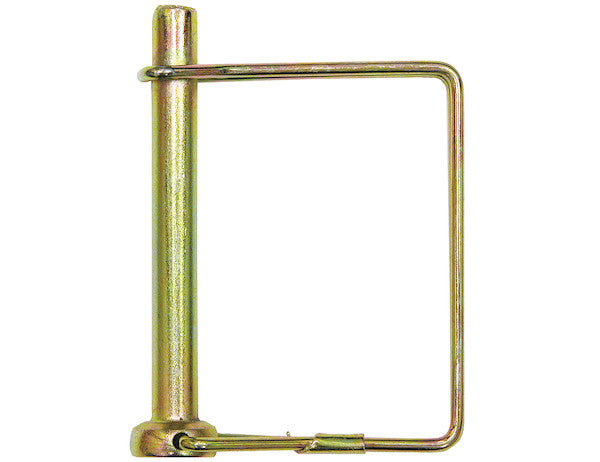
Buyers Products Snapper Pins are used as a convenient way to fasten accessories on truck equipment. Snapper lock pins join the benefits of a pin and cotter combination in a single assembly. Simply pull the wire loop over the pin to lock it in place. It quickly releases for easy removal. Snapper pins are yellow zinc-plated for corrosion resistance.
Specifications
| Clearance (in.) | 1-5/8 |
|---|---|
| Pin Dia (in.) | 5/16 |
| Usable Length (in.) | 2-1/2 |
Advanced Technical Overview: Snapper Pin – 5/16in Diameter x 2-1/2in Usable Length, Yellow Zinc Plated
The Snapper Pin, a meticulously engineered fastening solution, represents a significant advancement in mechanical retention technology, offering a robust, quick-release mechanism for a myriad of industrial, agricultural, and commercial applications. Specifically, this product, featuring a 5/16-inch diameter, a 2-1/2-inch usable length, and a durable yellow zinc-plated finish, is designed to meet rigorous demands for both secure fastening and operational efficiency. It effectively consolidates the functions of a traditional clevis pin and cotter pin into a single, integrated assembly, thereby streamlining installation, removal, and maintenance processes while enhancing overall system reliability.
Product Architecture and Core Functionality
At its core, the Snapper Pin is a sophisticated evolution of the conventional clevis pin. It consists of a cylindrical shaft, a head, and an integral wire loop retention mechanism. The pin shaft, precision-machined to a consistent 5/16-inch diameter, is designed for smooth insertion into appropriately sized boreholes. The head provides a bearing surface and prevents the pin from passing entirely through the mating components. The defining feature, however, is the innovative wire loop, which eliminates the need for separate cotter pins or R-clips. This loop is typically constructed from high-tensile spring steel, engineered to provide a positive locking action. Once the pin is inserted through the aligned holes of the components to be fastened, the wire loop is simply pulled over the exposed end of the pin, or a specifically designed groove near the pin's end, creating a secure, self-contained locking system. This intuitive design ensures that the pin remains firmly in place, resisting axial withdrawal forces and vibrations, until deliberately released. The release mechanism is equally straightforward, requiring only a simple reversal of the engagement process, making it ideal for applications requiring frequent setup and teardown.
In-Depth Analysis of Technical Specifications
Pin Diameter: 5/16 inch
The 5/16-inch (approximately 7.94 mm) diameter of this snapper pin is a critical dimensional specification that dictates its load-bearing capacity and compatibility with mating hardware. In mechanical engineering, pin diameter directly correlates with the pin's shear strength, which is the maximum force it can withstand before fracturing when subjected to forces perpendicular to its axis. A 5/16-inch diameter is a common and robust size, suitable for moderate to heavy-duty applications, providing ample strength for securing truck equipment, agricultural implements, and various machinery components where substantial loads may be encountered. The precise diameter ensures a snug fit within corresponding 5/16-inch or slightly larger boreholes, minimizing play and contributing to the structural integrity of the assembly. This dimension is carefully calibrated to optimize the balance between material usage, manufacturing cost, and structural performance, making it a versatile choice across numerous industrial sectors.
Usable Length: 2-1/2 inches
The usable length, specified at 2-1/2 inches (approximately 63.5 mm), refers to the effective grip length of the pin. This is the maximum thickness of material or the cumulative thickness of components that the pin can securely fasten while allowing the retaining wire loop to fully engage and lock. Measuring from the underside of the pin's head to the point where the locking mechanism engages, this dimension is paramount for proper application. A 2-1/2-inch usable length provides substantial versatility, accommodating a wide range of bracket thicknesses, hitch receivers, clevis joints, and other assemblies. It ensures that the pin can pass through multiple layers of material and still have sufficient length protruding to allow the wire loop to form a positive, secure lock. Insufficient usable length would prevent proper engagement of the locking mechanism, compromising safety, while excessive length could lead to unnecessary protrusion and potential interference with surrounding components.
Clearance: 1-5/8 inches
The specification of 1-5/8 inches (approximately 41.28 mm) for "Clearance" in the context of a snapper pin typically refers to the maximum internal width of a clevis or bracket that the pin is designed to fit through and secure effectively, while allowing the head and the entire wire loop mechanism to operate unimpeded. More precisely, it can be interpreted as the maximum effective gripping range or the maximum material thickness that the pin can secure while still providing adequate space for the wire loop to swing and engage/disengage without obstruction from the fastened components. This dimension is crucial for ensuring that the locking mechanism has the necessary operating space and does not bind or become difficult to manipulate when installed in a confined space. It highlights the pin's suitability for applications where the components being joined have an aggregate thickness not exceeding 1-5/8 inches, guaranteeing optimal function of the quick-release feature.
Material Science and Surface Treatment: Yellow Zinc Plating
The selection of material and surface finish is paramount for the longevity and performance of any fastening component, particularly one exposed to varying environmental conditions. This snapper pin is typically manufactured from high-grade carbon steel, chosen for its excellent balance of tensile strength, shear strength, and ductility, which prevents brittle fracture under stress. To fortify this base material against degradation, the pin undergoes a meticulous yellow zinc plating process.
Zinc Plating Process and Benefits
Zinc plating, an electroplating process, involves depositing a thin layer of zinc onto the steel substrate. Zinc acts as a sacrificial coating, meaning it corrodes preferentially to the steel, thus protecting the underlying metal from rust and corrosion. Beyond this primary protective function, the zinc layer itself provides a degree of abrasion resistance. Following the zinc deposition, the pin receives a chromate conversion coating, which is crucial for achieving the distinctive yellow hue and significantly enhancing corrosion resistance. This post-treatment process involves immersing the zinc-plated part in a solution containing chromium compounds, which react with the zinc surface to form a passive, gel-like film. This film acts as a barrier, further sealing the zinc and imparting self-healing properties in the event of minor scratches. Modern yellow zinc plating processes often utilize trivalent chromium formulations, which are environmentally safer alternatives to older hexavalent chromium processes, adhering to global environmental regulations such as RoHS and ELV directives.
The benefits of yellow zinc plating are multifaceted:
- Superior Corrosion Resistance: The combined effect of sacrificial zinc and the chromate conversion layer provides exceptional protection against rust and oxidation, making these pins ideal for outdoor, marine (above waterline), and high-humidity environments.
- Enhanced Durability: The plating adds a hard, protective layer that resists minor scratches and abrasions, prolonging the life of the pin.
- Aesthetic and Identification: The characteristic yellow-gold finish not only offers a professional appearance but also allows for easy visual identification, distinguishing it from unplated or differently plated fasteners. This can be critical in assembly lines or inventory management.
- Lubricity: The smooth, plated surface can reduce friction during insertion and removal, contributing to the "quick-release" functionality and reducing wear on mating components.
Operational Mechanism and Efficiency
The design of the snapper pin as a "pin and cotter combination in a single assembly" is a cornerstone of its operational efficiency. Traditional fastening often involves a clevis pin and a separate cotter pin (or R-clip), which can be cumbersome, time-consuming, and prone to losing small components. The snapper pin elegantly solves these issues:
- Elimination of Loose Parts: By integrating the retaining mechanism, the risk of misplacing or losing cotter pins during assembly, disassembly, or in the field is entirely mitigated. This simplifies inventory, reduces potential for human error, and ensures the fastening system remains complete.
- Rapid Deployment and Release: The intuitive wire loop mechanism allows for extremely fast operation. Insertion and locking can often be achieved with one hand, significantly reducing the time required for setup, adjustments, or repairs. This rapid engagement and disengagement capability is invaluable in dynamic environments where downtime needs to be minimized.
- Positive Locking Action: The tensioned wire loop provides a secure, positive lock that resists accidental disengagement due to vibration, shock, or incidental contact. Users can visually confirm the engaged state of the pin, adding an important layer of safety and confidence in the connection.
- Tool-Free Operation: The snapper pin requires no specialized tools for its operation, further enhancing its convenience and reducing the logistical burden associated with tool management on job sites or in the field.
Expansive Range of Applications
While specifically highlighted for "truck equipment," the utility of the 5/16in x 2-1/2in yellow zinc-plated snapper pin extends far beyond, serving a broad spectrum of industries that demand reliable, quick-release fastening:
- Truck and Trailer Equipment: Essential for securing tailgates, hitch receivers, trailer tongue jacks, safety chain connections, cargo ramps, snowplow attachments, spreader components, and various utility body accessories where quick changeovers are common.
- Agricultural Machinery: Widely used on tractors and farm implements for securing PTO shaft guards, planter attachments, mower decks, cultivators, harrows, and other quick-attach systems. Its corrosion resistance is critical in often muddy and wet farming environments.
- Construction Equipment: Integral for scaffolding assembly, temporary fencing, concrete forms, equipment attachments (e.g., buckets, forks on skid steers or mini-excavators), and safety guard rails where quick modifications are necessary.
- Marine and Boating: Suitable for securing boat covers, Bimini tops, boat trailer winches, and various deck hardware above the waterline where resistance to salt spray is beneficial. (Note: For submerged or continuously wet applications, stainless steel variants would be preferred).
- Automotive and Recreational Vehicles (RVs): Ideal for securing spare tires, battery boxes, utility trailer hitches, and various temporary setups on RVs and camper trailers.
- Industrial and Manufacturing: Employed in jigs, fixtures, temporary assembly lines, access panel closures, and safety interlocks for machinery where rapid adjustments or maintenance access is required.
- Outdoor and Recreational Gear: Useful for securing tent poles, awnings, camping equipment, and other temporary structures that require robust yet easily dismountable connections.
Strategic Advantages and Operational Benefits
The adoption of the Snapper Pin translates into several tangible advantages for end-users and organizations:
- Increased Productivity: The speed of installation and removal significantly reduces downtime, allowing operators to complete tasks faster and transition between different setups more efficiently.
- Enhanced Safety: A securely fastened component reduces the risk of accidental detachment, which can prevent equipment damage, injuries, and costly operational failures. The visible locking mechanism offers an immediate safety check.
- Durability and Longevity: The robust steel construction coupled with yellow zinc plating ensures excellent resistance to wear, fatigue, and environmental corrosion, leading to a longer service life and reduced replacement frequency.
- Cost-Effectiveness: While the initial cost may be marginally higher than a separate pin and cotter, the long-term savings from reduced labor, minimized component loss, and extended product life make it a highly economical choice.
- Simplified Inventory Management: Consolidating two components into one streamlines procurement and stocking, leading to more efficient parts management.
Key Engineering and Selection Considerations
For engineers and purchasing managers, selecting the appropriate snapper pin involves several critical considerations:
- Load Requirements: Assess the maximum static and dynamic shear and tensile loads the pin will experience. The 5/16-inch diameter provides substantial strength, but specific application loads should always be verified against the material's properties.
- Environmental Exposure: While yellow zinc plating offers excellent corrosion resistance, extreme conditions (e.g., constant saltwater immersion, strong chemical exposure) might necessitate alternative materials like stainless steel. However, for most outdoor and humid environments, this finish performs exceptionally well.
- Vibration and Shock: The positive locking mechanism of the wire loop is crucial for applications prone to high vibration, ensuring the pin remains securely engaged.
- Mating Component Material: Consider potential for galvanic corrosion if the pin is in direct contact with dissimilar metals in a corrosive environment.
- Accessibility: Ensure sufficient clearance around the pin head and wire loop for easy manipulation, especially in confined spaces, correlating with the specified 1-5/8 inch clearance.
- Regulatory Compliance: For specific applications (e.g., highway trailers), ensure the fastening solution meets relevant industry standards and safety regulations.
Manufacturing Quality and Standards
The reliability of a snapper pin is directly tied to the quality of its manufacturing. High-quality snapper pins like this one are produced using precise machining processes to ensure accurate dimensions and smooth finishes. The steel used is typically a certified grade, providing consistent mechanical properties. The yellow zinc plating adheres to strict industry standards (e.g., ASTM B633) for coating thickness and quality, often verified through salt spray testing to confirm corrosion resistance performance. The wire loop, a critical functional component, is manufactured from spring steel with specific tensile strength and fatigue resistance to ensure consistent locking force over thousands of cycles. Rigorous quality control measures, including dimensional inspections, plating thickness checks, and functional testing, are implemented throughout the production process to guarantee that each pin meets the specified performance criteria.
Maintenance, Longevity, and Best Practices
To maximize the lifespan and ensure continued reliable performance of the snapper pin, certain maintenance practices are recommended. Regular visual inspections for signs of wear, deformation, or excessive corrosion on both the pin shaft and the wire loop are crucial. Any pin exhibiting significant damage should be promptly replaced to prevent operational failure. While the yellow zinc plating offers excellent protection, occasional cleaning to remove accumulated dirt, salt, or debris is beneficial. For applications involving high friction or frequent articulation, a light application of a suitable lubricant may aid in smoother operation of the wire loop. Proper storage in a dry environment when not in use can also prevent premature degradation of the plating and extend the pin's service life.
Conclusion
The Snapper Pin, with its 5/16-inch diameter, 2-1/2-inch usable length, and yellow zinc-plated finish, stands as a prime example of an elegantly engineered fastening solution. It masterfully combines robust mechanical strength with unparalleled operational convenience and superior corrosion resistance. By integrating the pin and cotter into a single, user-friendly assembly, it offers significant advantages in terms of productivity, safety, and cost-effectiveness across a diverse range of demanding applications from truck equipment to agricultural machinery and industrial setups. Its technical specifications are precisely calibrated to deliver reliable performance, while its durable finish ensures longevity even in challenging environments. For any application requiring a secure, quick-release, and resilient fastening mechanism, this snapper pin represents an optimal choice, contributing substantially to operational efficiency and the overall integrity of mechanical systems.