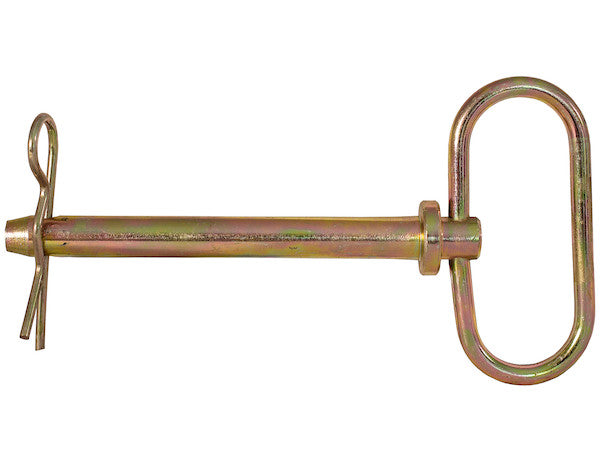
Buyers Products Hitch Pins come complete with a spring wire handle and cotter pin. Forged from 1040 steel, they are yellow zinc-plated for corrosion protection. Choose from a variety of sizes.
Specifications
| Pin Dia. (in.) | 3/4 |
|---|---|
| Usable Length (in.) | 6-1/4 |
Advanced Engineering and Material Science: Yellow Zinc Plated Hitch Pins – 3/4" Diameter x 6-1/4" Usable Length
The Buyers Products Yellow Zinc Plated Hitch Pin, with its precise dimensions of 3/4 inch diameter and 6-1/4 inch usable length, represents a critical component in a multitude of towing, agricultural, construction, and industrial applications. Engineered for robust performance and extended service life, this hitch pin is a testament to the meticulous selection of materials, advanced manufacturing processes, and superior protective finishes. Its design directly addresses the demanding requirements for secure attachment, reliable load transfer, and enduring resistance to environmental degradation, making it an indispensable asset for professional-grade equipment.
Material Excellence: The Choice of 1040 Steel
At the core of this hitch pin's exceptional mechanical integrity is its composition: 1040 steel. This medium-carbon steel grade is specifically chosen for its advantageous balance of strength, toughness, and machinability, rendering it highly suitable for applications subjected to significant shear and tensile stresses. The "10" in 1040 indicates a basic carbon steel, while "40" signifies a nominal carbon content of 0.40%. Specifically, 1040 steel typically contains 0.37-0.44% carbon, 0.60-0.90% manganese, a maximum of 0.04% phosphorus, and a maximum of 0.05% sulfur. The controlled carbon content is crucial for achieving high tensile and yield strengths, which are critical for preventing deformation and failure under heavy loads characteristic of towing and fastening applications.
Manganese plays a vital role in enhancing the steel's hardenability and strength, while also acting as a deoxidizer during steel production. The low levels of phosphorus and sulfur are important for minimizing brittleness and hot shortness, respectively, ensuring that the steel maintains its ductility and workability during forging and subsequent use. The typical mechanical properties of 1040 steel in its normalized or forged condition include a tensile strength often exceeding 80,000 psi (550 MPa) and a yield strength approaching 50,000 psi (345 MPa). Its hardness can range from approximately 160 to 190 Brinell, providing excellent wear resistance without compromising the material's ability to withstand shock loads. These properties collectively ensure that the 3/4-inch diameter pin possesses the requisite shear strength and bending resistance to reliably secure heavy implements and trailers, effectively distributing forces and maintaining structural stability across the connection point.
Precision Manufacturing: The Forging Process
The manufacturing process for these hitch pins employs forging, a metallurgical technique that significantly enhances the material's structural integrity and performance characteristics compared to pins produced via casting or simple machining from bar stock. Forging involves shaping the 1040 steel through compressive forces, typically at elevated temperatures (hot forging), which realigns the internal grain structure of the metal. This realignment eliminates internal voids and defects, resulting in a denser, more uniform grain flow that follows the contours of the pin. The benefits of forging are multi-fold:
- Enhanced Strength and Toughness: Forging refines the grain structure, making the steel stronger and more resistant to impact and fatigue. The continuous grain flow through the pin's critical stress areas, such as the shaft and head, provides superior resistance to stress concentrations and crack propagation.
- Improved Fatigue Resistance: Components subjected to repetitive loading cycles, like hitch pins, greatly benefit from the improved fatigue life imparted by forging. The reduced internal discontinuities and optimized grain structure minimize initiation points for fatigue cracks.
- Consistent Mechanical Properties: Forging ensures uniform mechanical properties throughout the component, eliminating anisotropic behavior often found in cast parts. This consistency translates to predictable performance and reliability under diverse operational conditions.
- Optimized Material Utilization: The forging process can produce near-net-shape components, minimizing waste and reducing the need for extensive secondary machining, which contributes to cost efficiency and environmental sustainability.
The forged construction of the Buyers Products hitch pin ensures that it can withstand the dynamic and often unpredictable forces encountered in towing and heavy-duty applications, offering a level of durability that is paramount for safety and longevity.
Superior Corrosion Protection: Yellow Zinc Plating
Corrosion is a primary cause of component degradation and failure, particularly for external hardware like hitch pins. To combat this, the Buyers Products hitch pins are meticulously treated with a yellow zinc plating. This advanced surface treatment provides multi-layered protection, significantly extending the pin's operational life in corrosive environments.
The Mechanism of Zinc Plating: Zinc plating functions as a sacrificial coating. When the underlying steel is exposed to corrosive elements (moisture, oxygen, road salts, chemicals), the zinc, being less noble than steel in the electrochemical series, preferentially corrodes. This galvanic protection prevents rust from forming on the steel substrate even if the coating is scratched or compromised in small areas.
The Significance of Yellow Chromate Conversion Coating: The "yellow" aspect of the plating refers to a chromate conversion coating applied over the electroplated zinc layer. This post-treatment process involves immersing the zinc-plated part in a chromate solution, which reacts with the zinc to form a complex, passive film. This film significantly enhances the corrosion resistance beyond that of plain zinc. Yellow chromate coatings typically contain hexavalent chromium (Cr6+) for maximum corrosion resistance, though modern environmental regulations often favor trivalent chromium (Cr3+) for its reduced toxicity while still offering substantial protection. The yellow coloration is a characteristic visual indicator of this specific chromate passivation layer.
The benefits of yellow zinc plating are substantial:
- Enhanced Corrosion Resistance: The chromate layer acts as a barrier, slowing down the rate of zinc corrosion and increasing the time before red rust (iron oxide) begins to form on the steel. It typically offers superior salt spray resistance compared to clear or blue zinc coatings.
- Abrasion Resistance: The chromate layer adds a degree of hardness to the surface, improving its resistance to minor abrasions that could expose the base metal.
- Aesthetic and Identification: The distinctive yellow hue provides a clear visual indication of the protective coating and can aid in component identification within a system.
- Environmental Durability: This plating is highly effective in resisting corrosion from various environmental factors, including humidity, rainwater, road salts, and mild industrial chemicals, making the hitch pin suitable for outdoor and harsh operating conditions typical in agriculture, marine, and construction sectors.
The combination of sacrificial zinc and the robust chromate conversion layer ensures that the 3/4" diameter hitch pin maintains its structural integrity and aesthetic quality over prolonged periods, minimizing maintenance requirements and replacement costs.
Precision Dimensions: 3/4" Diameter and 6-1/4" Usable Length
The specific dimensions of 3/4 inch diameter and 6-1/4 inch usable length are engineered to meet specific industry standards and application requirements, offering optimal compatibility and secure fastening.
Pin Diameter (3/4 inch): The 3/4-inch (19.05 mm) diameter is a widely recognized standard size for hitch pins in medium to heavy-duty towing and equipment applications. This diameter is critical for:
- Load-Bearing Capacity: The shear strength of a pin is directly proportional to its cross-sectional area. A 3/4-inch diameter provides substantial shear resistance, enabling the pin to safely withstand the significant forces generated by trailer loads, agricultural implements, and other towed equipment. It is commonly found in Class III and Class IV hitch systems and is suitable for substantial tongue weights and gross trailer weights, depending on the specific application and hitch receiver rating.
- Compatibility: This diameter ensures compatibility with standard receiver tubes, drawbars, and implement attachment points that are designed to accommodate 3/4-inch pins. Such standardization simplifies selection and ensures a secure, snug fit that minimizes play and wear.
- Stress Distribution: A larger diameter pin distributes shear stresses over a greater area, reducing the likelihood of localized deformation or material fatigue at the point of greatest stress concentration.
Usable Length (6-1/4 inches): The term "usable length" refers to the effective length of the pin's shaft that can pass through the components being secured. For this hitch pin, 6-1/4 inches (158.75 mm) offers significant advantages:
- Versatility for Thicker Components: This extended usable length is particularly beneficial when securing multiple components or those with thick cross-sections, such as heavy-duty drawbars, multi-leaf spring assemblies on trailers, or specialized agricultural implements. It ensures adequate protrusion through all layers to allow for secure fastening with the retaining clip.
- Enhanced Engagement: Sufficient usable length guarantees full engagement through the receiver or implement, minimizing the risk of the pin partially dislodging or being subjected to uneven loading. Proper engagement is crucial for maintaining the integrity of the connection under dynamic forces.
- Accommodation of Washers/Bushings: The generous length allows for the inclusion of washers, bushings, or shims if needed to reduce wear between components or to achieve a tighter fit without compromising the ability to secure the pin.
- Safety Margin: A longer usable length provides a safety margin, ensuring that even with minor misalignments or tolerance stacking, the pin can still be fully inserted and secured, preventing accidental disengagement.
These precise dimensions are not arbitrary; they are the result of engineering considerations aimed at maximizing performance, safety, and versatility across a broad spectrum of demanding applications.
Integral Securing Mechanism: Spring Wire Handle and Cotter Pin
The Buyers Products Hitch Pin is supplied complete with a spring wire handle and a cotter pin, crucial elements that facilitate ease of use and ensure secure retention of the main pin.
Spring Wire Handle: The integral spring wire handle is ergonomically designed for ease of manipulation. Crafted from high-strength spring steel, often similarly plated for corrosion resistance, it provides a comfortable grip and leverage for inserting and removing the pin, even with gloved hands. The spring steel construction ensures that the handle maintains its shape and structural integrity over time, resisting bending or deformation under normal operating conditions. This design significantly improves operational efficiency and reduces operator fatigue, particularly in frequently connected and disconnected setups.
Cotter Pin (Hairpin Clip): The accompanying cotter pin, commonly a hairpin or R-clip type, is essential for axial retention of the hitch pin. Once the main hitch pin is inserted through the desired components, the cotter pin is passed through a pre-drilled hole near the end of the hitch pin's shaft. Its spring-like action and distinctive shape create a robust locking mechanism that prevents the hitch pin from vibrating loose or inadvertently disengaging due to sudden jolts, vibrations, or impacts during operation. Like the main pin, these retaining clips are typically made from hardened steel and often zinc-plated to resist corrosion, ensuring their functionality is preserved in harsh environments. The proper and consistent use of this cotter pin is paramount for operational safety, preventing accidental detachment of trailers or implements during transport or use.
Diverse Applications and Industries
The robust construction and thoughtful design of the Yellow Zinc Plated Hitch Pin with a 3/4" diameter and 6-1/4" usable length make it exceptionally versatile across numerous industries:
- Agriculture: Essential for connecting various implements to tractors, such as plows, cultivators, sprayers, and trailers, ensuring secure attachment in dynamic field conditions.
- Construction: Used in securing attachments to skid steers, compact track loaders, mini excavators, and other construction equipment, as well as for trailer hitches on utility and dump trailers.
- Transportation & Logistics: Critical for securing diverse types of trailers, from utility trailers and boat trailers to smaller commercial trailers, ensuring safe transport of goods and equipment.
- Recreational Vehicles (RVs) & Marine: Utilized in towing applications for RVs and for securing marine trailers, where resistance to corrosion is especially vital.
- Industrial Material Handling: Applicable in factories and warehouses for securing specialized carts, dollies, and mobile equipment, enhancing operational safety and efficiency.
- Landscape & Grounds Maintenance: For towing chippers, stump grinders, and various trailers behind utility vehicles and trucks.
The consistent reliability of these pins across such varied and demanding applications underscores their superior engineering and material quality.
Safety, Performance, and Compliance
The integrity of a hitch pin is directly linked to the safety of towing operations and the longevity of attached equipment. The Buyers Products Yellow Zinc Plated Hitch Pin is designed with paramount consideration for both safety and performance. Its 1040 forged steel construction guarantees high shear and tensile strength, while the yellow zinc plating provides a durable shield against environmental corrosion, thereby mitigating the risk of material degradation and catastrophic failure.
Users are always advised to select the appropriate pin size for their specific application, ensuring that the diameter matches the receiver bore and that the usable length is sufficient to fully engage and accommodate the retaining clip. Regular inspection of hitch pins for signs of wear, bending, or corrosion is a best practice to ensure continued safe operation. While specific load ratings for the pin itself depend on the entire hitch system and application, the inherent strength of 3/4" 1040 forged steel provides a robust foundation for supporting significant loads within the appropriate usage context.
This product is manufactured to high-quality standards, adhering to industry best practices for material specification, manufacturing processes, and protective coatings. While specific SAE (Society of Automotive Engineers) or ISO (International Organization for Standardization) standards regarding hitch pin dimensions or material for a generic pin might vary depending on the exact application, the fundamental engineering principles applied ensure compliance with the performance expectations of demanding users.
Conclusion
The Buyers Products Yellow Zinc Plated Hitch Pin, with its 3/4-inch diameter and 6-1/4-inch usable length, embodies a sophisticated blend of material science, advanced manufacturing, and protective finishing. Forged from high-strength 1040 steel and safeguarded by a durable yellow zinc plating, it offers unparalleled mechanical strength, fatigue resistance, and corrosion protection. Complete with an ergonomic spring wire handle and a reliable cotter pin, this product delivers exceptional security, operational efficiency, and extended service life across a broad spectrum of heavy-duty applications. It stands as a testament to engineering precision, providing a dependable solution for critical fastening requirements in challenging environments.