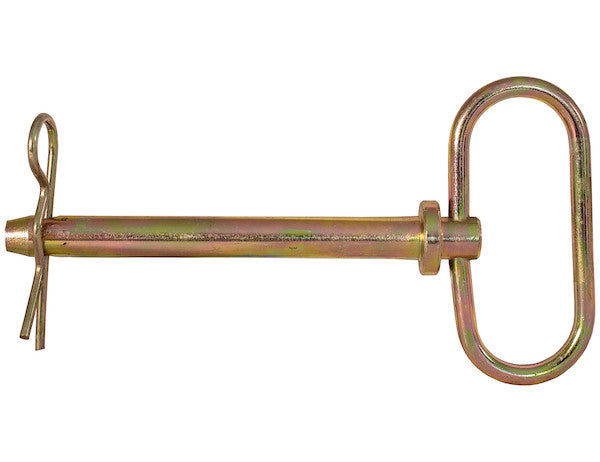
Buyers Products Hitch Pins come complete with a spring wire handle and cotter pin. Forged from 1040 steel, they are yellow zinc-plated for corrosion protection. Choose from a variety of sizes.
Specifications
| Pin Dia. (in.) | 1-1/8 |
|---|---|
| Usable Length (in.) | 6-1/4 |
Advanced Engineering and Material Science: The Yellow Zinc Plated Hitch Pin
In demanding industrial, agricultural, and commercial applications, the integrity of a connection point is paramount. The Yellow Zinc Plated Hitch Pin, with its robust 1-1/8 inch diameter and 6-1/4 inch usable length, represents a pinnacle of engineered reliability, designed to provide secure, quick-release fastening for heavy-duty linkages. This detailed exposition delves into the material science, manufacturing processes, protective coatings, and ergonomic design that coalesce to form a product indispensable for critical towing and coupling operations.
Precision Forging: The Foundation of Strength in 1040 Steel
The core strength and structural integrity of this hitch pin originate from its material composition: 1040 steel, meticulously forged. AISI 1040 is a medium-carbon steel, renowned for its excellent balance of strength, hardness, and ductility. Its chemical composition typically includes 0.37-0.44% carbon, 0.60-0.90% manganese, 0.15-0.30% silicon, and trace amounts of phosphorus and sulfur. This specific carbon content provides a significant increase in tensile strength and yield strength compared to lower carbon steels, making it exceptionally well-suited for applications requiring high load-bearing capacity and resistance to deformation under stress.
The choice of forging as the manufacturing process for these hitch pins is critical. Forging is a manufacturing process involving the shaping of metal using localized compressive forces. Unlike casting, which involves melting and pouring metal into a mold, or machining from bar stock, forging enhances the steel's mechanical properties. During the forging process, the metal's grain structure is refined and elongated to follow the contours of the pin. This results in a continuous grain flow, which significantly improves the pin's resistance to fatigue, impact, and shear stresses. Forged components exhibit superior strength-to-weight ratios and increased directional strength compared to their cast or machined counterparts. This inherent metallurgical advantage ensures that the 1-1/8 inch diameter pin can withstand the dynamic forces and vibrational stresses commonly encountered in heavy-duty towing and equipment articulation without premature failure. The 1040 steel, in its forged state, provides a formidable foundation for a pin designed to endure rigorous operational conditions, ensuring both safety and longevity.
Advanced Corrosion Protection: Yellow Zinc Plating with Chromate Conversion
The operational environments for hitch pins often expose them to severe corrosive elements, including moisture, road salts, agricultural chemicals, and industrial effluents. To counteract these aggressive conditions and extend the product’s service life, these pins are meticulously finished with a yellow zinc plating. This advanced coating system is not merely aesthetic; it provides a multi-layered defense against degradation.
The initial step, electroplating with zinc, creates a sacrificial layer on the steel surface. Zinc is galvanically anodic to steel, meaning that in the presence of an electrolyte (like moisture), the zinc preferentially corrodes, protecting the underlying steel substrate. This galvanic protection is highly effective, even if the coating is scratched, as the zinc will continue to protect the exposed steel until it is fully consumed. The zinc layer applied is carefully controlled for thickness, typically conforming to industry standards for optimal performance in moderate to severe environments.
Following the zinc plating, a yellow chromate conversion coating is applied. This chromate treatment reacts with the zinc layer to form a passive, insoluble film that significantly enhances corrosion resistance. The distinctive yellow coloration is a hallmark of hexavalent chromium chromates, historically favored for their superior protective qualities. While modern formulations increasingly utilize trivalent chromium for environmental compliance (RoHS directives), the term "yellow zinc" broadly describes this type of finish, known for its robust performance. This chromate layer acts as a barrier, slowing the rate of zinc corrosion and extending the life of both the zinc coating and the underlying steel. It provides an impressive increase in salt spray resistance, often achieving hundreds of hours without white rust (zinc corrosion) or red rust (steel corrosion), as measured by ASTM B117 standards. The combination of zinc’s sacrificial properties and the chromate’s barrier protection ensures that these hitch pins maintain their structural integrity and aesthetic appearance even after prolonged exposure to harsh elements, minimizing maintenance and replacement costs.
Engineered Dimensions and Ergonomic Design for Optimal Performance
The specific dimensions of this hitch pin – a 1-1/8 inch diameter and a 6-1/4 inch usable length – are not arbitrary; they are the result of careful engineering consideration to meet the demands of heavy-duty applications. The 1-1/8 inch diameter provides a substantial cross-sectional area, directly correlating to a higher shear strength and bending resistance. This robustness is critical for pins subjected to significant tensile, compressive, and shear forces when connecting trailers, implements, or other heavy machinery components. It ensures a tight, secure fit in corresponding clevises, receiver tubes, or pintle hooks, minimizing play and reducing wear on both the pin and the receiving component.
The 6-1/4 inch usable length refers to the effective portion of the pin that can pass through the mating components. This generous length accommodates a wide range of tongue widths, double-shear connections, and various receiver designs, ensuring versatility across different equipment types. It provides ample space for the spring wire handle to sit comfortably outside the connection point, allowing for easy access and manipulation. A sufficient usable length is also crucial for fully engaging the cotter pin, which acts as a secondary retention mechanism, preventing accidental disengagement due to vibration or shock loads.
The inclusion of a spring wire handle is a key ergonomic feature. Fabricated from durable spring steel, often with a protective coating, the handle is designed for quick and intuitive operation. Its integrated design ensures that the handle remains attached to the pin, preventing loss. The spring action provides a secure grip for insertion and removal, even when wearing gloves, enhancing operational efficiency and safety. Complementing the handle is the robust cotter pin, typically an R-clip or hairpin design, which securely locks the hitch pin in place. The cotter pin’s design facilitates rapid insertion and removal while offering a reliable failsafe against pin withdrawal during dynamic operations. The precise placement of the cotter pin hole on the main pin body ensures optimal engagement and maximum security, preventing lateral movement and accidental release of the connected apparatus.
Rigorous Manufacturing and Quality Assurance
The production of these Yellow Zinc Plated Hitch Pins adheres to stringent manufacturing protocols and comprehensive quality assurance measures, ensuring consistent performance and reliability. The process begins with the careful selection of 1040 steel billets, which are rigorously inspected for metallurgical purity and dimensional accuracy. These billets are then heated to their forging temperature in controlled environments, preventing oxidation and ensuring uniform plasticity.
During the forging phase, specialized dies shape the steel under immense pressure, compacting the material and refining its grain structure as previously described. Post-forging, the pins undergo controlled cooling to optimize their mechanical properties. Subsequent machining operations, such as drilling the cotter pin hole and chamfering edges, are performed with high precision to ensure dimensional tolerances and facilitate smooth operation. The pins are then thoroughly cleaned and degreased, removing any scale, oil, or contaminants that could compromise the integrity of the protective coating.
The electroplating and chromate conversion processes are meticulously controlled. Parameters such as bath chemistry, current density, temperature, and immersion times are precisely monitored to ensure a uniform zinc layer thickness and an even, robust chromate film. Post-plating, samples are routinely subjected to quality control tests, including coating thickness measurements (e.g., using X-ray fluorescence), adhesion tests, and accelerated corrosion tests like the salt spray test (ASTM B117) to verify the expected corrosion resistance performance. Dimensional checks are performed at various stages, including final inspection, to guarantee that the 1-1/8 inch diameter and 6-1/4 inch usable length, along with the cotter pin hole and handle dimensions, meet exact specifications. The spring wire handle and cotter pin are then assembled, and the final product undergoes a visual inspection for any defects before packaging. This multi-stage quality control regimen ensures that every hitch pin delivered is a product of superior craftsmanship and meets the highest standards of reliability and durability.
Versatile Applications Across Industries
The robust construction and superior protective finish of the Yellow Zinc Plated Hitch Pin make it an indispensable component across a vast array of industries and applications:
- Agriculture: Essential for connecting various farm implements to tractors, including plows, harrows, planters, cultivators, and trailers. The pins withstand the constant vibration, heavy loads, and exposure to dirt, moisture, and fertilizers inherent in agricultural operations. Their ease of use facilitates quick equipment changes in the field.
- Construction: Utilized in connecting attachments to construction machinery such as skid steers, mini excavators, and backhoes. They are also critical for securing trailer hitches on dump trailers, equipment haulers, and utility trailers, ensuring safe transport of heavy materials and machinery across challenging job sites.
- Commercial Towing & Transportation: For commercial trucks and specialized transport vehicles, these pins secure pintle hooks, drawbars, and various towing hitches. Their strength is crucial for towing heavy loads over long distances and varied terrains, providing a reliable connection for cargo and equipment trailers.
- Industrial Equipment: Found in various industrial settings for securing gates, machinery components, material handling equipment, and specialized fixtures. The pins offer a heavy-duty, yet easily removable, fastening solution for components that require frequent adjustment or disconnection.
- Utility Services: Used by utility companies for securing equipment on service vehicles, trailers for transporting tools and materials, and in various field operations where robust and reliable connections are required.
In each application, the pin’s specific attributes – its substantial diameter for load-bearing, its usable length for versatility, and its yellow zinc plating for environmental resilience – contribute to a safer, more efficient, and more durable operational outcome.
Unparalleled Advantages and Long-Term Value
Investing in the Yellow Zinc Plated Hitch Pin (1-1/8 Diameter x 6-1/4 Inch Usable Length) offers a multitude of tangible advantages:
- Exceptional Durability: Forged from high-strength 1040 steel, it possesses superior resistance to bending, shear, and fatigue, ensuring a long operational lifespan even under extreme stress.
- Advanced Corrosion Resistance: The yellow zinc plating with chromate conversion provides robust protection against rust and corrosion, significantly extending the pin’s life in challenging outdoor and corrosive environments, reducing the need for frequent replacement.
- Reliable Security: The combination of the precise diameter, optimal usable length, and the secure cotter pin mechanism guarantees a steadfast connection, preventing accidental disengagement and enhancing operational safety.
- Ease of Use: The integrated spring wire handle facilitates quick, effortless insertion and removal, streamlining equipment setup and breakdown, saving valuable time and labor.
- Versatile Compatibility: Engineered dimensions ensure compatibility with a broad spectrum of heavy-duty hitches, receivers, and clevises across diverse industrial and vehicular applications.
- Cost-Effectiveness: The pin’s extended lifespan and reduced maintenance requirements translate into a lower total cost of ownership, providing significant long-term value.
Conclusion: A Benchmark in Heavy-Duty Fastening
The Yellow Zinc Plated Hitch Pin, with its 1-1/8 inch diameter and 6-1/4 inch usable length, is more than just a fastener; it is a critical engineering component designed for peak performance and enduring reliability. From the metallurgical superiority of its forged 1040 steel core to the sophisticated multi-layer protection of its yellow zinc plating, every aspect of its design and manufacture is meticulously executed. Its robust dimensions, coupled with an intuitive, secure retention system, ensure it meets the rigorous demands of heavy-duty applications across agriculture, construction, transportation, and industrial sectors. This product embodies a commitment to quality, safety, and durability, setting a benchmark for dependable connection solutions where failure is not an option. Choose this hitch pin for uncompromising strength, superior corrosion resistance, and unwavering performance in your most demanding tasks.