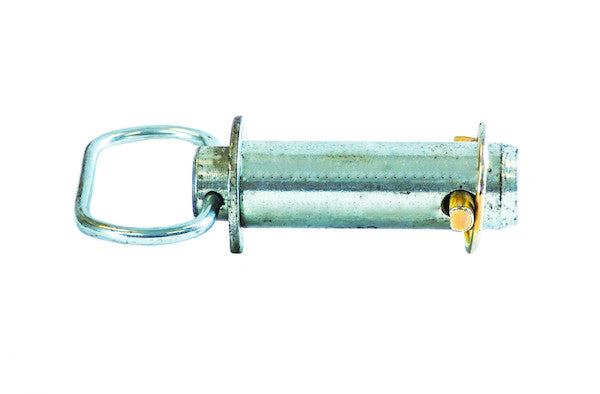
Buyers Products Hitch Pins come complete with a spring wire handle and cotter pin. Forged from 1040 steel, they are yellow zinc-plated for corrosion protection. Choose from a variety of sizes.
Specifications
| Pin Dia. (in.) | 1-1/4 |
|---|---|
| Usable Length (in.) | 2-3/4 |
Advanced Technical Overview: Hitch Pin Assembly - 1-1/4 Diameter x 2-3/4 Inch Usable Length
The Hitch Pin Assembly, featuring a 1-1/4 inch diameter and a 2-3/4 inch usable length, represents a critical component in countless mechanical, agricultural, construction, and towing applications. Designed and manufactured by Buyers Products, this specific assembly is engineered to provide a robust, secure, and reliable connection point, indispensable for the safe operation and attachment of various implements, trailers, and machinery. Its construction reflects a careful balance of material science, manufacturing precision, and functional design, ensuring optimal performance under demanding conditions. This comprehensive technical description will delve into the specific attributes of this hitch pin assembly, elaborating on its material composition, manufacturing processes, surface treatments, design specifications, and the multifaceted applications for which it is ideally suited.
Comprehensive Product Dissection and Component Analysis
At its core, the Hitch Pin Assembly is a multi-component system meticulously designed for secure fastening. It comprises three primary elements: the main pin body, the spring wire handle, and the cotter pin. Each element plays a distinct yet interconnected role in achieving the overall objective of a steadfast and user-friendly connection.
- The Main Pin Body: This is the central load-bearing component, engineered to withstand significant shear and bending stresses. Its 1-1/4 inch diameter is a critical dimensional specification, dictating its compatibility with corresponding receivers, couplers, or attachment points. The integrity and strength of this pin are paramount, as it directly bears the brunt of operational forces.
- The Spring Wire Handle: Attached to one end of the main pin, the spring wire handle serves a dual purpose. Firstly, it provides an ergonomic and accessible grip for easier insertion and removal of the pin, even with gloved hands. Secondly, its spring action is often designed to apply slight pressure against the connection point, assisting in keeping the pin seated and reducing rattling, although its primary role is user convenience.
- The Cotter Pin: This small yet indispensable component acts as the primary locking mechanism, preventing the main pin from inadvertently disengaging from its operational position. Typically inserted through a pre-drilled hole at the end of the main pin, once engaged and its ends bent, it provides a positive mechanical lock, securing the hitch pin assembly in place. The reliability of the cotter pin is non-negotiable for safety-critical applications.
Material Science and Manufacturing Excellence: Forged 1040 Steel
The selection of 1040 steel as the base material for this hitch pin assembly is a testament to its engineering suitability for high-stress applications. 1040 steel is a medium-carbon steel, renowned for its excellent balance of strength, hardness, and toughness. Its nominal chemical composition typically includes 0.37-0.44% carbon, 0.60-0.90% manganese, and trace amounts of silicon, sulfur, and phosphorus. This carbon content is crucial for achieving good tensile strength and hardenability, making it significantly stronger and more wear-resistant than lower carbon steels, while still maintaining reasonable ductility and machinability.
The decision to forge the hitch pins from 1040 steel is a key differentiator in terms of mechanical performance. Forging is a manufacturing process that involves shaping metal using localized compressive forces, typically through hammering or pressing. Unlike casting or machining from bar stock, forging inherently improves the mechanical properties of the steel:
- Grain Refinement: The forging process refines the grain structure of the steel, making it finer and more uniform. This refinement significantly enhances the material's strength and toughness, as smaller grains impede crack propagation more effectively.
- Grain Flow Orientation: Forging aligns the internal grain flow of the steel along the contours of the part. This optimized grain flow provides improved resistance to fatigue and impact, particularly along critical stress points. In a hitch pin, this means enhanced resistance to shear forces and bending moments.
- Elimination of Internal Defects: The compressive forces applied during forging work to close up internal voids, porosity, and gas pockets that might be present in the original metal stock. This results in a denser, more homogeneous material with superior integrity.
- Increased Strength-to-Weight Ratio: By enhancing the inherent strength of the material, forged components can often achieve the required load capacity with less material, potentially offering a better strength-to-weight ratio compared to components manufactured by other methods.
- Improved Fatigue Resistance: Given the dynamic loading often experienced by hitch pins, high fatigue resistance is crucial. The refined grain structure and favorable grain flow achieved through forging significantly contribute to the hitch pin's ability to withstand repetitive stress cycles without failure.
The employment of forged 1040 steel ensures that the main pin body possesses the requisite mechanical properties to safely and reliably manage the demanding shear and tensile loads encountered in heavy-duty applications. This choice of material and manufacturing process is a direct reflection of Buyers Products' commitment to durability and operational safety.
Advanced Corrosion Protection: Yellow Zinc Plating
Beyond its structural integrity, the longevity and reliability of a hitch pin in outdoor and often harsh environments are heavily dependent on its resistance to corrosion. This hitch pin assembly benefits from a yellow zinc-plated finish, a sophisticated electrochemical treatment designed to provide superior protection against environmental degradation.
Zinc plating, also known as electrogalvanization, involves depositing a thin layer of zinc onto the surface of the steel through an electrolytic process. Zinc acts as a sacrificial coating, meaning it corrodes preferentially to the underlying steel when exposed to corrosive agents like moisture, oxygen, and road salts. This electrochemical protection prevents rust from forming on the steel substrate, extending the functional lifespan of the component.
The "yellow" aspect of the zinc plating refers to a subsequent chromate conversion coating applied over the zinc layer. This chromate treatment significantly enhances the corrosion resistance of the zinc plating itself. Yellow chromate provides a passivating layer that:
- Increases Barrier Protection: It acts as an additional barrier against moisture and air, further slowing down the oxidation of the zinc.
- Provides Self-Healing Properties: In the event of minor scratches or abrasions to the zinc layer, the chromate film can offer some self-healing capabilities, helping to maintain protection.
- Offers Aesthetic and Identification Benefits: The distinctive yellow-gold hue not only provides an attractive finish but can also be used for product identification or to signify a specific level of corrosion protection.
The synergy between the zinc and the yellow chromate coating dramatically extends the service life of the hitch pin assembly, making it suitable for continuous outdoor exposure and use in environments where moisture, chemicals, or abrasive elements are prevalent. This robust anti-corrosion treatment minimizes maintenance requirements and ensures that the pin retains its structural integrity and aesthetic appeal over time, preventing issues like seized connections or premature material degradation that could compromise safety.
Precision Engineering and Dimensional Specifications
The precise dimensions of this hitch pin assembly are not arbitrary; they are critical engineering parameters that dictate its functionality, compatibility, and load-bearing characteristics.
- 1-1/4 Inch Diameter: This specific diameter is a standard size for heavy-duty applications, commonly found in larger agricultural implements, substantial construction equipment, and high-capacity towing systems. The diameter directly influences the pin's shear strength – its resistance to forces acting parallel to the pin's cross-section that would attempt to cut or shear it. A larger diameter means a greater cross-sectional area, proportionally increasing the pin's shear strength and its ability to withstand significant lateral forces without deformation or failure. Engineers carefully select this diameter based on anticipated load requirements and industry standards for specific hitch classes or implement categories. It ensures a snug fit in similarly sized receivers, minimizing play and enhancing stability, which is crucial for reducing wear and preventing dynamic stresses on the connected components.
- 2-3/4 Inch Usable Length: The usable length refers to the effective portion of the pin that can pass through the mating components (e.g., a clevis, hitch receiver, or drawbar eye) and still allow for the secure attachment of the cotter pin. A usable length of 2-3/4 inches provides sufficient clearance to accommodate a variety of material thicknesses, ensuring that even thick-walled components can be securely fastened. This dimension is vital to prevent the pin from being too short, which would prevent the cotter pin from being inserted, or too long, which could result in excessive protrusion, increasing the risk of snagging or interference with other moving parts. The optimal usable length guarantees a full engagement of the pin through all connected elements, distributing the load effectively and maintaining the integrity of the connection without creating unnecessary gaps or vulnerabilities.
Versatility Across Diverse Applications
The robust design and specific dimensions of this 1-1/4 inch diameter x 2-3/4 inch usable length hitch pin assembly lend it to an exceptionally wide range of applications, underscoring its versatility and essential role in various industries:
- Agriculture: Indispensable for securing implements such as plows, tillers, planters, trailers, and spreaders to tractor drawbars. The pin's strength is crucial for handling the dynamic forces and heavy loads encountered in field operations.
- Construction: Used extensively in construction equipment for attaching various work tools, securing scaffolding components, linking modular structures, or as robust fasteners for temporary or semi-permanent connections where high strength is required.
- Towing and Transportation: Critical for securing trailer couplers to hitch receivers, particularly in heavy-duty trucking, recreational vehicle (RV) applications, and commercial towing scenarios where the safety of the towed load is paramount.
- Industrial Machinery: Employed in a myriad of industrial settings for securing machine guards, positioning jigs and fixtures, or connecting components on manufacturing lines where quick yet secure attachment is necessary.
- Marine Applications: While zinc plating provides good corrosion resistance, specific marine-grade coatings or materials might be preferred for continuous saltwater immersion, but for freshwater or intermittent splash zones, this assembly offers significant protection for securing boat trailers, docks, or other marine equipment.
- General Utility: Suitable for a wide array of general utility fastening tasks in workshops, maintenance facilities, and large-scale DIY projects where a strong, reliable, and easily removable pin is required.
The availability of a 'variety of sizes' from Buyers Products further highlights the adaptability of their hitch pin line, allowing users to select the precise dimensions required for their specific needs, thereby optimizing both safety and performance across an even broader spectrum of applications.
Safety, Reliability, and Operational Best Practices
The integrity of a hitch pin assembly is directly tied to the safety of equipment operation and the security of towed loads. A failure in this critical component can lead to catastrophic consequences, including detachment of implements, loss of control, and potential injury or property damage. Therefore, the engineering and material choices for this product prioritize safety and long-term reliability.
To ensure optimal performance and safety, adherence to best practices is crucial:
- Correct Size Selection: Always ensure the hitch pin's diameter and usable length precisely match the receiving components. A pin that is too small can lead to excessive play, premature wear, and a reduction in shear strength. A pin that is too short may not allow the cotter pin to be fully engaged, compromising the lock.
- Proper Cotter Pin Usage: The cotter pin must be correctly inserted through the main pin and its ends bent apart (or a hairpin clip fully engaged) to create a positive lock. Never operate equipment with an improperly secured or missing cotter pin. This seemingly small component is the ultimate safeguard against accidental disengagement.
- Regular Inspection: Prior to each use, the hitch pin assembly should be visually inspected for any signs of wear, bending, cracks, corrosion, or deformation. Pay close attention to the area where the pin bears load and where the cotter pin is inserted. If any signs of damage are present, the pin should be replaced immediately.
- Load Ratings: While specific load ratings for this particular pin are not detailed, it is imperative that users ensure the overall assembly (including the hitch pin) is rated for the anticipated maximum load. Overloading a hitch pin can lead to catastrophic failure.
- Maintenance of Plating: Although zinc plating provides excellent corrosion resistance, regular cleaning to remove dirt, mud, and corrosive residues can further prolong its life. Avoid harsh abrasive cleaners or tools that could damage the plating.
- Avoid Modification: Never attempt to modify the hitch pin by grinding, welding, or bending, as this can severely compromise its structural integrity and safety.
The manufacturing quality, derived from forging 1040 steel and applying yellow zinc plating, ensures that this Buyers Products hitch pin assembly meets stringent performance expectations. Its robust construction is designed to withstand the rigorous demands of industrial, agricultural, and towing applications, providing operators with confidence in their connections.
Conclusion
The Buyers Products Hitch Pin Assembly, with its precisely engineered 1-1/4 inch diameter and 2-3/4 inch usable length, represents a superior solution for secure fastening in demanding environments. Through the strategic utilization of forged 1040 steel, it delivers exceptional strength, fatigue resistance, and durability, outperforming components made with lesser materials or manufacturing processes. The application of yellow zinc plating provides a critical layer of sacrificial and barrier corrosion protection, ensuring the longevity and reliable operation of the pin even when exposed to harsh environmental elements. Each component, from the robust main pin body to the user-friendly spring wire handle and the critical cotter pin, is designed to integrate seamlessly for maximum performance and safety.
This hitch pin assembly is not merely a fastener; it is a meticulously crafted engineering component that plays a vital role in preventing equipment detachment, safeguarding personnel, and ensuring the smooth operation of heavy machinery and towed systems across agriculture, construction, towing, and industrial sectors. Its adherence to high-quality materials and manufacturing standards makes it an indispensable asset for professionals who demand unwavering reliability and optimal performance from their hardware. By investing in this precision-engineered hitch pin assembly, users are assured of a secure, durable, and corrosion-resistant connection solution that stands up to the most challenging applications, exemplifying the commitment to excellence inherent in Buyers Products.