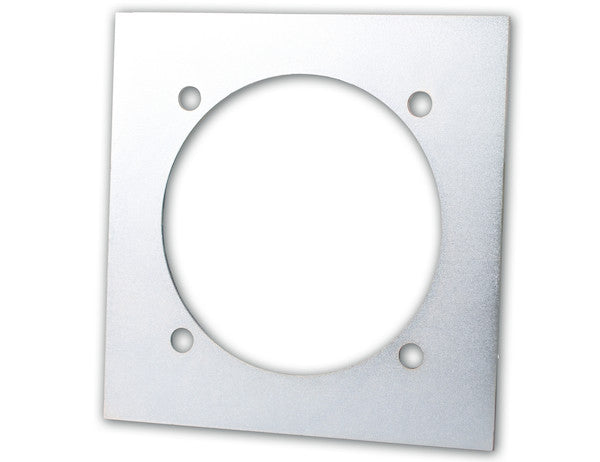
Buyers Products Zinc Plated Back Support Plate for B901 Series Rope Ring provides additional support for a sturdy installation.
Specifications
| Finish | Zinc Plated |
|---|---|
| Material | Carbon Steel |
| W.L.L. (lbs) | - |
Comprehensive Technical Overview: Back Support Plate for B901A Zinc Plated Rope Ring
The Back Support Plate, specifically engineered for integration with the B901 Series Rope Ring, represents a crucial component in the design and implementation of robust and secure cargo tie-down systems. This zinc-plated carbon steel plate is meticulously designed to provide essential structural reinforcement, effectively distributing localized stresses over a broader surface area. This critical function mitigates the risk of premature wear, deformation, or failure of the underlying mounting substrate, a common concern in applications subjected to high dynamic loads or vibrations. The inclusion of such a reinforcement plate is indispensable for achieving and maintaining the intended working load limits (WLL) of the entire securement assembly, particularly where the integrity of the base material—such as trailer flooring, truck beds, or chassis components—must be preserved under challenging operational conditions. The selection of materials and the refined manufacturing process underscore a commitment to delivering components that ensure superior durability, enhance safety, and provide consistent long-term performance across demanding industrial and commercial environments.
Material Science: The Engineering Foundation of Carbon Steel
The choice of carbon steel as the foundational material for the Back Support Plate is a deliberate engineering decision, optimizing for an exceptional balance of mechanical strength, inherent ductility, and economic viability. Carbon steel, fundamentally an alloy of iron and carbon, is celebrated for its excellent mechanical properties that render it highly suitable for strenuous load-bearing applications. The carbon content, typically ranging from 0.05% to 2.0% by weight, is a critical determinant of the steel's hardness, tensile strength, and processing characteristics, including weldability. For components such as back support plates, low to medium carbon steel grades are typically preferred due to their optimal combination of formability, allowing for precise shaping, and robust strength profiles, ensuring resilience under stress.
Compositional Advantages and Mechanical Properties:
- Iron (Fe): Serving as the primary constituent, iron establishes the metallic matrix, providing the bulk structural integrity.
- Carbon (C): As the principal alloying element, carbon directly influences the steel's ultimate tensile strength and hardness. Carefully controlled carbon levels are crucial; while higher carbon content generally boosts hardness and strength, it can concurrently reduce ductility and complicate welding processes, requiring a precise balance for this application.
- Manganese (Mn): Incorporated to enhance hot working properties, improve strength, and increase the material's toughness, which is vital for resisting impact and fatigue.
- Silicon (Si): Acts as an effective deoxidizer during the steel production phase and further contributes to strengthening the alloy.
- Sulfur (S) and Phosphorus (P): These elements are meticulously controlled as impurities. Elevated levels can induce brittleness and other undesirable metallurgical effects, thereby strict limits are imposed to maintain material quality.
The specific grade of carbon steel chosen for this back support plate is selected to ensure its capacity to withstand significant shear, tensile, and compressive forces without yielding or experiencing brittle fracture. Its inherent toughness allows it to absorb and dissipate energy from sudden impacts or fluctuating loads, a critical attribute in dynamic environments such as transportation, construction, and heavy industrial operations. Furthermore, carbon steel exhibits excellent fatigue resistance, enabling it to endure numerous cycles of stress and strain over its anticipated operational lifespan, thereby significantly prolonging the service life of the entire tie-down assembly and associated equipment.
From a manufacturing standpoint, carbon steel is highly adaptable to a variety of fabrication processes, including high-precision stamping, laser cutting, and forming. This versatility facilitates the production of components with extremely tight dimensional tolerances and consistent quality, crucial for mass production and reliable fitment. Its superior weldability is another significant advantage, allowing for secure integration into more complex structural frameworks if the application demands. The cost-effectiveness of carbon steel, when coupled with its formidable mechanical properties, positions it as an ideal material for performance-critical components in the heavy-duty hardware sector, offering an optimal balance of functionality and value.
Corrosion Protection: The Advanced Efficacy of Zinc Plating
While carbon steel provides an exceptional foundation of mechanical strength, it is intrinsically susceptible to corrosion, particularly oxidation (rusting), when exposed to environmental moisture and oxygen. To effectively counteract this vulnerability and extend the component's operational lifespan, the Back Support Plate undergoes a sophisticated zinc plating process. This widely recognized and highly effective method, often referred to as electro-galvanization, involves depositing a thin, uniform layer of zinc onto the steel surface through a precisely controlled electrochemical reaction.
Detailed Zinc Plating Process:
- Comprehensive Surface Preparation: The initial and most critical step involves meticulously cleaning the steel plate to eliminate all contaminants, including oils, greases, rust, and mill scale. This typically comprises several stages: alkaline degreasing to remove organic residues, pickling in an acid bath to dissolve oxides and rust, and multiple rinsing cycles to ensure a perfectly clean and receptive surface. Immaculate surface preparation is paramount for achieving optimal adhesion and uniformity of the subsequent zinc layer.
- Electroplating Application: Once thoroughly prepared, the clean steel plate is immersed in an aqueous electrolyte solution rich in dissolved zinc ions. An electric current is then applied, causing the positively charged zinc ions to migrate through the solution and deposit as a metallic coating onto the negatively charged steel workpiece (cathode). The precise thickness of this zinc layer is rigorously controlled by adjusting parameters such as current density, immersion time, and the chemical composition of the plating bath, ensuring consistent protective performance.
- Post-Treatment (Chromate Conversion Coating): Following the primary zinc deposition, the plated component is often subjected to a chromate conversion coating. This chemical process reacts directly with the newly formed zinc surface to create a passive, protective film. Depending on the desired finish and corrosion resistance level, this chromate layer can appear clear, blue-bright, yellow, or black. For this specific product, a standard clear or blue-bright chromate is typically applied, providing enhanced corrosion resistance without significantly altering the aesthetic profile. This chromate layer significantly boosts the zinc's inherent protective capabilities by sealing micro-pores and offering an additional robust barrier against environmental aggressors, such as moisture and airborne pollutants.
Dual Mechanism of Corrosion Protection:
Zinc plating safeguards carbon steel through a synergistic dual-action mechanism:
- Barrier Protection: The primary function of the zinc layer is to act as an impermeable physical barrier, effectively isolating the underlying steel substrate from corrosive elements present in the operating environment, including moisture, atmospheric oxygen, road salts, and industrial pollutants.
- Sacrificial Protection (Galvanic Action): Zinc is inherently more electrochemically active than steel. In the event that the zinc coating is breached or scratched, exposing the underlying steel, the zinc will preferentially corrode (acting as a sacrificial anode) instead of the steel. This galvanic protection mechanism actively prevents rust from propagating laterally beneath the coating, offering a distinct and superior advantage over non-sacrificial coatings like paint, where localized damage can lead to widespread under-film corrosion.
The zinc-plated finish not only imparts superior corrosion resistance but also provides an aesthetically pleasing, bright metallic appearance. This robust coating enhances the component's resistance to minor abrasions and wear, further contributing to its longevity in harsh and dynamic operational settings. The zinc plating process adheres to stringent international industry standards, such as ASTM B633, guaranteeing consistent quality, uniform coating thickness, and reliable performance. This protective layer is indispensable for applications exposed to diverse weather conditions, corrosive road chemicals, or aggressive industrial atmospheres, significantly prolonging the service life of the back support plate and, by extension, the entire cargo securement system.
Engineering Design and Optimal Functional Integration
The design of the Back Support Plate is far from a mere commodity; it is a meticulously engineered component specifically conceived to fulfill a vital role within a high-performance load securement system. Its paramount function is to optimize the distribution of forces exerted on a mounting point, particularly when a B901 Series Rope Ring is subjected to significant tension. Without the precise support offered by an adequate back support plate, the localized stresses around the bolt holes of a rope ring could concentrate excessively. Such stress concentrations invariably lead to rapid deformation, material fatigue, tearing, or even catastrophic failure of the substrate material (e.g., truck bed, trailer wall, or vehicle chassis). This engineering consideration is especially critical when the substrate material may not possess the same inherent tensile or shear strength as the tie-down hardware itself, highlighting the plate's role as a force-distributing interface.
Load Distribution and Advanced Stress Mitigation:
When a B901 Series Rope Ring is actively engaged in securing cargo, the tension generated by the tie-down strap or chain imparts substantial pull forces. These forces are then systematically transferred through the rope ring and its mounting bolts into the underlying substrate structure. The back support plate serves as an advanced load-spreading washer, substantially increasing the effective surface area over which these critical forces are dispersed. This intelligent distribution significantly reduces the intense point loading on the bolt holes and the surrounding material. By converting potentially damaging localized stress concentrations into more manageable, uniformly distributed stresses, the plate dramatically enhances the pull-out resistance and shear strength of the entire securement assembly. This engineering principle ensures that the structural integrity of both the tie-down hardware and the vehicle's structure is maintained under peak operational loads.
The plate's precise dimensions and meticulously configured hole pattern are designed to perfectly match the B901 Series Rope Ring. This ensures a precise, interference-free fit and optimal, efficient transfer of forces. The strategic utilization of multiple fastener points, typically incorporating high-grade bolts and corresponding nuts, further augments the overall integrity and rigidity of the installation. When installed in strict adherence to best practices, the back support plate creates a robust and unyielding clamping force, effectively integrating the rope ring as an integral part of the structural framework of the vehicle or industrial equipment.
Enhancing Global Structural Integrity and Durability:
Beyond its fundamental role in distributing localized loads, the back support plate significantly enhances the overall structural integrity and long-term durability of the entire tie-down point. It effectively mitigates the insidious risk of material fatigue and progressive yielding over extended operational periods, especially in applications where the rope ring is frequently subjected to dynamic loads, persistent vibrations, and unforeseen impacts. For instance, on a commercial flatbed trailer, the constant shifting of cargo, combined with inherent road imperfections, continuously subjects tie-down points to fluctuating and often unpredictable forces. A properly installed back support plate ensures that the mounting area remains exceptionally stable and highly resistant to deformation, thereby safeguarding the security of the transported cargo and, critically, the operational safety of the vehicle and its personnel.
Furthermore, in scenarios where the substrate material might be less robust—such as wooden flooring, composite panels, or thinner gauge metallic structures—the back support plate becomes absolutely indispensable. It provides a robust, rigid counter-surface against which the rope ring can be securely fastened, effectively preventing fastener pull-through and ensuring the consistent maintenance of the intended working load limit (WLL) of the entire securement system. This meticulous attention to design detail and material interaction underscores the paramount importance of every individual component in a critical safety application, ensuring that the weakest link does not compromise the entire system.
Diverse Applications and Critical Industry Relevance
The Back Support Plate for the B901A Zinc Plated Rope Ring is a foundational component that finds indispensable utility across an extensive spectrum of heavy-duty and commercial applications where unwavering cargo securement is not merely desired but an absolute operational necessity. Its inherently robust construction and sophisticated protective finish render it exceptionally well-suited for environments that demand uncompromising performance and an extended service life under challenging conditions.
Key Application Sectors Include:
- Commercial Trucking and Trailers: This plate is an essential component for reliably securing diverse types of cargo on flatbed trailers, enclosed freight trailers, utility trailers, and specialized step-deck configurations. It ensures that critical tie-down points possess the structural resilience to withstand the extreme stresses encountered during over-the-road transport, including abrupt braking, rapid acceleration, and traversing uneven or challenging terrain.
- Agricultural Equipment and Implements: Integral for securing various tools, agricultural supplies, and harvested goods on farm trailers, implements, and heavy machinery. In this sector, the plate's robust construction and corrosion protection are paramount due to constant exposure to outdoor elements, moisture, and agricultural chemicals.
- Construction Vehicles and Heavy Equipment: A vital component for establishing secure mounting points on service trucks, heavy equipment transporters, and temporary or permanent job site storage units. Its use ensures strict compliance with rigorous safety regulations governing the securement of construction materials, heavy machinery, and tools, thereby preventing dangerous cargo shifts.
- Marine and Boating Support: While not typically immersed in saltwater, the zinc plating provides superior protection against high humidity, freshwater exposure, and condensation commonly found in marine environments, making it suitable for boat trailers, dock equipment, or marine-grade equipment racks.
- Industrial and Manufacturing Facilities: Employed in a wide array of material handling equipment, sophisticated assembly lines, and stationary fixtures where items necessitate either temporary or permanent securement, contributing to workplace safety and operational efficiency.
The intrinsic reliability of cargo securement hardware directly and profoundly impacts operational efficiency, overall safety compliance, and adherence to stringent transportation regulations (such as those promulgated by the Federal Motor Carrier Safety Administration (FMCSA) in the United States, and analogous international bodies). By proactively preventing the premature failure of critical tie-down points, the Back Support Plate minimizes costly downtime stemming from equipment damage or catastrophic cargo loss. More significantly, it drastically reduces the potential for severe accidents caused by inadequately secured or shifting loads. For astute fleet managers, discerning trailer manufacturers, and rigorous industrial procurement specialists, specifying and utilizing components like this back support plate represents a strategic and informed decision that significantly contributes to the overall safety profile, long-term operational viability, and economic sustainability of their respective operations.
Manufacturing Excellence and Stringent Quality Assurance
The production of the Back Support Plate is meticulously executed under stringent manufacturing protocols and comprehensive quality assurance measures, guaranteeing that each individual unit consistently meets and often exceeds its specified performance criteria. The entire process commences with the scrupulous selection of high-grade carbon steel sheets, which are then subjected to precision cutting and forming processes utilizing state-of-the-art machinery and advanced fabrication techniques.
Highlights of the Manufacturing Process:
- Certified Material Sourcing: Only certified carbon steel, which strictly conforms to relevant ASTM (American Society for Testing and Materials) or equivalent international standards, is procured and utilized. This rigorous material selection ensures consistent and predictable mechanical properties across all production batches.
- Precision Cutting and Punching: Advanced laser cutting or high-speed precision punching techniques are meticulously employed to achieve exact dimensions and perfectly aligned hole patterns. This precision is paramount for ensuring flawless compatibility with the B901 Series Rope Ring, guaranteeing that all mounting holes align impeccably and all edges are clean, smooth, and entirely free of burrs.
- Precision Forming (as required): While many back support plates are designed as flat components, certain designs may necessitate minor bends or specific contours. In such cases, precision forming presses are utilized to ensure consistent geometry, optimal fit, and uncompromised structural integrity.
- Deburring and Edge Finishing: All component edges are carefully deburred to eliminate any sharp points or rough edges. This process not only enhances safety during handling and installation but also significantly improves the quality and adhesion of the subsequent zinc plating.
- Controlled Zinc Plating Application: As previously detailed, the sophisticated electro-galvanization process is rigorously controlled at every stage, encompassing pre-treatment, precise management of plating bath chemistry, exact current density regulation, and meticulous post-plating chromate conversion. This ensures the application of the specified coating thickness and achieves the desired superior finish quality.
Rigorous Quality Control and Adherence to Standards:
Throughout every phase of the manufacturing cycle, rigorous and systematic quality control checks are meticulously implemented. These critical checks include:
- Dimensional Inspection: Utilizing highly calibrated gauges, precise micrometers, and advanced optical comparators, critical dimensions, hole spacing, and plate thickness are meticulously verified against strict engineering drawings.
- Material Verification: Incoming raw material batches undergo comprehensive chemical analysis and mechanical property testing to confirm their exact composition and ensure full compliance with specified standards.
- Adhesion Testing: Specialized tests are conducted to assess and confirm the bond strength and integrity of the zinc coating to the underlying steel substrate, ensuring long-term durability.
- Corrosion Resistance Testing: Periodic salt spray testing, conducted in accordance with recognized international standards (e.g., ASTM B117), evaluates the long-term effectiveness and durability of the zinc plating and chromate layer in simulating aggressive corrosive environments. This testing validates the component's ability to withstand real-world exposure without premature degradation.
- Comprehensive Visual Inspection: Each finished component undergoes a thorough visual examination for any surface defects, inconsistencies in plating coverage, or any manufacturing flaws that could compromise performance or aesthetic quality.
Adherence to internationally recognized quality management systems, such as ISO 9001, ensures that all manufacturing processes are standardized, thoroughly documented, and subjected to continuous improvement cycles. This unwavering commitment to manufacturing excellence guarantees that every Back Support Plate leaving the facility consistently delivers the elevated level of performance, unwavering reliability, and superior durability expected by discerning end-users in the most demanding industrial and commercial applications.
Installation Best Practices and Proactive Maintenance
The optimal performance, long-term durability, and overall effectiveness of the Back Support Plate are profoundly dependent on its correct and meticulous installation. While the plate itself is engineered for inherent robustness, its maximum effectiveness is achieved only when it is flawlessly integrated into the complete cargo securement system.
Essential Installation Considerations:
- Thorough Surface Preparation: It is imperative to ensure that the designated mounting surface on the vehicle or equipment is impeccably clean, perfectly flat, and completely free from any obstructions or irregularities. Any surface unevenness can compromise the crucial clamping force, leading to uneven stress distribution and ultimately, premature wear or localized stress points.
- Judicious Fastener Selection: Always utilize high-grade fasteners (e.g., Grade 5 or Grade 8 bolts, corresponding nuts, and washers) that are specifically rated for the anticipated working load and the prevailing environmental conditions. The diameter and length of the bolts must be precisely adequate to pass securely through the rope ring, the substrate material, and the back support plate, with sufficient thread engagement for the nut to achieve full mechanical lock.
- Precise Alignment: Meticulously align the back support plate with the B901 Series Rope Ring and the pre-drilled mounting holes in the substrate. Any degree of misalignment can induce uneven stresses across the assembly, severely reducing the effectiveness of the support plate and potentially compromising the entire securement point.
- Adherence to Torque Specifications: Fasteners must be tightened to the vehicle or hardware manufacturer's explicitly recommended torque specifications using a calibrated torque wrench. Over-tightening can lead to stripped threads, deformed components, or material fatigue, while under-tightening can result in fasteners loosening under dynamic loads and vibrations, jeopardizing cargo security.
- Strategic Sealing (Recommended): In environments frequently exposed to moisture, road salts, or other corrosive agents, it is highly recommended to apply a high-quality sealant around the bolt holes or between the back support plate and the substrate. This measure effectively prevents water ingress and significantly enhances the corrosion protection of internal structural elements.
Proactive Maintenance for Extended Longevity:
While the zinc plating provides substantial inherent corrosion resistance, periodic inspection and minimal, proactive maintenance can further extend the service life of the Back Support Plate and the entire cargo tie-down assembly:
- Regular Visual Inspection: Conduct routine visual checks for any discernible signs of rust, excessive wear, bending, cracks, or other forms of deformation, particularly concentrating on areas around the bolt holes and plate edges. Any severe corrosion, significant deformation, or structural compromise warrants immediate replacement of the component.
- Fastener Integrity Verification: Periodically verify that all bolts and nuts remain securely tightened to their specified torque. Re-torqueing may be necessary, especially after initial use, after exposure to unusually heavy loads, or following periods of sustained vibration.
- Routine Cleaning: Periodically clean the plates to remove accumulated dirt, road salts, debris, or any corrosive substances. Such accumulations can trap moisture and accelerate localized corrosion, undermining the protective zinc layer.
Adhering to these comprehensive installation and maintenance guidelines ensures that the Back Support Plate continues to perform its critical structural reinforcement function effectively and reliably, thereby contributing significantly to the sustained safety and uncompromising reliability of cargo securement operations for many years to come.
Conclusion: The Unseen Pillar of Cargo Securement Integrity
The Back Support Plate for the B901A Zinc Plated Rope Ring, while often perceived as a discreet or secondary component, assumes an absolutely pivotal role in ensuring the structural integrity, operational safety, and long-term reliability of any heavy-duty cargo securement system. Meticulously crafted from robust carbon steel and diligently protected with a high-performance zinc-plated finish, this plate is ingeniously engineered to effectively distribute immense static and dynamic loads, proficiently mitigate critical stress concentrations, and provide unparalleled resistance against the pervasive corrosive forces prevalent in demanding operational environments. Its precise and optimized compatibility with the B901 Series Rope Ring ensures a seamless, high-performance integration, culminating in a secure and resilient tie-down point.
Across diverse sectors, from the rigorous demands of commercial trucking and heavy equipment transport to the precision requirements of industrial manufacturing, the strategic foresight to incorporate such a critical reinforcement component stands as a testament to an unwavering commitment to safety, inherent durability, and superior long-term cost efficiency. By fundamentally reinforcing the mounting point, significantly extending the operational lifespan of the tie-down hardware, and diligently safeguarding the integrity of the underlying substrate, this back support plate unequivocally embodies reliability. For industry professionals who mandate the absolute highest standards in cargo securement hardware, this meticulously engineered component is far more than a mere accessory; it is an indispensable foundation, serving as the unseen pillar for unwavering cargo stability, enhanced operational security, and profound peace of mind.