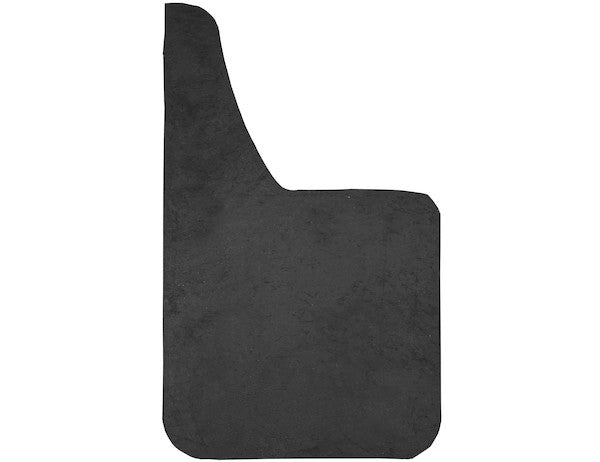
Buyers Products Heavy Duty Rubber Mud Flaps repel impact from road debris and have a durable design for long lasting road life. Made from 1/4 in. thick rubber, they resist cutting and tearing. The splash guards withstand subfreezing temperatures while resisting snow and ice buildup, making them ideal for all-season use. Available in many sizes and styles, the mud flaps are made in the USA at Boomerang Rubber Company from 100% recycled rubber.
Specifications
| Color | Black |
|---|---|
| Finish | Plain |
| Height (in.) | 18.00 |
| Material | Rubber |
| Mount Type | Bolt-On |
| Thickness (in.) | .25 |
| Width (in.) | 10.00 |
Technical Overview: Heavy Duty Black Rubber Mudflaps 10x18 Inch (Teardrop Style)
The Buyers Products Heavy Duty Rubber Mudflaps, specifically the 10x18 inch Teardrop Style variant, represent a critical engineering solution for vehicle protection and road safety. Designed and manufactured in the USA by Boomerang Rubber Company, these mudflaps are constructed from a robust 1/4 inch (approximately 6.35 mm) thick composite of 100% recycled rubber, formulated to deliver exceptional durability and performance across a broad spectrum of environmental and operational conditions. This technical description will elaborate on the material science, performance characteristics, design considerations, and operational advantages of this specific product.
Material Science and Engineering of Recycled Rubber Composites
The selection of 100% recycled rubber as the primary material for these mudflaps is a deliberate engineering choice, balancing environmental sustainability with stringent performance requirements. Rubber, as an elastomer, possesses unique viscoelastic properties that are ideally suited for applications requiring high impact absorption, flexibility, and resistance to dynamic stress. The use of recycled rubber, specifically post-industrial and post-consumer rubber products, undergoes a sophisticated processing methodology to ensure consistent quality and mechanical integrity. This process typically involves sorting, shredding, grinding into various mesh sizes (granulate or crumb rubber), and then compounding with specific binders, vulcanizing agents, and reinforcing additives to achieve the desired physical properties.
The 1/4 inch thickness is a fundamental aspect of the mudflap's mechanical performance. This gauge provides a substantial mass and structural rigidity that is crucial for effective energy dissipation upon impact. When road debris, such as rocks, gravel, or ice chunks, strikes the mudflap, the kinetic energy of the projectile is absorbed and distributed throughout the rubber matrix, preventing direct transfer to the vehicle’s body or undercarriage. Thinner mudflaps would be more susceptible to tearing, puncturing, or simply transmitting impact forces with less attenuation. The thickness also contributes to the mudflap's inherent resistance to flapping or excessive oscillation at highway speeds, a common issue with lighter, less substantial alternatives that can lead to premature wear or ineffective spray suppression.
The specific formulation of the recycled rubber compound is engineered to maintain optimal mechanical properties across a wide temperature range. Unlike some thermoplastic materials that can become brittle at subfreezing temperatures or excessively pliable at elevated temperatures, the vulcanized rubber structure exhibits a stable modulus of elasticity. This ensures the mudflap retains its flexibility and resilience even when exposed to severe winter conditions, preventing cracking or shattering upon impact. Furthermore, the material's inherent damping characteristics contribute to noise reduction, as impacts from debris are absorbed rather than resonating as metallic or rigid plastic would.
The density of the rubber compound is also optimized. While recycled rubber can vary in density depending on its source and processing, the final composite is engineered to provide sufficient weight to hang plumb and resist upward deflection caused by wind sheer or turbulent airflows around the wheel wells. This contributes to consistent ground clearance and effective containment of road spray and debris. The black pigmentation of the rubber is not merely aesthetic; it often incorporates carbon black, which acts as a UV stabilizer, significantly enhancing the material's resistance to degradation from prolonged exposure to solar radiation. UV degradation can otherwise lead to molecular chain scission, resulting in hardening, cracking, and a reduction in overall service life.
Performance Characteristics: Durability and Environmental Resilience
The performance claims of the Buyers Products Heavy Duty Rubber Mudflaps are substantiated by the engineered properties of their recycled rubber composition and robust design. These characteristics are paramount for ensuring operational reliability and safety in demanding vehicular environments.
Impact and Abrasive Resistance
The primary function of a mudflap is to shield the vehicle and other road users from debris. The 1/4 inch thick rubber is exceptionally effective at repelling impact from road debris. This capability stems from rubber's high energy absorption capacity and excellent tear strength. Upon impact, the rubber deforms elastically, absorbing the kinetic energy of the projectile, then rapidly recovers its original shape. This elastic deformation prevents permanent damage such as dents, chips, or scratches to the vehicle's paintwork or undercarriage components. Furthermore, the material exhibits superior resistance to cutting and tearing. This is critical as mudflaps are constantly subjected to abrasive forces from road grit, sharp gravel, and occasional impacts with larger objects or curbs. The robust molecular cross-linking achieved through the vulcanization process in the rubber compound makes it highly resilient against the propagation of tears and cuts, contributing significantly to its extended service life.
Thermal Stability and All-Season Performance
A key performance differentiator for these mudflaps is their ability to withstand extreme thermal variations. The material is specifically formulated to withstand subfreezing temperatures, a critical requirement for year-round operation in diverse climates. Unlike certain polymers that may undergo a significant increase in glass transition temperature (Tg) and become brittle at low temperatures, the chosen rubber compound maintains its elastomeric properties, ensuring flexibility and impact resistance even in arctic conditions. This prevents the mudflaps from cracking or shattering when struck by ice or frozen debris, a common failure mode for inferior materials.
Conversely, the mudflaps are equally robust in resisting degradation from elevated temperatures encountered during summer months or in regions with hot climates. The thermal stability ensures that the material does not become excessively soft or deformed, which could lead to reduced effectiveness or mechanical failure. This comprehensive thermal performance underscores their designation as ideal for "all-season use."
Snow and Ice Buildup Resistance
Beyond maintaining structural integrity at low temperatures, these mudflaps are engineered to resist snow and ice buildup. The surface finish and material composition minimize the adhesion of frozen precipitation. This is crucial because significant accumulation of snow and ice can add considerable weight to the mudflaps, potentially causing them to sag, tear from their mounting points, or reduce ground clearance to an unsafe level. By resisting buildup, the mudflaps maintain their effective dimensions and functional integrity, ensuring consistent spray suppression and debris containment without requiring frequent manual clearing, thereby reducing maintenance burden for operators.
Chemical and Environmental Resistance
While not explicitly detailed in the original description, the "long lasting road life" implicitly includes resistance to various environmental aggressors beyond just temperature. These mudflaps are designed to withstand exposure to common road chemicals such as road salt (sodium chloride, magnesium chloride, etc.), oils, greases, and automotive fluids (e.g., diesel fuel, hydraulic fluid). The robust chemical structure of the vulcanized rubber provides a barrier against these substances, preventing material degradation, swelling, or changes in mechanical properties that could compromise performance and longevity. This comprehensive resistance ensures that the mudflaps remain effective and aesthetically consistent throughout their operational lifespan, regardless of the challenging conditions encountered on roadways.
Design and Aesthetics: The 10x18 Inch Teardrop Style
The specified dimensions and style of these mudflaps are not arbitrary; they are the result of functional considerations tailored for specific vehicle applications, balanced with aesthetic appeal and regulatory compliance.
Dimensions: 10x18 Inch (Width x Height)
The dimensions of 10 inches wide by 18 inches high are engineered for optimal coverage on a range of light to medium-duty trucks, utility trailers, and other commercial vehicles where larger mudflaps might be excessive or impractical. The 10-inch width is sufficient to extend beyond the tire tread width for many standard wheel configurations, effectively intercepting the majority of spray and debris ejected by the tires. The 18-inch height provides ample vertical coverage, ensuring that spray is suppressed sufficiently to meet common regulatory requirements for spray suppression, particularly crucial for safety in wet driving conditions.
Proper mudflap sizing is critical. If too small, they fail to adequately contain spray and debris. If too large, they can become an impediment, dragging on the ground, incurring damage, or creating unnecessary aerodynamic drag. The 10x18 inch size represents a well-optimized balance for a segment of the commercial vehicle market, offering effective protection without excessive bulk or weight.
Teardrop Style
The "Teardrop Style" refers to a specific contour or profile of the mudflap, typically characterized by a slightly rounded or tapered bottom edge, often resembling the shape of a teardrop. This design choice is often multi-functional:
- Reduced Snagging: A rounded or tapered bottom edge is less likely to snag on obstacles, curbs, or rough terrain compared to a sharp, square edge. This reduces the risk of tearing the mudflap or damaging its mounting hardware.
- Aesthetic Appeal: The Teardrop Style can offer a more refined and less purely utilitarian aesthetic compared to a standard rectangular flap. This can contribute to the overall visual appeal of the vehicle, particularly for owner-operators or fleets that prioritize appearance.
- Minor Aerodynamic Benefits: While not a primary aerodynamic component, subtle tapering can marginally reduce air turbulence and spray generation at the bottom edge compared to a blunt cut, contributing to the overall effectiveness of spray suppression.
- Brand Recognition: In some cases, a specific style can become a recognizable feature of a particular brand or product line, signifying quality and design consistency.
Black Color and Plain Finish
The choice of a black color with a plain finish is driven by both practical and aesthetic considerations common in the heavy-duty vehicle sector:
- Durability and UV Resistance: As mentioned, black pigmentation, often achieved through carbon black, is inherently more resistant to UV degradation compared to many other colors. This ensures the mudflap retains its color and structural integrity over time, resisting fading and material breakdown.
- Concealment of Dirt and Grime: In an environment where mudflaps are constantly exposed to dirt, mud, and road grime, a black finish effectively conceals these accumulations, maintaining a more presentable appearance for longer periods between cleanings.
- Universal Compatibility: Black is a universally compatible color that seamlessly integrates with the aesthetics of virtually any vehicle color or fleet livery, eliminating concerns about color matching.
- Industrial Aesthetic: A plain, unadorned black finish conveys a sense of ruggedness, functionality, and professional utility, aligning with the industrial nature of heavy-duty vehicles. It also provides a neutral canvas for potential customization with stenciled logos or reflective tapes, should the end-user desire.
Installation and Compatibility: The Bolt-On Mount System
The "Bolt-On" mount type specified for these mudflaps is a standard and highly reliable method of attachment, offering both security and practicality for vehicle operators.
Advantages of Bolt-On Mounting
- Secure Attachment: Bolt-on systems provide a mechanically robust connection between the mudflap and the vehicle's frame or mudflap hangers. When properly installed with appropriate hardware (e.g., carriage bolts, washers, lock nuts, or self-tapping screws into a reinforced frame member), this method creates a strong, vibration-resistant attachment that can withstand the dynamic forces encountered during vehicle operation, including wind resistance, impacts, and vehicle motion.
- Ease of Installation and Replacement: While requiring drilling if pre-existing holes are not present, bolt-on installation is straightforward using common tools. More importantly, in the event of damage to a mudflap, replacement is simplified, minimizing vehicle downtime. The standardization of bolt patterns, where applicable, allows for interchangeability.
- Adjustability: Bolt-on systems often allow for minor adjustments in the mudflap's position during installation, ensuring optimal alignment with the tires and desired ground clearance. This is important for meeting regulatory requirements concerning mudflap proximity to the ground and tire coverage.
- Versatility: The bolt-on method is highly versatile and compatible with a wide array of mudflap hangers and vehicle chassis designs, making these mudflaps suitable for a broad range of applications.
Installation Considerations
While the mudflaps themselves are robust, the effectiveness and longevity of the installation depend on several factors:
- Hardware Selection: Users should select corrosion-resistant hardware (e.g., stainless steel or galvanized bolts, nuts, and washers) appropriate for the specific application to prevent rust and ensure long-term integrity, especially in regions exposed to road salts.
- Mounting Location: Proper mounting ensures that the mudflaps provide adequate tire coverage and maintain sufficient ground clearance to prevent dragging or damage. Compliance with local regulations regarding mudflap height and coverage should always be a primary consideration.
- Reinforcement: For heavy-duty applications or where significant stress is anticipated, using mudflap hangers with integrated steel or aluminum reinforcement can further enhance the stability and longevity of the installation.
Manufacturing and Quality Assurance: Made in USA by Boomerang Rubber Company
The "Made in USA" designation and the involvement of Boomerang Rubber Company underscore a commitment to quality, responsible manufacturing practices, and support for domestic industry. Buyers Products, as the brand, leverages the specialized expertise of Boomerang Rubber in rubber compounding and fabrication.
Advantages of Domestic Manufacturing
- Quality Control: Manufacturing in the USA typically entails adherence to higher quality control standards and more rigorous inspection protocols throughout the production process. This includes stringent checks on raw material consistency (especially important for recycled rubber), dimensional accuracy of finished products, and verification of mechanical properties.
- Regulatory Compliance: US-based manufacturing operates under strict environmental and labor regulations, ensuring responsible and ethical production practices.
- Supply Chain Efficiency: Domestic manufacturing often leads to shorter and more predictable supply chains, reducing lead times, enhancing inventory management, and allowing for quicker response to market demands or unforeseen disruptions.
- Technical Expertise: Access to skilled labor, advanced manufacturing technologies, and specialized engineering expertise within the USA ensures that products like these mudflaps benefit from continuous improvement and innovation in material science and design.
Boomerang Rubber Company's Role
Boomerang Rubber Company specializes in rubber products, bringing decades of experience in compounding and molding. Their expertise is critical in transforming recycled rubber into a high-performance material that meets the demanding specifications for heavy-duty mudflaps. This involves:
- Recycled Material Processing: Implementing advanced techniques to sort, clean, and process various sources of recycled rubber into consistent, usable forms.
- Compound Formulation: Developing proprietary rubber formulations that optimize properties such as elasticity, tear strength, abrasion resistance, and temperature stability.
- Precision Molding/Cutting: Utilizing specialized equipment to precisely cut or mold the 1/4 inch thick rubber into the specified 10x18 inch Teardrop Style mudflaps, ensuring dimensional accuracy and consistency across production batches.
Regulatory Compliance and Enhanced Road Safety
The fundamental purpose of mudflaps extends beyond merely protecting the vehicle to significantly enhancing road safety and ensuring regulatory compliance.
Spray Suppression
The most critical safety function of mudflaps is the suppression of road spray. In wet conditions, vehicle tires churn up significant quantities of water, mud, and slush, creating a dense plume of spray that severely reduces visibility for following vehicles. This spray can blind drivers, increasing the risk of accidents. By effectively intercepting and directing this spray downwards, the 10x18 inch mudflaps substantially improve visibility, making roadways safer for all users. The specific dimensions and the heavy-duty nature ensure that the mudflaps remain effective even at higher speeds or in heavy precipitation.
Debris Containment
In addition to water spray, tires on commercial vehicles can eject stones, gravel, ice, and other road debris at high velocities. These projectiles pose a significant hazard, capable of causing damage to windshields, headlights, and paintwork of other vehicles, and potentially injuring pedestrians or cyclists. The robust 1/4 inch thick rubber of these mudflaps acts as an effective barrier, absorbing the impact energy of such debris and preventing it from being launched into the path of others. This protective function is crucial for mitigating liability risks for fleet operators and ensuring public safety.
Legal Requirements
Mudflaps are not merely an accessory; they are often a legal requirement in many jurisdictions for specific types of vehicles, particularly commercial trucks and trailers. Regulations vary by state and country but generally mandate certain dimensions, ground clearance, and tire coverage to ensure effective spray and debris suppression. The 10x18 inch dimensions are designed to comply with many common regulatory standards, making these mudflaps a reliable choice for operators seeking to ensure their vehicles meet legal operating requirements and avoid fines or citations.
Environmental Responsibility and Sustainable Practices
The commitment to using 100% recycled rubber highlights a strong dedication to environmental stewardship, positioning these mudflaps as an eco-conscious choice for consumers and fleets.
Reducing Landfill Waste
By utilizing 100% recycled rubber, these mudflaps directly contribute to diverting significant quantities of waste rubber (such as discarded tires, industrial scraps, and other rubber products) from landfills. This reduces the environmental burden associated with waste disposal and conserves valuable landfill space.
Conservation of Virgin Resources
The manufacturing of virgin rubber, whether natural (from rubber trees) or synthetic (from petrochemicals), requires substantial resources, including land, water, and energy. By using recycled content, the demand for virgin raw materials is significantly reduced, thereby conserving natural resources and minimizing the environmental footprint associated with material extraction and initial processing.
Lower Carbon Footprint
The energy required to process recycled rubber into usable material is often considerably less than that required to produce virgin rubber from scratch. This translates to a reduced carbon footprint during the manufacturing phase, contributing to lower greenhouse gas emissions and a more sustainable production cycle. The local manufacturing in the USA further minimizes transportation-related emissions compared to sourcing products from overseas.
Conclusion
The Buyers Products Heavy Duty Black Rubber Mudflaps, in the 10x18 inch Teardrop Style, represent a meticulously engineered solution designed to meet the rigorous demands of commercial vehicle operation. Their construction from 1/4 inch thick, 100% recycled rubber ensures exceptional durability, providing superior resistance to impact, cutting, tearing, and environmental degradation, including extreme temperatures and chemical exposure. The specific dimensions and Teardrop Style are optimized for effective spray suppression, debris containment, and aesthetic integration across a range of vehicle types, while the bolt-on mounting ensures secure and reliable attachment.
Manufactured in the USA by the reputable Boomerang Rubber Company, these mudflaps adhere to stringent quality control standards, ensuring consistent performance and long-lasting road life. Beyond their functional excellence, the product embodies a commitment to environmental responsibility through its sustainable material sourcing. By choosing these mudflaps, vehicle operators not only invest in robust protection for their assets and enhanced safety for the motoring public but also support eco-conscious manufacturing practices and domestic industry. This comprehensive blend of material science, performance engineering, practical design, and environmental consideration makes these mudflaps an indispensable component for any heavy-duty vehicle requiring reliable and durable splash guards.