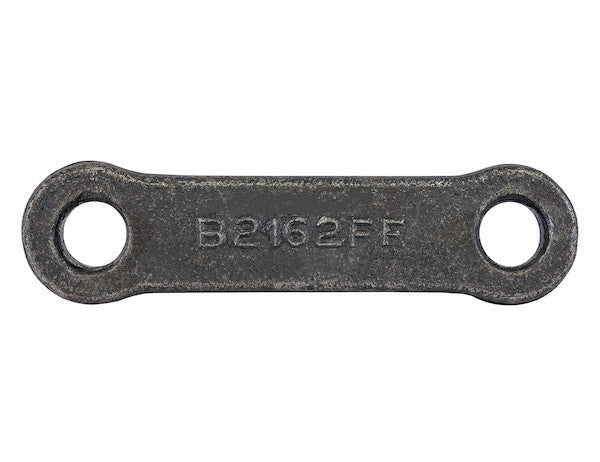
Buyers Products Forged Tie Bar is 5-3/4 in. with rounded ends and is ideal for use with tie down rods or U-bolts. Each tie bar is forged from 1/2 in. thick steel and has 4-1/4 in. center-to-center mounting holes. Ideal for mounting truck equipment to the chassis.
Specifications
| Finish | Zinc Plated |
|---|---|
| Length (in.) | 5.75 |
| Material | Forged Steel |
| Mounting Holes Ctr to Ctr (in.) | 4.25 |
| Number of Mounting Holes | 2 |
| Thickness | .50 |
| Width (in.) | 1.25 |
Engineered for Unyielding Stability: The Forged Tie Bar for 3-1/2 Inch Frames
In the demanding world of commercial vehicle operation, the integrity of mounted equipment is paramount. The Buyers Products Forged Tie Bar, specifically designed for 3-1/2 inch frame applications, stands as a testament to robust engineering and unwavering reliability. This component is not merely an accessory but a critical structural element engineered to provide superior clamping force and secure attachment for a diverse range of truck equipment to vehicle chassis. Its meticulous design, utilizing forged steel and a clear zinc plated finish, ensures long-term performance under the most challenging operational conditions.
Precision Application and Core Functionality
The primary function of this forged tie bar is to distribute and maintain clamping pressure exerted by U-bolts or tie-down rods, thereby securing auxiliary equipment, bodies, and other components directly to the vehicle's structural frame. Its 4-1/4 inch center-to-center hole spacing is precisely calibrated to integrate seamlessly with standard U-bolt configurations commonly employed for 3-1/2 inch wide chassis frames. This precise fit minimizes potential for movement, vibration, and ultimately, structural fatigue in the secured assembly. Whether it's securing toolboxes, service bodies, dump beds, plows, salt spreaders, or complex hydraulic systems, this tie bar acts as an essential interface, transforming localized point loads into a more evenly distributed force across the equipment's mounting points and the chassis itself.
The selection of a tie bar of appropriate dimensions is critical for achieving optimal security and load distribution. A 3-1/2 inch frame typically refers to the width of the vehicle's structural channel or I-beam members. The 4-1/4 inch center-to-center hole measurement of this tie bar is intentionally wider than the frame itself, allowing U-bolts to straddle the frame rails effectively. This design ensures that the U-bolt legs pass around the frame, through the mounted equipment, and then through the tie bar, allowing the nuts to be tightened against the tie bar. This clamping action is what creates the immense friction necessary to prevent slippage and movement of the attached apparatus, even under dynamic stresses encountered during vehicle operation.
The Engineering Superiority of Forged Steel
At the heart of this tie bar's exceptional performance lies its construction from forged steel. Forging is a manufacturing process that involves shaping metal through localized compressive forces using hammers or presses. Unlike casting, which involves pouring molten metal into a mold, or stamping, which cuts and bends sheet metal, forging refines the grain structure of the steel, eliminating internal voids and porosity. This results in a material that is inherently stronger, tougher, and more ductile than components produced by other methods.
The benefits of forged steel are manifold and directly translate into superior product performance:
- Enhanced Strength-to-Weight Ratio: Forging aligns the grain flow of the steel along the contour of the part. This optimized grain structure provides significantly higher tensile strength, yield strength, and impact strength compared to non-forged counterparts. This means the 1/2 inch thick forged steel tie bar can withstand greater loads and stresses without deforming or failing, offering a superior strength-to-weight ratio crucial for vehicle components where every ounce matters.
- Superior Fatigue Resistance: Components in vehicle applications are subjected to constant vibrations, shocks, and cyclical loading. Forged parts inherently possess excellent fatigue resistance due to their refined and continuous grain structure, which resists crack initiation and propagation. This characteristic is vital for components like tie bars that endure continuous dynamic stresses, ensuring a longer service life and reducing maintenance requirements.
- Increased Toughness and Ductility: Toughness refers to a material's ability to absorb energy and plastically deform without fracturing. Ductility is the ability to deform under tensile stress without losing toughness. Forged steel exhibits high levels of both, making the tie bar less prone to brittle fracture under sudden impacts or extreme stress conditions. This resilience is critical for safety-sensitive applications.
- Consistency and Reliability: The forging process provides exceptional control over the material's properties, resulting in a highly consistent product. This uniformity translates into predictable performance, critical for applications where safety and structural integrity are non-negotiable. Each tie bar manufactured is engineered to perform identically to the last, upholding stringent quality standards.
- Resistance to Wear: The dense, uniform grain structure of forged steel also contributes to its superior wear resistance, an important attribute for components that are subjected to friction or abrasive environments, although in the case of a tie bar, this mainly relates to internal material integrity rather than surface wear.
The choice of 1/2 inch (0.50 inch) thick steel is not arbitrary. This gauge provides the necessary rigidity and load-bearing capacity to prevent bending or distortion under the high clamping forces of tightened U-bolts and the dynamic loads experienced during vehicle operation. It strikes an optimal balance between material use and structural performance, ensuring that the tie bar effectively transfers forces without becoming a weak point in the assembly.
Precision Dimensions for Optimal Integration
Every dimension of this forged tie bar has been meticulously specified to ensure optimal performance and compatibility:
- Length (5.75 inches): The overall length of 5-3/4 inches provides ample span to accommodate standard U-bolt widths designed for 3-1/2 inch frames, while also offering sufficient material beyond the mounting holes for structural integrity. The rounded ends, as noted, contribute to safety by eliminating sharp edges that could snag or cause injury during installation or maintenance, and also serve to minimize stress concentrations at the ends of the bar, which can be points of failure in conventionally cut, sharp-edged components.
- Mounting Holes Center-to-Center (4.25 inches): This crucial dimension ensures compatibility with a vast array of U-bolts and mounting brackets designed for medium-duty and heavy-duty truck applications. By spanning 4-1/4 inches, the tie bar effectively accommodates the 3-1/2 inch frame, allowing the U-bolt to securely encircle the frame members. This precision fit is paramount for preventing slippage and maintaining the desired clamping force over time, even under significant vibration.
- Number of Mounting Holes (2): The two-hole configuration is standard for tie bars used with U-bolts, providing a symmetrical and balanced clamping point for each leg of the U-bolt. This design distributes the load evenly across the tie bar and the mounted component, enhancing stability and preventing localized stress points.
- Thickness (0.50 inches / 1/2 inch): As previously discussed, this robust thickness provides the necessary rigidity and strength to withstand high clamping forces and dynamic vehicle loads without deformation. It ensures that the tie bar itself does not become the weakest link in the equipment mounting system.
- Width (1.25 inches): The 1-1/4 inch width provides a substantial bearing surface for the U-bolt nuts. This wide surface area helps to distribute the clamping force over a larger section of the tie bar, reducing the likelihood of the nuts digging into the material and ensuring a secure, long-lasting connection. A wider bar also offers enhanced resistance to bending and twisting, contributing to the overall stability of the mounted equipment.
Advanced Corrosion Protection: Clear Zinc Plating
The operational environments for commercial vehicles are notoriously harsh, exposing components to moisture, road salts, chemicals, and abrasive elements. To combat these aggressive conditions, the Buyers Products Forged Tie Bar features a clear zinc plated finish. Zinc plating, a form of electroplating, applies a thin coating of zinc onto the steel surface. This coating serves as a sacrificial layer, corroding before the underlying steel substrate, thereby providing exceptional galvanic protection.
Key advantages of clear zinc plating include:
- Superior Corrosion Resistance: The zinc layer acts as a barrier, preventing oxygen and moisture from reaching the steel. More importantly, when the coating is scratched or compromised, the zinc sacrifices itself, continuing to protect the steel through cathodic protection. This significantly extends the service life of the tie bar, even in highly corrosive environments.
- Aesthetic Appeal: "Clear" zinc plating typically refers to a transparent passivation layer over the zinc, which maintains the bright, metallic appearance of the component. This not only offers a clean, professional look but also often indicates the use of trivalent chromium passivation, which is more environmentally friendly than older hexavalent chromium processes, aligning with modern industrial standards.
- Enhanced Durability: The plating process adheres tightly to the forged steel, creating a durable finish that resists chipping and peeling under normal operational stresses. This robust coating ensures that the corrosion protection remains intact over a longer period.
- Reduced Maintenance: Components with effective corrosion protection require less frequent inspection, cleaning, and replacement due to rust-related degradation, leading to reduced operational costs and increased uptime for commercial fleets.
The combination of forged steel and clear zinc plating represents a synergistic approach to material science and surface engineering, resulting in a component that offers both mechanical strength and environmental resilience.
Installation Best Practices and Safety Considerations
Proper installation of the forged tie bar is crucial to realizing its full performance potential. While the tie bar itself is robust, the overall integrity of the mounting system depends on correct procedures:
- Component Compatibility: Ensure that the U-bolts, nuts, washers, and the equipment being mounted are all compatible in size and strength with the tie bar and the vehicle chassis.
- Correct Torque: U-bolt nuts must be tightened to the manufacturer's specified torque settings. Under-torquing can lead to loose connections, vibration, and premature wear, while over-torquing can stretch or damage the U-bolts, nuts, or the frame itself. Use a calibrated torque wrench for accuracy.
- Even Tightening: When using two nuts per U-bolt leg (a common practice for enhanced security with locking nuts), tighten them gradually and evenly to ensure uniform clamping pressure across the tie bar.
- Periodic Inspection: All mounting hardware, including the tie bar, U-bolts, and equipment, should be periodically inspected for tightness, signs of wear, corrosion, or deformation, especially after the initial break-in period and after severe off-road or heavy-duty use.
- Load Distribution: Always ensure that the weight of the mounted equipment is distributed as evenly as possible across multiple tie bars and mounting points to avoid concentrated stress.
By adhering to these installation guidelines, operators can maximize the safety, stability, and longevity of their mounted equipment.
Versatility Across Industrial and Commercial Applications
The Buyers Products Forged Tie Bar finds indispensable utility across a broad spectrum of industries and commercial applications where reliable equipment mounting is non-negotiable:
- Commercial Trucking: Essential for securing various truck bodies (flatbeds, stake beds, dry van bodies), auxiliary fuel tanks, fifth-wheel hitches, and specialized cargo handling equipment to chassis rails.
- Municipal Fleets: Used on snowplows, salt and sand spreaders, refuse collection vehicles, street sweepers, and public utility trucks to ensure that vital operational equipment remains securely fastened through rigorous daily use and varying environmental conditions.
- Construction and Heavy Equipment: Critical for mounting toolboxes, generators, compressors, winches, and auxiliary lighting systems on vocational trucks and heavy machinery, which frequently operate in high-vibration, high-impact environments.
- Service and Utility Vehicles: For securing service bodies, aerial lifts, ladder racks, and custom storage solutions, ensuring that technicians' tools and equipment are always safely transported and accessible.
- Agricultural Vehicles: Used in specialized agricultural trucks for mounting spray tanks, fertilizer spreaders, and other farm implements, where durability and resistance to corrosive agricultural chemicals are vital.
Its robust construction and precise dimensions make it a preferred choice for professionals who demand components that exceed standard expectations for strength and durability.
The Buyers Products Commitment to Quality and Value
As a product from Buyers Products, this forged tie bar carries the assurance of a brand renowned for its commitment to quality, innovation, and customer satisfaction in the truck equipment industry. Every component is subjected to rigorous quality control processes, from material sourcing to final finishing, ensuring that it meets stringent performance criteria. The investment in a high-quality forged steel, clear zinc plated tie bar translates into long-term value, characterized by:
- Reduced Downtime: Reliable components mean fewer failures and less time spent on repairs or replacements, increasing vehicle operational efficiency.
- Enhanced Safety: Securely mounted equipment reduces the risk of detachment or malfunction, safeguarding drivers, personnel, and public safety.
- Extended Equipment Life: Proper mounting protects the mounted equipment itself from excessive vibration and movement-induced damage.
- Cost-Effectiveness: While the initial investment in a forged component may be marginally higher than lesser alternatives, the superior durability and extended lifespan result in a significantly lower total cost of ownership over the operational life of the vehicle.
In conclusion, the Buyers Products Forged Tie Bar for 3-1/2 Inch Frames with 4-1/4 Inch Center-to-Center Holes and a Clear Zinc Plated finish represents a pinnacle of engineering for vehicle equipment mounting. Its forged steel construction provides unparalleled strength, fatigue resistance, and durability, while the precision dimensions ensure optimal fit and performance. Coupled with robust clear zinc plating for superior corrosion protection, this tie bar is an indispensable component for any commercial or industrial application requiring secure, long-lasting equipment attachment to vehicle chassis. It embodies a commitment to safety, reliability, and operational excellence, ensuring that your valuable equipment remains firmly in place, mile after mile, year after year.