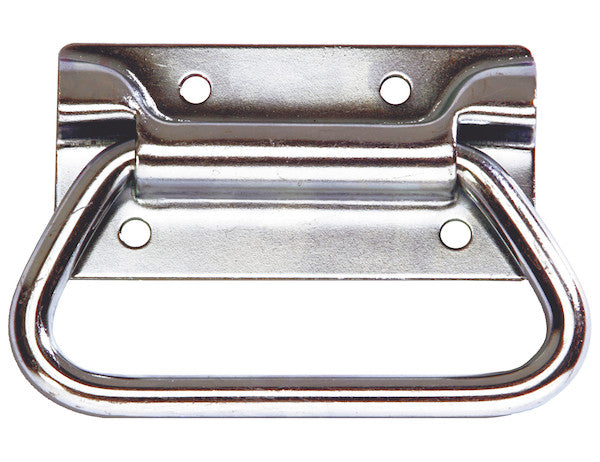
Buyers Products Chest Handle is lightweight, corrosion-resistant, and simple to install with pre-drilled bolt holes. The zinc-plated handle can be used in fabrication, as a replacement, or in a variety of other applications.
Specifications
| Handle Finish | Zinc Plated |
|---|---|
| Handle Length (in.) | 4.00 |
| Handle Material | Carbon Steel |
| Handle Style | Chest |
| Height (in.) | 2.75 |
| Mounting Hole Diameter | 0.188 |
| Mounting Holes Center to Center | 1.375/2.25 |
| Mounting Type | Bolt On |
Advanced Technical Overview: Zinc-Plated Carbon Steel Chest Handle (4" x 2.75")
The Zinc Chest Handle, with its precise dimensions of 4 inches in length and 2.75 inches in height, represents a meticulously engineered solution for robust and reliable manual handling requirements across diverse industrial, commercial, and utility applications. Manufactured by Buyers Products, this handle is not merely a component but a critical interface designed to facilitate ergonomic manipulation and secure conveyance of equipment, storage containers, access panels, and various other apparatus. Its design integrates fundamental principles of materials science, mechanical engineering, and user-centric ergonomics to deliver a product that stands out in terms of durability, resistance to environmental degradation, and ease of integration.
Material Science and Surface Engineering: Carbon Steel Substrate with Zinc Plating
The selection of materials for the Zinc Chest Handle is a deliberate choice aimed at optimizing performance while maintaining cost-effectiveness. The core structure of the handle is fabricated from high-quality carbon steel. Carbon steel is an iron-carbon alloy renowned for its exceptional strength-to-weight ratio, ductility, and formability. Specifically, the carbon content in the steel grants it superior hardness and tensile strength, making it highly resistant to deformation under dynamic and static loads. This intrinsic mechanical strength is paramount for a component intended to bear significant operational stresses, ensuring longevity and safety in demanding environments.
To augment the inherent properties of carbon steel and address its susceptibility to corrosion, the handle undergoes a sophisticated surface engineering process: zinc plating. Zinc plating, often performed via electroplating, involves depositing a thin layer of metallic zinc onto the carbon steel substrate. This process is crucial for conferring significant corrosion resistance to the handle through two primary mechanisms:
- Barrier Protection: The zinc layer acts as a physical barrier, isolating the underlying carbon steel from corrosive elements present in the environment, such as moisture, oxygen, and various chemical agents. This barrier prevents direct contact, thereby inhibiting the electrochemical reactions that lead to rust formation.
- Sacrificial Protection (Galvanic Action): Zinc is more electrochemically active than iron (the primary constituent of carbon steel). In the presence of an electrolyte (e.g., moisture), if the zinc coating is scratched or compromised, the zinc will preferentially corrode, sacrificing itself to protect the underlying steel. This galvanic protection mechanism ensures that even minor surface imperfections do not immediately lead to red rust on the steel, significantly extending the service life of the component.
The zinc plating process typically involves cleaning and degreasing the steel substrate, followed by immersion in an electrolytic bath containing zinc ions. An electric current is then applied, causing the zinc ions to deposit onto the steel surface. The thickness and quality of this plating are critical and are meticulously controlled to meet industry standards for corrosion resistance. The result is a uniformly coated handle that not only boasts enhanced durability but also presents an aesthetically pleasing, bright finish.
Precision Engineering and Dimensional Specifications
The precise dimensions of this chest handle are critical for its functional efficacy and broad compatibility. With a handle length of 4.00 inches and a height of 2.75 inches, it is designed to provide an ergonomic grip suitable for a wide range of hand sizes, allowing for comfortable and secure manipulation. The "Chest" style indicates a robust, often rectangular or slightly contoured design, optimized for pulling and lifting applications where substantial force may be exerted. This style is characterized by its ability to distribute load efficiently across the mounting points, minimizing stress concentrations.
Installation ease and structural integrity are paramount, which is why the handle incorporates pre-drilled bolt holes. The mounting hole diameter is precisely 0.188 inches. This standardized diameter facilitates compatibility with commonly available fasteners, typically #10 or #12 screws or bolts, ensuring a secure attachment. The strategic placement of these mounting holes is detailed by the "Mounting Holes Center to Center" specifications: 1.375 inches and 2.25 inches. This dual measurement implies a rectangular bolt pattern, often signifying a four-hole configuration where two pairs of holes are spaced at 1.375 inches apart, and the two sets of pairs are spaced at 2.25 inches. Such a configuration maximizes the stability of the mounted handle, resisting rotational forces and ensuring a firm, unyielding attachment to the host structure.
The "Bolt On" mounting type signifies a mechanical fastening method that offers several advantages over alternative attachment techniques such as welding or adhesive bonding. Bolt-on installations are inherently reversible, allowing for easy replacement or repositioning of the handle without damaging the underlying structure. Furthermore, mechanical fasteners provide a predictable and quantifiable load-bearing capacity when installed correctly, enabling engineers to design systems with confidence in the handle's attachment strength. The pre-drilled nature of the holes significantly reduces installation time and labor costs, simplifying the integration process for both OEM manufacturers and aftermarket users.
Performance Attributes: Lightweight Design and Enhanced Corrosion Resistance
While constructed from carbon steel, the handle is designed to be lightweight relative to its strength and load-bearing capacity. This attribute contributes to several operational advantages:
- Reduced System Weight: In applications where overall weight is a critical factor, such as in aerospace ground support equipment, mobile vehicles, or portable tool chests, the lightweight nature of the handle contributes to better fuel efficiency or easier manual handling of the entire assembly.
- Ease of Operation: A lighter handle reduces the inertial forces required to manipulate attached components, contributing to a smoother and more user-friendly experience.
- Manufacturing Efficiency: Optimized material usage contributes to more efficient manufacturing processes and potentially lower material costs.
Versatile Applications and Integration Scenarios
The Zinc Chest Handle's robust construction and protective finish render it suitable for an expansive array of applications:
- Fabrication and OEM Manufacturing: Its standardized dimensions and bolt-on design make it an ideal component for original equipment manufacturers (OEMs) and custom fabrication shops. It can be seamlessly integrated into new designs for industrial machinery, custom toolboxes, access panels for HVAC systems, electrical enclosures, and specialized storage units. The consistent quality and ready availability reduce design and procurement complexities.
- Replacement Hardware: As a direct replacement part, this handle offers an economical and durable alternative to worn-out, damaged, or inferior quality handles on existing equipment. Its common mounting pattern ensures compatibility with a broad spectrum of legacy designs across various sectors, including automotive, agricultural, construction, and recreational vehicles.
- Industrial Storage and Material Handling: Widely used on heavy-duty storage chests, job boxes, site boxes, and shipping containers, it facilitates the secure opening, closing, and transport of contents. Its strength is critical for managing loads associated with tools, parts, and equipment.
- Utility and Service Vehicles: Essential for access doors, compartments, and cabinets on service trucks, trailers, emergency vehicles, and municipal utility fleets. The corrosion resistance is particularly beneficial given the constant exposure to varying weather conditions and road contaminants.
- Marine and Outdoor Equipment: While not specifically stainless steel, the zinc plating provides substantial protection for applications in freshwater marine environments or areas with moderate salt spray. It's suitable for hatches, storage lockers, and equipment on boats, docks, and outdoor recreational gear where a cost-effective, durable handle is required.
- Agricultural and Construction Equipment: From tractor toolboxes to access panels on heavy machinery, these handles endure the rigorous demands of agricultural fields and construction sites, including exposure to dirt, moisture, and vibration.
- Commercial and Retail Fixtures: For display cases, custom cabinetry, and point-of-sale units requiring a functional and secure pull handle with industrial aesthetic appeal.
- Custom Furniture and Architectural Elements: For designers seeking a rugged, utilitarian aesthetic, these handles can be incorporated into industrial-style furniture, workbenches, or architectural details requiring robust hardware.
Installation Best Practices and Maintenance
Optimal performance and longevity of the Zinc Chest Handle are achieved through correct installation and minimal maintenance:
- Fastener Selection: Utilize fasteners (bolts, screws, nuts, washers) that are compatible with the 0.188-inch mounting hole diameter. For maximum corrosion resistance and strength, consider zinc-plated or stainless steel fasteners, especially in corrosive environments. The length of the fasteners should be appropriate for the thickness of the mounting surface.
- Surface Preparation: Ensure the mounting surface is clean, flat, and free from obstructions. For materials like wood or composite, pre-drilling pilot holes is recommended to prevent splitting and ensure proper fastener engagement.
- Torque Specification: Fasteners should be tightened to appropriate torque specifications to ensure a secure, vibration-resistant attachment without over-stressing the handle or the mounting surface. Over-tightening can strip threads or deform components, while under-tightening can lead to loosening over time.
- Periodic Inspection: While maintenance is minimal, periodic inspection of the handle and its fasteners is recommended, particularly in high-use or high-vibration applications. Check for any signs of loosening, wear, or coating damage that may compromise performance or corrosion resistance.
Quality Assurance and Compliance
Buyers Products is committed to delivering components that meet rigorous quality standards. The manufacturing process for the Zinc Chest Handle involves precision stamping and forming of the carbon steel, followed by a controlled zinc electroplating process. Quality checks are typically integrated at various stages, including dimensional verification, adhesion testing of the zinc coating, and visual inspection for defects. While specific certifications like ASTM B633 (for Electrodeposited Coatings of Zinc on Iron and Steel) are often implied by such products, the adherence to best manufacturing practices ensures a reliable and consistent product.
Economic and Performance Value Proposition
The Zinc Chest Handle offers a compelling value proposition by balancing critical performance attributes with cost-effectiveness. Compared to unplated steel, its zinc coating dramatically extends its service life and maintains its aesthetic integrity in challenging conditions, reducing the frequency of replacement and associated labor costs. When contrasted with alternatives like stainless steel handles, the zinc-plated carbon steel option provides comparable strength and adequate corrosion resistance for many applications at a more favorable price point. For applications not requiring the ultimate corrosion resistance of 316 stainless steel or the specific weight advantages of aluminum, this zinc-plated carbon steel handle presents an optimal blend of durability, strength, and economic viability.
In conclusion, the Buyers Products Zinc Chest Handle (4" x 2.75") is an expertly designed and manufactured component, engineered for robust functionality and extended operational life. Its foundation of high-strength carbon steel, enhanced by a meticulously applied zinc plating, ensures superior mechanical performance and exceptional resistance to environmental degradation. Coupled with its standardized dimensions and user-friendly bolt-on installation, this handle provides a reliable, versatile, and economically sound solution for a vast spectrum of industrial, commercial, and recreational applications requiring durable manual handling interfaces.