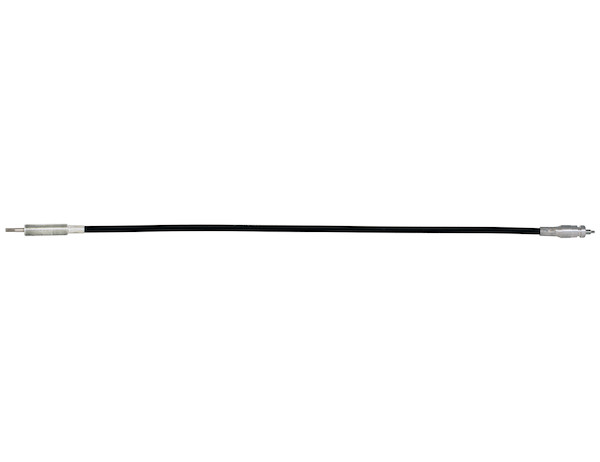
The Remote Valve Control Cable from Buyers Products connects RVC levers to valves using the corresponding RVC Connection Kit. It has a RVC Adapter Input with a Bonnet output. The cable features durable stainless steel ends and comes in a wide range of lengths.
Specifications
| Cable Length (in.) | 48 " |
| End Type | Valve Bonnet Connection |
| Bulkhead Thread Size | 3/4-16 " |
| Total Travel (in.) | .56 " |
| Cable Series | RVC Adapter |
| Rod End Thread Size | 1/4-28 " |
| Cable Diameter (in.) | 48 " |
| Conduit Color | Black |
The 48 Inch Remote Valve Control Cable from Buyers Products is an exemplary solution for precise and reliable remote actuation of hydraulic and pneumatic valve systems across diverse industrial and mobile applications. Engineered for an optimal 48-inch functional length, this cable establishes a robust mechanical linkage between an RVC (Remote Valve Control) lever and its designated valve mechanism. Its design prioritizes durability, consistent performance, and seamless integration, making it indispensable for heavy-duty equipment requiring accurate, low-friction force transmission over distance. Featuring robust stainless steel ends and calibrated travel specifications, this cable translates operator input into precise valve movement, enhancing system efficiency and operator safety. This detailed technical exposition will explore the cable's mechanical design, material science, application versatility, and operational advantages, underscoring its superior utility.
Technical Design and Operational Mechanics
The core functionality of the 48 Inch Remote Valve Control Cable is predicated on a highly efficient push-pull mechanism, engineered to transmit linear motion and force with minimal loss across varying distances and around routing obstacles. This cable serves as a direct mechanical interface, converting manual input from an RVC lever into accurate valve spool or poppet actuation. The efficacy of this translation is paramount for achieving system responsiveness and control accuracy.
Interfacing and Mechanical Components
The cable incorporates an RVC Adapter Input, meticulously designed for seamless connection to the RVC control lever. This connection typically necessitates a specialized RVC Connection Kit to ensure precise mechanical alignment, secure fastening, and minimal operational play. The output end is characterized by a "Bonnet Output," indicating a specialized interface engineered to directly engage with the valve bonnet. This common connection type in hydraulic and pneumatic valve systems provides a secure, sealed, and often adjustable attachment point for the cable's output rod, enabling direct manipulation of the valve's internal flow control elements.
Construction and Material Science
The engineering of this control cable involves a multi-layered construction, each component contributing significantly to its overall performance and longevity in arduous environments.
- Inner Core: The innermost element typically comprises multiple strands of high-tensile, corrosion-resistant stainless steel wire, helically wound to form a flexible yet robust core. Stainless steel's inherent properties – high tensile strength, fatigue resistance, and exceptional corrosion resistance – are critical for applications involving continuous, repetitive motion and exposure to environmental stressors.
- Internal Lubrication: A proprietary, low-friction lubricant is typically applied around the inner core. This specialized lubrication significantly reduces internal friction between the core and the conduit, ensuring smooth cable operation, minimizing wear, and extending service life across a broad operational temperature range.
- Conduit Assembly: Encasing the lubricated inner core is a robust conduit. This often features a spiral-wound, high-carbon steel wire for structural integrity and resistance to compressive forces, internally lined with a low-friction polymer such as HDPE (High-Density Polyethylene) or PTFE (Polytetrafluoroethylene) to enhance smooth movement and reduce abrasion. The outermost layer is a durable, weather-resistant jacket, typically constructed from UV-stabilized PVC (Polyvinyl Chloride) or polyethylene, specified as black for enhanced UV protection and aesthetic consistency. This jacket provides comprehensive protection against moisture, dirt, chemicals, abrasion, and UV radiation, common in outdoor and industrial settings.
- End Fittings: The "durable stainless steel ends" are precision-engineered components, mechanically swaged or crimped onto the cable to form high-strength, permanent connections. The RVC Adapter Input usually features a robust clevis or threaded rod end for secure attachment to the control lever. The Bonnet Output is specifically designed to interface with the valve bonnet, often incorporating threads (e.g., the 1/4-28 " Rod End Thread Size for linkage) and specialized geometries for secure engagement and precise adjustment. Stainless steel ensures superior corrosion resistance and mechanical integrity, crucial for maintaining connection reliability over extended operational periods.
Key Specifications and Their Engineering Implications
Understanding the detailed specifications of the 48 Inch Remote Valve Control Cable is essential for optimal system integration and performance:
- Cable Length (48 inches): This precise length is a fundamental design parameter, offering adequate reach for numerous remote control applications while minimizing excess slack. Correct length selection is critical to facilitate proper routing, avoid tight bend radii that could induce premature wear or increase friction, and optimize system design.
- End Type (Valve Bonnet Connection): This output interface defines a secure, often threaded, connection directly to the valve's actuator housing. Such connections are preferred for applications demanding direct, positive mechanical linkage for precise modulation or reliable on/off control.
- Bulkhead Thread Size (3/4-16 "): The inclusion of a 3/4-16 bulkhead thread signifies the cable's capability for stable, vibration-resistant mounting through a panel or chassis. This feature is vital for maintaining cable routing integrity, preventing undesired movement, and ensuring structural stability within the machinery, isolating cable forces from other components.
- Total Travel (.56 "): This parameter specifies the maximum linear displacement of the inner wire relative to the conduit. A total travel of .56 inches precisely dictates the available stroke for valve actuation. It is imperative that this value matches the valve's required stroke for full operational range, preventing incomplete actuation or potential overstressing of components, thereby ensuring optimal control resolution.
- Cable Series (RVC Adapter): This classification indicates adherence to the RVC Adapter series standards established by Buyers Products, guaranteeing compatibility with their range of RVC levers and associated connection kits. This standardization streamlines component selection and ensures system interoperability.
- Rod End Thread Size (1/4-28 "): The 1/4-28 thread size on the rod end is a common and versatile specification for control linkages. Its fine pitch enables precise adjustment of the linkage length, facilitating accurate calibration of the valve's neutral position or specific control points. It provides a secure attachment for clevises, rods, or other mechanical elements connecting to the valve's operating mechanism.
- Cable Diameter (in.): 48 ": While the specification table lists "48" under Cable Diameter (in.), it is crucial to clarify this in the context of physical cable dimensions. The operational length of this control cable is indeed 48 inches. The actual physical diameter of robust control cables like this, referring to the outer conduit, typically falls within a range suitable for transmitting force effectively while maintaining flexibility, commonly from approximately 0.187 inches to 0.5 inches. This ensures a balance of strength, stiffness, and routing capabilities. The choice of inner wire and conduit diameters is engineered to provide the necessary load capacity and minimize backlash under operational loads.
- Conduit Color (Black): The black color of the conduit is a standard for industrial control cables, offering superior UV resistance due to the pigments used. This protects the outer jacket from degradation under prolonged sunlight exposure, extending the cable's lifespan in outdoor and exposed applications.
Environmental Durability and Performance
The cable is meticulously engineered to perform reliably across a broad spectrum of challenging environmental conditions:
- Temperature Resilience: Material selection ensures that the cable maintains optimal flexibility and structural integrity across extreme temperature fluctuations, preventing embrittlement at low temperatures and softening at high temperatures.
- UV Stability: The UV-stabilized black polymer outer jacket is formulated to resist degradation from prolonged exposure to ultraviolet radiation, preventing material breakdown, cracking, and fading that could compromise the conduit's protective functions.
- Chemical Resistance: The outer jacket and internal components are designed to resist common industrial chemicals, oils, greases, and cleaning solvents, preventing material degradation and preserving sealing integrity in contaminated environments.
- Fatigue Resistance: Engineered for millions of operational cycles, the selection of high-grade stainless steel for the inner wire rope, combined with optimized wire stranding and secure end fitting swaging, maximizes the cable's fatigue life, ensuring sustained performance under repetitive tension and compression.
Applications and Industry Relevance
The 48 Inch Remote Valve Control Cable's robust construction and precise control capabilities render it indispensable across various industrial and commercial sectors:
- Mobile Hydraulics: Extensively utilized in heavy-duty vehicles such as snowplows, salt spreaders, dump trucks, refuse collection vehicles, and utility service trucks. It provides remote control for hydraulic valves managing functions like blade angling, spreader gate operation, dump bed articulation, and various auxiliary equipment.
- Heavy Equipment: Essential for construction machinery (e.g., excavators, loaders), agricultural equipment (e.g., tractors, harvesters), and forestry machinery, facilitating precise control of implements, attachments, and critical hydraulic functions.
- Industrial Automation: Provides reliable mechanical linkage for controlling valves in process lines, material handling systems, and specialized manufacturing equipment where robust, direct control is preferred over electrical or pneumatic alternatives.
- Municipal and Specialized Vehicles: Used in street sweepers, vacuum trucks, and other specialized maintenance vehicles for operating water valves, vacuum gates, and diverse hydraulic actuators.
Installation, Maintenance, and Quality Assurance
Optimal performance and extended service life depend on correct installation and diligent maintenance practices.
- Proper Installation: Cables must be routed carefully, avoiding sharp bends that exceed the minimum bend radius to prevent increased friction, reduced travel efficiency, and premature fatigue. Routing should also steer clear of heat sources, moving parts, and abrasive surfaces. Secure clamping at regular intervals prevents excessive slack and chafing. Connections at the RVC lever and valve bonnet must be securely made, adhering to any specified torque values to prevent vibration-induced loosening or component damage.
- Routine Maintenance: Regular visual inspections are recommended to detect signs of wear, abrasion, kinking, or jacket damage. Excessive play in end fittings or sticky operation can indicate internal wear or lubrication loss. While many modern cables are sealed and factory-lubricated for life, adherence to manufacturer guidelines for any periodic re-lubrication is critical.
- Quality Assurance: Manufactured under stringent quality assurance protocols, this cable undergoes comprehensive quality control checks, including dimensional inspections, material verification, and functional testing. It is designed to meet or exceed relevant industry standards (e.g., SAE, ISO) for strength, fatigue life, and environmental resistance, ensuring fitness for purpose in demanding applications. Extensive testing protocols, including pull, flex, environmental, and friction tests, validate its performance and durability.
Advantages and Value Proposition
Investing in the 48 Inch Remote Valve Control Cable yields significant operational and economic advantages:
- Unparalleled Reliability: Robust materials and precision manufacturing minimize unexpected failures, contributing directly to increased equipment uptime and productivity.
- Exceptional Precision: Low-friction design and minimal backlash ensure accurate, smooth translation of operator inputs to valve movements, providing superior control resolution and enhancing operational efficiency.
- Reduced Operating Costs: Durable construction, corrosion-resistant components, and integrated lubrication lead to extended service life, reducing repair and replacement frequency.
- Enhanced Safety: Reliable control prevents unintended valve operations or failures, significantly improving the safety profile of machinery and protecting operators.
- Seamless Integration: As part of the RVC Adapter series, it offers broad compatibility with Buyers Products’ control levers and connection kits, simplifying procurement and installation for integrators and maintenance personnel.
- Extreme Durability: Engineered to withstand harsh temperatures, corrosive agents, and abrasive conditions, maintaining peak performance in the most challenging operational environments.
Conclusion
The 48 Inch Remote Valve Control Cable from Buyers Products is a meticulously engineered solution that provides critical mechanical actuation for a multitude of demanding applications. Its precise 48-inch length, coupled with robust stainless steel ends, a specific total travel, and a dedicated valve bonnet connection, offers an uncompromising solution for linking RVC levers to valve mechanisms. By integrating advanced material science, rigorous manufacturing standards, and a deep understanding of real-world operational challenges, this cable delivers superior durability, reliability, and precision control. It stands as a vital component, ensuring the efficient, safe, and consistent operation of heavy-duty mobile and industrial equipment. For professionals seeking an optimal blend of performance, longevity, and seamless integration, the 48 Inch Remote Valve Control Cable represents an ideal choice, upholding the reliability and responsiveness of critical control systems. Its technical specifications and robust construction unequivocally affirm its position as a high-performance solution, essential for maintaining operational integrity in the most demanding environments.