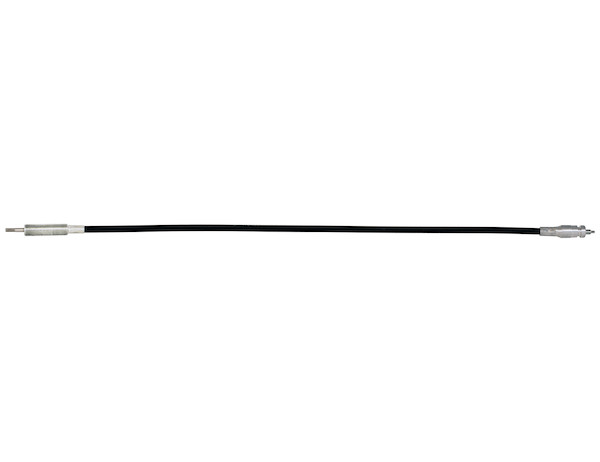
The Remote Valve Control Cable from Buyers Products connects RVC levers to valves using the corresponding RVC Connection Kit. It has a RVC Adapter Input with a Bonnet output. The cable features durable stainless steel ends and comes in a wide range of lengths.
Specifications
| End Type | Valve Bonnet Connection |
| Cable Diameter (in.) | 72 " |
| Rod End Thread Size | 1/4-28 " |
| Cable Series | RVC Adapter |
| Cable Length (in.) | 72 " |
| Total Travel (in.) | .56 " |
| Conduit Color | Black |
| Bulkhead Thread Size | 3/4-16 " |
Advanced Technical Overview: The 72-Inch Remote Valve Control Cable for Precision Actuation Systems
The 72-inch Remote Valve Control Cable represents a critical component within sophisticated mechanical actuation systems, engineered to facilitate precise and reliable remote operation of hydraulic, pneumatic, or mechanical valves. Manufactured by Buyers Products, this cable is specifically designed to interface between Remote Valve Control (RVC) levers and the corresponding valve mechanisms, ensuring seamless transmission of mechanical input. Its robust construction, meticulously chosen materials, and adherence to stringent engineering specifications make it an indispensable element in demanding industrial and mobile applications where direct manual valve access is impractical or unsafe.
Core Functionality and System Integration
At its essence, the Remote Valve Control Cable acts as a direct mechanical linkage, translating the linear or angular motion of an RVC lever into a corresponding linear displacement at the valve. This fundamental push-pull operation is achieved through a specialized inner cable, meticulously guided within a protective outer conduit. The cable's architecture ensures that forces applied at the lever end are efficiently transmitted to the valve, enabling remote activation, deactivation, or modulation of flow, pressure, or direction within a fluid power system. The integration process is streamlined by the requirement of an RVC Connection Kit, which provides the necessary hardware for secure and precise attachment to both the RVC lever and the valve's input mechanism.
The cable features an "RVC Adapter Input," which is the standardized interface designed to mate with the RVC lever. This adapter ensures a consistent and robust connection, optimizing the transfer of mechanical force from the operator's input to the cable's core. On the opposing end, the "Bonnet Output" specifically targets valves equipped with a bonnet-style actuation point. This configuration is common in many industrial and mobile hydraulic valves, where the control input directly manipulates a spool or poppet housed within the valve bonnet. The design of this bonnet output is critical for achieving the specified "Total Travel (in.)" of 0.56 inches, ensuring compatibility with a wide array of valve stroke requirements for full open, closed, or intermediate positions.
Detailed Examination of Technical Specifications
End Type: Valve Bonnet Connection
The "Valve Bonnet Connection" specifies the precise mechanical interface at the valve end of the cable. A valve bonnet is typically a cover or enclosure that houses the valve stem, packing, and other actuating mechanisms. For remote control applications, a specific point on the bonnet is designed to accept mechanical input to manipulate the internal valve elements (e.g., spool, disc, or plug). This connection type is favored for its reliability and direct mechanical engagement, ensuring that the cable's linear travel directly translates into the required valve actuation. The design of this connection minimizes backlash and hysteresis, contributing to the overall precision of the control system.
Cable Diameter (in.): 72" / Cable Length (in.): 72"
It is important to clarify that the specification "Cable Diameter (in.): 72 inches" in the provided context refers to the nominal *length* of the cable, not its cross-sectional diameter. This common nomenclature sometimes arises in product listings where the primary dimension (length) might be mistakenly attributed to a "diameter" field. The "Cable Length (in.): 72 inches" unequivocally denotes the overall operational length of the control cable. A 72-inch (6-foot) length offers significant flexibility in routing and positioning RVC levers relative to valves, accommodating various equipment layouts and operator ergonomic requirements. Selecting the appropriate cable length is crucial for efficient system design, minimizing unnecessary bends which can introduce friction and reduce cable efficiency, while also ensuring sufficient reach without excessive slack.
Rod End Thread Size: 1/4-28"
The "Rod End Thread Size" of 1/4-28 inches is a critical detail for mechanical compatibility and secure attachment. This specifies a ¼-inch nominal diameter with 28 threads per inch (TPI), typically designated as a UNF (Unified National Fine) thread series. Fine threads like the 1/4-28 UNF offer superior resistance to vibration loosening compared to coarse threads, and they allow for finer adjustments during installation. The use of a standard thread size ensures broad compatibility with various mounting brackets, linkages, and connection kits, facilitating robust and reliable mechanical integration within the control system. The precision of this threaded connection is vital for maintaining the integrity of the push-pull motion and preventing premature wear or disconnection under operational loads.
Cable Series: RVC Adapter
The designation "Cable Series: RVC Adapter" signifies that this cable is an integral part of the Remote Valve Control system ecosystem, designed to be fully compatible with RVC levers and associated connection kits from Buyers Products. This series nomenclature implies a standardized set of mechanical interfaces, performance characteristics, and quality standards across all cables within the RVC Adapter family. This ensures interchangeability, simplifies system design, and guarantees consistent performance when integrating components from the same series. It also indicates a design optimized for the specific force and travel requirements characteristic of remote valve control applications.
Total Travel (in.): 0.56"
The "Total Travel" specification of 0.56 inches (approximately 14.22 mm) is one of the most critical functional parameters of this control cable. Total travel defines the maximum linear displacement that the inner cable can achieve from its fully retracted to its fully extended position. This specific travel distance is engineered to match the actuation stroke requirements of a wide range of common hydraulic and pneumatic valves controlled via a bonnet connection. For instance, many spool valves or pilot-operated valves require a relatively short, precise stroke to achieve full shift. If the cable's travel were insufficient, the valve could not fully actuate, leading to partial flow, pressure drops, or incorrect system states. Conversely, excessive travel could lead to over-stressing the valve mechanism. The 0.56-inch travel ensures optimal engagement and disengagement of the valve's internal components, contributing to the precision and efficiency of the entire control system.
Conduit Color: Black
While seemingly a minor aesthetic detail, the "Conduit Color: Black" often carries functional implications in industrial and mobile applications. Black conduits typically incorporate UV stabilizers, enhancing their resistance to degradation from prolonged exposure to sunlight. This is particularly important for cables installed on exterior machinery, construction equipment, or agricultural vehicles. A black conduit can also help the cable blend into various machinery components, offering a more professional and integrated appearance. Functionally, the conduit protects the inner cable from abrasive wear, moisture ingress, chemical exposure, and physical damage, ensuring long-term operational integrity.
Bulkhead Thread Size: 3/4-16"
The "Bulkhead Thread Size" of 3/4-16 inches refers to the threading on the cable's conduit end designed for secure mounting through a panel, chassis, or bulkhead. A bulkhead fitting allows the cable to pass cleanly through an enclosure wall, providing both mechanical support and environmental sealing. The 3/4-16 thread is a standard size, typically a UNF (Unified National Fine) series, providing a strong and vibration-resistant connection. This feature is crucial for routing cables through control cabinets, operator consoles, or vehicle chassis, ensuring that the conduit is firmly anchored and protected from strain at the entry/exit point. The bulkhead connection also helps maintain the sealed integrity of the control system by preventing contaminants from entering the inner cable mechanism.
Material Science and Construction Excellence
The superior performance and longevity of this 72-inch remote valve control cable are directly attributable to its meticulous construction and the judicious selection of materials. The inner cable, responsible for transmitting the push-pull force, is typically constructed from high-strength, low-stretch steel wire, often galvanized or stainless steel, to resist corrosion and provide excellent tensile strength. This multi-strand construction enhances flexibility while minimizing elongation under load, ensuring consistent and precise travel over the cable's lifespan.
The outer conduit plays a pivotal role in guiding and protecting the inner cable. It consists of multiple layers, beginning with a spirally wound high-carbon steel wire for compressive strength and crush resistance. This steel wire is often coated for corrosion protection. Over this metallic core, a durable plastic jacket, typically made from high-density polyethylene (HDPE) or PVC with appropriate additives, provides environmental sealing against moisture, dust, and chemicals. The internal surface of the conduit is frequently lined with a low-friction material, sometimes combined with a permanent lubrication, to minimize operational effort and maximize efficiency by reducing frictional losses during cable movement.
The "durable stainless steel ends" are a testament to the cable's robust design. Stainless steel is chosen for its exceptional corrosion resistance, particularly in environments exposed to moisture, road salts, chemicals, or abrasive particles. This material also offers high tensile strength, ensuring that the rod ends and threaded connections can withstand significant push and pull forces without deformation or failure. The precision machining of these stainless steel components ensures accurate fitment with connection kits and valve bonnets, minimizing play and enhancing the overall responsiveness of the control system.
Performance Characteristics and Reliability
This remote valve control cable is engineered for optimal performance, characterized by several key attributes:
- High Efficiency: The combination of a low-friction inner cable within a lubricated conduit ensures minimal force is lost due to friction, allowing for light and responsive operation of the valve.
- Exceptional Durability: The multi-layered conduit, corrosion-resistant stainless steel ends, and robust inner cable construction provide superior resistance to abrasion, impact, UV radiation, and environmental contaminants, ensuring an extended service life even in harsh operating conditions.
- Consistent Reliability: Precision manufacturing and quality control processes ensure that each cable delivers consistent performance over its operational lifespan, minimizing maintenance requirements and maximizing uptime.
- Precise Actuation: The carefully engineered total travel, coupled with minimal backlash in the connections, enables highly accurate positioning of valve spools or poppets, critical for applications requiring fine control over fluid flow or pressure.
- Temperature Stability: The materials used in the conduit and inner cable are selected to maintain performance across a wide range of operating temperatures, from extreme cold to high heat, ensuring reliable operation in diverse climates and industrial environments.
Diverse Applications and Industries
The 72-inch Remote Valve Control Cable finds extensive application across a multitude of industries, particularly where robust and reliable remote mechanical control is paramount:
- Mobile Hydraulics: Essential for off-highway vehicles, construction machinery (e.g., excavators, loaders, bulldozers), agricultural equipment (e.g., tractors, harvesters), and municipal service vehicles. Common uses include controlling hydraulic valves for dump body hoists, snow plow angles, salt spreader discharge, refuse truck compactors, and auxiliary equipment.
- Truck and Trailer Systems: Used extensively in heavy-duty trucks for controlling PTO (Power Take-Off) engagement, air brake systems, fifth-wheel kingpin locks, and various auxiliary functions.
- Material Handling Equipment: Facilitates remote operation of valves on forklifts, conveyor systems, and other material handling machinery, enhancing safety and operational efficiency.
- Industrial Machinery: Utilized in various industrial settings for remote control of process valves, safety interlocks, and machinery functions where operators need to be positioned away from moving parts or hazardous areas.
- Marine Applications: Though not explicitly marine-grade, the stainless steel ends offer suitable corrosion resistance for certain boat or dockside equipment applications, particularly for engine controls or steering systems.
- Forestry and Logging Equipment: Critical for remotely controlling hydraulic functions on log loaders, chippers, and other forestry machinery where robustness and reliability are key.
The versatility of the 72-inch length allows for effective routing in compact vehicle chassis or expansive industrial setups, providing operators with ergonomic control over distant components.
Installation and Maintenance Best Practices
Proper installation is crucial to ensure the optimal performance and longevity of the remote valve control cable. Users must adhere to manufacturer guidelines provided in the RVC Connection Kit. Key considerations include:
- Minimum Bend Radius: Avoid exceeding the cable's specified minimum bend radius to prevent kinking, increased friction, and premature wear of the inner cable and conduit. Gradual curves are always preferred.
- Secure Mounting: Utilize the bulkhead thread size (3/4-16 inches) and appropriate fasteners to securely anchor the conduit, preventing movement and strain at connection points.
- Correct Connection: Ensure that both the RVC Adapter Input and Bonnet Output are correctly and securely attached using the recommended RVC Connection Kit hardware, tightened to the specified torque.
- Protection from Damage: Route cables away from sources of extreme heat, sharp edges, abrasive surfaces, and potential impact zones to protect the conduit.
- Periodic Inspection: Regularly inspect the cable for signs of wear, fraying, kinks, or damage to the conduit and end connections. Address any issues promptly to prevent system failure. While these cables are designed to be largely maintenance-free, ensuring the integrity of the protective conduit and the security of the end connections is vital.
The Strategic Advantage of Mechanical Remote Control
The adoption of mechanical remote control cables, such as this 72-inch RVC cable, offers distinct advantages over more complex electronic or hydraulic remote control systems for specific applications. Mechanical cables provide a direct, tactile connection, often preferred by operators for its immediate feedback and simplicity. They are generally less susceptible to electromagnetic interference (EMI) or power supply issues that can plague electronic systems, making them highly reliable in challenging electrical environments. Compared to hydraulic lines, mechanical cables eliminate the risk of fluid leaks, reduce system complexity by removing pumps, hoses, and reservoirs from the control loop, and typically require less maintenance. This makes them a cost-effective and robust solution for transmitting control inputs over moderate distances with high precision and reliability.
Conclusion
The 72-inch Remote Valve Control Cable from Buyers Products is a meticulously engineered component designed for peak performance in demanding remote actuation applications. Its specific dimensions, material composition, and technical specifications – including the Valve Bonnet Connection, 1/4-28" rod end thread, 0.56" total travel, and 3/4-16" bulkhead thread – are harmonized to provide a highly reliable, durable, and precise link between operator input and valve function. Suitable for a vast range of mobile and industrial machinery, this cable ensures operational safety, ergonomic efficiency, and long-term service stability, underscoring its value as an essential element in contemporary control systems where direct mechanical linkage is the preferred method of remote operation.