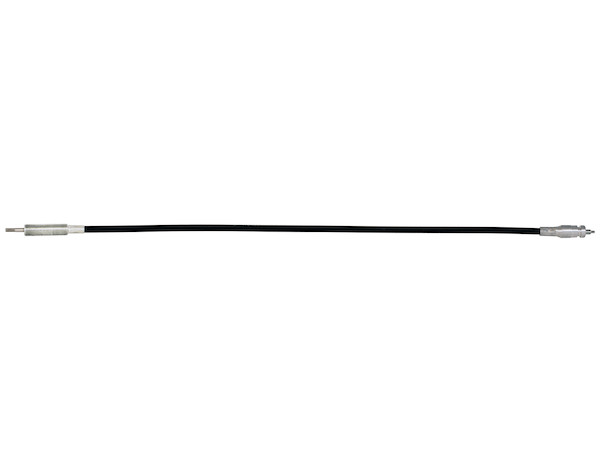
The Remote Valve Control Cable from Buyers Products connects RVC levers to valves using the corresponding RVC Connection Kit. It has a RVC Adapter Input with a Bonnet output. The cable features durable stainless steel ends and comes in a wide range of lengths.
Specifications
| Cable Length (in.) | 144 " |
| Cable Series | RVC Adapter |
| Conduit Color | Black |
| Total Travel (in.) | .56 " |
| Bulkhead Thread Size | 3/4-16 " |
| End Type | Valve Bonnet Connection |
| Rod End Thread Size | 1/4-28 " |
| Cable Diameter (in.) | 144 " |
Advanced Technical Overview: The 144-Inch Remote Valve Control Cable for Precision Actuation
The 144-inch Remote Valve Control Cable represents a pinnacle of mechanical engineering designed to provide precise, reliable, and durable remote actuation for a diverse array of hydraulic and pneumatic valve systems. Manufactured by Buyers Products, a recognized leader in commercial vehicle and industrial equipment components, this cable is specifically engineered to bridge the operational gap between RVC (Remote Valve Control) levers and their corresponding valves. Its extended length of 144 inches (12 feet) renders it exceptionally suitable for applications requiring significant reach, intricate routing paths, or installations in larger vehicles and industrial setups where the control station is geographically separated from the actuated valve assembly.
At its core, this control cable is a critical component within any robust RVC system. It acts as the indispensable mechanical conduit, translating the nuanced physical inputs from an operator's control lever into direct and responsive movements of a valve's spool or poppet. The efficiency and reliability of this translation are paramount in applications where precise control over hydraulic flow, pneumatic pressure, or mechanical engagement is essential for operational safety and productivity. The cable's inherent design, featuring an RVC Adapter Input and a Bonnet output, ensures seamless integration into the broader RVC ecosystem, guaranteeing compatibility and optimized performance when utilized with the appropriate RVC Connection Kit.
Functional Principles and System Integration
The operational efficacy of the 144-inch Remote Valve Control Cable stems from its sophisticated push-pull mechanism. This tried-and-true mechanical principle involves an inner wire core, or conduit, that can be moved axially within a protective outer sheath. When the RVC lever is manipulated by the operator, it exerts either a pushing or pulling force on the cable's inner core. This force is then transmitted along the entire 144-inch length of the cable, culminating in a precise linear displacement at the valve end. This linear movement is then directly coupled to the valve's actuation mechanism, facilitating its opening, closing, or modulated positioning.
A key specification of this cable is its "Total Travel" of .56 inches. This metric defines the maximum linear displacement that the cable's inner rod can achieve from one extreme position to the other. This precise travel distance is critically important for accurate valve control. Many hydraulic and pneumatic valves are designed to operate within specific stroke limits, and a control cable with a matched or slightly greater travel can ensure full actuation without undue stress on the valve mechanism. The .56-inch travel is carefully calibrated to correspond with the typical operational stroke required by standard industrial and mobile equipment valves, enabling complete engagement or disengagement, as well as nuanced modulation for proportional control applications where incremental valve positioning is necessary. This ensures that the operator has direct, predictable, and finely tuned control over the connected system, whether it involves adjusting the angle of a snowplow blade, the speed of a salt spreader's auger, or the lift of a dump body.
The RVC Adapter Input is meticulously designed to interface securely and efficiently with the RVC control lever. This connection point is engineered to minimize backlash and hysteresis, ensuring that the operator's input is immediately and accurately translated into cable movement. The "Rod End Thread Size" of 1/4-28 inches for the RVC Adapter Input is a standard dimension that facilitates robust and interchangeable connections with various lever configurations. This threaded connection allows for fine-tuning of the linkage and provides a secure, vibration-resistant attachment, crucial for maintaining consistent control in dynamic operational environments. Similarly, the Bonnet output, coupled with the "Valve Bonnet Connection" end type, is optimized for direct mechanical coupling to the valve's bonnet, which often houses the valve spool or plunger assembly. The "Bulkhead Thread Size" of 3/4-16 inches at this end provides a robust and standardized means for mounting and securing the cable, allowing for proper alignment and stability where the cable transitions from its conduit to the valve actuation point. This secure mounting prevents unwanted movement or bending stresses that could compromise cable integrity or control precision.
Advanced Engineering and Material Science
The durability and sustained performance of the 144-inch Remote Valve Control Cable are direct results of its superior material selection and meticulous engineering. The robust construction is tailored to withstand the severe conditions often encountered in heavy-duty commercial, industrial, and agricultural applications, encompassing exposure to extreme temperatures, corrosive elements, moisture, road debris, and constant mechanical stress.
Cable Core and Conduit Assembly
The inner working element of the cable, the core, is typically constructed from high-tensile strength steel wire or a multi-strand stainless steel bundle. This core is engineered for minimal elongation under tension and maximum compressive strength during push operations. It is often factory-lubricated with a specialized low-friction compound to ensure smooth, effortless movement within the conduit, which significantly reduces operational effort and extends the cable's lifespan by minimizing wear.
The conduit, the protective outer sheath through which the inner core operates, is a multi-layered assembly designed for optimal flexibility, crush resistance, and environmental protection. It typically comprises:
- Inner Liner: A low-friction polymer material, such as PTFE (Teflon) or a specially formulated polyethylene, which encases the inner core. This liner drastically reduces sliding friction, ensuring smooth operation and minimizing wear on the core, contributing to the cable's precise .56-inch total travel.
- Intermediate Layer: A spirally wound steel wire or flat-wire armor. This crucial layer provides the primary structural integrity, imparting superior crush resistance and preventing the conduit from buckling under compressive loads or kinking during bending. This reinforcement is critical for maintaining consistent performance over the 144-inch length, especially when routed around obstacles.
- Outer Jacket: A durable, weather-resistant polymer, specified as black in color. This outer jacket is typically made from high-density polyethylene (HDPE) or PVC, chosen for its excellent resistance to abrasion, impact, UV radiation, moisture, oils, grease, road salt, and many common chemicals. The black conduit color is a practical choice, offering superior UV resistance compared to lighter colors, preventing material degradation from prolonged sun exposure, and providing a professional, discreet aesthetic common in industrial applications.
Stainless Steel Ends
A standout feature of this control cable is its use of durable stainless steel ends. Stainless steel, particularly grades such as 303, 304, or 316, is chosen for its exceptional properties:
- Corrosion Resistance: Crucial in environments exposed to moisture, road salt, chemicals, and other corrosive agents prevalent in outdoor and industrial settings. Stainless steel prevents rust formation, which could otherwise compromise the mechanical integrity and smooth operation of the cable ends.
- High Strength: Provides the necessary mechanical strength to withstand repeated push-pull forces and the stresses of secure attachment to the control lever and valve.
- Longevity: The inherent durability of stainless steel ensures that the critical connection points maintain their structural integrity and precise dimensions over extended periods of heavy use, minimizing the need for replacement and reducing operational downtime.
The precision machining of the stainless steel ends, including the 1/4-28 inch rod end threads and the 3/4-16 inch bulkhead threads, ensures a tight, secure fit with mating components. This precision is vital for minimizing play in the system, which could otherwise lead to imprecise valve actuation or a feeling of "looseness" in the controls.
Operational Excellence and Performance Metrics
The design and material selection of the 144-inch Remote Valve Control Cable are optimized for operational excellence, yielding several key performance advantages:
- Durability and Longevity: Engineered to withstand harsh operating conditions, the cable resists degradation from environmental factors and mechanical fatigue. This translates to an extended operational life and reduced frequency of component replacement.
- Smooth and Consistent Operation: The low-friction internal design and robust conduit construction ensure that the cable maintains smooth, consistent movement throughout its operational life, even after prolonged use or exposure to contaminants. This consistency is critical for applications requiring repetitive and reliable valve actuation.
- Reliability: In heavy-duty applications where system failure can lead to significant downtime or safety hazards, the reliability of the control cable is paramount. This cable is built to deliver dependable performance under continuous, demanding usage.
- Fatigue Resistance: The materials and construction methods are chosen to withstand millions of push-pull cycles without premature failure of the core or conduit, ensuring sustained performance over the product's lifespan.
- Minimal Backlash: The precise manufacturing tolerances of the cable and its stainless steel end fittings work in concert to minimize mechanical play (backlash), ensuring that the operator's input is directly and accurately transmitted to the valve without lag or unnecessary movement. This precision is especially critical for proportional valve control.
Proper installation is crucial to realizing the full performance potential of this cable. Installers must adhere to recommended bending radii to prevent kinking or excessive stress on the internal components, which could lead to premature wear or increased friction. Secure mounting of the bulkhead connection and proper alignment of the rod ends are also essential for maintaining the integrity and precision of the control system over time.
Diverse Applications Across Industries
The 144-inch Remote Valve Control Cable's robust construction, precise control capabilities, and extended length make it an indispensable component across a vast spectrum of industries and applications:
- Heavy-Duty Commercial Vehicles: Essential for a wide range of municipal and commercial trucking applications. This includes snowplows (for controlling blade lift, angle, and tilt), salt and sand spreaders (for precise control of auger speed, spinner speed, and gate opening), dump trucks (for hoist engagement and tailgate release mechanisms), refuse vehicles (for compaction cycles, arm lift, and bucket functions), and utility trucks (for controlling auxiliary hydraulic functions on cranes, booms, and aerial work platforms). The 144-inch length is particularly advantageous for routing from the cab to rear-mounted equipment or complex undercarriage systems.
- Construction Equipment: Utilized in various construction machinery for controlling auxiliary hydraulic functions on mini excavators, skid steers, backhoes, and other earthmoving equipment. It provides remote actuation for attachments such as grapples, hammers, and tiltrotators.
- Agricultural Machinery: Employed in agricultural implements for remote engagement of PTOs (Power Take-Offs), control of hydraulic cylinders on planters, cultivators, sprayers, and other farm machinery where the operator needs to control implements from the tractor cab.
- Marine Applications: Suitable for certain marine control systems, such as remote throttle control for auxiliary engines, steering linkages for small vessels, or control of davits and winches, where resistance to corrosion is paramount and longer runs are often necessary.
- Industrial Automation and Processing: In factory settings and processing plants, these cables can provide reliable remote control for industrial valves that regulate fluid flow, pneumatic cylinders, or mechanical linkages in areas where electrical controls are unsuitable or where a simple, robust mechanical solution is preferred. Examples include conveyor gate controls, diverter valve actuation, or safety interlock mechanisms.
The extensive 144-inch length provides significant flexibility in system design, allowing engineers and installers to place control levers at ergonomically optimal positions within a cab or control room, while the actuated valves can be located in their most hydraulically efficient or mechanically advantageous positions on the equipment, even if physically distant. This flexibility aids in creating safer, more efficient, and easier-to-operate machinery.
Compliance, Quality Assurance, and Value Proposition
Buyers Products maintains a steadfast commitment to engineering excellence and quality assurance, ensuring that the 144-inch Remote Valve Control Cable meets or exceeds the rigorous demands of industrial and commercial applications. While specific certifications may vary by product line, the underlying design and manufacturing principles adhere to industry best practices for mechanical control cables. Each cable undergoes stringent quality control checks to verify critical specifications such as total travel, thread dimensions, and overall construction integrity, ensuring that every unit performs reliably from installation through its extended service life.
The investment in a high-quality control cable like the 144-inch RVC Adapter series translates into significant long-term value. By providing consistent, precise, and trouble-free operation, this cable contributes to:
- Reduced Downtime: The exceptional durability and reliability minimize unexpected failures, thereby reducing maintenance costs and increasing the operational uptime of critical equipment.
- Enhanced Safety: Reliable remote control systems allow operators to manage hazardous processes or equipment from a safe distance, significantly improving workplace safety.
- Improved Operational Efficiency: Precise control over valve functions enables operators to perform tasks more accurately and efficiently, leading to optimized resource utilization and higher productivity.
- Long-Term Cost-Effectiveness: The longevity and low-maintenance nature of the cable provide a superior return on investment compared to lesser-quality alternatives that may require frequent replacement and attention.
Conclusion
The 144-inch Remote Valve Control Cable from Buyers Products stands as a testament to precision engineering and robust construction. Designed specifically for the demands of remote valve actuation within RVC systems, its 12-foot length offers unparalleled routing flexibility for complex applications. With durable stainless steel ends, a meticulously engineered conduit, and precise specifications such as its .56-inch total travel, this cable ensures superior durability, consistent performance, and highly accurate control. Whether deployed in heavy-duty commercial vehicles, sophisticated construction machinery, or demanding industrial settings, this cable provides the essential mechanical link for reliable and efficient valve operation. It is not merely a component but a critical enabler of productivity and safety, delivering the reliable control necessary for the most challenging operational environments.