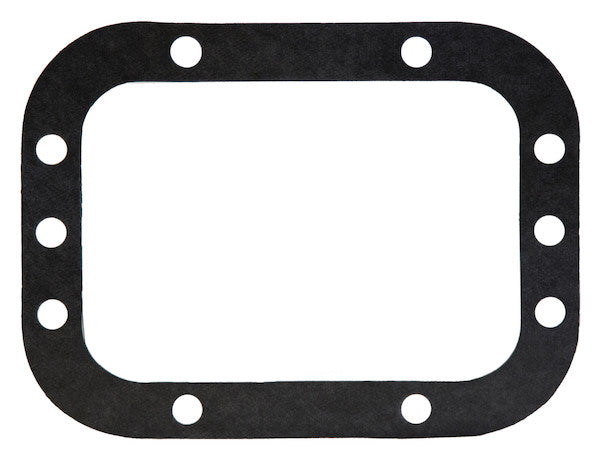
The 10 Hole Gasket from Buyers Products is ideal for mounting a Buyers Products clutch pump/PTO on your engine. The paper gasket is available in a .010 in. or .020 in. thickness or can be stacked to meet your needs. Note: Buyers Products PTOs can be custom-ordered for your specific vehicle and application. Contact Customer Service for assistance in selecting the correct PTO.
Specifications
| For Use With | 0.010 Inch Thick 10-Hole Gasket For 2000 Series |
|---|
The 0.010 Inch Thick 10-Hole Gasket, specifically engineered for 2000 Series hydraulic pumps, represents a critical component in ensuring the integrity, efficiency, and longevity of demanding hydraulic systems. Far from a mere accessory, this precision-engineered gasket serves as the primary interface sealant between the hydraulic pump and its mating surface, often a power take-off (PTO) unit or engine block. Its design and material composition are meticulously chosen to withstand the rigorous operational conditions inherent in mobile and industrial hydraulic applications, where consistent sealing performance is paramount to preventing fluid leakage, maintaining system pressure, and excluding environmental contaminants. This technical exposition delves into the material science, dimensional precision, application context, engineering principles, and installation best practices associated with this vital hydraulic system component.
Fundamental Role of Gaskets in Hydraulic Systems
In any hydraulic system, the efficient transmission of power relies on the integrity of the contained fluid under pressure. Gaskets are passive mechanical seals that fill the microscopic irregularities between two mating surfaces, creating a fluid-tight barrier. For hydraulic pumps, such as the 2000 Series, the gasket performs several critical functions:
- Fluid Containment: The primary role is to prevent the escape of hydraulic fluid. Leakage, even minor, can lead to significant fluid loss, reduced system efficiency, environmental contamination, and potential safety hazards.
- Pressure Integrity: Hydraulic systems operate at high pressures, often ranging from hundreds to several thousand pounds per square inch (psi). The gasket must maintain its sealing capability under these sustained pressures, preventing internal bypass or external expulsion of fluid. A compromised seal can lead to a drop in system pressure, affecting the performance of actuators and other hydraulic components.
- Contaminant Exclusion: While preventing fluid egress, gaskets are equally important in preventing the ingress of external contaminants such as dirt, dust, moisture, and debris. Contamination is a leading cause of premature wear and failure in hydraulic components, including pumps, valves, and cylinders. A robust seal protects the sensitive internal mechanisms of the pump.
- Vibration Damping: Although not their primary function, gaskets can offer a minor degree of vibration dampening between bolted components. In dynamic environments typical of mobile hydraulic applications, this can contribute to the overall mechanical stability of the assembly.
- Component Alignment and Protection: By providing a consistent interface, gaskets help in the accurate alignment of components and prevent direct metal-to-metal contact, which could lead to galvanic corrosion or fretting over time.
Material Science of the 10-Hole Gasket
The description "paper gasket" often refers to a composite material rather than simple paper. For hydraulic applications, these are typically high-performance compressed non-asbestos fiber (CNAF) sheets or cellulose-based materials impregnated and bonded with various elastomeric binders. The selection of such a material for the 0.010 inch thick gasket for 2000 Series pumps is based on a balance of several critical properties:
- Chemical Compatibility: Hydraulic fluids come in various formulations (mineral oil-based, synthetic, water-glycol, biodegradable). The gasket material must exhibit excellent resistance to degradation, swelling, or embrittlement when exposed to these fluids over prolonged periods and varying temperatures. Common binders like nitrile butadiene rubber (NBR), styrene-butadiene rubber (SBR), or acrylic elastomers are often chosen for their oil and fuel resistance.
- Temperature Stability: Hydraulic systems can experience significant temperature fluctuations, from ambient cold starts to elevated operating temperatures due to fluid shear and environmental heat. The gasket material must maintain its mechanical properties and sealing integrity across this operational temperature range without becoming brittle, soft, or losing its elasticity.
- Compressibility and Recovery: An ideal gasket material for static sealing applications should be sufficiently compressible to conform to the irregularities of the mating flange surfaces, ensuring a tight seal, but also possess adequate recovery (resilience) to maintain bolt load and seal integrity as the joint "relaxes" slightly over time due to creep or temperature cycles. Excessive creep can lead to a loss of bolt preload and eventual leakage.
- Tensile Strength and Tear Resistance: The gasket must be robust enough to withstand handling during installation and resist tearing or extrusion under high localized pressures once compressed within the bolted joint.
- Cost-Effectiveness: While performance is paramount, the chosen material often represents an optimal balance between desired technical specifications and manufacturing cost, making it a viable solution for mass-produced components.
For a 0.010 inch thick gasket, a cellulose fiber base impregnated with a nitrile rubber binder (often referred to as a "nitrile paper" gasket) is a common and highly effective choice. This composition offers excellent resistance to petroleum-based hydraulic fluids and many synthetic lubricants, good temperature performance, and superior sealability for static applications under moderate to high pressures, aligning perfectly with the requirements of 2000 Series hydraulic pumps.
Dimensional Precision: Thickness and Hole Configuration
The specific dimensions of this gasket – a 0.010 inch thickness and a 10-hole pattern – are not arbitrary but are precisely engineered to meet the stringent requirements of hydraulic pump mounting:
-
0.010 Inch Thickness:
- Optimal Compression: The thickness of a gasket directly influences the amount of compression it experiences when the bolts are torqued. A 0.010 inch thickness is typically chosen to provide sufficient material for uniform compression across the sealing surface without requiring excessive bolt load. It allows the gasket material to conform to surface imperfections effectively.
- Joint Stiffness and Preload: Gasket thickness plays a role in the overall stiffness of the bolted joint. A thinner gasket generally allows for a stiffer joint, which helps in maintaining bolt preload more consistently. However, it must be thick enough to compensate for flange non-parallelism and surface finish.
- Stackability: The availability of .010 inch and .020 inch thicknesses, and the option to stack them, highlights the need for precise control over the spacing and alignment of mating components. Stacking allows for fine adjustments to achieve correct shaft engagement depth, gear meshing, or to compensate for manufacturing tolerances in the overall assembly. This level of adaptability ensures optimal performance and prevents premature wear of internal pump components or the PTO.
- Minimizing Creep: Thinner gaskets tend to exhibit less creep (time-dependent deformation under constant stress) compared to thicker ones, as there is less material to deform. This characteristic helps maintain the bolt preload and seal integrity over the operational lifespan of the assembly.
-
10-Hole Configuration:
- Bolt Pattern Match: The 10-hole pattern indicates a specific bolt circle diameter (BCD) and angular spacing designed to precisely match the mounting flange of 2000 Series hydraulic pumps and corresponding Buyers Products PTOs. This ensures perfect alignment and distribution of clamping force.
- Even Stress Distribution: A multi-hole pattern, such as 10-hole, ensures that the compressive force from the bolts is distributed uniformly around the sealing area. This prevents localized stress concentrations that could lead to gasket extrusion or leakage. Each bolt contributes to maintaining pressure around its vicinity, creating a robust and continuous seal.
- Flange Rigidity: The number and placement of bolts also contribute to the rigidity of the bolted flange connection, preventing deformation of the flange under high internal pressures or external loads.
Application Context: 2000 Series Hydraulic Pumps and PTO Systems
The gasket’s application context—2000 Series hydraulic pumps and Buyers Products clutch pump/PTOs—is crucial to understanding its design requirements and importance.
-
2000 Series Hydraulic Pumps: These pumps typically refer to a range of medium to heavy-duty hydraulic gear pumps, piston pumps, or vane pumps, widely used in various mobile and industrial applications. Common characteristics include:
- Robust Construction: Designed for demanding environments, handling significant pressure and flow rates.
- Versatile Applications: Found in municipal vehicles (e.g., snowplows, refuse trucks, salt spreaders), construction equipment (e.g., mini excavators, skid steers), agricultural machinery, and various industrial power units.
- Performance: Capable of delivering reliable hydraulic power for operating cylinders, motors, and other hydraulic actuators for tasks like lifting, pushing, rotating, and clamping.
-
Power Take-Off (PTO) and Clutch Pump Integration:
- PTO Function: A PTO is a mechanical gearbox or shaft that is typically mounted to a vehicle's transmission or engine, allowing an external drive shaft to be powered by the engine. In hydraulic systems, PTOs transmit engine power to operate hydraulic pumps, which in turn generate the fluid flow and pressure needed for auxiliary functions.
- Clutch Pump: A clutch pump specifically incorporates a clutch mechanism, allowing the hydraulic pump to be engaged or disengaged independently of the engine's operation. This provides flexibility, conserves energy when hydraulic power is not needed, and reduces wear on the pump.
- Gasket's Position: The 10-hole gasket is positioned precisely at the interface where the Buyers Products clutch pump/PTO bolts to the engine or transmission. This is a critical juncture where mechanical power is converted into hydraulic power. A perfect seal here is essential to prevent oil leaks from the engine/transmission side or hydraulic fluid leaks from the pump side, ensuring that no cross-contamination occurs and that all power is efficiently transferred.
The demanding operational cycles, exposure to varying environmental conditions, and the need for continuous, reliable power output in these applications underscore the critical importance of a high-quality, precisely engineered gasket.
Engineering Principles of Gasket Design for Hydraulic Applications
The design of the 0.010 inch thick 10-hole gasket for 2000 Series hydraulic pumps embodies several fundamental engineering principles:
- Conformability and Sealing Stress: The gasket material is selected to be conformable, meaning it can deform plastically and elastically to fill the microscopic voids and irregularities of the mating flange surfaces. When compressed by the bolted joint, it generates sealing stress. This stress must be sufficient to resist the internal fluid pressure attempting to push past the seal, while also remaining below the material's yield strength to prevent extrusion or damage.
- Creep Relaxation Resistance: Over time, under constant compressive load and elevated temperatures, most gasket materials exhibit creep relaxation, where the stress within the gasket material decreases. An optimally designed gasket material, like the advanced cellulose fiber compositions used, minimizes this effect to maintain adequate sealing stress over the long term, thereby extending the service life of the connection.
- Blow-Out Resistance: In high-pressure applications, there is a risk of the gasket being "blown out" from between the flanges if the internal pressure exceeds the compressive force holding the gasket in place. The 10-hole pattern and precise thickness, combined with proper bolt torque, ensure sufficient and uniform compressive load to prevent blow-out, even during pressure spikes.
- Environmental Robustness: Beyond fluid compatibility and temperature stability, the gasket design must account for other environmental factors such as UV exposure (if exposed), ozone, and chemical splashes that might occur in a vehicle's engine compartment or industrial setting. While primary sealing occurs internally, the exposed edges must also maintain integrity.
- Surface Finish Interaction: The gasket material's ability to seal effectively is also dependent on the surface finish of the flanges. The chosen material is designed to work efficiently with typical machined finishes of hydraulic pump and PTO housings, bridging small imperfections to achieve a reliable seal.
Installation Best Practices and Criticality
Even the most meticulously designed gasket will fail prematurely if not installed correctly. Adherence to best practices is paramount:
- Surface Preparation: Both mating surfaces (pump flange and PTO/engine block) must be scrupulously clean, dry, and free of any old gasket material, burrs, scratches, or other damage. Residual grease, dirt, or old sealant can create leakage paths or prevent proper compression.
- Gasket Placement: The gasket must be correctly oriented and aligned with all 10 bolt holes and any fluid ports. Misalignment can obstruct fluid flow or lead to uneven compression.
- Bolt Torque Sequence and Value: This is perhaps the most critical aspect. Bolts should be tightened incrementally in a specific cross-pattern or spiral sequence to ensure even compression across the entire gasket surface. The manufacturer's specified torque values must be strictly followed. Under-tightening will lead to insufficient sealing stress and leaks; over-tightening can crush the gasket, causing it to extrude, lose resilience, and fail prematurely, or even deform the flanges.
- No Additional Sealants: For high-quality, precision-cut gaskets like this, additional liquid sealants or RTV (Room Temperature Vulcanizing) compounds are typically not required and can often be detrimental. They can prevent the gasket from seating properly, interfere with its material properties, or contaminate the hydraulic system.
- Avoid Retorquing (Unless Specified): Modern gasket materials are designed for minimal creep. Retorquing after initial installation is generally not recommended unless explicitly specified by the manufacturer, as it can over-compress the gasket.
Proper installation ensures the gasket performs to its full engineered potential, contributing significantly to the overall reliability and efficiency of the hydraulic system.
Performance and Reliability
The 0.010 inch thick 10-hole gasket for 2000 Series hydraulic pumps is designed for superior performance and long-term reliability in demanding hydraulic applications. Its robust construction and chemical resistance translate into:
- Extended Service Life: Minimizing the need for frequent maintenance and replacement.
- Consistent System Performance: By preventing pressure loss and contamination, it ensures the hydraulic pump and connected actuators operate at peak efficiency.
- Reduced Downtime: A reliable gasket prevents catastrophic leaks that could lead to unscheduled equipment downtime and costly repairs.
- Environmental Compliance: Preventing hydraulic fluid leaks is crucial for environmental protection and compliance with regulations.
Maintenance, Inspection, and Replacement
While designed for durability, gaskets are wear items. Regular inspection of hydraulic connections during routine maintenance is advisable. Signs of a failing gasket include:
- Visible weeping or dripping of hydraulic fluid around the pump-PTO interface.
- Hardening, cracking, or bulging of the gasket material at the joint.
- A noticeable drop in hydraulic system pressure or performance without other apparent causes.
When replacement is necessary, it is imperative to use an OEM-specified or equivalent gasket, such as this 0.010 inch thick 10-hole gasket, to ensure compatibility with the 2000 Series pump and optimal sealing performance. Reusing old gaskets is highly discouraged as they will have lost their sealing properties due to compression set and material degradation.
Conclusion
In summary, the 0.010 Inch Thick 10-Hole Gasket for 2000 Series hydraulic pumps is a precisely engineered, high-performance sealing component. Its selection of advanced composite materials, specific thickness, and multi-hole configuration are all harmonized to create a robust, leak-proof interface for demanding hydraulic applications. By ensuring fluid containment, pressure integrity, and contaminant exclusion, this gasket plays an indispensable role in safeguarding the efficiency, reliability, and operational lifespan of hydraulic pumps and their associated PTO systems. Its technical specifications and design considerations highlight a commitment to quality and performance that is essential for the continuous and safe operation of heavy-duty machinery dependent on hydraulic power.