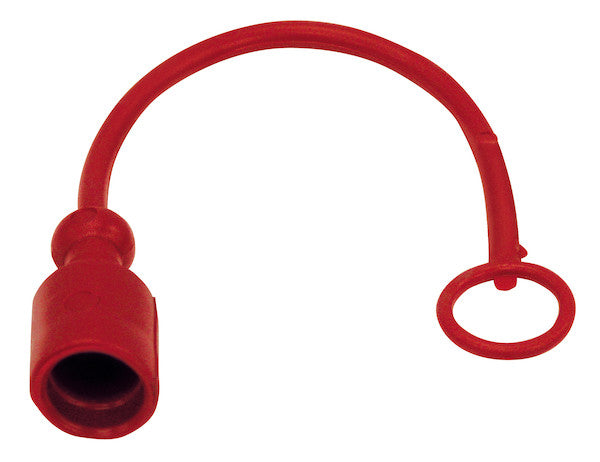
The Rubber Dust Cap from Buyers Products protects a quick coupler from harmful dirt and dust when it is not in use.
Specifications
| Material | Rubber |
|---|---|
| Size | 0.250 |
The 1/4 Inch Rubber Dust Cap, while seemingly a minor and often overlooked component, is critically important for preserving the operational integrity and extending the longevity of quick-disconnect coupling systems across a broad range of industrial, agricultural, and heavy-duty hydraulic applications. Engineered precisely to create an impervious barrier, this cap is an essential preventative measure, diligently safeguarding the intricate internal mechanisms and critical sealing surfaces of quick couplers whenever they are disengaged. It actively mitigates the ingress of particulate matter, moisture, corrosive agents, and abrasive debris, all known accelerators of component degradation and system failure. In complex fluid power circuits, where precision, cleanliness, and uninterrupted fluid flow are paramount, the humble dust cap acts as a frontline defense, preserving system efficiency, reducing unscheduled downtime, and contributing significantly to the overall economic viability and reliability of modern machinery.
Detailed Material Analysis: Industrial-Grade Rubber
The deliberate selection of industrial-grade rubber as the primary material for this protective cap is based on its superior elastomeric properties and inherent resilience in challenging operational environments. Rubber compounds, often selected from formulations such as Nitrile Butadiene Rubber (NBR) for its excellent resistance to petroleum-based oils and hydraulic fluids, Ethylene Propylene Diene Monomer (EPDM) for its exceptional resistance to ozone, UV radiation, and weathering, or Styrene-Butadiene Rubber (SBR) for its good abrasion resistance and general durability, offer a synergistic blend of performance characteristics. The inherent flexibility of rubber allows the cap to conform snugly to the exterior profile of a quick coupler, forming a robust, hermetic seal. This pliability is crucial for both ease of installation and removal, ensuring that maintenance personnel can efficiently deploy and retrieve the cap without undue force or the risk of damage to the coupler or the cap itself. Beyond flexibility, industrial rubber exhibits a high degree of resistance to compression set, meaning it can withstand prolonged periods of compression without losing its original shape and sealing capability. This characteristic is vital for maintaining a consistent, long-term seal, even when exposed to temperature fluctuations. Furthermore, rubber's natural damping properties provide a degree of impact resistance, protecting the coupler from incidental bumps or scrapes. Its non-conductive nature can also be an advantage in certain applications, preventing galvanic corrosion. The material's durability and integrity against premature cracking, tearing, or degradation across its specified operational temperature range are fundamental to its long-term efficacy, ensuring it maintains its protective function effectively.
Design and Engineering of the 1/4 Inch Dust Cap
The precise engineering of the 1/4 Inch Rubber Dust Cap is a testament to the principle that effective protective solutions demand meticulous attention to detail. The '0.250' specification, corresponding to a 1/4-inch nominal size, refers to the internal diameter of the cap, which is meticulously designed to create an interference fit with the external diameter of a standard 1/4-inch quick coupler's exposed end. This precise dimensional compatibility is critical; an undersized cap would be difficult or impossible to install, while an oversized one would offer an insufficient seal, rendering it ineffective. The internal geometry of the cap is typically designed with a slight taper or a series of internal gripping ribs that secure the coupler firmly. This design ensures that once applied, the cap remains robustly in place, resisting accidental dislodgement due to vibration, minor impacts, or pressure variations. A key design feature is often the presence of a sealing lip or multiple concentric sealing ridges around the opening. These lips compress against the smooth surface of the coupler, creating a primary and secondary barrier against the ingress of particulate matter and moisture. Externally, the cap is generally designed with a textured or ribbed surface to facilitate a firm grip during installation and removal, especially when hands are gloved, oily, or wet. Some designs may incorporate an integrated lanyard loop or a provision for a tether, allowing the cap to remain attached to the hose or equipment when the coupler is in use, thus preventing loss and ensuring immediate availability. Manufacturing processes, typically injection molding or compression molding of the rubber compound, allow for high dimensional accuracy and repeatability, ensuring consistency across large production batches, with strict quality control verifying proper cure, tolerances, and material integrity.
Functionality and Contamination Control
The core functionality of the 1/4 Inch Rubber Dust Cap revolves around its critical role in comprehensive contamination control for fluid power systems. When a quick coupler is disconnected, its internal components, particularly the valving mechanism, sealing surfaces, and critical internal passages, become exposed to the external environment. This exposure presents a direct pathway for a myriad of contaminants to enter the hydraulic or pneumatic system. The types of contaminants effectively blocked by the dust cap include:
- Particulate Matter: Dust, dirt, sand, metal shavings, lint, and other airborne particles are pervasive in most industrial and outdoor environments. Even microscopic particles can act as abrasive agents, causing wear on sealing surfaces, scoring precision-machined components, and leading to internal leakage or complete component failure.
- Moisture: Water, humidity, and condensation can introduce corrosive elements into a system, leading to rust and oxidation of metallic components. In hydraulic systems, water can degrade the lubricating properties of hydraulic fluid, reduce its dielectric strength, and promote microbial growth, further compromising system performance and component life.
- Chemicals: Splashes or aerosols of other industrial fluids, solvents, or cleaning agents can compromise the integrity of the coupler's internal seals or initiate corrosive reactions if they are not compatible with the coupler's material construction.
- Debris: Larger foreign objects, such as plant matter, rags, or loose hardware, can mechanically obstruct the coupler, preventing proper re-engagement or causing immediate damage upon connection.
Applications Across Industries
The utility of the 1/4 Inch Rubber Dust Cap extends across a broad spectrum of industries, wherever quick-disconnect couplings are employed to facilitate rapid and secure connection and disconnection of fluid or air lines. Its widespread application underscores its fundamental importance in maintaining operational integrity.
- Hydraulic Systems: This is arguably the most prevalent application. Quick couplers are ubiquitous in construction equipment (excavators, loaders), agricultural machinery (tractors, harvesters), and various industrial power units. Here, 1/4 inch couplers are often used for auxiliary circuits, pilot lines, or smaller hydraulic tools. Protecting these couplers from abrasive dust, mud, and moisture in rugged environments is paramount to preventing contamination of high-pressure hydraulic fluid, which can severely damage pumps, valves, and cylinders.
- Pneumatic Systems: In manufacturing, automation, and general industrial settings, pneumatic systems utilize quick couplers for compressed air lines powering tools, actuators, and machinery. Contaminants like dust and moisture in compressed air can lead to blockages, corrosion, and wear in pneumatic cylinders, valves, and air motors. The dust cap ensures clean air connections, improving efficiency and prolonging equipment life.
- Automotive and Fleet Maintenance: While less common for primary fluid lines, quick couplers are used for specialized tasks such as brake bleeding equipment, refrigerant charging stations, and diagnostic tool connections. Protecting these connections, especially in garage environments where dust and oil mist are prevalent, is essential for accurate diagnostics and reliable service.
- Agricultural Sector: Beyond heavy machinery hydraulics, smaller 1/4 inch quick couplers might be found on spray equipment, irrigation systems, or specialized implement attachments. Exposure to soil, fertilizers, pesticides, and varying weather conditions makes robust contamination protection indispensable.
- Marine Applications: On boats and marine equipment, quick couplers might be used for fuel lines, water systems, or auxiliary hydraulic circuits. The corrosive nature of saltwater and the presence of sand and debris necessitate effective dust caps to prevent corrosion and maintain system reliability.
- General Industrial and Manufacturing: Across countless factories and workshops, quick couplers are used for water lines, chemical transfer lines (if material compatible), and various utility connections. The dust cap provides universal protection against typical industrial airborne contaminants.
Benefits of Proactive Protection
The deployment of the 1/4 Inch Rubber Dust Cap exemplifies a proactive maintenance strategy, yielding a multitude of significant benefits that extend far beyond the modest cost of the component itself. These benefits collectively contribute to enhanced operational efficiency, reduced total cost of ownership, and improved safety profiles.
- Extended Component Lifespan: By preventing the ingress of abrasive particles and corrosive agents, the dust cap directly preserves the integrity of quick couplers, hoses, and upstream/downstream components such as pumps and valves. This protection significantly delays the onset of wear and corrosion, thereby extending the operational life of expensive machinery and infrastructure.
- Reduced Maintenance and Downtime: Contamination is a leading cause of hydraulic and pneumatic system failure. By mitigating this risk, dust caps drastically reduce the frequency of unscheduled maintenance events and the associated downtime. Fewer repairs translate directly into higher equipment availability and increased productivity.
- Significant Cost Savings: The cost of replacing a compromised quick coupler, let alone a damaged pump or valve, far outweighs the minimal investment in dust caps. Proactive protection against contamination prevents costly component failures, reduces labor costs associated with emergency repairs, and minimizes expenses related to lost productivity during downtime. It also reduces the need for frequent fluid changes and filter replacements.
- Improved System Performance and Efficiency: Clean fluid systems operate at peak efficiency. Contaminants can cause internal leakage, pressure drops, increased friction, and reduced flow rates, all of which diminish system performance. By ensuring couplers remain clean, the dust cap helps maintain the designed specifications and optimal operational parameters of the fluid power system.
- Enhanced Operational Safety: A compromised quick coupler can lead to unexpected disconnections, fluid leaks, or pressure failures, posing significant safety hazards to personnel and equipment. By safeguarding the coupler's integrity and ensuring reliable connections, dust caps contribute to a safer working environment, reducing the risk of accidents and injuries.
- Ease of Integration and Use: Dust caps are simple to install and remove, requiring no specialized tools or training. Their ergonomic design ensures they can be quickly applied and retrieved by operators and maintenance personnel, making them a practical and user-friendly addition to any equipment.
Installation and Maintenance Considerations
The efficacy of the 1/4 Inch Rubber Dust Cap is not solely dependent on its robust design and material composition but also on its correct application and ongoing care. While intuitively simple, adhering to best practices for installation and maintenance ensures maximum protective performance.
Installation:
- Cleanliness First: Before applying the dust cap, ensure that the mating surface of the quick coupler is thoroughly cleaned. Any residual dirt, grease, or fluid on the coupler's exterior can be trapped beneath the cap, potentially contaminating the system upon later re-engagement.
- Secure Fitment: Gently but firmly push the rubber dust cap onto the quick coupler end until a secure, snug fit is achieved. The cap's inherent flexibility allows it to stretch slightly to form a tight seal. Verify that the sealing lip (if present) is fully engaged.
- Tethering (if applicable): If the cap is equipped with a tether, ensure it is securely attached to the hose or equipment. This prevents loss and ensures immediate availability upon disconnection.
Maintenance and Inspection:
- Regular Visual Inspection: Periodically inspect dust caps for any signs of wear, damage, or degradation. Look for cracking, tears, loss of elasticity, swelling, or severe discoloration.
- Cleaning: If the exterior of the cap becomes heavily soiled, clean it with a mild soap and water solution. Avoid harsh solvents or abrasive cleaners.
- Storage: Store spare caps in a cool, dry place away from direct sunlight, ozone-generating equipment, and harsh chemicals.
- Replacement: Replace damaged or degraded dust caps immediately. The small cost of a replacement cap pales in comparison to the potential damage caused by a compromised protective barrier.
Quality Assurance and Compliance
The manufacturing of the 1/4 Inch Rubber Dust Cap, while seemingly straightforward, adheres to stringent quality assurance protocols to ensure its reliability and consistent performance. High-quality rubber product manufacturers typically follow established industry standards and robust internal quality control systems throughout the production cycle. Material traceability is often a key aspect, allowing manufacturers to track specific rubber compound batches from raw material to finished product. This ensures that the material properties, such as hardness (Shore A durometer), tensile strength, elongation at break, and specific gravity, consistently meet engineering specifications. During the molding process, strict controls are applied to temperature, pressure, and cure time to ensure optimal vulcanization of the rubber, which dictates its final physical and chemical properties. Post-molding, each batch of dust caps undergoes comprehensive inspection. This includes dimensional verification using precision calipers and gauges to ensure the 0.250-inch internal diameter and overall geometry conform to design specifications, guaranteeing a proper fit on the quick coupler. Visual inspections are also conducted to detect surface defects such as flash, voids, inclusions, or incomplete molding, which could compromise the cap's sealing ability or structural integrity. Batch testing may also be performed, where a statistical sample of caps is subjected to functional tests. These could include fitment tests on standard couplers, pull-off force tests to ensure secure retention, and environmental aging tests (e.g., accelerated UV exposure, heat aging, chemical immersion) to validate the long-term durability and resistance of the rubber material under simulated service conditions. While specific regulatory compliance for a dust cap itself is generally minimal, adherence to general manufacturing quality standards, such as ISO 9001, reflects a strong commitment to consistent product quality. This rigorous approach to quality assurance ensures that every 1/4 Inch Rubber Dust Cap delivered provides the intended level of protection and contributes to the overall reliability of the systems it serves.
Conclusion
In summary, the 1/4 Inch Rubber Dust Cap is a vital, non-negotiable component for proactive fluid power system maintenance and comprehensive asset protection. Its robust rubber construction and precise engineering deliver an impermeable barrier against myriad contaminants, thereby preserving quick coupler integrity. This small yet highly effective investment yields significant returns in extended equipment lifespan, dramatically reduced downtime, substantial cost savings, and enhanced operational safety and efficiency, solidifying its essential role as a cornerstone of best-practice industrial maintenance protocols.