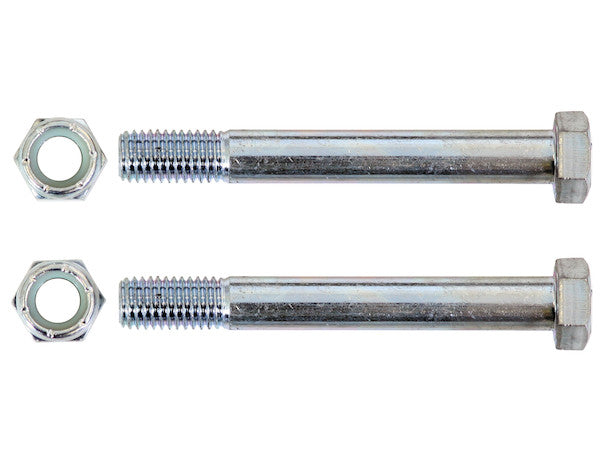
Buyers Products 3 Position Channel and 5 Position Channel Bolt and Nut Kit is for use with B8978/B8979. It includes: (2) 5/8-11 x 4.5 in. Grade 8 cap screws, and (2) 5/8-11 nylock nuts.
Specifications
| Color | Natural |
|---|---|
| Finish | Zinc Plated Clear |
| Material | Carbon Steel |
The Buyers Products Bolt and Nut Kit for 3 or 5 Position Channel represents an essential, meticulously engineered fastening solution designed for critical applications requiring superior strength, durability, and vibration resistance. This kit, specifically formulated for seamless integration with Buyers Products channels B8978 and B8979, exemplifies a commitment to operational integrity and extended service life in demanding environments. Understanding the technical specifications and underlying engineering principles of this kit is paramount for ensuring optimal performance, safety, and longevity of the assemblies it secures.
At the core of this fastening system are two crucial components: two 5/8-11 x 4.5 inch Grade 8 cap screws and two corresponding 5/8-11 nylock nuts. Each element has been selected and specified to meet rigorous industrial standards, guaranteeing a robust and reliable connection.
Grade 8 Cap Screws: Unrivaled Strength and Durability
The selection of Grade 8 cap screws is a definitive indicator of the kit's intended use in high-stress applications. According to SAE International (Society of Automotive Engineers) standard J429, Grade 8 fasteners are among the strongest available for commercial and industrial use, significantly surpassing the tensile and yield strengths of commonly used Grade 5 or Grade 2 fasteners.
- **Material Composition and Heat Treatment:** Grade 8 fasteners are typically manufactured from medium carbon alloy steel, such as 4140 or 8640 steel, which undergoes a stringent heat-treatment process. This process involves quenching and tempering, which refines the microstructure of the steel, imparting exceptional hardness and toughness. The controlled thermal cycles transform the steel's crystalline structure, enhancing its resistance to deformation and fracture under extreme loads. This advanced metallurgical treatment is what differentiates Grade 8 from lower grades, where carbon steel is often used without extensive heat treatment (Grade 2) or with less aggressive quenching and tempering (Grade 5). The specific alloying elements, including manganese, silicon, chromium, and molybdenum, contribute to the steel's hardenability, allowing for the achievement of superior strength properties through heat treatment.
- **Mechanical Properties:** The defining characteristic of Grade 8 cap screws is their superior mechanical properties. A standard 5/8-inch diameter Grade 8 bolt typically exhibits a minimum tensile strength of 150,000 pounds per square inch (psi) and a minimum yield strength of 130,000 psi. These figures represent the maximum stress the fastener can withstand before fracturing and the maximum stress it can endure before permanent deformation, respectively. For comparison, a Grade 5 bolt offers 120,000 psi tensile and 92,000 psi yield, while a Grade 2 bolt only provides 74,000 psi tensile and 55,000 psi yield. This substantial difference in strength means Grade 8 fasteners can accommodate significantly higher clamping forces and resist greater shear and tensile stresses, which are critical in applications subject to heavy loads, dynamic forces, and vibrational stress. The high proof load of Grade 8 fasteners, which is the maximum tensile load that can be applied without causing permanent deformation, further underscores their robust design.
- **Dimensional and Thread Specifications (5/8-11):** The "5/8-11" designation refers to the nominal major diameter of the screw (5/8 inch) and the thread pitch (11 threads per inch, UNC - Unified National Coarse). Coarse threads (UNC) are generally preferred for heavy-duty applications due to several advantages:
- **Robustness:** UNC threads are less susceptible to damage from nicks, cross-threading, or repeated assembly/disassembly compared to fine threads. Their larger thread root radius makes them inherently more resistant to stress concentrations.
- **Ease of Assembly:** The larger thread profile allows for quicker engagement and reduces the likelihood of galling, particularly in field installations where conditions may not be ideal.
- **Strength:** While fine threads offer slightly greater shear area in the thread root, coarse threads are often specified for situations where thread stripping is less of a concern than general mechanical strength and ease of handling. The robustness of UNC threads ensures reliable performance even under less than perfect alignment, and they are typically easier to clean if exposed to dirt or debris.
- **Length (4.5 inches):** The specified length of 4.5 inches is not arbitrary; it is precisely engineered to accommodate the thickness of the 3 or 5 position channels (B8978/B8979) along with any washers or intermediate components, ensuring sufficient thread engagement for optimal clamping force. Proper thread engagement, typically 1.5 times the nominal diameter, is crucial to prevent premature thread stripping and to allow the fastener to achieve its designed preload efficiently. An insufficient length would compromise the joint integrity, leading to an unreliable connection, while excessive length could lead to interference with other components, increased weight, or an unesthetic projection. The precise length ensures functionality and aesthetics are met.
- **Head Style:** As "cap screws," these fasteners typically feature a hexagonal head, designed for external wrenching. This provides excellent grip for standard tools, facilitating high-torque application necessary to achieve the required preload in Grade 8 fasteners. The large contact area of the wrench on the hex head minimizes the risk of stripping the head during installation, ensuring a secure and efficient assembly process. The specific dimensions of the hex head comply with ANSI/ASME standards for heavy hex structural bolts, ensuring compatibility with standard tooling.
- **Manufacturing Process:** Grade 8 cap screws are typically produced through a cold heading or cold forging process, followed by thread rolling. Cold forming processes improve the grain structure of the steel, enhancing its strength and fatigue resistance by orienting the grain flow along the fastener's axis. This process also work-hardens the material, further increasing its strength. Thread rolling, in particular, creates threads by plastic deformation rather than cutting. This process compacts the material at the thread roots, improving the surface finish and significantly enhancing the fatigue strength of the threads compared to cut threads, as it avoids stress risers at the thread roots. The rolled threads are also denser and more resistant to stripping.
Nylock Nuts: Engineered for Vibration Resistance and Secure Fastening
Complementing the high-strength cap screws are the 5/8-11 nylock nuts. These specialized nuts are critical for maintaining joint integrity in dynamic environments where conventional nuts might loosen due to vibration or shock.
- **Self-Locking Mechanism:** The defining feature of a nylock nut is its integrated non-metallic, typically nylon or polymer, insert. This insert is located at the top of the nut, slightly deforming the mating bolt threads as the nut is tightened past a certain point. The elastic deformation of the nylon creates an interference fit between the nut and the bolt threads, generating friction that resists rotational movement. This frictional resistance is independent of the joint's clamping force (preload) and significantly enhances the nut's ability to remain secured, even when the fastener experiences external vibrations or cyclic loading that could otherwise cause conventional nuts to back off. The nylon insert acts as a wedge, forcing the bolt threads against the threads of the nut's body, creating a positive lock.
- **Vibration Resistance:** In applications like those involving 3 or 5 position channels on heavy equipment, constant vibration is an inherent challenge. Nylock nuts are exceptionally effective in preventing self-loosening under such conditions, providing a crucial safety and operational advantage. This mechanism ensures that the structural integrity of the assembly is maintained over extended periods of operation, reducing the need for frequent retightening and minimizing the risk of component failure due to loose fasteners. The principle of operation is to increase the prevailing torque of the nut, meaning the torque required to rotate the nut without developing any axial load. This prevailing torque prevents loosening.
- **Material (Carbon Steel):** The body of the nylock nut is manufactured from carbon steel, ensuring its mechanical properties are well-matched to the Grade 8 cap screws. This material choice provides the necessary strength to withstand the clamping forces and internal stresses generated during tightening and operation, preventing the nut itself from deforming or fracturing. The material compatibility between the bolt and nut is vital for a robust fastening system, preventing issues such as dissimilar metal corrosion or premature wear of the threads. The nuts typically meet ASTM A563 Grade C or DH standards, ensuring they can withstand the tensile loads generated by Grade 8 bolts.
- **Thread Specification (5/8-11):** The 5/8-11 thread specification of the nylock nuts perfectly matches that of the cap screws, ensuring proper engagement and the establishment of a secure, high-strength joint. Precision in thread matching is fundamental for achieving the desired preload and maximizing the fatigue life of the assembly. The consistent thread class (e.g., 2B for internal threads) ensures smooth assembly and full thread contact.
- **Performance Considerations:**
- **Reusability:** While nylock nuts offer excellent locking performance, their reusability can be limited. The nylon insert deforms with each installation, and its locking effectiveness may diminish after a few cycles. For critical applications, it is often recommended to replace nylock nuts after a single use or after a limited number of reuses, depending on the manufacturer's guidelines and application severity. This ensures the integrity of the locking feature is maintained for optimal safety and performance. The locking torque can decrease after repeated cycles.
- **Temperature Limitations:** The nylon insert has specific temperature limitations. Typically, the effective operating temperature range for standard nylon inserts is up to approximately 250°F (121°C). Exceeding this temperature can cause the nylon to degrade, melt, or lose its elasticity, thereby compromising the locking mechanism. Designers and installers must consider the operating environment to ensure the nylock nut remains effective under thermal stresses.
- **Chemical Resistance:** While nylon generally offers good resistance to many common chemicals, exposure to certain aggressive solvents, acids, or bases can degrade the insert. This is another environmental factor to consider when selecting fasteners for specialized industrial applications where chemical exposure is a risk. For instance, strong oxidizing acids or certain organic solvents can compromise the polymer's integrity.
- **Torque Characteristics:** When installing nylock nuts, it is important to note that the nylon insert will create a resistance (prevailing torque) before the nut begins to apply clamping force. This prevailing torque must be overcome during tightening, and it should be accounted for when applying the final seating torque to achieve the desired preload.
Material and Finish: Carbon Steel with Zinc Plated Clear
The choice of carbon steel as the base material for both the cap screws and nylock nuts, combined with a zinc plated clear finish, is a strategic decision balancing mechanical performance with environmental protection.
- **Carbon Steel:** As discussed, carbon steel provides the foundational strength required for heavy-duty fasteners. For Grade 8, it specifically refers to alloy steels containing controlled amounts of carbon, manganese, silicon, and sometimes other alloying elements like chromium and molybdenum, which contribute to its hardenability and overall mechanical properties after heat treatment. This material is widely recognized for its excellent balance of strength, ductility, and machinability, making it ideal for fastener manufacturing. Its cost-effectiveness combined with its ability to be heat-treated to high strengths makes it a staple in demanding engineering applications.
- **Zinc Plated Clear Finish:** The "Zinc Plated Clear" finish is a common and highly effective method for enhancing the corrosion resistance of steel fasteners.
- **Electroplating Process:** Zinc plating involves electrodeposition of a thin, uniform layer of zinc onto the surface of the steel components. During this process, the fasteners are submerged in an electrolyte solution containing zinc ions, and an electric current is passed through, causing the zinc to deposit evenly onto the steel surface. This creates a physical barrier against environmental elements. The thickness of the zinc layer is carefully controlled to provide adequate protection without compromising thread fit.
- **Sacrificial Protection:** Zinc plating provides cathodic or sacrificial protection. Zinc is a more electrochemically active metal than steel. In the presence of an electrolyte (e.g., moisture, salt water), if the zinc coating is scratched or compromised, the zinc will corrode preferentially, sacrificing itself to protect the underlying steel substrate. This significantly prolongs the life of the fastener by delaying the onset of rust on the steel, even if minor surface damage occurs.
- **Clear Passivation (Chromate Conversion Coating):** The "clear" aspect of the finish refers to a subsequent process called chromate conversion coating. After zinc plating, the fasteners are dipped into a chromate solution. This creates a thin, gel-like passive layer on the zinc surface, which further enhances corrosion resistance, improves adhesion for subsequent coatings (though not needed here), and provides a clean, aesthetic appearance. The "clear" designation means that no dye has been added to the chromate solution, resulting in a silvery-white or iridescent transparent finish, preserving the natural metallic look while adding a crucial protective layer. This layer typically increases the salt spray resistance (ASTM B117) of the zinc coating from a few hours to well over 100 hours before white rust (zinc corrosion) appears, offering significant protection against atmospheric corrosion.
- **Benefits:** This finish is particularly advantageous for fasteners exposed to outdoor conditions, road salts, moisture, and general industrial environments. It provides a cost-effective balance of corrosion protection, durability, and a clean appearance, making it suitable for a wide array of applications in the transportation, construction, and utility sectors where both functionality and visual integrity are desired. It also offers a moderate level of abrasion resistance.
Application Specificity: For B8978/B8979 3 or 5 Position Channels
The explicit mention of compatibility with Buyers Products channels B8978 and B8979 underscores the engineered precision of this kit. While the specific details of these channels are proprietary, the "3 or 5 Position Channel" designation strongly suggests their use in applications requiring adjustable or multi-point attachment systems. Common scenarios include:
- **Snowplow and Spreader Equipment:** Many components on snowplows, salt spreaders, and de-icing equipment require robust, adjustable connections to adapt to different vehicle types, road conditions, or operational requirements. The channels likely provide mounting points for blades, hoppers, or other accessories, which are constantly subjected to impact, vibration, and corrosive elements like road salt.
- **Truck Body and Trailer Fabrication:** Utility trucks, dump trucks, and trailers often use channel structures for mounting toolboxes, cargo control systems, specialized equipment, or body sections. The "positions" could refer to varying heights, angles, or lateral adjustments for modular components, demanding fasteners that can maintain integrity despite repeated repositioning and heavy loads.
- **Agricultural and Construction Machinery:** Heavy machinery in these sectors frequently incorporates adjustable or modular components that rely on strong, vibration-resistant fasteners to withstand extreme operational stresses, dirt, mud, and environmental exposure. Applications like adjustable hitches, accessory mounts, or structural braces would benefit from this kit.
- **Utility and Municipal Vehicles:** Vehicles used for utility work, such as boom trucks or service vehicles, often feature adjustable platforms or equipment mounts that need to be secured with high-strength fasteners to ensure operator safety and equipment reliability during dynamic operations.
In these demanding applications, fasteners are subjected to a complex array of forces:
- **Tensile Loads:** Forces that try to pull the joint apart, often dynamic and fluctuating.
- **Shear Loads:** Forces that try to cut or slide the fastener sideways, which can be significant during lateral impacts or movements.
- **Bending Loads:** Forces that induce bending stress in the fastener, often a combination of tensile and shear.
- **Dynamic Loads:** Fluctuating forces due to vehicle movement, equipment operation, road irregularities, or impact events, leading to fatigue.
- **Vibration:** Constant oscillations that can lead to fastener loosening and fatigue failure, making self-locking nuts indispensable.
- **Environmental Degradation:** Exposure to moisture, aggressive chemicals (e.g., road salt, fertilizers, hydraulic fluids), extreme temperature fluctuations, and UV radiation, which the zinc plating helps mitigate.
The Grade 8 cap screws provide the necessary tensile and shear strength to safely manage these loads, while the nylock nuts ensure that the connection remains secure despite continuous vibration and shock. The zinc plated clear finish protects against the corrosive elements prevalent in outdoor and automotive environments, extending the operational life of the entire assembly and reducing maintenance frequency.
Engineering Principles and Fastener Preload
The primary function of a threaded fastener is not merely to hold components together, but to create a clamping force (preload) that prevents joint separation and relative motion between the clamped parts. When a bolt is tightened, it stretches elastically, and this stretch creates a tension that pulls the components together, effectively making them act as a single, rigid unit.
- **Importance of Preload:** Sufficient preload is critical for several reasons:
- **Prevents Joint Separation:** Ensures the clamped components act as a single unit, resisting external forces that would try to pull them apart.
- **Increases Fatigue Life:** A properly preloaded joint resists fatigue much better than a loosely clamped one. The external cyclic loads are primarily absorbed by the bolt's elastic deformation, reducing stress variations in the bolt and significantly extending its fatigue life.
- **Prevents Relative Movement:** A high clamping force creates strong friction between the joint faces, which prevents movement, fretting, and galling between joint members. This is crucial for maintaining precise positioning and preventing wear.
- **Shear Resistance:** While bolts can resist shear loads directly, a high clamping force enables the joint to resist shear forces primarily through friction between the clamped surfaces, minimizing the direct shear stress on the bolt itself. This effectively distributes the load over a larger area.
- **Achieving Preload with Grade 8 Fasteners:** Grade 8 fasteners, with their high strength and ductility, are designed to be torqued to much higher values than lower-grade bolts. This allows for significantly greater preload to be established, resulting in a much stronger and more durable joint that can absorb higher external loads without loosening or failure. The 5/8-inch diameter facilitates substantial torque application, enabling the development of considerable clamping force.
- **Role of Nylock Nuts in Preload Retention:** While the primary function of the nylock nut's insert is to resist rotation by creating prevailing torque, it also plays an indirect role in preload retention by physically preventing the nut from backing off once the desired clamping force is applied. This ensures that the established preload is maintained over time, countering external influences such as vibration, shock, or thermal expansion/contraction that might otherwise cause the joint to relax.
Installation, Maintenance, and Quality Assurance
Proper installation techniques are paramount to realizing the full design potential and safety benefits of this bolt and nut kit.
- **Torque Specifications:** Adhering to manufacturer-recommended torque specifications is essential. Under-torquing can lead to insufficient preload, resulting in a weak joint susceptible to fatigue and loosening, potentially leading to equipment failure or safety hazards. Over-torquing can permanently deform or fracture the fastener, strip threads, or damage the clamped components. While specific torque values for B8978/B8979 channels are not provided here, general guidelines for a 5/8-11 Grade 8 bolt with a clear zinc finish often fall within a specific range, and it is crucial to consult the equipment manufacturer's service manual for the exact recommended values. A properly calibrated torque wrench should always be used to ensure precise preload application.
- **Thread Condition:** Threads on both the bolt and nut should be clean and free of burrs, debris, or excessive lubricant (unless specified). Contaminants can significantly alter torque-tension relationships, leading to inaccurate preload. The zinc plating acts as a light lubricant, which is factored into general torque specifications for plated fasteners.
- **Inspection:** Regular inspection of fastened joints is critical, especially in heavy-duty applications. Checks should include:
- Visual inspection for any signs of corrosion, damage, cracks, or deformation to fasteners.
- Assessment for looseness or signs of relative movement between components.
- Integrity of the nylock insert (if fasteners are reused), checking for excessive wear or degradation of the nylon.
- Presence of any foreign material or obstruction that could affect performance.
- **Replacement Policy:** Given the critical nature of the components secured by this kit, a prudent maintenance strategy often includes replacement of fasteners, especially nylock nuts, during major overhauls or when any signs of wear or degradation are observed. The reusability of nylock nuts should always be critically evaluated against the specific application's safety and performance requirements; for maximum safety and locking effectiveness in critical applications, replacement after a single use is often recommended. Bolts should also be replaced if any signs of stretching, necking down, or head damage are observed.
Buyers Products' commitment to quality is reflected in the precise engineering and robust material selection of this bolt and nut kit. By using high-grade components like heat-treated carbon steel for Grade 8 cap screws and self-locking nylock nuts, all protected by a durable zinc plated clear finish, the kit ensures compliance with stringent industry standards (such as SAE J429 for bolts and ASTM A563 for nuts) and delivers exceptional performance. This proactive approach to fastener design reduces the total cost of ownership by minimizing downtime, enhancing operational safety, and extending the lifespan of valuable equipment through reliable, long-lasting connections.
In conclusion, the Buyers Products Bolt and Nut Kit for 3 or 5 Position Channel is far more than just a collection of hardware. It is a precisely engineered fastening system where every specification – from the Grade 8 strength rating and the 5/8-11 thread dimensions to the nylock locking mechanism and the zinc plated finish – contributes to a single objective: to provide a steadfast, resilient, and safe connection in the most challenging industrial and mobile equipment environments. Its design ensures that channels B8978 and B8979 remain securely fixed, allowing operators to rely on their equipment without compromise.