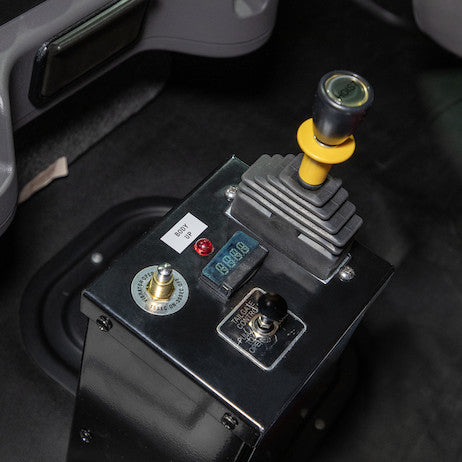
Buyers Products 4-Way, 2-Position Air Valve is ideal for operating double acting cylinders because it controls the air flow required for precise operation in many air cylinder applications. The air valve mounts in the dashboard or a console and includes a tailgate control face plate.
Specifications
| Depth (in.) | 1-3/8 |
|---|---|
| Feathering | No |
| Height (in.) | 4 |
| Number of Ports | 3 |
| Port Size | 0.125 |
| Port Type | NPT |
| Rated Pressure | 120 |
| Spring to Neutral / Deadman Control (y/n) | N |
| Valve Action | 4-Way, 2 Position |
| Valve Actuation | Manual Push/Pull |
| Valve Primary Application | Air Tailgate Valve |
| Width (in.) | 13/16 |
The Buyers Products 4-Way, 2-Position Manual Air Valve with Five 1/8 Inch NPT Ports represents a critical component in pneumatic systems requiring robust, reliable, and user-friendly control over double-acting cylinders. This technical exposition delves into the intricate design, functional principles, application specific advantages, and operational considerations of this essential pneumatic valve, emphasizing its pivotal role in various industrial and mobile equipment contexts, particularly as an air tailgate valve.
Understanding the Core Functionality: 4-Way, 2-Position Operation
At the heart of this valve’s utility lies its "4-Way, 2-Position" designation. This classification is fundamental in pneumatic control. A "way" refers to a distinct path for airflow through the valve, while a "position" denotes a stable state the valve can adopt.
- 4-Way Valves: These valves are engineered to manage the flow of pressurized air to two separate output ports (often labeled A and B) and simultaneously direct exhaust air from the inactive port. This capability is indispensable for controlling double-acting pneumatic cylinders, which require air pressure to extend the piston rod and a separate air pressure application to retract it. In essence, a 4-way valve allows for the selective pressurization and depressurization of both sides of a double-acting cylinder.
- 2-Position Valves: This indicates that the valve has two distinct, stable operational states. For a manual valve, these positions are typically achieved through a physical manipulation, such as a push or pull action. Once in a position, the valve will remain there until deliberately actuated to the other position. This contrasts with 3-position valves, which offer a neutral or center position, or spring-return valves that revert to a default position when actuation force is removed. The "No Feathering" specification further clarifies that this valve operates with discrete, ON/OFF-type control, lacking the ability to modulate flow rates incrementally.
When the valve is in its first position, it typically directs pressurized air to Work Port A, while simultaneously connecting Work Port B to an exhaust port. This action would cause a double-acting cylinder to extend. Conversely, when the valve is shifted to its second position, it reverses the flow: pressurized air is directed to Work Port B, and Work Port A is connected to exhaust, resulting in the cylinder's retraction. This alternating pattern of pressure and exhaust is the bedrock of double-acting cylinder control.
The Significance of Five 1/8 Inch NPT Ports
The explicit mention of "Five 1/8 Inch NPT Ports" in the product title provides critical insight into the valve's design and operational flexibility. While a 4-way valve fundamentally requires at least four ports (one pressure inlet, two cylinder outlets, and one exhaust outlet), the inclusion of a fifth port, specifically separate exhaust ports, enhances system performance.
A typical five-port, 4-way valve configuration comprises:
- Pressure Port (P): This is the inlet for compressed air from the system's supply. It is crucial for maintaining the operational pressure, rated at 120 PSI for this model, indicating robust performance for standard pneumatic applications.
- Work Port A: Connects to one side of the double-acting cylinder (e.g., the rod end).
- Work Port B: Connects to the other side of the double-acting cylinder (e.g., the cap end).
- Exhaust Port 1 (R1 or EA): Dedicated to exhausting air from Work Port A when it is depressurized.
- Exhaust Port 2 (R2 or EB): Dedicated to exhausting air from Work Port B when it is depressurized.
The provision of separate exhaust ports (R1 and R2) offers several advantages. It allows for independent metering or muffling of exhaust air from each side of the cylinder. This can be critical for achieving smoother, more controlled cylinder movement, reducing noise levels, and even allowing for regeneration circuits in more advanced pneumatic designs. While the "Feathering: No" specification indicates that fine speed control isn't achieved through modulating the main flow, separate exhaust paths still allow for better overall system tuning and response characteristics compared to single-exhaust configurations.
The "1/8 Inch NPT" port size and type are standard for many industrial and mobile pneumatic applications.
- 1/8 Inch Port Size: This size is common for applications where moderate airflow is required, balancing compact valve dimensions with adequate flow rates for smaller to medium-sized cylinders. It is well-suited for controlling actuators in auxiliary systems like tailgates, snow plow angling, or small lifting mechanisms.
- NPT (National Pipe Taper) Threads: NPT is a widely adopted standard for tapered pipe threads in North America. The taper allows the threads to form a seal when tightened, with the assistance of thread sealant or PTFE tape. This robust and reliable connection method ensures leak-free operation, which is paramount for maintaining system pressure and efficiency.
Manual Actuation: Push/Pull Mechanism and Operator Control
The "Manual Push/Pull" actuation method provides a direct, intuitive, and highly reliable means of control. In systems where an operator needs immediate and direct command over an actuator, manual valves are often preferred.
- Simplicity and Reliability: Manual valves are inherently simpler than their electrically or pneumatically piloted counterparts. Fewer moving parts and direct mechanical linkage translate to higher reliability and reduced susceptibility to electrical faults or complex control system failures. This makes them ideal for environments where robustness is key.
- Direct Operator Feedback: The tactile feedback from pushing or pulling the control lever provides the operator with immediate confirmation of the valve's position. This is particularly valuable in applications like tailgate operation, where precise knowledge of the cylinder's state is important for safety and operational efficiency.
- Detented Positions: The "Spring to Neutral / Deadman Control: N" specification confirms that this valve does not automatically return to a neutral position when the actuating force is released. Instead, it features detented positions, meaning it will stay in the selected "pushed" or "pulled" state until manually changed. This design is beneficial for applications where continuous air flow is required without constant operator engagement, freeing the operator for other tasks once the desired position is set.
Primary Application: Air Tailgate Valve
The designation as an "Air Tailgate Valve" and its inclusion of a "tailgate control face plate" highlight its specialized utility in heavy-duty vehicles such as dump trucks, utility trucks, and other commercial vehicles equipped with air-operated tailgates.
In these applications, an air cylinder is typically used to latch, unlatch, open, or close a tailgate. The 4-Way, 2-Position valve provides the necessary control:
- Position 1 (e.g., Pull): May pressurize the cylinder to unlatch or open the tailgate, allowing material to be discharged.
- Position 2 (e.g., Push): May pressurize the cylinder to latch or close the tailgate securely for transport.
The ability to mount the valve in the dashboard or a console ensures ergonomic accessibility for the operator within the cab, allowing for safe and convenient control of the tailgate mechanism without leaving the driver's seat. The included face plate streamlines installation and provides a professional, integrated appearance, often featuring clear labeling for tailgate functions.
Technical Specifications: Performance and Physical Attributes
A detailed understanding of the physical and operational specifications is crucial for proper system integration and performance assurance.
- Rated Pressure: 120 PSI: This pressure rating specifies the maximum continuous operating pressure for which the valve is designed. It indicates that the valve is robust enough for typical vehicle air systems, which often operate in the 80-120 PSI range. Operating within or below this pressure ensures optimal performance, longevity, and safety. Over-pressurization can lead to premature wear or catastrophic failure.
- Feathering: No: As previously discussed, this signifies a discrete, non-modulating control. The valve is either fully open to a path or fully closed, without intermediate flow control. While this simplifies the valve's mechanism and operation, it means that fine-tuning the speed of cylinder movement must be achieved through external flow control devices or the inherent resistance of the pneumatic system.
- Dimensions (Depth: 1-3/8 in., Height: 4 in., Width: 13/16 in.): These compact dimensions are critical for dashboard or console mounting where space is often at a premium. The slender width (13/16 inch) allows for minimal intrusion into the panel, while the depth (1-3/8 inch) ensures sufficient internal valve mechanism without excessive protrusion. The height (4 inch) likely accounts for the full travel of the push/pull mechanism and the mounting bezel. Careful consideration of these dimensions is necessary during installation planning to ensure proper fit and clearance.
Materials, Construction, and Durability
The construction materials of pneumatic valves are selected for their ability to withstand the operating environment, including pressure, temperature fluctuations, and potential contaminants in the air supply. While specific materials are not detailed in the provided description, professional-grade manual air valves like this typically feature:
- Valve Body: Often constructed from durable metals such as anodized aluminum or brass for corrosion resistance and structural integrity, or high-performance engineered plastics (e.g., nylon, acetal) for lighter weight and chemical resistance.
- Internal Components (Spool/Poppet): Typically made from precision-machined metals or low-friction engineering plastics to ensure smooth operation and minimize wear.
- Seals: Elastomers like Nitrile Butadiene Rubber (NBR), Viton (FKM), or EPDM are commonly used for O-rings and dynamic seals, chosen for their resilience, chemical compatibility with pneumatic oils, and wide temperature range.
- Actuation Mechanism: Robust metals for the push/pull shaft and detent mechanism ensure long-term reliability even with frequent manual operation.
The robust construction implied by Buyers Products' reputation ensures the valve can withstand the rigors of commercial vehicle operation, including vibration, temperature extremes, and exposure to dust and moisture, especially when correctly sealed during installation.
Installation, Operation, and Maintenance Best Practices
Proper installation and adherence to maintenance best practices are paramount to realizing the full potential and longevity of this manual air valve.
-
Installation:
- Mounting: The valve is designed for dashboard or console mounting. Ensure the mounting hole dimensions match the valve's design and that there is sufficient depth clearance behind the panel for the valve body and pneumatic connections. The tailgate control face plate should be securely fastened to provide a clean finish and proper identification.
- Pneumatic Connections: Utilize appropriate 1/8 inch NPT fittings and high-quality pneumatic tubing or hose suitable for 120 PSI operating pressure. Always use thread sealant (e.g., PTFE tape or liquid sealant) on all NPT connections to prevent air leaks, which can lead to system inefficiency and compressor strain. Torque fittings to manufacturer specifications to avoid damage.
- Air Quality: A clean, dry, and adequately lubricated air supply is critical. Upstream installation of air filters, regulators, and lubricators (FRL unit) is highly recommended. Filters remove particulates and moisture, preventing contamination and corrosion of internal valve components. Lubricators, when specified for the system, ensure smooth operation of cylinders and seals.
-
Operation:
- Intuitive Control: The manual push/pull mechanism is straightforward. Operators should be trained on the specific function assigned to each position (e.g., "Pull to Open Tailgate," "Push to Close Tailgate").
- Pressure Management: Ensure the system pressure remains within the valve's rated 120 PSI. Pressure gauges should be used to monitor system pressure.
-
Maintenance:
- Leak Detection: Periodically check all pneumatic connections for leaks using a soapy water solution. Leaks waste compressed air, reduce system efficiency, and can cause premature wear on the compressor.
- Actuator Inspection: Inspect the manual actuation mechanism for smooth operation and ensure the detents hold the positions firmly. Any stiffness or binding may indicate a need for inspection or minor lubrication (if recommended by the manufacturer and compatible with internal seals).
- Air System Maintenance: Regular draining of air tanks and replacement of filter elements as per the FRL manufacturer's schedule will significantly extend the life of all pneumatic components, including the valve.
Integration into Pneumatic Systems and Broader Applications
While specifically highlighted as an air tailgate valve, the inherent characteristics of a 4-Way, 2-Position manual air valve make it suitable for a broader range of applications controlling double-acting cylinders where direct operator control is desired. These could include:
- Snow Plows: Controlling the lift and angle cylinders of smaller snow plow blades.
- Auxiliary Equipment on Utility Trucks: Operating small outriggers, lifting mechanisms, or tool functions.
- Agricultural Machinery: Actuating various functions on farm equipment.
- Industrial Jig and Fixture Control: In manufacturing settings, providing simple, reliable control for clamping, positioning, or ejection cylinders.
The valve serves as a crucial interface between the human operator and the pneumatic actuator, translating a manual input into a controlled pneumatic output. Its ability to provide precise control over air flow for double-acting cylinders ensures that tasks requiring linear motion can be executed efficiently and reliably.
Conclusion
The Buyers Products 4-Way, 2-Position Manual Air Valve with Five 1/8 Inch NPT Ports stands as a testament to robust engineering and functional design in the realm of pneumatic control. Its technical specifications—including a 120 PSI rated pressure, 4-way, 2-position operation, manual push/pull actuation with detented positions, and five 1/8 inch NPT ports—collectively define a product optimized for demanding applications, particularly in commercial vehicle pneumatic systems like tailgate operation. The compact dimensions, integrated face plate, and straightforward operation ensure ease of installation and user-friendliness. By understanding its operational principles, technical attributes, and adhering to best practices for installation and maintenance, users can leverage this valve for highly reliable and efficient control of double-acting pneumatic cylinders across a spectrum of industrial and mobile applications. This valve is not just a component; it is a critical link enabling precise, manual command over essential pneumatic functions, contributing significantly to operational safety and productivity.