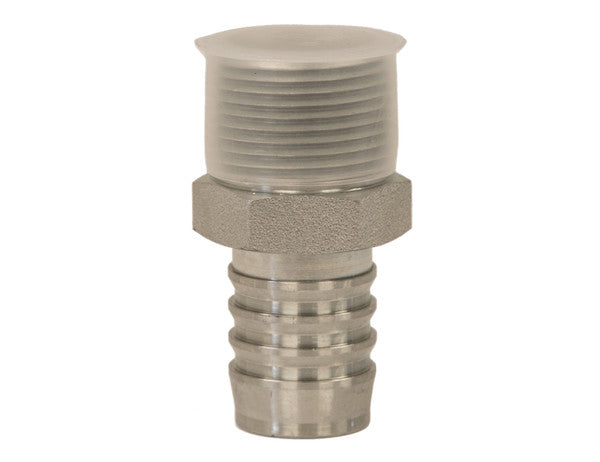
The Suction Hose Barbed Adapter from Buyers Products is used to tightly secure hoses to your hydraulic system components.
Specifications
| Finish | Zinc Plated |
|---|---|
| Material | Carbon Steel |
| Shape | Straight |
| Side 1 | 1 1/4 NPT |
| Side 2 | 1 1/4 Hose Barb |
| Style | MM |
Advanced Technical Overview: Suction Hose Barbed Adapter (1-1/4 Inch Male NPT x 1-1/4 Inch Hose Barb)
The Suction Hose Barbed Adapter from Buyers Products represents a critical component in the engineering of robust and reliable hydraulic fluid transfer systems. Designed with precision and manufactured from high-grade materials, this adapter facilitates a secure and leak-tight connection between a hydraulic hose and a system component featuring a compatible National Pipe Taper (NPT) port. Its specific configuration – a 1-1/4 inch Male NPT on one end and a 1-1/4 inch Hose Barb on the other – coupled with its carbon steel construction and zinc-plated finish, underscores its suitability for demanding applications, particularly those involving suction lines within hydraulic circuits.
Precision Engineering for Hydraulic Integrity
The 1-1/4 Inch Male NPT Connection
The National Pipe Taper (NPT) thread standard is a widely recognized and utilized design for joining pipes and fittings in various fluid power applications, including hydraulic systems. The defining characteristic of NPT threads is their tapered profile, where the threads narrow slightly from the tip to the base. This taper, typically 1/16 inch per inch of diameter, is fundamental to the sealing mechanism. When a male NPT thread is screwed into a corresponding female NPT port, the tapered flanks of the threads compress against each other, creating a mechanical seal. However, to achieve a fluid-tight connection, especially in hydraulic systems operating under significant pressure or vacuum, a thread sealant is indispensable. Common sealants include PTFE (polytetrafluoroethylene) tape or various pipe dope compounds, which fill the helical leak path created by the thread engagement and also lubricate the threads to prevent galling during assembly.
The "1-1/4 inch" designation refers to the nominal pipe size, which, for NPT threads, does not correspond directly to the measured outside diameter of the threads. Instead, it relates to a historical internal diameter of a pipe that the thread was designed to fit. The male configuration of this adapter means it is designed to be threaded into a female NPT port on a pump, valve, reservoir, or other hydraulic system component. The robust engagement of NPT threads provides excellent mechanical strength, preventing accidental disengagement even under significant vibration or pressure fluctuations inherent in hydraulic operations. The choice of NPT for this adapter emphasizes its intended use in permanent or semi-permanent installations where reliability and resistance to loosening are paramount.
The 1-1/4 Inch Hose Barb Connection
The hose barb, a fundamental element of this adapter, is engineered to provide a secure mechanical grip on the inner diameter of a flexible hose. Its design features a series of circumferential ridges or "barbs" that are slightly larger in diameter than the inner diameter of the hose it is intended to connect. When the hose is pushed over the barb, the elastic properties of the hose material allow it to stretch over these ridges. Once fully seated, the hose material contracts behind each barb, creating a positive mechanical interlock. This design prevents the hose from slipping off the fitting, particularly when subjected to axial pulling forces or internal pressure/vacuum. The "1-1/4 inch" designation for the hose barb refers to the nominal inner diameter of the hose with which it is compatible. Precise sizing ensures optimal engagement and sealing.
For enhanced security and to withstand the operational stresses of hydraulic systems, particularly in suction applications, external hose clamps are always required over the hose barb connection. These clamps, typically worm-gear clamps or constant-tension clamps, exert radial compression on the hose, forcing it tightly against the barbs. This compression not only reinforces the mechanical grip but also creates a reliable seal, preventing air ingress in suction lines or fluid leakage in pressure lines. The multi-barb design of this adapter maximizes the contact area and friction between the hose and the fitting, contributing to an exceptionally stable and leak-resistant connection, vital for maintaining the efficiency and integrity of hydraulic circuits.
Straight Configuration and Male-Male Style
The "Straight" shape of this adapter indicates that it provides a direct, in-line connection without any change in direction. This simplicity in design offers several advantages. It minimizes flow restriction and turbulence within the fluid path, contributing to greater hydraulic efficiency and reducing energy losses. Straight fittings are often preferred when components are aligned directly, or when the routing of the hose itself provides the necessary bend. Their straightforward nature also simplifies installation and reduces the potential points for failure compared to angled or complex geometries.
The "MM" (Male-Male) style further clarifies the gender of each connection end. As established, both the NPT end and the hose barb end are male. This means the NPT side will connect into a female NPT port, and the hose barb side will insert into the inner diameter of a female hose end. This common configuration is designed for direct integration into existing system ports and for accepting standard hydraulic hoses, simplifying inventory and system design.
Material Science and Surface Protection
High-Grade Carbon Steel Construction
The selection of carbon steel as the primary material for this suction hose barbed adapter is a deliberate choice driven by the demanding operational environment of hydraulic systems. Carbon steel is a ferrous alloy renowned for its superior strength, hardness, and durability. These mechanical properties are critical for hydraulic fittings, which must withstand significant static and dynamic pressures, mechanical stresses, and potential impact forces without deforming, cracking, or failing catastrophically. The inherent toughness of carbon steel ensures the fitting can endure the rigors of heavy-duty applications, providing a long service life and maintaining connection integrity.
Furthermore, carbon steel exhibits excellent machinability, allowing for the precise threading of the NPT end and the intricate formation of the hose barb profiles. This precision is essential for achieving the required tolerances that guarantee effective sealing and secure hose retention. Its high tensile strength means it can resist the substantial pulling forces and internal hydraulic pressures without yielding, which is particularly important in suction lines where external forces (such as system vacuum) can attempt to pull components apart or collapse the hose.
Zinc Plated Finish for Enhanced Durability
To augment the intrinsic properties of carbon steel and protect it from environmental degradation, this adapter is treated with a zinc-plated finish. Zinc plating is a highly effective and widely used electrochemical process that deposits a thin layer of zinc onto the surface of the carbon steel. The primary function of this zinc layer is to provide robust corrosion resistance. Zinc acts as a sacrificial coating; meaning, in the presence of moisture and corrosive agents, the zinc will corrode preferentially to the underlying steel, thereby protecting the steel substrate from rust and oxidation. This galvanic protection is invaluable in environments where the fitting may be exposed to water, humidity, road salts, or other corrosive substances, common in mobile hydraulic applications on construction equipment, agricultural machinery, or municipal vehicles.
Beyond its protective capabilities, the zinc plating also offers a clean, aesthetic finish and can improve the surface hardness, making the fitting more resistant to minor abrasions and wear during handling and installation. The consistent application of a high-quality zinc plating ensures that the adapter maintains its structural integrity and appearance over an extended period, reducing the need for premature replacement and contributing to the overall longevity and reliability of the hydraulic system.
Applications in Suction Hydraulic Circuits
This Suction Hose Barbed Adapter is specifically designed for integration into the suction side of hydraulic systems. Suction lines are critical conduits that draw hydraulic fluid from the reservoir to the inlet of the hydraulic pump. The integrity of these lines is paramount, as any air ingress can lead to cavitation within the pump, a phenomenon characterized by the formation and collapse of vapor bubbles. Cavitation causes severe damage to pump components, reduces system efficiency, generates excessive noise, and ultimately leads to premature pump failure. Therefore, connections in the suction line must be absolutely airtight and robust enough to prevent collapse under the negative pressure (vacuum) generated by the pump.
The combination of a securely clamped hose barb and a sealed NPT connection ensures that this adapter can withstand the vacuum conditions without drawing in atmospheric air. Its carbon steel construction provides the necessary rigidity to prevent deformation under suction, while the zinc plating protects against corrosion that could otherwise compromise the seal or the material integrity over time. Typical applications include:
- Mobile Hydraulic Equipment: Used in construction machinery (excavators, loaders), agricultural equipment (tractors, harvesters), and forestry equipment to connect suction hoses from the hydraulic reservoir to the main pump.
- Industrial Hydraulic Power Units: Integrating into stationary hydraulic power units found in manufacturing plants, presses, and material handling systems where fluid cleanliness and cavitation prevention are critical for machine longevity.
- Waste Management Vehicles: On refuse trucks, compactors, and other specialized vehicles that rely heavily on hydraulic power for their operational functions, requiring dependable fluid transfer.
- Marine Applications: In hydraulic steering systems, winches, and other marine machinery where exposure to harsh, corrosive environments necessitates highly durable and corrosion-resistant components.
The 1-1/4 inch sizing is common for moderate to larger flow rates, ensuring adequate fluid supply to the pump without excessive velocity, which could also contribute to cavitation or increased pressure drop.
Installation Best Practices and Maintenance Considerations
Proper installation of the Suction Hose Barbed Adapter is crucial for maximizing its performance and ensuring the long-term reliability of the hydraulic system. Adherence to established best practices can prevent leaks, reduce downtime, and extend component life.
NPT Thread Installation
- Thread Preparation: Ensure both the male NPT threads on the adapter and the female NPT port are clean and free of debris, burrs, or damaged threads.
- Thread Sealant Application: Apply an appropriate thread sealant to the male NPT threads. For hydraulic applications, PTFE tape (ensure it's suitable for the system's fluid and pressure) or a liquid pipe thread sealant (anaerobic sealant) is recommended. Wrap PTFE tape clockwise, starting one or two threads back from the end, ensuring full coverage without excess. Liquid sealants should be applied evenly to the threads.
- Hand Tightening: Thread the adapter into the female port by hand until snug.
- Wrench Tightening: Using an appropriately sized wrench, tighten the adapter an additional 1 to 2 turns past hand-tight, as recommended by NPT thread standards or component manufacturer. Avoid overtightening, as this can deform the fitting, damage the threads, or crack the mating port, compromising the seal and structural integrity.
Hose Barb Installation
- Hose Selection: Use a hydraulic hose with an internal diameter (ID) precisely matching the 1-1/4 inch barb size. Ensure the hose has adequate pressure and vacuum ratings for the application and is compatible with the hydraulic fluid.
- Hose Preparation: Cut the hose squarely and remove any internal or external burrs. Ensure the hose end is clean.
- Lubrication (Optional): A small amount of compatible hydraulic fluid or water-based lubricant can be applied to the hose barb or the inside of the hose end to facilitate easier installation. Avoid using petroleum-based greases if not compatible with the hose material.
- Hose Engagement: Push the hose firmly over the entire length of the hose barb, ensuring that all ridges are fully engaged by the hose material. It may require significant force to achieve full seating.
- Hose Clamp Application: Install a high-quality hose clamp (e.g., worm-gear or constant-tension) over the hose, positioning it directly over the engaged barb, typically behind the last barb ridge. For critical applications, especially suction lines, two clamps spaced slightly apart can be used for redundant security. Tighten the clamp(s) to the manufacturer's specified torque, ensuring a secure grip without over-tightening which could damage the hose.
Maintenance and Inspection
Regular inspection is vital for maintaining the performance and safety of hydraulic systems. Periodically check all connections, including the Suction Hose Barbed Adapter, for:
- Leaks: Visible fluid seepage around the NPT or hose clamp connections.
- Air Ingress: Signs of air bubbles in the hydraulic fluid reservoir or unusual pump noise, indicating potential suction line leaks.
- Corrosion: Degradation of the zinc plating or red rust on the carbon steel, which could compromise structural integrity.
- Hose Condition: Cracking, hardening, abrasion, or softening of the hose material near the barb, which could lead to loss of sealing or hose separation.
- Clamp Condition: Loose, corroded, or damaged hose clamps.
- Fitting Damage: Visible deformation, cracks, or excessive wear on the adapter itself.
Promptly address any issues found during inspection to prevent system failures, reduce costly repairs, and ensure operational safety.
Advantages and Operational Benefits
The strategic deployment of the Suction Hose Barbed Adapter offers numerous operational and economic benefits within hydraulic systems:
- Unwavering Reliability: Engineered for durability, this adapter ensures consistent, leak-free operation, significantly reducing the risk of unexpected system failures.
- Enhanced System Efficiency: By preventing air ingress in suction lines, it directly combats cavitation, thereby safeguarding the hydraulic pump, extending its service life, and maintaining optimal fluid power transmission.
- Superior Durability: The robust carbon steel construction coupled with effective zinc plating provides exceptional resistance to mechanical stress, vibration, and environmental corrosion, even in the harshest operating conditions.
- Simplified Installation and Maintenance: The standard NPT and hose barb interfaces, combined with the straight shape, facilitate straightforward assembly and connection, minimizing installation time and complexity.
- Cost-Effectiveness: Its long operational lifespan and contribution to preventing costly pump damage translate into significant long-term savings by reducing maintenance expenditures and premature component replacement.
- Fluid Compatibility: Designed for use with standard hydraulic fluids, ensuring broad applicability across various industrial and mobile hydraulic systems.
Conclusion
The Suction Hose Barbed Adapter (1-1/4 Inch Male NPT x 1-1/4 Inch Hose Barb) from Buyers Products is more than just a connection piece; it is a meticulously engineered component critical to the sustained performance and longevity of hydraulic systems. Its thoughtful design, incorporating a precision NPT thread, a robust hose barb, durable carbon steel material, and a protective zinc plating, addresses the specific demands of suction line applications. By ensuring a secure, leak-proof, and resilient connection, this adapter plays a pivotal role in preventing cavitation, preserving pump integrity, and maintaining overall system efficiency. For engineers and maintenance professionals seeking uncompromising reliability and performance in their hydraulic fluid transfer solutions, this adapter stands as an exemplary choice, embodying industrial-grade quality and meticulous attention to functional detail.