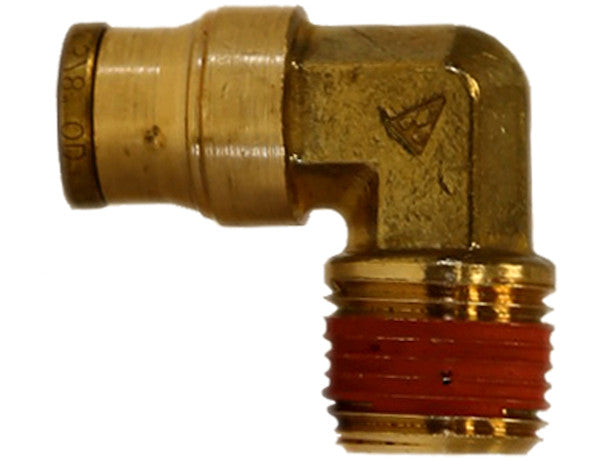
Buyers Products Male Elbows are made of long lasting corrosion-resistant brass. They are designed to meet DOT FMVSS 571.106 air brake performance specifications.
Specifications
| Color | Natural |
|---|---|
| Finish | Plain |
| Fitting Shape | 90?? Elbow |
| Male/Female/Union | Male |
| Material | Brass |
| Meets D.O.T. FMVSS 571.106 Air Brake Performance Regulations (y/n) | Yes |
| Pipe Thread Size | 1/4 NPT |
| Swivel (y/n) | No |
| Works with Tube Outer Diameter | 3/8 |
Advanced Technical Overview: Brass DOT Push-In Male Elbow 3/8 Inch Tube O.D. x 1/4 Inch Pipe Thread
The Brass DOT Push-In Male Elbow, specified with a 3/8-inch tube outer diameter (O.D.) and a 1/4-inch National Pipe Taper (NPT) thread, represents a critical component in modern pneumatic braking systems, particularly within the heavy-duty commercial vehicle sector. Engineered for both exceptional performance and streamlined installation, this fitting embodies a confluence of robust material science, precision manufacturing, and adherence to stringent regulatory standards. Its design is meticulously crafted to facilitate secure, leak-free connections in air brake lines, ensuring the operational integrity and safety of vehicles ranging from commercial trucks and buses to trailers and specialized transport equipment.
Material Excellence: The Advantages of Brass in Air Brake Systems
At the core of this elbow's durability and reliability is its construction from high-grade brass. Brass, an alloy primarily composed of copper and zinc, offers an array of metallurgical properties that are exceptionally well-suited for demanding pneumatic applications. Its inherent corrosion resistance is a paramount advantage, particularly in environments where exposure to moisture, road salts, chemicals, and varying atmospheric conditions is commonplace. Unlike other metallic alloys that may succumb to oxidative degradation or galvanic corrosion over time, brass maintains its structural and sealing integrity, thereby extending the service life of the air brake system and reducing the frequency of maintenance and replacement.
Beyond its resistance to corrosion, brass exhibits excellent mechanical strength and ductility. This combination allows the fitting to withstand significant internal pressures and external stresses without compromising its structural form or sealing capabilities. The inherent machinability of brass is also a key factor in its selection for precision components. This property enables manufacturers to achieve very tight tolerances and intricate geometries, which are essential for the precise function of push-in mechanisms and the accurate formation of pipe threads. The result is a fitting that is not only robust but also dimensionally consistent, ensuring reliable performance across a broad manufacturing batch.
Furthermore, brass possesses good thermal conductivity, which, while not a primary design driver for air brake fittings, contributes to overall material stability. Its resistance to temperature-induced deformation ensures that the fitting maintains its critical dimensions and sealing characteristics across the operational temperature range typically encountered in commercial vehicle applications, from extreme cold to elevated heat generated by engine compartments or braking cycles.
Adherence to DOT FMVSS 571.106 Air Brake Performance Regulations
A defining characteristic of this Male Elbow is its explicit compliance with DOT FMVSS 571.106 (Federal Motor Vehicle Safety Standard No. 106) for air brake performance specifications. This regulation is a cornerstone of vehicle safety in the United States, dictating the stringent requirements for air brake hoses, hose assemblies, and their end fittings. Compliance is not merely a label; it signifies that the component has undergone rigorous testing and validation processes to ensure its ability to perform reliably under emergency and routine operating conditions.
The testing protocols stipulated by FMVSS 106 are comprehensive, evaluating several critical performance parameters. These include, but are not limited to:
- Burst Pressure Resistance: The fitting must withstand internal pressures far exceeding normal operating conditions without failure, ensuring a significant safety margin.
- Proof Pressure: Verification that the fitting can hold a specified pressure for a duration without leakage or deformation.
- Vacuum Resistance: Ensuring the fitting maintains its integrity and seal under negative pressure conditions, which can occur in certain parts of the air brake system.
- Tension Test (Pull-Out Resistance): For push-in fittings, this is particularly crucial. It assesses the strength of the tube retention mechanism, ensuring the air line cannot be inadvertently disconnected under typical operational forces, including those induced by vehicle vibration and movement.
- Vibration Resistance: Simulating the constant dynamic forces experienced during vehicle operation to confirm the fitting’s ability to maintain a secure connection and prevent fatigue failure over its service life.
- Corrosion Resistance: As discussed, the material's ability to resist environmental degradation is tested to ensure long-term functionality.
- Temperature Cycling: The fitting must withstand rapid and extreme changes in temperature without degradation of its sealing or structural properties.
By meeting or exceeding these demanding criteria, this Brass DOT Push-In Male Elbow provides an unequivocal assurance of safety, operational consistency, and regulatory adherence. This compliance is essential for fleet operators, vehicle manufacturers, and maintenance professionals seeking components that contribute to overall vehicle safety and avoid potential liabilities associated with non-compliant parts.
Push-In Technology: Efficiency and Reliability in Connection
The integration of push-in technology represents a significant advancement in pneumatic connection systems, offering substantial benefits in terms of installation speed, ease of use, and overall system reliability. This mechanism, also known as push-to-connect or quick-connect, allows for the rapid and secure attachment of air brake tubing without the need for specialized tools, adhesives, or complex crimping processes.
The internal design of the push-in mechanism typically involves a collet or gripping mechanism and an O-ring seal. When the tubing is inserted, the collet automatically engages with the outer surface of the tube, providing a secure mechanical grip. Simultaneously, the O-ring compresses against the tube’s outer diameter, creating an airtight and leak-proof seal. The harder the tube is pulled, the tighter the collet grips, enhancing the connection's resistance to pull-out forces.
The primary advantages of this technology include:
- Reduced Installation Time and Labor Costs: Eliminates the need for traditional wrenching or flaring, drastically cutting down installation time per connection.
- Minimized Risk of Installation Error: The intuitive push-to-connect action reduces the potential for improper installation, which is a common cause of leaks and system failures in conventional threaded or compression fittings.
- Enhanced System Reliability: Once connected correctly, the design ensures a robust seal and strong mechanical retention, even under dynamic conditions of vibration and pressure fluctuations.
- Ease of Maintenance and Repair: Disconnection is typically straightforward, involving depressing the collet release collar and pulling the tube out. This simplifies maintenance and component replacement.
- Compatibility: These fittings are designed to work effectively with standard air brake tubing materials, most commonly nylon (PA11 or PA12), but also compatible with other thermoplastic tubing like polyurethane and polyethylene, provided they meet the appropriate rigidity and dimensional specifications.
The precise engineering of the collet and O-ring within this Brass DOT Push-In Male Elbow ensures optimal performance characteristics, contributing to a truly robust and reliable pneumatic circuit.
Form Factor and Dimensional Precision: 90° Male Elbow with Specific Diameters
The specific configuration of this fitting as a 90-degree male elbow is highly purposeful for air brake system design. The elbow shape is indispensable for routing air lines around obstacles, through tight spaces, and for making directional changes while minimizing stress on the tubing. A sharp bend in a continuous tube can lead to kinking, reduced flow, or premature material fatigue; the 90-degree elbow mitigates these risks by providing a controlled, smooth change in direction.
The term "Male" indicates that one end of the fitting features an external thread designed to screw into a corresponding female port on a valve, manifold, reservoir, or other component. This provides a robust and permanent connection point to the primary air system.
The dimensional specifications are critical for universal compatibility and performance:
- 3/8 Inch Tube Outer Diameter (O.D.): This specification refers to the external diameter of the air brake tubing that the push-in end of the elbow is designed to accommodate. The 3/8-inch O.D. is a widely standardized size in commercial vehicle air brake systems, balancing sufficient airflow capacity with flexibility and spatial requirements. The precision with which the push-in mechanism grips and seals against this specific O.D. is paramount for leak-free operation.
- 1/4 Inch Pipe Thread (NPT): The other end of the elbow features a 1/4-inch National Pipe Taper (NPT) thread. NPT threads are recognized globally for their ability to create pressure-tight seals without the need for additional gaskets or O-rings, due to their tapered design. As the male and female tapered threads are tightened, they wedge together, creating a metal-to-metal seal. The 1/4-inch size is a common standard for auxiliary air connections and branch lines within air brake systems, providing adequate flow for various components like air tanks, gauges, and smaller actuators.
The precise machining of both the push-in port and the NPT thread ensures perfect mating and sealing, which are non-negotiable requirements for air brake system integrity.
Operational Performance and Environmental Resilience
The operational environment for commercial vehicle air brake systems is inherently challenging, characterized by wide temperature fluctuations, persistent vibration, exposure to corrosive agents, and fluctuating pressures. This Brass DOT Push-In Male Elbow is engineered to excel under these conditions, ensuring sustained performance over its intended service life.
Vibration Resistance: The design of the push-in mechanism is intrinsically resistant to vibration-induced loosening. The internal collet, through its spring-loaded design and gripping teeth, maintains constant pressure on the tubing, preventing walk-out or gradual disconnection even under prolonged and intense vibrational stress typical of heavy-duty vehicle operation. This is further supported by the robust threaded connection on the NPT side, which, when properly torqued and sealed with appropriate thread sealant, forms a virtually immovable joint.
Temperature Stability: The brass material, combined with high-quality elastomeric O-rings (typically made from EPDM or NBR, selected for their resistance to air, moisture, and temperature extremes), ensures functional stability across a broad temperature spectrum. This prevents material degradation, embrittlement, or softening that could lead to leaks or structural failure in hot or cold climates.
Pressure Integrity: While operating pressures in air brake systems typically range from 90-120 psi, the fitting is designed with significant over-pressure capacity to handle transient spikes and provide a substantial safety margin. Its ability to maintain a leak-proof seal under these conditions is verified through rigorous pressure testing in accordance with DOT FMVSS 571.106.
Corrosion and Chemical Resistance: The natural corrosion resistance of brass is a major benefit for longevity. It withstands exposure to water, road salt solutions, diesel fuel, and other common automotive fluids without significant degradation. This preserves both the aesthetic finish and, more importantly, the structural and sealing integrity of the fitting over many years of service.
Installation Best Practices for Optimal Performance
While push-in fittings are celebrated for their ease of installation, adhering to best practices is crucial to guarantee maximum performance and longevity:
- Tube Preparation: Always cut the air brake tubing squarely and cleanly. A specialized tube cutter designed for pneumatic tubing is recommended to prevent ovalization and burrs. Deburr both the inside and outside edges of the tube to prevent damage to the O-ring seal or obstruction of airflow.
- Cleanliness: Ensure the tube and the fitting's bore are free from dirt, debris, and contaminants before insertion. Contaminants can compromise the seal or damage the internal components.
- Proper Insertion: Insert the tube firmly and completely into the fitting until it bottoms out. A slight resistance will be felt as the tube passes the O-ring, followed by a positive "click" or tactile feedback as the collet engages. Gently pull back on the tube to confirm that it is securely seated and locked.
- Thread Sealant (for NPT connection): For the 1/4-inch NPT male thread, always use an appropriate thread sealant (e.g., PTFE tape or liquid pipe sealant) compatible with pneumatic systems and DOT regulations. Apply sealant carefully to the male threads, avoiding excess that could enter the air system. Torque the fitting to the manufacturer's recommended specifications; overtightening can damage threads, while undertightening can lead to leaks.
- System Testing: After installation, perform a comprehensive leak test on the entire air brake system at full operating pressure. A soap solution or electronic leak detector can be used to identify any minute leaks at connection points.
- Avoid Side Loading: Ensure the tubing runs reasonably straight into the push-in port to avoid excessive side loading, which can stress the fitting and lead to premature wear or leaks.
Broad Spectrum of Applications
This Brass DOT Push-In Male Elbow is an indispensable component across a wide array of applications requiring reliable and compliant air brake connections. Its primary domain is the heavy-duty transportation sector, including:
- Commercial Trucks and Tractors: Integral for connecting various air brake components such as brake chambers, air tanks, control valves, and pressure sensors.
- Buses: Used throughout the pneumatic braking and suspension systems of transit, school, and coach buses.
- Trailers: Essential for connecting trailer brake lines to the tractor's air supply, ensuring synchronized braking.
- Specialized Vehicles: Applicable in vocational vehicles like refuse trucks, fire apparatus, cement mixers, and utility trucks that rely on air brake systems.
- Industrial Pneumatics: While primarily designed for DOT air brake applications, its robust construction and compliance make it suitable for certain industrial pneumatic systems where high reliability, specific pressure ratings, and environmental resilience are paramount, even if not strictly DOT-regulated.
- Maintenance, Repair, and Overhaul (MRO): A standard replacement part for MRO operations in fleet garages, service centers, and independent repair shops due to its universal compatibility and regulatory compliance.
Manufacturing Excellence and Quality Assurance
The manufacturing process for this Brass DOT Push-In Male Elbow involves precision machining from high-quality brass stock. Advanced CNC (Computer Numerical Control) machinery is employed to ensure consistent dimensional accuracy and surface finish, which are critical for both the sealing surfaces and the thread profiles. Each fitting undergoes rigorous quality assurance checks at various stages of production.
Key aspects of quality assurance include:
- Material Certification: Verification of brass alloy composition to ensure it meets specified metallurgical standards for strength, corrosion resistance, and machinability.
- Dimensional Inspection: Automated and manual inspections to confirm that critical dimensions, such as tube O.D. compatibility, NPT thread specifications, and overall geometry, are within tight tolerances.
- Leak Testing: Batch testing for internal and external leakage under pressure to guarantee seal integrity.
- Functional Testing: Random sampling and testing of push-in retention mechanisms to confirm compliance with pull-out force requirements as per DOT FMVSS 571.106.
- Visual Inspection: Ensuring the absence of manufacturing defects, burrs, or surface imperfections that could compromise performance or appearance.
This commitment to manufacturing excellence and stringent quality control protocols ensures that every Brass DOT Push-In Male Elbow delivers the consistent performance, reliability, and safety expected in critical air brake applications.
Conclusion: A Benchmark in Air Brake System Connectivity
In summary, the Brass DOT Push-In Male Elbow with 3/8-inch Tube O.D. x 1/4-inch Pipe Thread is more than just a connector; it is a meticulously engineered component designed to be a cornerstone of safe and efficient pneumatic braking systems. Its selection of premium brass material guarantees unparalleled corrosion resistance and mechanical robustness. Its unwavering compliance with DOT FMVSS 571.106 assures adherence to the highest safety and performance standards mandated for air brake components. The innovative push-in technology facilitates rapid, error-free installation and secure tube retention, while the precise 90-degree elbow configuration and standardized dimensions ensure versatile application across a wide range of heavy-duty vehicles and industrial pneumatic setups.
Investing in this fitting translates directly into enhanced vehicle safety, reduced maintenance downtime, and superior operational longevity. It represents a commitment to reliability, performance, and adherence to critical regulatory benchmarks, making it the preferred choice for professionals who demand the absolute best in air brake system integrity.