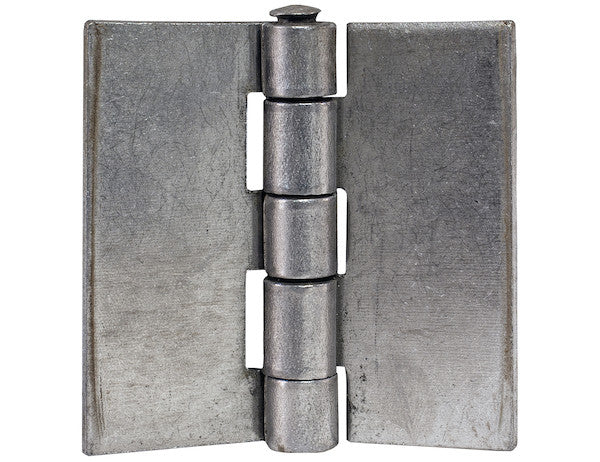
Buyers Products Steel Butt Hinges have a plain finish and can be either welded-on or drilled for bolt-on installation. No holes provide a clean look and the plain finish can be painted or powder-coated if desired. The steel butt hinges feature a tight pin, spun on both ends for secure installation. The hinges are available in multiple sizes to fit a variety of applications. Please contact Customer Service for further information.
Specifications
| Finish | Plain |
|---|---|
| Hinge Length (in.) | 4.00 |
| Material | Carbon Steel |
| Open Width (in.) | 4.00 |
| Pin Diameter (in.) | .25 |
| Pin Retention | Spun Ends |
| Thickness (in.) | .120 |
The Steel Butt Hinge, meticulously engineered with a .120 inch thickness, 4 inch length, a robust 1/4 inch pin, and a 4 inch open width, represents a superior solution for a diverse array of industrial and commercial access point applications. This component is a testament to precision manufacturing and material selection, designed to deliver exceptional durability, operational reliability, and structural integrity in demanding environments. Its specifications are not arbitrary but are carefully chosen to optimize performance across a broad spectrum of load-bearing and operational requirements.
Material Science and Structural Integrity: Carbon Steel Construction
At the core of this hinge's robust performance is its construction from high-grade carbon steel. Carbon steel is an alloy primarily composed of iron and carbon, with carbon content typically ranging up to 2.1% by weight. This specific material choice imparts several critical mechanical properties essential for the intended heavy-duty applications. Key characteristics include high tensile strength, excellent yield strength, and inherent toughness, which collectively contribute to the hinge's ability to withstand significant static and dynamic loads without permanent deformation or brittle fracture. The tensile strength dictates the maximum stress the material can endure before breaking, while the yield strength defines the point at which plastic deformation begins. For a butt hinge designed for frequent use and substantial weight support, these properties are paramount. Furthermore, carbon steel exhibits good fatigue resistance, meaning it can endure repeated cycles of loading and unloading, a common occurrence in hinged mechanisms, without premature failure. Its inherent hardness also contributes to resistance against abrasion and wear, ensuring the longevity of the pivot points and leaf surfaces.
The plain finish of the carbon steel offers a crucial advantage in customization and post-installation protection. Unlike pre-finished components that might require extensive surface preparation to remove existing coatings, the raw steel surface provides an optimal substrate for various protective treatments. This allows engineers and fabricators to apply a finish specifically tailored to the operational environment. Options include, but are not limited to, powder coating, liquid painting, electroplating (e.g., zinc plating for enhanced corrosion resistance), or hot-dip galvanizing for the most aggressive corrosive conditions. This flexibility ensures that while the base material provides structural strength, its surface can be optimized for aesthetic integration, chemical resistance, UV stability, or extreme weather exposure, thereby extending the service life and maintaining the appearance of the hinge in situ. The absence of pre-drilled holes further supports custom fabrication processes, allowing the hinge to be seamlessly integrated into diverse designs.
Precision Dimensions: Understanding the .120 x 4 Inch x 4 Inch Profile
The specified dimensions of this butt hinge are critical determinants of its functional capacity and suitability for various applications. The .120 inch (approximately 3.05 mm) leaf thickness is a substantial gauge, significantly contributing to the hinge's load-bearing capability and resistance to bending and torsional forces. Thicker leaves provide a larger cross-sectional area, which directly translates to a higher moment of inertia, thereby increasing the hinge's stiffness and preventing flexing under stress. This is particularly important for applications involving heavy doors, gates, or access panels where structural rigidity is non-negotiable. A thinner hinge might warp or deform over time, leading to misalignment and operational failure, whereas the .120 inch thickness ensures robust support and maintains planar alignment of the hinged components.
The 4 inch (101.6 mm) hinge length refers to the dimension along the axis of the pin, from one end of the leaf to the other. This length influences the distribution of stress along the hinge line and the overall stability of the hinged assembly. A longer hinge provides a greater surface area for attachment and distributes the load over a wider section, reducing concentrated stress points on both the hinge itself and the mounting substrate. For heavier doors or panels, a 4-inch length helps prevent sagging and ensures smoother, more controlled articulation. It also provides adequate leverage against torsional loads, which are common when opening and closing large or heavy objects, enhancing the overall mechanical stability of the system.
The 4 inch (101.6 mm) open width, also known as the overall width when the hinge is fully extended (open to 180 degrees), is a crucial parameter dictating the hinge's reach and the clearance it provides between the hinged components. This measurement from the outer edge of one leaf to the outer edge of the other when flat, influences the "throw" of the hinge, which is the distance the door or panel moves away from the frame as it opens. A 4-inch open width is generous, facilitating adequate clearance for doors that might need to clear an obstruction or for applications where a wide opening arc is desirable. It also provides ample material for secure attachment points on both the frame and the moving component, optimizing load distribution across the entire hinge assembly.
The Robust 1/4 Inch Pin and Spun End Retention System
The hinge's performance hinges critically on its pivot mechanism, and here, the 1/4 inch (6.35 mm) diameter pin plays a central role. The pin is the primary element that bears the shear forces and rotational stresses during hinge operation. A larger diameter pin, such as 1/4 inch, offers superior shear strength and resistance to bending compared to smaller pins. This substantial diameter ensures that the pin will not deform or fracture under the dynamic loads associated with heavy door movement or repetitive use. It provides a robust axis of rotation, maintaining the structural integrity of the hinge assembly even under significant operational stress, thereby contributing directly to the longevity and reliability of the overall system. The material of the pin is typically a hardened steel, often identical or complementary to the carbon steel leaves, further enhancing its mechanical resilience and wear resistance within the knuckle barrels.
The pin retention mechanism, featuring a "tight pin, spun on both ends," is a testament to secure and maintenance-free operation. A "tight pin" implies a precision fit within the hinge knuckles, minimizing play and wobble, which is essential for maintaining alignment and reducing wear. The "spun ends" technique involves deforming the ends of the pin after insertion, creating a flared or crimped profile that permanently secures the pin within the hinge barrels. This method offers several distinct advantages:
- Permanent Security: Once spun, the pin cannot be easily removed, making the hinge inherently tamper-resistant. This is particularly valuable in applications where security is paramount, preventing unauthorized disassembly of the hinged component.
- Maintenance-Free Operation: Unlike hinges with removable pins or retaining clips that might loosen over time, spun pins ensure a fixed assembly for the life of the hinge, eliminating the need for periodic inspection or re-securing of the pin.
- Enhanced Durability: The permanent nature of the pin retention contributes to the overall structural integrity of the hinge. The pin is less susceptible to migration or loss due to vibration, impact, or extreme temperature fluctuations, which can be critical in industrial and mobile applications.
- Reduced Wear: A tightly fitted and securely retained pin minimizes frictional wear between the pin and the knuckles, leading to smoother operation and extended service life.
Installation Versatility: Weld-On or Bolt-On Integration
The design of this steel butt hinge prioritizes installation flexibility, offering both weld-on and drill-for-bolt-on methodologies, without pre-drilled holes. This unblemished surface provides significant advantages for diverse fabrication and mounting scenarios.
Weld-On Installation:
Welding the hinge directly to the mating surfaces offers the highest degree of structural integration and security. This method creates a monolithic bond between the hinge leaves and the frame/door, resulting in a joint that is often stronger than the parent materials. Weld-on applications are preferred in heavy-duty industrial settings, commercial vehicles, trailers, heavy gates, and machinery where maximum strength, tamper resistance, and durability are paramount. The absence of pre-drilled holes is ideal for welding, as it allows fabricators to achieve full contact between the hinge and the substrate, ensuring a clean, strong weld bead without interference from existing fastener holes. Welding eliminates the need for fasteners, reducing material costs and potential points of failure associated with bolted connections. However, welding requires specialized equipment and skilled personnel, and considerations such as material compatibility, heat distortion control, and proper joint design must be carefully managed to ensure optimal performance. Post-weld inspection for defects such as porosity, undercut, or incomplete fusion is also crucial.
Drill-for-Bolt-On Installation:
The option to drill for bolt-on installation provides exceptional flexibility for scenarios requiring field adjustability, easier maintenance, or non-permanent attachment. Fabricators can precisely drill holes into the hinge leaves at the exact locations required for their specific application, accommodating various bolt patterns, sizes, and fastener types. This customization capability is invaluable for unique projects, prototypes, or repairs where standard hole patterns may not suffice. Bolt-on installation allows for easier replacement or removal of the hinged component for maintenance, repair, or upgrade. It also eliminates the need for welding equipment, making it a more accessible option for a broader range of installers. When opting for bolt-on, careful consideration must be given to:
- Fastener Selection: The type, grade, and material of bolts (e.g., carbon steel, stainless steel) should be chosen based on load requirements, environmental conditions, and corrosion resistance.
- Hole Sizing and Placement: Precise drilling is essential to ensure proper alignment and prevent stress concentrations. Deburring the holes is also important to prevent fatigue crack initiation.
- Torque Specification: Fasteners must be tightened to the manufacturer's specified torque to achieve optimal clamping force, prevent loosening, and avoid overstressing the hinge or substrate.
- Washers: Flat washers and lock washers may be employed to distribute load, prevent galling, and enhance vibration resistance, respectively.
Performance Characteristics and Operational Environment
This steel butt hinge is designed for environments demanding high performance and endurance. Its robust construction ensures reliable operation under varying conditions, including heavy load applications, frequent cycles of opening and closing, and exposure to moderate industrial environments. While carbon steel is inherently strong, its plain finish implies susceptibility to oxidation (rust) when exposed to moisture and oxygen. Therefore, for outdoor or corrosive environments, the application of a suitable protective coating (as discussed previously) is not merely an aesthetic choice but a functional imperative to achieve long-term corrosion resistance and maintain operational integrity. Properly coated, these hinges can withstand challenging outdoor elements, marine atmospheres (with specific marine-grade coatings), and various chemical exposures prevalent in industrial settings.
The tight pin and spun ends contribute to a low-friction pivot point when properly lubricated, facilitating smooth and consistent operation over thousands of cycles. This design minimizes wear and tear on the internal components, extending the operational lifespan of the hinge far beyond that of typical light-duty alternatives. The substantial thickness and material strength also contribute to excellent resistance against impact and vibration, which are common in mobile applications such as heavy-duty truck bodies, trailers, and agricultural machinery.
Diverse Applications Spectrum
The robust specifications of the Steel Butt Hinge .120 x 4 Inch Long with 1/4 Pin and 4 Inch Open Width make it an indispensable component across a multitude of heavy-duty and industrial applications. Its versatility stems from its strength, customizability, and reliable performance.
- Commercial and Industrial Vehicles: Ideal for heavy truck bodies, utility trailers, equipment haulers, RVs, and specialized mobile units. It is frequently used on cargo doors, side access panels, ramps, and storage compartment lids, where reliability and security are critical.
- Heavy-Duty Gates and Fences: Suitable for agricultural gates, industrial perimeter gates, livestock pens, and large pedestrian gates where robust support and resistance to tampering are required. The weld-on option is particularly beneficial here for creating exceptionally strong, integrated structures.
- Machinery and Equipment Enclosures: Used on access doors for industrial machinery, electrical enclosures, control panels, and HVAC units, providing secure and durable access for maintenance and operation.
- Construction and Agricultural Equipment: Applications include access panels on excavators, tractors, harvesters, and other heavy equipment, where components must withstand harsh working conditions, dirt, and constant vibration.
- Custom Fabrication Projects: Its plain finish and absence of pre-drilled holes make it a prime choice for bespoke metal fabrication, allowing designers and welders to integrate the hinge seamlessly into unique designs without compromise.
- Marine and Offshore Applications (with appropriate coating): With the correct marine-grade coating or galvanization, these hinges can be adapted for use on boat hatches, offshore platforms, and other marine environments where corrosion resistance is paramount.
- Storage Solutions: Used on heavy-duty storage locker doors, tool chests, and industrial cabinets that require strong, secure, and durable hinge mechanisms.
In essence, any application requiring a strong, durable, and customizable hinge solution capable of supporting significant weight and enduring demanding operational cycles will find this Steel Butt Hinge to be an optimal choice. Its design considerations directly address the common failure points of lesser hinges, ensuring a product that contributes positively to the overall structural integrity and longevity of the assemblies it serves.
Technical Selection and Integration Considerations
When specifying this Steel Butt Hinge for a particular application, engineers and fabricators should consider several key factors to ensure optimal performance and longevity:
- Load Capacity: While the hinge is inherently strong, the total weight of the door/panel, its distribution, and any dynamic loads (e.g., wind, impact) must be calculated to ensure the chosen quantity and placement of hinges can adequately support the load with a sufficient safety factor.
- Frequency of Use: For high-cycle applications, regular inspection of the hinge and surrounding structure, along with appropriate lubrication, can further extend its life. The spun pin design minimizes wear but does not eliminate it entirely under extreme usage.
- Environmental Conditions: The plain carbon steel requires protection in outdoor, corrosive, or high-humidity environments. The selection of a suitable protective coating is paramount. Temperature extremes can also affect material properties and lubricant viscosity.
- Opening Angle and Clearance: The 4-inch open width provides substantial clearance. The design of the door and frame should ensure that the hinge's full range of motion is utilized without binding or interference.
- Security Requirements: The spun pin provides inherent tamper resistance. For applications requiring extreme security, consider additional measures such as anti-pry tabs or concealed hinge installations.
- Aesthetics: The plain finish allows for complete customization to match or complement the surrounding structure, offering a high degree of aesthetic flexibility.
- Installation Method: The choice between weld-on and bolt-on should be driven by the required strength, permanence, access for maintenance, and available fabrication resources. Both methods, when executed correctly, provide robust attachment.
This Steel Butt Hinge is more than just a component; it is a precisely engineered solution for critical access points. Its robust material specification, meticulous dimensional control, and versatile installation options underscore its value in demanding industrial and commercial settings. For detailed engineering support or to discuss specific application requirements, customers are encouraged to contact our expert Customer Service team, who can provide further technical data and guidance to ensure seamless integration and optimal performance.