Specifications
| Direct Mount/Remote Mount | Direct |
|---|---|
| Direct or Remote Mount | Direct Mount |
| Displacement | 3 |
| Flow | 16 |
| Flow at 1000 RPM | 16.1 |
| Flow at 1200 RPM | 19.2 |
| Flow at 1500 RPM | 16.76 |
| Flow at 1800 RPM | 29 |
| Flow at 2100 RPM | 33.81 |
| Flow at 600 RPM | 9.66 |
| Flow at 900 RPM | 14.49 |
| Gear Size | 2.00 |
| Gear Width | 2.000 |
| Inlet Port Size | 1 1/4 NPT |
| Input Mount Type | Integral Bracket |
| Material | Cast Iron |
| Maximum Pressure | 2500 |
| Maximum Rotations Per Minute (RPM) | 2000 |
| Mount Type | SAE B 4 Bolt |
| Outlet Port Size | 3/4 NPT |
| Pilot Diameter | - |
| Ports (rear/side) | Rear |
| Rear Port Size | 3/4 NPT |
| Rotation | Clockwise |
| Shaft Size | 7/8-13 |
| Shaft Type | Splined |
| Suction Port Size | 1 1/4 NPT |
Precision Engineering: The Direct Mount Hydraulic Pump with Clockwise Rotation and 2-Inch Diameter Gear
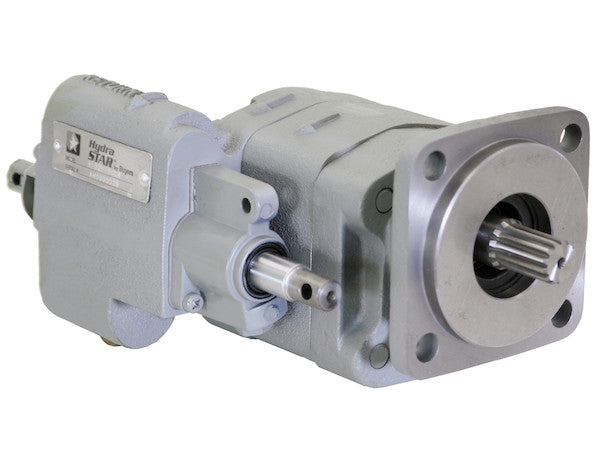
The Direct Mount Hydraulic Pump from Buyers Products represents a pinnacle in compact, robust hydraulic power generation, specifically engineered for demanding mobile applications requiring a precise and efficient fluid power source. Designed with a distinct clockwise rotation and featuring a durable 2-inch diameter gear, this unit is meticulously crafted to integrate directly with a vehicle's Power Take-Off (PTO) system. This direct-mount configuration not only streamlines installation but also optimizes hydraulic system efficiency by minimizing energy losses often associated with more complex remote-mount setups. Its inherent design, including an integrated manual valve with cable-controlled shift operations, offers operators intuitive and reliable command over hydraulic functions, making it an ideal choice for smaller dump applications, utility vehicles, and various auxiliary hydraulic systems where space is at a premium and dependable performance is paramount.
Advanced Design and Core Operational Principles
At the heart of this hydraulic pump lies a robust positive displacement gear pump mechanism. This design utilizes two intermeshing gears – a drive gear, powered by the PTO, and an idler gear – to continuously draw hydraulic fluid from the reservoir and force it into the hydraulic system. As the gears rotate, fluid is trapped between the gear teeth and the pump housing, then carried around to the outlet port where it is expelled under pressure. This operational principle ensures a consistent and predictable flow rate, irrespective of system pressure fluctuations, making gear pumps highly reliable for mobile hydraulic applications.
The direct mount advantage is a critical feature, offering significant engineering and operational benefits. By bolting directly to the PTO, this pump eliminates the need for intermediate drive shafts, universal joints, or additional mounting brackets, which are common in remote-mount systems. This reduction in components leads to a more compact footprint, crucial for vehicles with limited installation space. Furthermore, the direct coupling minimizes mechanical losses, enhances power transfer efficiency, reduces vibration, and simplifies maintenance procedures. The rigid connection ensures precise alignment, contributing to extended pump and PTO lifespan by mitigating undue stress on driveline components. This optimized power transmission translates directly into more effective hydraulic performance and reduced operational costs.
An integral component of this hydraulic power unit is its integrated manual valve, designed for cable-controlled shift operations. This manual valve provides the operator with direct and tactile control over the hydraulic circuit, typically enabling functions such as "raise," "hold," and "lower" for hydraulic cylinders. The cable-controlled mechanism offers a durable and reliable interface, transmitting mechanical input from the operator's control lever to the valve spool. This integration simplifies system plumbing by consolidating the pump and control valve into a single, compact unit, reducing potential leak points and installation complexity. For dump applications, this manual valve provides the essential functionality for precise control over the tipping mechanism, ensuring safety and operational efficiency during material handling tasks.
Detailed Technical Specifications and Performance Analysis
Understanding the precise technical specifications is fundamental to appreciating the capabilities and ideal applications of this Direct Mount Hydraulic Pump. The pump's performance is characterized by its displacement, flow rates, pressure handling, and rotational limits, all engineered for optimal functionality within its design parameters.
Volumetric Displacement and Flow Characteristics
With a nominal displacement of 3 cubic inches (or approximately 49.16 cubic centimeters) per revolution, this pump is designed to deliver substantial hydraulic fluid volumes. The theoretical flow rate of a pump is directly proportional to its displacement and rotational speed (RPM). However, actual flow rates deviate slightly due to internal leakage (volumetric efficiency) which is influenced by pressure, fluid viscosity, and temperature. The provided flow data illustrates this relationship across various RPMs:
- At 600 RPM: 9.66 GPM
- At 900 RPM: 14.49 GPM
- At 1000 RPM: 16.1 GPM (matching the stated "Flow" of 16 GPM closely)
- At 1200 RPM: 19.2 GPM
- At 1500 RPM: 16.76 GPM
- At 1800 RPM: 29 GPM
- At 2100 RPM: 33.81 GPM
These figures demonstrate the pump's capability to provide a wide range of flow rates, allowing for versatile application across different operational speeds of the driving engine and PTO. The slight variations in the proportional increase in flow relative to RPM at higher speeds (e.g., 1500 RPM showing slightly lower than linear expectation) indicate the complex interplay of internal fluid dynamics, pressure effects, and volumetric efficiency characteristics inherent in gear pump designs. This detailed flow data is crucial for system designers to match the pump's output with the specific requirements of the hydraulic actuators, ensuring appropriate speed of operation for cylinders or motors.
Gear Geometry: 2.00-inch Diameter and 2.000-inch Width
The core components responsible for the pump's volumetric efficiency are its gears. With a precise 2.00-inch diameter and a 2.000-inch width, these gears are engineered for optimal performance. The dimensions directly dictate the pump's displacement volume, as a larger gear size and width will entrap and transfer more fluid per revolution. The precision manufacturing of the involute gear profiles, along with tight clearances between the gear teeth and the pump housing, is critical for minimizing internal leakage and maximizing volumetric efficiency. The robust design of these gears ensures they can withstand the significant hydraulic forces generated during high-pressure operation, contributing to the pump's overall durability and consistent performance over its operational life.
Maximum Pressure and RPM Ratings
The pump boasts a substantial maximum pressure rating of 2500 PSI (Pounds per Square Inch), making it highly suitable for applications requiring significant force, such as lifting heavy loads in dump truck beds or powering other high-force hydraulic actuators. This pressure rating indicates the structural integrity and sealing capabilities of the pump under extreme operational conditions. It is imperative that the hydraulic system's relief valve is appropriately set to protect the pump and other components from exceeding this maximum pressure. The maximum permissible rotational speed is specified at 2000 RPM. Adhering to this limit is crucial to prevent cavitation, excessive wear on bearings and gear teeth, and potential mechanical failure. Exceeding the maximum RPM can lead to reduced pump lifespan and compromised system reliability. Engineers must ensure the PTO output speed, relative to engine RPM, remains within this operational envelope for sustained performance.
Rotational Direction and Material Construction
This particular model features a Clockwise Rotation, a critical specification for ensuring proper integration with the vehicle's PTO. Incorrect rotation can lead to immediate pump failure or inability to draw fluid. The clear instruction provided – "look at the pump with the shaft facing you and the belly of the pump facing down" – serves as a vital guide for technicians to verify the correct rotational compatibility prior to installation. The pump's housing and internal components are constructed from Cast Iron. This material choice is deliberate and provides numerous advantages in hydraulic applications. Cast iron offers excellent tensile strength, high rigidity, superior wear resistance, and exceptional damping properties, which help to absorb vibrations and reduce noise. Its inherent strength allows it to safely contain the high pressures generated, while its wear resistance contributes to the longevity of the pump in abrasive and high-stress environments typical of mobile hydraulic systems.
Mechanical Interface and Connectivity
The seamless integration of the hydraulic pump into a vehicle's driveline and hydraulic circuit is facilitated by its precisely engineered mechanical interfaces. These include the mounting flange, shaft configuration, and porting design, all conforming to industry standards for compatibility and robust performance.
Mounting Flange and Shaft Configuration
The pump is equipped with an SAE B 4-Bolt mounting flange, a widely recognized and standardized interface in the mobile hydraulic industry. This standardization ensures broad compatibility with a multitude of PTO units and simplifies interchangeability. The 4-bolt pattern provides a secure and rigid connection, essential for maintaining alignment and handling the significant torque loads transmitted from the PTO. The "Integral Bracket" input mount type further emphasizes that the pump's robust cast iron housing is designed to serve as the direct mounting structure, eliminating the need for additional, separate mounting hardware and contributing to the compact nature of the unit.
Power is transmitted to the pump via a 7/8 inch by 13 spline shaft. The splined shaft offers superior advantages over keyed shafts, particularly in high-torque applications. Splines distribute torque loads over a larger surface area, minimizing stress concentrations, reducing wear, and providing a more positive and precise engagement with the PTO output shaft. The 7/8-inch diameter and 13-spline count are specific dimensions that must be matched with the corresponding PTO output for a secure and efficient mechanical connection. Proper engagement and lubrication of the splines are crucial for preventing fretting corrosion and ensuring long-term operational integrity.
Porting Standards and Configuration
The hydraulic pump features standardized National Pipe Taper (NPT) ports for fluid ingress and egress. The inlet (suction) port is sized at 1 1/4 NPT, while the outlet (pressure) port is 3/4 NPT. The larger suction port size is intentionally designed to minimize fluid velocity and pressure drop at the pump's inlet, thereby reducing the risk of cavitation. Cavitation, caused by insufficient inlet pressure leading to the formation and collapse of vapor bubbles, can severely damage pump components. By providing ample fluid supply through a larger port, the pump's longevity and performance are enhanced. The 3/4 NPT outlet port is dimensioned to handle the high-pressure flow efficiently without creating excessive backpressure or velocity. The specifications confirm that the primary working ports are located at the rear of the pump, simplifying hose routing and system layout in many applications.
Application Versatility and System Integration
While primarily highlighted for "smaller dump applications," the Direct Mount Hydraulic Pump's robust design, efficient performance, and compact form factor make it exceptionally versatile across a broad spectrum of mobile hydraulic systems. Its capability to deliver consistent flow at pressures up to 2500 PSI, coupled with its direct PTO mount, positions it as an indispensable component for numerous light- to medium-duty commercial and municipal vehicles.
Beyond conventional dump trucks, this pump is an excellent fit for various utility vehicles, including those equipped with snow plows and salt/sand spreaders, where rapid and reliable hydraulic power is necessary for blade manipulation and material dispensing. It is also well-suited for service vehicles that utilize auxiliary hydraulic functions such as small articulating cranes, liftgates, or hydraulic tool circuits. In the agricultural sector, the pump can power smaller implements, sprayers, or specialized attachments requiring auxiliary hydraulic power. Its compact nature also makes it suitable for certain industrial applications where mobile machinery requires an integrated hydraulic power source, such as compact loaders or material handling equipment.
Effective system integration requires careful consideration of complementary components. The hydraulic reservoir must be adequately sized to accommodate fluid volume changes and dissipate heat. A robust filtration system, including suction strainers and return line filters, is critical to maintaining fluid cleanliness, which is paramount for the longevity and efficiency of the pump and the entire hydraulic system. Proper hose and fitting selection, utilizing components rated for the maximum system pressure and flow, is essential to prevent leaks and ensure operational safety. Furthermore, the integration of an appropriate relief valve is non-negotiable for system protection, preventing over-pressurization and safeguarding all hydraulic components from damage. Designers must also consider the compatibility of this pump's flow and pressure characteristics with the specific hydraulic cylinders, motors, or other actuators it is intended to power, ensuring optimal performance and responsive control.
Installation Best Practices and Maintenance for Longevity
The longevity and reliable operation of this Direct Mount Hydraulic Pump are significantly influenced by adherence to proper installation procedures and a diligent maintenance schedule. Prior to installation, it is crucial to verify the compatibility of the pump with the vehicle's PTO, paying close attention to rotation (clockwise in this case), shaft type and size, and mounting flange specifications. Any mismatch in these parameters can lead to immediate operational failure or accelerated wear.
During mounting, ensure that the PTO and pump mounting surfaces are clean and free of burrs. Use appropriate gaskets or O-rings if specified, and torque all mounting bolts to the manufacturer's recommended specifications. Proper alignment is paramount to prevent undue stress on the spline shaft and PTO bearings. When connecting hydraulic lines, ensure that the suction line is adequately sized and as short and direct as possible to minimize pressure drop and prevent cavitation. All connections should be clean and securely tightened to prevent leaks. Prior to initial startup, the hydraulic system should be thoroughly filled with the recommended hydraulic fluid, and the pump should be primed to ensure it is drawing fluid, not air. Air trapped in the system must be bled out to prevent noisy operation and potential damage.
Routine maintenance is essential. This includes regular checks of the hydraulic fluid level and quality; contaminated or degraded fluid is a leading cause of hydraulic component failure. Scheduled replacement of hydraulic filters is critical for maintaining fluid cleanliness. Hoses and fittings should be inspected periodically for signs of wear, abrasion, or leakage. Any unusual noises or changes in performance should be investigated promptly. As previously noted, Buyers Products PTOs can be custom-ordered; therefore, contacting Customer Service for assistance in selecting the correct PTO for your specific vehicle and application is a highly recommended step to ensure optimal system harmony and maximum operational life.
Engineering Excellence and Reliability from Buyers Products
This Direct Mount Hydraulic Pump embodies the engineering excellence and commitment to durability that defines Buyers Products. Every unit is manufactured to exacting standards, employing high-quality cast iron and precision-machined gears to ensure consistent performance under rigorous conditions. The integration of a manual valve and direct PTO mounting reflects a design philosophy focused on user-friendliness, efficiency, and long-term reliability. Rigorous quality control processes and extensive testing ensure that each pump meets the high demands of mobile hydraulic applications, providing operators and fleet managers with a product they can trust for sustained, heavy-duty operation and minimal downtime.
Conclusion
The Direct Mount Hydraulic Pump with Clockwise Rotation and 2-Inch Diameter Gear from Buyers Products stands as a testament to efficient, reliable hydraulic power. Its compact, direct-mount design, coupled with a robust 3 cubic inch displacement and 2500 PSI pressure capability, makes it an ideal solution for a multitude of mobile hydraulic tasks. With its integrated manual valve and durable cast iron construction, this pump offers superior control and longevity. Invest in this engineered solution to elevate the performance and reliability of your hydraulic systems, ensuring seamless operation in the most demanding applications.