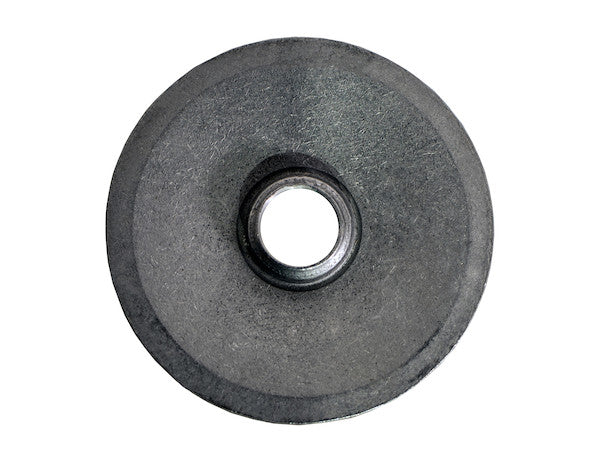
The Stamped Welding Flange from Buyers Products comes in aluminum, steel, and stainless steel in a variety of sizes to meet your reservoir installation needs. Use the flanges when fabricating your own hydraulic reservoir, or adding a port to an existing reservoir. Choose from a wide range of sizes, materials, ODs, and thicknesses to match your requirements.
Specifications
| Construction | Stamped |
|---|---|
| Finish | Plain |
| Material | Carbon Steel |
| Outer Diameter | 1.680 |
| Pilot | 0.480 |
| Size | .125 |
| Thickness | 0.134 |
The 1/8 Inch NPTF Steel Stamped Welding Flange represents a critical component in the design, fabrication, and maintenance of hydraulic fluid reservoirs and similar fluid containment systems. Engineered for robustness and precision, this specific flange is manufactured from high-quality carbon steel, offering an optimal balance of strength, weldability, and cost-effectiveness for a wide array of industrial applications. Its stamped construction ensures consistent dimensional accuracy and material integrity, which are paramount for creating leak-free and durable connections in demanding operational environments.
At its core, this flange is designed to facilitate the secure integration of fluid conduits into reservoir walls. The 1/8 Inch NPTF designation refers to its internal threading, adhering to the National Pipe Taper Fuel standard. This particular thread type is revered in hydraulic and pneumatic systems for its "dryseal" capabilities, meaning that, when properly engaged, it creates a metal-to-metal seal without the absolute necessity of thread sealants, though their use is often recommended for added security and ease of assembly/disassembly. The tapered design of NPTF threads ensures that the flanks of the male and female threads physically wedge together, forming a pressure-tight seal that is resistant to vibration and thermal cycling. The 1/8 inch size indicates a nominal pipe size, suitable for lower flow rates or auxiliary connections such as pressure gauge ports, drain plugs, or sensor inputs.
The choice of carbon steel as the primary material for this welding flange is deliberate and confers several significant advantages. Carbon steel is renowned for its high tensile strength and ductility, allowing it to withstand considerable mechanical stresses and internal fluid pressures typical of hydraulic systems. Its excellent weldability is another critical factor; carbon steel readily forms strong, permanent bonds with standard welding techniques, ensuring a robust connection to the reservoir wall. This material also exhibits good fatigue resistance, crucial for applications where the system may experience dynamic loading or pressure fluctuations. While carbon steel is susceptible to corrosion if left unprotected, its plain finish is specifically intended for post-welding treatment, allowing users to apply customized coatings or paints that match the reservoir's protective scheme, thereby extending the service life of the entire assembly.
The manufacturing process, described as "stamped," is central to the quality and cost-efficiency of these flanges. Stamping involves placing a flat sheet of carbon steel into a press where a die cuts and forms the material into the desired shape. This method offers unparalleled consistency in dimensions, ensuring that each 1/8 Inch NPTF Steel Stamped Welding Flange meets the precise specifications for Outer Diameter (1.680 inches), Pilot (0.480 inches), Size (0.125 inches nominal, referring to the pipe thread), and Thickness (0.134 inches). The stamping process results in a flange with smooth edges and uniform material thickness, which contributes to better weld penetration and reduced risk of distortion during welding. Furthermore, stamping is a highly efficient production method, leading to lower manufacturing costs per unit compared to machining from solid bar stock, a benefit that is passed on to the end-user.
The detailed dimensions provided are critical for proper integration. The Outer Diameter of 1.680 inches dictates the overall footprint of the flange on the reservoir surface, influencing the required clearance and weld seam length. The Pilot diameter of 0.480 inches refers to a concentric raised or recessed feature that helps center the flange within a pre-drilled or cut hole in the reservoir wall prior to welding. This piloting feature significantly aids in precise alignment, minimizing errors and ensuring that the NPTF port is perpendicular to the reservoir surface, which is crucial for proper thread engagement with connecting components. The specified thickness of 0.134 inches provides sufficient material for structural integrity and allows for robust weld fusion without excessive heat input, managing potential heat-affected zone issues during the welding process.
The primary application of the 1/8 Inch NPTF Steel Stamped Welding Flange lies in the fabrication of custom hydraulic reservoirs. When engineers and manufacturers design bespoke hydraulic systems, they often require reservoirs with specific port configurations that standard off-the-shelf units cannot provide. These welding flanges allow for precise placement of inlet, outlet, return, drain, and auxiliary ports. For instance, a 1/8 inch NPTF flange might be strategically placed at the lowest point of a reservoir to serve as a drain port for maintenance or fluid changes, or at a specific height for level sensing. Similarly, it can be used for pressure transducer connections to monitor system pressure or for air breather ports in smaller systems.
Beyond new reservoir construction, these flanges are invaluable for modifying or repairing existing hydraulic reservoirs. Over time, operational needs may evolve, requiring additional ports for new instrumentation, ancillary systems, or upgraded components. Rather than replacing an entire reservoir, which can be costly and time-consuming, a welding flange provides a cost-effective solution for adding a new NPTF connection. This flexibility extends the lifespan of existing equipment and allows for rapid adaptation to changing system requirements, minimizing downtime and optimizing operational efficiency. For example, a system undergoing an upgrade might need a new port for a thermal sensor to monitor fluid temperature more accurately, or an additional port for a fluid sampling valve for proactive maintenance.
In terms of installation, proper welding techniques are paramount to ensure the integrity of the connection. For carbon steel flanges, common welding processes such as Gas Metal Arc Welding (GMAW/MIG), Shielded Metal Arc Welding (SMAW/Stick), or Gas Tungsten Arc Welding (GTAW/TIG) are typically employed. Prior to welding, the flange and the reservoir surface must be thoroughly cleaned to remove any oils, grease, rust, or contaminants that could compromise weld quality. Proper fit-up, facilitated by the pilot feature, ensures correct alignment. During welding, appropriate heat management is essential to prevent distortion of the flange or the reservoir wall, especially in thinner gauge materials. Post-welding inspection for weld integrity, followed by thorough cleaning and the application of a protective coating (e.g., paint, powder coat) to the plain steel surface, is critical to prevent corrosion and ensure long-term performance.
The NPTF threading standard itself warrants further technical discussion. Unlike standard NPT (National Pipe Taper) threads, NPTF threads are designed with crest and root diameters engineered to interfere with each other when assembled, creating a metal-to-metal seal at the thread flanks and roots. This "dryseal" capability is crucial in applications where thread sealants could potentially contaminate the hydraulic fluid, leading to system malfunctions or component damage. The precise taper of 1 in 16 (3/4 inch per foot) on the diameter is meticulously maintained during the stamping process and subsequent threading operations to ensure optimal interference fit. When connecting a male NPTF fitting to this flange, it is essential to tighten it sufficiently to achieve the dryseal without over-torquing, which could damage the threads or distort the flange. Adherence to recommended torque specifications, often provided by the fitting manufacturer, is vital.
Quality assurance is an integral part of the production of the 1/8 Inch NPTF Steel Stamped Welding Flange. Manufacturers like Buyers Products adhere to stringent quality control protocols to ensure that each flange meets dimensional tolerances, material specifications, and threading standards. This typically involves regular material testing of incoming carbon steel stock, in-process dimensional checks during stamping, and final inspection of threaded components. Compliance with relevant industry standards, such as those set by ASTM for material composition and ASME for pressure vessel components, contributes to the reliability and safety of the final product. The consistent quality ensures that users can depend on these flanges to perform as expected in demanding hydraulic applications, minimizing the risk of leaks, component failure, and costly downtime.
In conclusion, the 1/8 Inch NPTF Steel Stamped Welding Flange is a technically sophisticated and indispensable component for any professional involved in hydraulic system design, manufacturing, or maintenance. Its carbon steel construction offers superior strength and weldability, while the precision stamping process guarantees consistent dimensions and optimal fit. The NPTF dryseal threading provides a reliable, contaminant-free connection for hydraulic fluids, and its versatility allows for seamless integration into both new and existing reservoir systems. By providing a secure, leak-resistant, and adaptable port for various hydraulic components, this flange contributes significantly to the overall efficiency, safety, and longevity of hydraulic machinery across numerous industrial sectors, from heavy construction and agriculture to manufacturing and specialized vehicle applications.