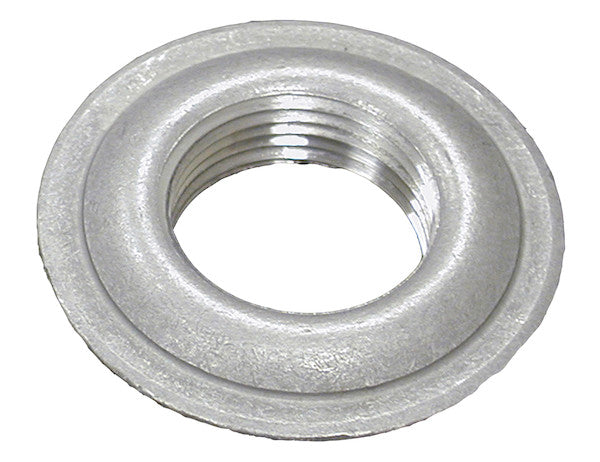
The Stamped Welding Flange from Buyers Products comes in aluminum, steel, and stainless steel in a variety of sizes to meet your reservoir installation needs. Use the flanges when fabricating your own hydraulic reservoir, or adding a port to an existing reservoir. Choose from a wide range of sizes, materials, ODs, and thicknesses to match your requirements.
Specifications
| Construction | Stamped |
|---|---|
| Finish | Plain |
| Material | Carbon Steel |
| Outer Diameter | 3.705 |
| Pilot | 2.455 |
| Size | 2.00 |
| Thickness | 0.118 |
Technical Overview: 2 Inch NPTF Steel Stamped Welding Flange for Hydraulic Systems
The 2 Inch NPTF Steel Stamped Welding Flange represents a critical component engineered for robust and reliable integration within hydraulic fluid power systems, particularly for reservoir fabrication and modification. This flange is meticulously designed to provide a secure and leak-proof connection point, facilitating the efficient transfer of hydraulic fluid within demanding operational environments. Its construction from high-grade carbon steel, combined with a precise stamping manufacturing process and a specialized NPTF (National Pipe Taper Fuel) dryseal thread, ensures exceptional performance, durability, and compatibility.
Material Science: The Choice of Carbon Steel
The selection of carbon steel as the primary material for this welding flange is a deliberate engineering decision based on its superior mechanical properties, cost-effectiveness, and excellent weldability. Carbon steel, primarily an alloy of iron and carbon (typically up to 2.1% by weight), offers a balance of strength, ductility, and hardness essential for components subjected to hydraulic pressures and mechanical stresses. For this particular flange, the carbon steel composition ensures a high tensile strength, providing the structural integrity required to withstand internal system pressures and external forces without deformation or failure. Its yield strength is carefully matched to prevent permanent plastic deformation under typical operating loads, thereby maintaining the critical dimensional stability necessary for a leak-free connection over time.
Furthermore, carbon steel exhibits commendable fatigue resistance, a crucial attribute for hydraulic components that may experience cyclical loading, pressure fluctuations, and vibrations inherent in mobile and industrial hydraulic machinery. While standard carbon steel inherently possesses a degree of corrosion susceptibility, particularly in humid or aggressive chemical environments, its plain finish allows for secondary treatments such as painting, powder coating, or plating if enhanced corrosion protection is required by specific application parameters. However, within an enclosed hydraulic reservoir system, the steel's primary interaction is with hydraulic fluid, which typically contains corrosion inhibitors, thereby mitigating significant degradation under normal operating conditions. The material's thermal properties also ensure stability across a typical range of operating temperatures encountered in hydraulic systems, preventing thermal expansion or contraction that could compromise the integrity of the weld or the threaded connection.
In comparison to alternative materials like aluminum or stainless steel, carbon steel offers an optimal balance. Aluminum flanges are lighter and offer excellent corrosion resistance, but generally possess lower tensile strength and fatigue resistance, making them less suitable for high-pressure or heavy-duty steel reservoir applications unless specific weight-saving or unique corrosion requirements dictate their use. Stainless steel, while offering superior corrosion resistance and often higher strength, comes at a significantly higher material and fabrication cost, which may be unwarranted for applications where carbon steel provides adequate performance and longevity, especially when integrated into existing carbon steel reservoir structures. The economic advantage and robust mechanical properties of carbon steel make it the preferred material for a broad spectrum of industrial and mobile hydraulic applications where reliability and cost-efficiency are paramount.
Manufacturing Precision: The Stamped Construction Method
The fabrication of this welding flange utilizes a sophisticated stamping process, a manufacturing technique lauded for its efficiency, precision, and consistency in producing high-volume metal components. Stamping involves placing a flat sheet of metal (in this case, carbon steel) into a press, where a die forms the metal into the desired shape. This method applies immense pressure to precisely cut, bend, and form the material, resulting in a product with uniform dimensions and mechanical properties. The 'stamped' construction ensures that each flange adheres to stringent dimensional tolerances, which is critical for proper fit-up during welding and for the integrity of the NPTF thread.
Key advantages of the stamping process for this application include:
- Dimensional Accuracy and Repeatability: Stamping dies are engineered to exact specifications, ensuring that every flange produced is virtually identical in size, thickness (0.118 inches), outer diameter (3.705 inches), and pilot diameter (2.455 inches). This consistency is invaluable for mass production and for guaranteeing reliable performance across multiple installations.
- Material Efficiency: The stamping process is optimized to minimize material waste, contributing to a more cost-effective product while maintaining quality standards.
- Surface Finish: Stamped parts typically exhibit a smooth, uniform surface finish (plain finish as specified), which is advantageous for subsequent welding operations and minimizes the need for extensive post-processing. This smooth surface also contributes to the prevention of stress concentrators that could lead to fatigue failure.
- Structural Integrity: The cold working inherent in the stamping process can sometimes enhance the material's mechanical properties, suchasing its strength and hardness in localized areas, thereby improving the overall robustness of the flange.
- Cost-Effectiveness: For components like welding flanges that are often required in significant quantities, stamping offers a highly economical production method compared to forging or casting, without compromising on the essential performance characteristics.
Thread Specification: The NPTF Dryseal Advantage
A defining characteristic of this flange is its 2 Inch NPTF thread specification. NPTF stands for National Pipe Taper Fuel, also known as Dryseal American National Standard Taper Pipe Thread. This thread type is specifically engineered to provide a mechanical seal without the need for additional thread sealants when properly assembled, although sealants are frequently used as an added measure of security in critical hydraulic applications. Unlike standard NPT (National Pipe Taper) threads, which create a mechanical seal by the flank contact of the threads and rely on a sealant to fill the helical gaps, NPTF threads achieve their seal through an interference fit at both the thread crest and root, as well as along the flanks.
The design of the NPTF thread features a truncated crest and root. When an NPTF male thread is tightened into an NPTF female thread, the metal-to-metal contact at these points deforms the thread material slightly, creating a highly effective mechanical seal. This "dryseal" capability is paramount in hydraulic systems where the integrity of connections is critical to prevent fluid leakage, which can lead to system contamination, loss of pressure, environmental hazards, and operational inefficiency. The 2-inch nominal pipe size indicates compatibility with standard 2-inch NPTF plumbing components, ensuring straightforward integration into a wide array of hydraulic systems. Proper engagement requires careful torque application to achieve the deformation necessary for sealing without overtightening, which can damage the threads or deform the flange.
The 2-inch dimension refers to the nominal pipe size, which corresponds to the internal diameter of the pipe or port to which the flange will connect, dictating the flow rate capacity. The taper angle of NPTF threads, typically 1°47' (or 3/4 inch per foot), is standardized to ensure universal compatibility with other NPTF components. This precise geometry is critical for achieving the interference fit and subsequent dryseal. The selection of an NPTF thread for a welding flange destined for hydraulic reservoir applications underscores a commitment to high-performance fluid containment, minimizing the risks associated with fluid loss and system contamination from external ingress. This technical detail significantly enhances the reliability and operational safety of the hydraulic system.
Design and Dimensional Precision: Optimizing for Performance
The specific dimensions of the 2 Inch NPTF Steel Stamped Welding Flange – including its outer diameter (OD), pilot, and thickness – are engineered to optimize its performance and facilitate seamless integration into hydraulic reservoir designs. The 2.00-inch size is a standard nominal pipe size, ensuring broad compatibility with existing hydraulic piping and componentry. This size dictates the flow area through the port, which is crucial for maintaining efficient fluid circulation within the reservoir and system, minimizing pressure drops and ensuring adequate supply to hydraulic pumps.
The Outer Diameter (OD) of 3.705 inches provides a substantial surface area for robust welding to the reservoir wall. This generous OD ensures a strong, load-bearing weld joint that can withstand the stresses of pressure, vibration, and component weight without compromising the reservoir's integrity. A larger OD also distributes weld stresses over a greater area, reducing localized heat effects and potential distortion during the welding process. The precise measurement of the OD is crucial for ensuring proper fit-up with reservoir openings, especially when automated or standardized fabrication techniques are employed.
The Pilot diameter of 2.455 inches serves a critical role in guiding and centering the flange within a prepared opening in the reservoir wall. This pilot feature ensures concentric alignment of the threaded port with the flow path, which is vital for efficient fluid dynamics and for preventing cavitation or turbulence at the fluid entry/exit points. Precise piloting also simplifies the installation process, reduces setup time, and helps in achieving a clean, accurate weld joint. By ensuring the flange is perfectly centered, it minimizes the risk of misalignment that could lead to uneven stress distribution, weld imperfections, or difficulties in connecting subsequent pipework.
With a Thickness of 0.118 inches, the flange provides sufficient material for structural rigidity and welding depth without being excessively bulky or heavy. This thickness is carefully balanced to ensure adequate strength to support the connected components and withstand internal pressures, while also being thin enough to be effectively welded using common industrial welding techniques. The thickness directly impacts the strength of the weld joint; a well-proportioned thickness ensures proper weld bead formation and complete penetration, crucial for creating a permanent, leak-proof attachment to the reservoir. The combination of these precise dimensions facilitates an optimal mechanical interface, contributing significantly to the overall stability and long-term reliability of the hydraulic system.
Application in Hydraulic Reservoirs: Fabrication and Modification
The primary application for the 2 Inch NPTF Steel Stamped Welding Flange is within hydraulic reservoir systems. Hydraulic reservoirs are fundamental components of any hydraulic circuit, serving multiple critical functions: they store hydraulic fluid, allow for air and contaminant separation, dissipate heat, and provide a stable volume for the pump's inlet. The integrity and design of these reservoirs directly impact the efficiency and longevity of the entire hydraulic system. These welding flanges play a pivotal role in two main scenarios:
1. Fabricating New Hydraulic Reservoirs: When custom hydraulic reservoirs are designed and constructed, these flanges provide the essential connection points for various components. Engineers and fabricators can strategically position these 2-inch NPTF ports to optimize fluid flow paths, accommodate specific pumps, filters, return lines, suction lines, drain ports, and auxiliary equipment such as sensors, heaters, or coolers. The flexibility offered by weld-in flanges allows for bespoke reservoir designs tailored to the unique spatial constraints, fluid volume requirements, and functional demands of specific machinery or industrial applications. The ability to weld these flanges directly into the reservoir wall ensures a permanent, high-strength, and leak-proof interface, which is superior to bolt-on solutions in many high-pressure or vibration-prone environments. This approach simplifies the plumbing layout and enhances the overall cleanliness and integrity of the hydraulic system.
2. Adding Ports to Existing Reservoirs: For existing hydraulic systems that require modification, upgrade, or the integration of new functionalities, these welding flanges offer a practical and robust solution for adding new ports. This could be necessary for installing additional hydraulic circuits, upgrading filtration systems, incorporating advanced sensors for condition monitoring, or redirecting fluid lines. Rather than replacing an entire reservoir, which can be costly and time-consuming, a precisely cut opening in the existing reservoir wall can be prepared, and the welding flange can be securely attached. This process provides a reliable and permanent connection point, extending the operational life and versatility of the existing hydraulic infrastructure. The plain finish of the carbon steel flange is ideal for seamless integration with existing steel reservoir structures, allowing for consistent welding parameters and a visually uniform appearance post-fabrication.
In both scenarios, the flange's design ensures that the connection is capable of handling the operational pressures and flow rates without compromising the reservoir's structural integrity or allowing external contaminants to enter the fluid, which could severely impact the performance and lifespan of hydraulic pumps, valves, and actuators. The robustness of a welded connection is critical in environments where mechanical shock, vibration, or high internal pressures are commonplace.
Welding Best Practices for Optimal Integration
The successful integration of the 2 Inch NPTF Steel Stamped Welding Flange into a hydraulic reservoir hinges critically on proper welding techniques. As the flange is made of carbon steel, it is highly compatible with common welding processes such as Gas Metal Arc Welding (GMAW/MIG), Shielded Metal Arc Welding (SMAW/Stick), and Gas Tungsten Arc Welding (GTAW/TIG). Each method offers distinct advantages, and the choice depends on the specific application, welder skill, and available equipment.
Preparation:
- Surface Cleaning: Before welding, both the flange and the contact area on the reservoir must be thoroughly cleaned. This involves removing any oil, grease, paint, rust, scale, or other contaminants that could interfere with weld quality. Grinding, wire brushing, or solvent cleaning are common methods. A clean surface is paramount for achieving strong, porosity-free welds.
- Fit-up and Alignment: The reservoir opening should be cut precisely to accommodate the flange's pilot diameter (2.455 inches) for accurate centering. The flange should fit snugly against the reservoir wall, minimizing any gaps. Proper fit-up ensures uniform weld penetration and reduces the risk of distortion.
- Tacking: Once positioned, the flange should be tack welded in several spots around its circumference to hold it securely in place and prevent movement during the main welding pass. This step is critical for maintaining alignment and minimizing distortion.
For carbon steel flanges on steel reservoirs, a fillet weld is typically employed around the exterior circumference.
- MIG Welding (GMAW): Often preferred for its speed and relative ease of use, MIG welding provides excellent penetration and a clean finish. Using a suitable shielding gas (e.g., CO2 or argon/CO2 mix) and filler wire (e.g., ER70S-6) is essential.
- TIG Welding (GTAW): Offers superior control, precision, and aesthetic quality, making it ideal for thinner materials or applications where a very clean, high-integrity weld is required. It typically uses an inert shielding gas (e.g., argon) and a filler rod if needed.
- Stick Welding (SMAW): A versatile and robust process, suitable for various conditions. The choice of electrode (e.g., E7018) is important for achieving appropriate strength and ductility.
- Heat Input: Control of heat input is vital to prevent warping or distortion of the reservoir wall, especially if it's made of thinner gauge material. Multiple passes with adequate cooling time between them can help manage heat.
- Penetration: Ensure full penetration of the weld metal into both the flange and the reservoir material to achieve maximum strength and a leak-proof seal.
- Weld Bead Profile: A smooth, consistent weld bead with proper toe lines (where the weld meets the base metal) and minimal undercut or overlap indicates a strong weld.
After welding and cooling, a thorough visual inspection is recommended. The weld bead should be uniform, free from cracks, porosity, excessive spatter, or other defects. For critical applications, non-destructive testing (NDT) methods such as liquid penetrant inspection or magnetic particle inspection may be employed to detect surface or near-surface flaws, ensuring the integrity of the connection. The expertise of a qualified and experienced welder is paramount to ensure the long-term reliability and safety of the hydraulic system.
Performance, Reliability, and Industry Compliance
The engineering attributes of the 2 Inch NPTF Steel Stamped Welding Flange coalesce to deliver exceptional performance and reliability in demanding hydraulic applications. The robust carbon steel material, combined with the precise stamping process, yields a component capable of withstanding the rigors of continuous operation. The inherent strength of carbon steel ensures the flange resists mechanical stress, fatigue from cyclical pressure loading, and external impacts. Its stable physical properties across operational temperature ranges minimize the risk of thermal expansion or contraction issues that could compromise the weld or threaded connection.
The NPTF dryseal thread is a cornerstone of its reliability, providing a leak-resistant connection crucial for maintaining system pressure, preventing fluid loss, and safeguarding against environmental contamination. This design minimizes the reliance on sealants, reducing potential for sealant degradation or contamination within the hydraulic fluid, thereby enhancing the overall cleanliness and longevity of the hydraulic system components. The consistency achieved through the stamping process guarantees that each flange meets strict dimensional tolerances, ensuring predictable and repeatable performance during assembly and throughout its service life.
While specific industry standards for this exact component type may vary, its design and material selection align with general engineering principles and practices prevalent in the fluid power industry. Manufacturers typically adhere to quality management systems (e.g., ISO 9001) to ensure consistent product quality, from raw material sourcing to the final inspection. The use of carbon steel, stamped construction, and NPTF threading are all recognized and accepted practices in the fabrication of hydraulic components, signifying compliance with established industry norms for safety, performance, and interchangeability. This commitment to quality and proven design principles instills confidence in the flange's ability to provide a durable and dependable connection point for critical hydraulic circuits.
Installation, System Integration, and Maintenance Considerations
Integrating the 2 Inch NPTF Steel Stamped Welding Flange into a hydraulic system extends beyond the welding process to encompass broader considerations for optimal system performance and longevity. Correct installation ensures the flange functions as intended, supporting the overall efficiency and safety of the hydraulic circuit.
System Integration: Once welded to the reservoir, the flange serves as the interface for connecting other critical hydraulic components. This includes hydraulic lines (rigid tubing or flexible hoses), pumps, filters, valves, and various sensors. The 2-inch NPTF port provides a standard connection point that is compatible with a wide array of commercially available fittings and adapters, simplifying the plumbing process. When connecting threaded components, it is crucial to ensure that mating threads are also NPTF or compatible NPT, and that appropriate thread lubricants or sealants (even with dryseal threads, as a safeguard) are used to achieve a fully leak-proof connection, torqued to manufacturer specifications. This ensures that the entire fluid path maintains its integrity under operating pressures.
Fluid Dynamics: The placement of these flanges on the reservoir should consider fluid dynamics. For suction lines, the port should be located to ensure a continuous, uninterrupted flow of fluid to the pump, minimizing turbulence and air entrainment. Return line ports should ideally be below the fluid level and directed to avoid disturbing fluid already in the reservoir, allowing for effective air separation and heat dissipation. Proper positioning of ports contributes significantly to preventing cavitation in the pump and maintaining the cleanliness and temperature of the hydraulic fluid.
Maintenance: Once installed, the welding flange itself typically requires minimal maintenance due to its robust, welded-in nature. However, the integrity of the threaded connection should be periodically inspected, especially in high-vibration applications. Any connected fittings or components should be checked for signs of leakage, thread wear, or structural fatigue. The plain finish of the steel allows for inspection for external corrosion, and if present, appropriate surface treatments can be applied. In the event of system modifications or component replacement, the standardized 2-inch NPTF thread allows for straightforward interchangeability of connected components.
The strategic deployment and meticulous installation of these welding flanges are key factors in constructing resilient and high-performing hydraulic systems, ultimately contributing to the operational reliability and extended service life of industrial and mobile equipment.
Conclusion
The 2 Inch NPTF Steel Stamped Welding Flange is an indispensable component for the construction and modification of hydraulic reservoirs, embodying a fusion of intelligent material selection, precision manufacturing, and astute engineering design. Its carbon steel construction delivers superior strength, durability, and cost-effectiveness, while the stamping process ensures consistent dimensional accuracy critical for robust welding and reliable performance. The NPTF dryseal thread design guarantees a highly leak-resistant connection, a paramount requirement for maintaining the integrity and efficiency of hydraulic fluid power systems. With its optimized dimensions—a 2-inch nominal pipe size, a 3.705-inch outer diameter, a 2.455-inch pilot, and a 0.118-inch thickness—this flange is purpose-built for seamless integration, offering structural stability and facilitating optimal fluid flow. Whether fabricating new custom reservoirs or enhancing existing ones, this flange provides a dependable, high-strength solution that meets the rigorous demands of industrial and mobile hydraulic applications. Its professional-grade design ensures long-term operational reliability, contributing significantly to the safety and productivity of hydraulic machinery.