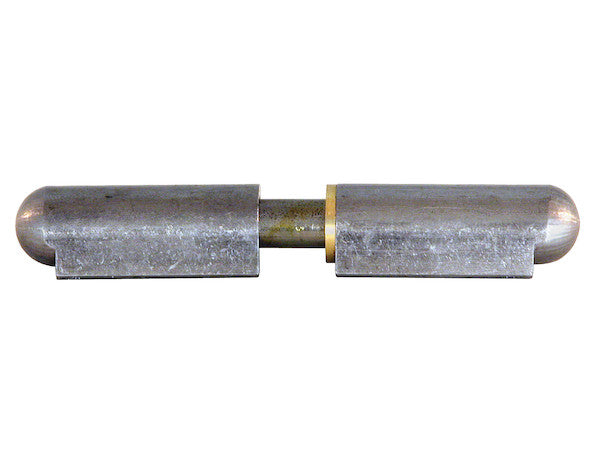
Buyers Products Steel Weld-On Bullet Hinge (also known as a lift-hinge) is ideal for trailer doors/gates and tool cabinets. The hinge is constructed from steel with a steel pin and brass bushing. They are available in multiple sizes to fit your application. Please contact Customer Service for further information.
Specifications
| Bushing Material | Brass |
|---|---|
| Diameter (in.) | 0.91 |
| Hinge Length (in.) | 7.87 |
| Pin Diameter (in.) | 0.63 |
| Pin Length A (in.) | 3.46 |
| Pin Length B (in.) | 2.05 |
| Pin Material | Carbon Steel |
| Thickness (in.) | 1.12 |
| With Grease Fitting (y/n) | No |
Advanced Technical Overview: Steel Weld-On Bullet Hinge with Steel Pin and Brass Bushing - 1.12 x 7.87 Inch
The Buyers Products Steel Weld-On Bullet Hinge, precisely dimensioned at 1.12 x 7.87 inches (referring to the main body thickness and overall hinge length, respectively), represents a robust and meticulously engineered component designed for critical load-bearing applications in various industrial and commercial environments. Often referred to as a lift-hinge due to its distinctive design that facilitates easy removal of the hinged component, this unit is constructed from high-grade steel for its primary body, features a resilient carbon steel pin, and incorporates a low-friction brass bushing. This specific combination of materials and design elements is not arbitrary; rather, it is the result of engineering considerations aimed at optimizing strength, durability, operational efficiency, and longevity under demanding conditions.
Core Design and Material Science
Integrated Weld-On Mounting System
The fundamental characteristic of this hinge is its weld-on mounting capability. Unlike hinges that utilize mechanical fasteners such as bolts or rivets, weld-on hinges are permanently integrated into the structural components they connect. This method offers several distinct advantages in applications requiring maximum structural integrity and resistance to shear and tensile forces. The molecular bonding achieved through professional welding techniques creates a monolithic connection, eliminating potential points of failure associated with loosened fasteners, vibratory fatigue, or tampering. This ensures an exceptionally strong and stable pivot point, crucial for heavy-duty doors, gates, and access panels. The seamless integration also contributes to a cleaner aesthetic and a reduced protrusion profile, which can be advantageous in confined spaces or where snagging prevention is a concern. Proper welding procedures, including appropriate filler material selection and heat management, are paramount to maintain the integrity of both the hinge material and the mating structure, preventing distortion or metallurgical degradation.
Bullet Hinge (Lift-Hinge) Configuration
The "bullet" designation derives from the hinge's streamlined, cylindrical shape, which minimizes visual bulk while maximizing structural integrity. More critically, its design as a "lift-hinge" allows for the hinged element (e.g., a door or gate) to be lifted directly off the pin, thereby detaching it from its frame without requiring disassembly of the hinge itself. This functionality is invaluable in scenarios where periodic removal of the hinged component is necessary for maintenance, unrestricted access, material handling, or modular system configurations. This feature significantly reduces downtime and simplifies logistical operations compared to conventional butt hinges, which would necessitate removal of fasteners. The precision manufacturing ensures smooth engagement and disengagement, preventing binding or excessive play that could compromise functionality or safety.
Material Specification and Performance Synergy
The selection of materials for each component – steel for the body, carbon steel for the pin, and brass for the bushing – is a deliberate engineering choice that leverages the unique properties of each metal to optimize overall hinge performance.
Steel Body Construction
The hinge body, with a robust thickness of 1.12 inches and a length of 7.87 inches, is fabricated from high-grade steel. Steel is chosen for its superior mechanical properties, including high tensile strength, excellent yield strength, and inherent toughness. These attributes ensure the hinge body can withstand significant static and dynamic loads, resisting deformation, bending, and cracking under stress. The weldability of steel further reinforces its suitability for this application, allowing for a strong and durable bond with the mating structures. Depending on the specific steel alloy utilized (typically low to medium carbon steel for general welding applications), the material offers a balance of strength, ductility, and formability. Post-welding, the steel can be coated or painted to provide enhanced corrosion resistance, particularly important in outdoor or harsh industrial environments.
Carbon Steel Pin
The hinge pin, with a diameter of 0.63 inches, is constructed from carbon steel. Carbon steel is selected for its exceptional hardness, wear resistance, and high shear strength. The pin is the primary pivot point and is subjected to significant abrasive forces during articulation, as well as shear stress from the suspended load. Carbon steel's ability to resist abrasive wear ensures a long operational life for the pin, maintaining tight tolerances and preventing premature loosening or failure of the hinge joint. The specified Pin Length A (3.46 inches) and Pin Length B (2.05 inches) indicate a precisely engineered pin geometry, likely designed to optimize load distribution across the bearing surfaces within the two hinge leaves, ensuring maximum stability and preventing bending or fatigue of the pin under varying load conditions. The exact configuration might imply a split pin design or different effective lengths interacting with the hinge's opposing barrels.
Brass Bushing Technology
The inclusion of a brass bushing is a critical engineering detail that significantly enhances the performance and longevity of the hinge. Brass, an alloy primarily composed of copper and zinc, is renowned for its excellent tribological properties (properties related to friction, lubrication, and wear). In contrast to a direct steel-on-steel pivot, a brass bushing provides several key advantages:
- Low Friction: Brass inherently exhibits a lower coefficient of friction when paired with steel. This reduces the force required to open and close the hinged component, minimizes heat generation, and lessens wear on both the pin and the hinge barrel.
- Corrosion Resistance: Brass offers superior resistance to corrosion, particularly in damp or humid environments, compared to many common steels. This resistance helps prevent rust formation within the pivot mechanism, which could lead to seizing or binding of the hinge.
- Self-Lubricating Characteristics: While not fully self-lubricating like certain advanced polymer bushings, brass has excellent galling resistance. Galling is a form of wear caused by adhesion between sliding surfaces, leading to material transfer and surface damage. Brass's composition helps mitigate this, providing a smoother, more consistent operation without excessive reliance on external lubrication.
- Wear Resistance: While the carbon steel pin provides primary wear resistance for the rotating element, the brass bushing acts as a sacrificial wear component. Over extended operational cycles, the softer brass will wear preferentially to the harder steel pin. This design choice simplifies maintenance; replacing a worn bushing is generally easier and more cost-effective than replacing a worn pin or the entire hinge assembly.
- Vibration Damping: The material properties of brass can contribute to a degree of vibration damping, offering a smoother operational feel and potentially reducing noise during articulation.
The strategic placement of the brass bushing between the steel pin and the steel hinge barrel creates an optimal bearing surface, ensuring smooth, consistent, and durable rotational movement.
Dimensional Specifications and Their Functional Implications
The precise dimensions of this hinge are not merely descriptive; they dictate its load capacity, operational characteristics, and suitability for specific applications.
- Diameter (0.91 in.): This refers to the overall diameter of the hinge barrel, providing a substantial cross-section for structural integrity and containing the pin and bushing assembly effectively.
- Hinge Length (7.87 in.): A generous hinge length contributes significantly to load distribution. A longer hinge distributes the applied load over a greater surface area along the edge of the hinged component, reducing stress concentrations on both the hinge itself and the mounting points on the frame and door/gate. This extended length also enhances stability, minimizing deflection and racking, especially beneficial for tall or wide components subjected to dynamic forces.
- Pin Diameter (0.63 in.): The robust pin diameter ensures high shear strength, crucial for supporting heavy loads. A thicker pin is less prone to bending or fracturing under eccentric or shock loads, maintaining the integrity of the pivot point.
- Pin Length A (3.46 in.) and Pin Length B (2.05 in.): These specific lengths likely refer to distinct segments of the carbon steel pin. This could indicate differing engagement depths within the upper and lower hinge leaves or a design that optimizes bearing surface contact. For instance, 'A' might represent the primary load-bearing segment within one leaf, while 'B' could be a shorter segment designed for alignment or to interact with a specific bushing configuration. Understanding these precise dimensions is critical for fitment and ensuring the hinge operates within its intended design parameters.
- Thickness (1.12 in.): This dimension pertains to the thickness of the hinge body or barrel. A substantial thickness directly correlates with the hinge's ability to resist deformation under compressive and shear loads, contributing to its overall heavy-duty classification.
- With Grease Fitting (y/n): No: The absence of a grease fitting indicates that this particular hinge relies on the inherent low-friction and anti-galling properties of the brass bushing for its operational lubrication. While periodic manual lubrication might still be considered for extremely harsh or high-cycle applications, the design prioritizes a low-maintenance profile, leveraging the material science of the brass to minimize the need for active lubrication systems. This can be advantageous in environments where access for greasing is difficult or where contamination from exposed grease is undesirable.
Applications and Industry Suitability
The Steel Weld-On Bullet Hinge with Steel Pin and Brass Bushing, sized at 1.12 x 7.87 inches, is engineered for a broad spectrum of demanding applications where strength, durability, and reliable operation are paramount. Its design specifications make it exceptionally suitable for:
- Heavy-Duty Trailer Doors and Gates: This includes commercial trailers, cargo trailers, utility trailers, and livestock trailers where doors and gates are frequently opened and closed and must withstand road vibrations, impact, and varying weather conditions. The weld-on nature provides maximum security and load-bearing capability for heavy payloads.
- Industrial Tool Cabinets and Enclosures: For large, heavy tool cabinets, industrial storage units, and electrical enclosures, particularly those in workshop environments or field service vehicles, the robust construction ensures longevity and secure closure.
- Agricultural Equipment: Hinges on tractor implements, access panels on machinery, and gates on agricultural vehicles often operate in dusty, dirty, and corrosive conditions. The steel and brass combination offers resilience against these environmental factors.
- Construction Machinery: Access hatches, battery compartments, and engine covers on excavators, bulldozers, and other heavy equipment benefit from the high strength and vibration resistance of weld-on bullet hinges.
- Utility and Fleet Vehicles: Doors on service trucks, utility boxes, and emergency vehicles require durable hinges that can endure frequent use and exposure to the elements.
- Security Gates and Barriers: For industrial complexes, commercial properties, or secure areas, the permanent weld-on installation provides enhanced security by preventing hinge tampering or removal.
- Custom Fabrication Projects: Fabricators building custom heavy-duty enclosures, machinery guards, or specialized doors can rely on these hinges for their robust design and ease of integration.
- Marine Applications (with appropriate finishing): While bare steel is not ideal for marine environments, a properly coated and sealed weld-on steel hinge can provide superior structural integrity for hatches and doors on workboats or docks, especially when paired with the corrosion resistance of brass internally.
Installation and Maintenance Guidelines
Installation
The installation of a weld-on hinge requires specialized skills and equipment. Professional welding is strongly recommended to ensure proper alignment and maximum structural integrity. Key considerations include:
- Surface Preparation: Both the hinge and the mating surfaces must be thoroughly cleaned, free of rust, paint, oil, or any contaminants that could compromise weld quality.
- Alignment: Precise alignment of the hinge components on both the stationary frame and the movable element is critical to ensure smooth, bind-free operation and the ability to lift off the door/gate. Tack welding and verification of movement before full welding are advisable.
- Welding Technique: Full penetration welds are typically recommended for maximum strength, particularly in high-stress applications. The choice of welding process (e.g., MIG, TIG, Stick) and filler material should be appropriate for the base metals of the hinge and the receiving structure.
- Heat Management: Careful control of heat input during welding is necessary to prevent distortion of the hinge or the surrounding structure, and to avoid compromising the metallurgical properties of the steel.
Maintenance
Despite the absence of a grease fitting, the design incorporating a brass bushing inherently contributes to a low-maintenance profile. The brass material reduces friction and resists galling, minimizing wear on the steel pin. However, periodic inspection is always recommended, especially in high-cycle or abrasive environments. Inspect for:
- Excessive Play: Any noticeable increase in radial or axial play could indicate wear in the bushing or pin.
- Corrosion: While the brass bushing resists corrosion, the external steel components should be regularly inspected for rust, particularly if not adequately coated or painted post-installation.
- Weld Integrity: Visually inspect the weld seams for cracks, fatigue, or signs of detachment.
For applications experiencing exceptionally high cycles or extreme environmental conditions, a light application of a suitable high-pressure, water-resistant grease or lubricant to the pivot point during routine inspections could further extend service life, despite the lack of a dedicated fitting.
Conclusion
The Buyers Products Steel Weld-On Bullet Hinge with Steel Pin and Brass Bushing, measuring 1.12 x 7.87 inches, represents a meticulously engineered solution for demanding industrial and commercial applications. Its robust steel construction, combined with a durable carbon steel pin and a friction-reducing brass bushing, provides a superior balance of strength, longevity, and operational efficiency. The inherent advantages of the weld-on design, offering unparalleled structural integration and security, coupled with the practical functionality of a lift-off hinge, make this component an ideal choice for heavy-duty trailer doors, industrial equipment access panels, secure enclosures, and a multitude of custom fabrication projects where reliable, enduring performance is non-negotiable. This hinge is not merely a component; it is a critical investment in the long-term operational integrity and safety of the structures it supports.