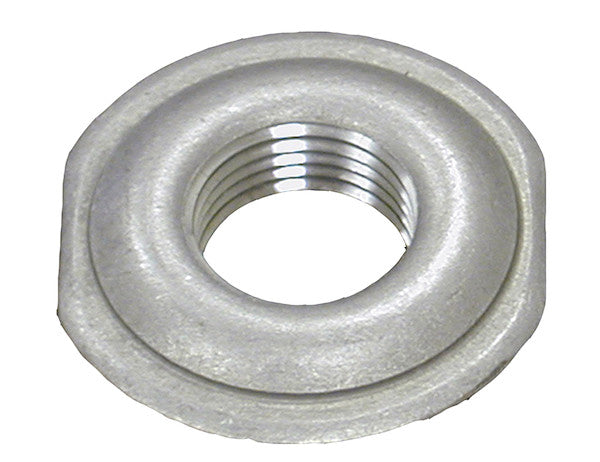
The Stamped Welding Flange from Buyers Products comes in aluminum, steel, and stainless steel in a variety of sizes to meet your reservoir installation needs. Use the flanges when fabricating your own hydraulic reservoir, or adding a port to an existing reservoir. Choose from a wide range of sizes, materials, ODs, and thicknesses to match your requirements.
Specifications
| Construction | Stamped |
|---|---|
| Finish | Plain |
| Material | Stainless Steel |
| Outer Diameter | 2.847 |
| Pilot | 1.745 |
| Size | 1.25 |
| Thickness | 0.134 |
Technical Overview: 1-1/4 Inch NPTF Stainless Steel Stamped Welding Flange for Hydraulic Systems
This document provides a comprehensive technical description of the 1-1/4 Inch NPTF Stainless Steel Stamped Welding Flange from Buyers Products, a critical component engineered for robust and reliable integration into hydraulic reservoir systems. Designed to facilitate secure and leak-free porting, this flange is indispensable for both the fabrication of new hydraulic reservoirs and the augmentation of existing ones, ensuring optimal fluid transfer and system integrity under demanding operational conditions.
Material Excellence: The Advantages of Stainless Steel in Hydraulic Applications
The selection of stainless steel for this welding flange is paramount, conferring a multitude of advantages crucial for the longevity and performance of hydraulic systems. Stainless steel, specifically austenitic grades typically used for stamped components such as 304 or 316 (though not explicitly stated, common choices for industrial flanges), offers an unparalleled combination of corrosion resistance, mechanical strength, and weldability.
Corrosion Resistance: Hydraulic systems are frequently exposed to diverse environmental conditions, including moisture, temperature fluctuations, and potentially aggressive hydraulic fluids or cleaning agents. Stainless steel's inherent chromium content forms a passive oxide layer that effectively resists various forms of corrosion, including atmospheric oxidation, pitting, crevice corrosion, and galvanic corrosion when properly isolated from dissimilar metals. This resistance is vital for preventing the ingress of contaminants into the hydraulic fluid, which can lead to premature wear of pumps, valves, and cylinders, thereby extending the service life of the entire system.
Mechanical Strength and Durability: With a tensile strength significantly higher than many other common engineering materials, stainless steel provides exceptional structural integrity. This allows the flange to withstand the dynamic pressures, vibrations, and mechanical stresses inherent in hydraulic operations without deformation or failure. The stamped construction, which often involves work hardening of the material, further enhances the material's yield strength and overall durability, ensuring that the flange maintains its precise dimensions and sealing capabilities over extended periods of service.
Temperature Performance: Hydraulic fluids can operate at elevated temperatures, and the surrounding environment can also contribute to thermal stress. Stainless steel exhibits excellent performance across a wide temperature range, resisting thermal expansion and contraction that could compromise the integrity of welded joints or threaded connections. This thermal stability ensures that the flange maintains its structural and sealing properties even under fluctuating thermal loads.
Cleanliness and Compatibility: In many hydraulic applications, particularly those requiring high purity or sensitive fluid media, material compatibility is crucial. Stainless steel is inert to most hydraulic fluids and does not leach contaminants, preserving fluid cleanliness. Its smooth, non-porous surface is also resistant to microbial growth and is easy to clean, which is beneficial for systems requiring periodic maintenance or fluid changes.
Weldability: The composition of common stainless steel grades is optimized for welding processes. The inherent properties of stainless steel allow for strong, ductile welds, which are essential for creating a permanent, leak-proof connection between the flange and the reservoir wall. Proper welding techniques, considering factors like heat input and shielding gas, ensure that the corrosion resistance and mechanical properties of the stainless steel are maintained in the heat-affected zone.
Manufacturing Process: Precision Stamping for Optimal Performance
The "stamped" construction method employed for this welding flange is a key differentiator, offering a balance of precision, consistency, and cost-effectiveness. Stamping is a cold-forming process where sheet metal is cut and formed into a desired shape using a press and a die.
Consistency and Repeatability: Stamping ensures a high degree of dimensional accuracy and repeatability across large production volumes. Each flange produced from the same die will exhibit identical geometric properties, which is critical for standardized installation, interchangeability, and reliable fit-up in welding operations. This consistency minimizes variations that could lead to alignment issues or compromised weld integrity.
Material Utilization: Stamping is an efficient manufacturing process that minimizes material waste, contributing to cost-effectiveness. The precise design of the stamping die allows for optimal nesting of parts on the sheet metal, reducing scrap rates compared to machining from solid billets.
Enhanced Mechanical Properties: Cold stamping induces work hardening in the stainless steel, which can significantly increase its yield strength and hardness without altering its chemical composition. This improvement in mechanical properties contributes to the flange's overall robustness and resistance to deformation under stress.
Cost-Effectiveness: For high-volume production, stamping offers a lower unit cost compared to other manufacturing methods like machining or casting. The initial investment in tooling is amortized over a large number of parts, making stamped components an economical choice for widely used industrial applications.
Surface Finish: Stamped components typically exhibit a smooth, uniform surface finish, which is conducive to welding. The "Plain" finish specified for this flange means it lacks any additional coatings or treatments that would interfere with the welding process, ensuring optimal metal-to-metal fusion.
Thread Standard: 1-1/4 Inch NPTF for Dryseal Reliability
The 1-1/4 Inch NPTF (National Pipe Taper Fuel) thread standard is a critical specification for this welding flange, specifically engineered to provide a robust, leak-proof connection without the need for additional sealants. Understanding NPTF's characteristics is essential for appreciating its value in hydraulic systems.
NPTF vs. NPT: While similar to the standard NPT (National Pipe Taper) thread, NPTF threads incorporate subtle but crucial modifications that ensure a "dryseal" connection. Both are tapered threads, meaning their diameter decreases along the length of the pipe or fitting. This taper causes the threads to wedge together as they are tightened, creating a mechanical seal.
The key difference lies in the crest and root of the threads. In standard NPT threads, clearances can exist between the crests and roots, necessitating the use of pipe dope or PTFE tape to fill these helical leak paths. NPTF threads, however, are designed with controlled truncation of the crests and roots to create an interference fit. When properly tightened, the crest of the male NPTF thread crushes into the root of the female NPTF thread (and vice-versa), plastically deforming the metal at these points to create a metal-to-metal seal along the thread flanks, preventing spiral leakage paths.
Dryseal Performance: This interference fit provides superior sealing performance, particularly crucial in high-pressure hydraulic applications where fluid containment is paramount. The "dryseal" capability eliminates the reliance on external sealants, which can degrade over time, be improperly applied, or even contaminate the hydraulic fluid if particles enter the system. This inherent sealing mechanism contributes significantly to the long-term reliability and safety of the hydraulic circuit.
1-1/4 Inch Size: The 1-1/4 inch nominal pipe size denotes a substantial flow capacity, suitable for main fluid lines, larger return lines, or ports requiring significant volumetric flow rates in hydraulic reservoirs. This size is commonly specified in industrial and mobile hydraulic equipment where efficient fluid transfer is essential for machinery operation.
Application Significance: The NPTF standard is widely recognized and adopted in fuel and hydraulic systems due to its robust sealing capability. When integrating this 1-1/4 Inch NPTF stainless steel welding flange, users can be confident in establishing a connection that meets stringent performance requirements for fluid retention and system integrity, even under dynamic pressure and vibration.
Application in Hydraulic Reservoirs: Facilitating Critical Fluid Management
The primary function of this stainless steel welding flange is to create a secure, accessible port in hydraulic reservoirs. Reservoirs are integral components of any hydraulic system, serving to store hydraulic fluid, dissipate heat, allow air to separate from the fluid, and settle contaminants. Proper porting is crucial for the efficient and reliable operation of the entire system.
Reservoir Fabrication: For engineers and manufacturers fabricating custom hydraulic reservoirs, this welding flange streamlines the process of incorporating connection points. By welding the flange directly onto the reservoir wall, a robust and permanent threaded interface is created, ready to accept corresponding NPTF fittings for suction lines, return lines, auxiliary hydraulic circuits, pressure transducers, temperature sensors, or fluid level indicators.
Adding Ports to Existing Reservoirs: The flange also serves as an ideal solution for retrofitting or upgrading existing hydraulic reservoirs. When additional hydraulic functions are introduced, or if an existing port needs to be replaced or augmented, this welding flange provides a reliable means to integrate new connections without compromising the structural integrity or leak-tightness of the reservoir.
Critical Connection Points:
- Suction Lines: Providing a secure port for the pump's suction line is paramount to prevent air ingress, which can lead to cavitation and premature pump failure.
- Return Lines: Ensuring that return fluid enters the reservoir below the fluid level, minimizing aeration, often requires strategically placed ports.
- Auxiliary Circuits: Many hydraulic systems feature auxiliary functions that require dedicated supply and return lines, which can be easily plumbed using these flanges.
- Instrumentation: Pressure gauges, temperature sensors, and fluid level switches are often threaded into the reservoir to monitor system parameters.
- Drain Ports: A robust drain port, typically located at the lowest point of the reservoir, facilitates fluid changes and maintenance.
The ability to securely weld a stainless steel NPTF flange onto a reservoir ensures a permanent connection that can withstand the operational pressures and vibrations, critical for maintaining system performance and preventing costly fluid leaks.
Detailed Technical Specifications and Their Implications
The specifications provided offer precise dimensions and characteristics that collectively define the performance and suitability of this welding flange.
Outer Diameter (OD): 2.847 inches (approximately 72.3 mm)
The outer diameter specifies the overall footprint of the flange on the reservoir surface. This dimension is crucial for several reasons:
- Welding Surface: A sufficient OD provides an adequate surface area for a strong, continuous circumferential weld, ensuring maximum strength and leak integrity.
- Structural Integration: The OD must be appropriate to distribute stresses effectively across the reservoir wall, especially important for thinner-walled reservoirs or those subjected to internal pressure fluctuations.
- Clearance: It dictates the space required for installation and welding, ensuring proper fitment without interfering with other reservoir components or mounting hardware.
Pilot: 1.745 inches (approximately 44.3 mm)
The pilot dimension refers to a concentric protrusion or step on the flange designed for precise alignment.
- Centering and Alignment: The pilot facilitates accurate centering of the flange within a pre-cut hole in the reservoir wall. This ensures that the NPTF thread is perfectly perpendicular to the reservoir surface, which is critical for proper thread engagement with mating fittings and for minimizing angular stress on the connection.
- Stress Distribution: By creating a snug fit, the pilot helps distribute mechanical loads from the attached fitting more evenly across the flange and the reservoir wall, reducing localized stress concentrations.
- Welding Preparation: A well-seated pilot simplifies the welding process by holding the flange in position, allowing the welder to focus on achieving a quality bead.
Thickness: 0.134 inches (approximately 3.4 mm)
The thickness of the flange plays a vital role in its mechanical performance:
- Pressure Rating: A robust thickness contributes directly to the flange's ability to withstand internal fluid pressures without deformation. This is especially important for NPTF connections, where overtightening or high pressures can place significant stress on the threaded section.
- Weld Integrity: Sufficient thickness ensures there is enough material to form a strong, complete weld joint with the reservoir wall. It also helps manage heat distribution during welding, reducing the risk of burn-through or excessive distortion.
- Durability: The material thickness provides resistance against external impacts, vibrations, and the stress induced by tightening and untightening fittings over the product's lifespan.
Finish: Plain
A "Plain" finish indicates that the flange surface is free from any plating, coating, or additional surface treatments.
- Optimal Weldability: For welding applications, a plain finish is ideal. It ensures direct metal-to-metal contact between the flange and the reservoir, which is essential for creating strong, defect-free welds. Coatings can interfere with the welding arc, introduce porosity, or release hazardous fumes.
- Material Purity: A plain finish ensures that only the inherent properties of the stainless steel are present at the weld interface, contributing to the integrity and corrosion resistance of the welded joint.
Construction: Stamped
As previously detailed, stamping ensures cost-effective production with high dimensional accuracy and repeatability, leveraging the inherent strength and formability of stainless steel.
Installation and Welding Best Practices for Stainless Steel Flanges
Proper installation and welding techniques are paramount to realize the full performance potential of this stainless steel welding flange. Due to the unique metallurgical properties of stainless steel, specific considerations must be observed.
Preparation:
- Hole Preparation: The reservoir wall must have a precisely cut hole that accommodates the flange's pilot diameter. The edges should be clean, smooth, and free of burrs or slag.
- Cleaning: Both the flange's welding surface and the corresponding area on the reservoir must be meticulously cleaned. Remove any oil, grease, paint, rust, or other contaminants using appropriate solvents or mechanical cleaning methods. Contaminants can compromise weld quality and introduce porosity.
- Fit-up: The flange should fit snugly into the prepared hole, guided by its pilot, ensuring it is flush with the reservoir surface and correctly oriented.
Welding Process:
- Process Selection: For stainless steel, Gas Tungsten Arc Welding (GTAW or TIG) or Gas Metal Arc Welding (GMAW or MIG) are generally preferred. TIG welding offers superior control over heat input and produces high-quality, precise welds, which is often desirable for critical hydraulic applications. MIG welding can be faster for thicker materials.
- Shielding Gas: An inert shielding gas, typically 100% argon for TIG, is essential to protect the molten weld pool and the heat-affected zone from atmospheric contamination (oxygen and nitrogen). This prevents the formation of oxides and nitrides that can embrittle the weld and reduce corrosion resistance.
- Heat Input Control: Stainless steel is susceptible to carbide precipitation (sensitization) if heated in a specific temperature range (around 800-1500°F or 425-815°C) for too long, which can reduce corrosion resistance. Minimize heat input by using appropriate welding parameters (amps, travel speed) and interpass cooling.
- Distortion Control: Stainless steel has a higher coefficient of thermal expansion than carbon steel. Proper clamping, tack welding, and controlled weld sequencing can help minimize distortion and warpage of the reservoir wall.
- Back Purging (Optional but Recommended): For optimal corrosion resistance on the interior of the reservoir, especially in critical applications, back purging with inert gas (e.g., argon) can prevent oxidation on the back side of the weld (sugaring), which is otherwise susceptible to corrosion.
Post-Weld Treatment:
- Cleaning: After welding, remove any heat tint, slag, or spatter using stainless steel brushes, grinding, or pickling agents. Iron contamination from carbon steel tools must be strictly avoided.
- Passivation: To restore the passive chromium oxide layer that might have been compromised during welding, a passivation treatment (chemical cleaning) is often recommended, especially for applications where maximum corrosion resistance is critical.
- Leak Testing: Upon completion, the welded joint must undergo rigorous leak testing (e.g., pneumatic pressure test, dye penetrant test, or visual inspection for evidence of fluid seepage) to confirm its integrity.
Benefits and Value Proposition for the End-User
The 1-1/4 Inch NPTF Stainless Steel Stamped Welding Flange from Buyers Products delivers significant value to hydraulic system designers, manufacturers, and maintenance professionals:
- Unmatched Durability: Constructed from high-grade stainless steel with a stamped process, this flange offers exceptional resistance to corrosion, wear, and mechanical stress, ensuring a long operational lifespan.
- Superior Leak Prevention: The NPTF dryseal thread design provides an inherently leak-proof connection, reducing the risk of fluid loss, environmental contamination, and costly system downtime associated with conventional NPT threads relying on sealants.
- Enhanced System Reliability: By creating secure, contamination-resistant ports, the flange contributes directly to the overall reliability and efficiency of hydraulic systems, protecting expensive components from fluid degradation and foreign particles.
- Simplified Fabrication and Maintenance: The precise dimensions, piloting feature, and excellent weldability simplify the fabrication of new reservoirs and the addition of ports to existing ones, streamlining manufacturing processes and facilitating maintenance activities.
- Compliance and Quality Assurance: Buyers Products is known for its commitment to quality, ensuring that these flanges meet stringent industry standards for material properties, dimensions, and performance, providing peace of mind to the end-user.
- Cost-Effectiveness: While offering premium performance characteristics, the stamped manufacturing process provides an economical solution for a high-quality component, offering long-term savings through reduced maintenance, extended system life, and minimized fluid loss.
Conclusion
The 1-1/4 Inch NPTF Stainless Steel Stamped Welding Flange represents a meticulously engineered component, specifically designed to meet the rigorous demands of modern hydraulic systems. Its construction from corrosion-resistant stainless steel, precision achieved through the stamping process, and the advanced leak-prevention capabilities of the NPTF dryseal thread standard, collectively ensure a robust, reliable, and durable solution for critical reservoir porting applications. This flange is an investment in the long-term integrity and operational efficiency of any hydraulic system, providing a foundation for secure fluid transfer and optimal performance.