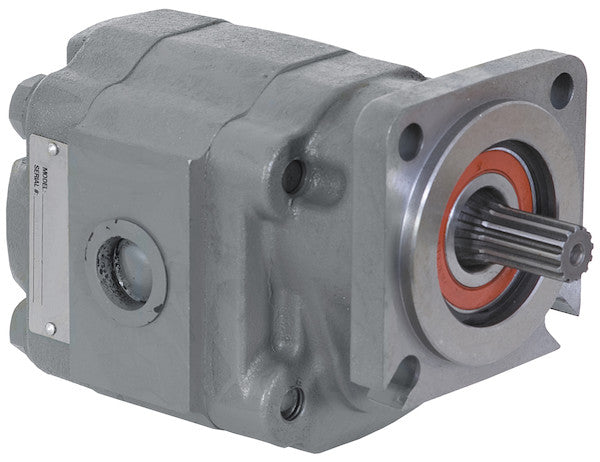
The heavy duty Live Floor Hydraulic Pump from Buyers Products is built tough to handle continuous, high-pressure operations such as a live floor. It features counter clockwise rotation. The pump is constructed of cast iron with Teflon-coated bronze thrust plates and heavy duty roller bearings. Eight internal dowels protect the structural integrity of the pump. Two models both handle a maximum 3000 PSI while delivering a flow of either 18 GPM or 24.2 GPM at 1000 RPM. The pump is designed to be 4-bolt mounted into an SAE B mount.
Specifications
| Direct Mount/Remote Mount | 4 Bolt SAE B |
|---|---|
| Direct or Remote Mount | Direct Mount |
| Displacement | 6 |
| Flow | 24 |
| Flow at 1000 RPM | 24 |
| Flow at 1200 RPM | 29. |
| Flow at 1500 RPM | 36.3 |
| Flow at 1800 RPM | 43.56 |
| Flow at 2100 RPM | 50.82 |
| Flow at 600 RPM | 14.52 |
| Flow at 900 RPM | 21.78 |
| Gear Size | 2.50 |
| Gear Width | 2.500 |
| Inlet Port Size | 1 1/2 NPT |
| Input Mount Type | Integral Bracket |
| Material | Cast Iron |
| Maximum Pressure | 3000 |
| Maximum Rotations Per Minute (RPM) | - |
| Mount Type | SAE B 4 Bolt |
| Outlet Port Size | 1 1/2 NPT |
| Pilot Diameter | 4.00 |
| Ports (rear/side) | Side |
| Rear Port Size | - |
| Rotation | Counterclockwise |
| Shaft Size | 7/8-13 |
| Shaft Type | Splined |
Technical Overview: Live Floor Hydraulic Pump with 2-1/2 Inch Diameter Gear
The Live Floor Hydraulic Pump from Buyers Products, distinguished by its robust 2-1/2 inch diameter gear, represents a pinnacle in hydraulic power transmission for demanding applications, particularly live floor systems. Engineered for continuous, high-pressure operation, this heavy-duty gear pump is a testament to precision manufacturing and material science, designed to deliver exceptional reliability and extended service life in harsh operational environments.
Fundamental Principles of External Gear Pump Operation
At its core, this unit is an external gear pump, a type of positive displacement pump renowned for its simplicity, robustness, and high volumetric efficiency across a broad range of operating conditions. The fundamental principle involves two intermeshing gears – a drive gear and an idler gear – contained within a precisely machined housing. As the drive gear, coupled to an external power source (such as a PTO), rotates, it draws hydraulic fluid from the inlet port into the cavities formed between the gear teeth and the pump housing. The rotating gears then transport this fluid around the periphery of the housing. At the discharge side, as the gear teeth mesh, the volume between them is progressively reduced, forcing the trapped fluid out through the outlet port at high pressure. Because the gears continuously mesh, a constant and pulsion-free flow is maintained. The positive displacement nature ensures that a specific volume of fluid is delivered with each revolution, making the flow rate directly proportional to the pump's rotational speed and its fixed displacement, regardless of the system pressure (within its operational limits). The counter-clockwise rotation, specified for this model, is a critical factor for correct installation and integration into existing hydraulic circuits, ensuring proper fluid directionality and system performance.
Advanced Engineering and Material Selection for Durability
The exceptional durability and performance of this hydraulic pump are largely attributable to its meticulous design and superior material selection. Each component has been chosen and engineered to withstand the rigorous demands of continuous, high-pressure live floor operations.
Cast Iron Construction: The Foundation of Strength
The primary material for the pump housing is high-grade cast iron. This choice is deliberate and crucial for several technical reasons. Cast iron offers inherent advantages over lighter materials like aluminum, especially in heavy-duty applications. Its high tensile strength and superior stiffness ensure that the pump housing maintains its dimensional integrity even under the extreme internal pressures reaching up to 3000 PSI. This rigidity is vital for maintaining tight internal clearances between the gears and the housing, which directly impacts volumetric efficiency and reduces internal leakage. Furthermore, cast iron possesses excellent vibration damping characteristics, which helps to absorb operational noise and reduce mechanical stress on the pump's internal components, contributing to a smoother, quieter operation and longer lifespan. Its thermal stability minimizes dimensional changes due to temperature fluctuations, ensuring consistent performance. The natural resistance of cast iron to wear and corrosion, particularly when exposed to various hydraulic fluids, further reinforces its suitability for industrial and mobile hydraulic systems.
Precision-Engineered 2-1/2 Inch Diameter Gears
The 2-1/2 inch gear width (or diameter, as sometimes used interchangeably in general descriptions) is a defining characteristic of this pump, directly correlating to its displacement and thus its flow capacity. The precision with which these gears are manufactured is paramount. The gear teeth are typically hardened to resist wear from continuous meshing and fluid erosion, ensuring long-term operational efficiency. The optimized tooth profile minimizes pulsation and noise while maximizing fluid transfer efficiency. A gear width of 2.50 inches, combined with the gear diameter and number of teeth, determines the pump’s volumetric displacement, specified here as 6 cubic inches per revolution (CiR). This substantial displacement per revolution is a key factor in achieving the high flow rates required for rapid and efficient live floor movement.
Teflon-Coated Bronze Thrust Plates: Optimizing Efficiency and Longevity
Internal to the pump, flanking the gears, are Teflon-coated bronze thrust plates. These components play a critical role in managing axial thrust and minimizing internal leakage paths. Bronze is an ideal material for bearing surfaces due to its inherent lubricity and excellent wear resistance. The addition of a Teflon (Polytetrafluoroethylene, PTFE) coating further enhances these properties. Teflon is known for its exceptionally low coefficient of friction and chemical inertness. This coating significantly reduces frictional losses between the gear faces and the thrust plates, thereby increasing mechanical efficiency and reducing heat generation. More importantly, the thrust plates effectively seal the sides of the gears against the housing, preventing fluid from bypassing the pumping action and migrating from the high-pressure side back to the low-pressure side. This active sealing mechanism, often pressure-balanced, is crucial for maintaining high volumetric efficiency, especially under elevated system pressures. The combination of bronze and Teflon ensures smooth operation, extended component life, and sustained performance even in demanding, continuous duty cycles.
Heavy-Duty Roller Bearings: Sustained Load Capacity
The utilization of heavy-duty roller bearings, as opposed to simpler plain bushings, is a significant engineering choice that contributes to the pump's robust nature. Roller bearings are designed to handle both high radial and axial loads with significantly lower friction than plain bearings. In a gear pump, the gears transmit substantial forces to their shafts, resulting in considerable radial and axial loads. The roller bearings effectively support these loads, preventing shaft deflection and misalignment, which could otherwise lead to premature wear of gears and housing, increased internal leakage, and reduced efficiency. Their low friction characteristic also minimizes power consumption and heat generation within the pump. This design choice ensures precise gear alignment, reduces wear, and substantially extends the operational life of the pump under sustained high-pressure conditions.
Eight Internal Dowels: Structural Integrity and Precision Alignment
The incorporation of eight internal dowels is a critical feature for the structural integrity and long-term reliability of the pump. These precision-machined pins serve to accurately align and secure the various sections of the pump housing – typically the front cover, gear housing, and rear cover/manifold – preventing any relative movement between these components. Under high internal pressure, hydraulic pumps experience significant separating forces. Without adequate structural support, these forces could cause slight deflections or shifts in the housing, leading to increased internal leakage, reduced efficiency, and accelerated wear. The dowels ensure that the critical internal clearances are maintained throughout the pump's operational life, resisting twisting and bending moments. This precise alignment is paramount for optimal gear meshing, proper functioning of the thrust plates, and the consistent delivery of high-pressure fluid without compromise.
Performance Specifications and Hydraulic Capabilities
This Live Floor Hydraulic Pump offers impressive performance capabilities, meticulously engineered to meet the strenuous demands of its intended applications.
Maximum Pressure Rating: 3000 PSI
A maximum pressure rating of 3000 PSI (pounds per square inch) positions this pump firmly in the heavy-duty category. This high-pressure capability is essential for live floor systems, which often require significant force to move dense, viscous, or heavy materials. Operating at 3000 PSI means the pump can generate substantial hydraulic power, enabling powerful and responsive operation of live floor cylinders or motors. The ability to maintain this pressure continuously underscores the robustness of its cast iron construction, durable gears, and high-load bearings.
Displacement and Flow Rates
The pump boasts a volumetric displacement of 6 cubic inches per revolution (CiR). This fundamental parameter dictates the theoretical flow output. The relationship between displacement, RPM, and flow rate is defined by the formula: Flow (GPM) = Displacement (CiR) * RPM / 231. Utilizing this, the specified flow rates become clear:
- At 600 RPM: 14.52 GPM (54.96 liters/minute)
- At 900 RPM: 21.78 GPM (82.44 liters/minute)
- At 1000 RPM: 24.2 GPM (91.6 liters/minute) – matching one of the highlighted models.
- At 1200 RPM: 29.04 GPM (109.9 liters/minute)
- At 1500 RPM: 36.3 GPM (137.4 liters/minute)
- At 1800 RPM: 43.56 GPM (165.0 liters/minute)
- At 2100 RPM: 50.82 GPM (192.3 liters/minute)
These flow figures demonstrate the pump's versatility across various operational speeds, allowing system designers to select optimal RPMs for specific live floor speeds and material handling requirements. The range of flow rates ensures efficient movement of diverse cargo, from light aggregates to heavy bulk materials, accommodating different operational cycles and productivity targets. It's important to note that actual flow may be slightly less due to minor internal leakage (slippage), which is minimized by the advanced design features.
Mounting and Interface Standards
Seamless integration into existing hydraulic systems is facilitated by adherence to industry-standard mounting and interface specifications.
SAE B 4-Bolt Direct Mount
The pump is designed for a 4-bolt SAE B mount, which is a widely recognized and utilized standard in mobile and industrial hydraulics. This direct mount configuration offers several advantages: compactness, reduced overall system weight, and simplified installation by eliminating the need for intermediate mounting brackets or flexible couplings. The direct drive connection minimizes alignment issues and backlash, ensuring efficient power transfer from the prime mover (e.g., PTO) to the pump. The pilot diameter of 4.00 inches ensures precise centering and concentricity between the pump and the drive source, which is critical for preventing vibration and premature wear on the shaft and bearings.
Splined Shaft (7/8-13)
Power input to the pump is through a splined shaft, specifically a 7/8-inch diameter shaft with 13 splines. Splined shafts are superior for transmitting high torque and are excellent at handling shock loads, which are common in heavy machinery. The multiple keys (splines) distribute the torque evenly over a larger surface area compared to a single-key shaft, reducing stress concentrations and enhancing durability. This specification ensures compatibility with a broad range of PTOs (Power Take-Offs) and other drive mechanisms commonly found in commercial vehicles and industrial equipment.
Porting: Side Ports with 1 1/2 NPT Connections
The pump features side ports for both its inlet and outlet connections, using 1 1/2 inch NPT (National Pipe Taper) threads. Side porting often simplifies plumbing layouts, offering greater flexibility in hose routing and component placement within the chassis or machine. The NPT thread standard provides a robust, self-sealing connection under pressure due to its tapered design. The generous 1 1/2 inch port size is crucial for minimizing pressure drop at the inlet, which helps prevent cavitation – a phenomenon where vacuum bubbles form and collapse, causing damage and noise – especially at higher flow rates. Similarly, adequately sized outlet ports ensure efficient fluid return to the system, reducing backpressure and improving overall system efficiency.
Applications: The Live Floor Specialist
While versatile enough for various heavy-duty hydraulic tasks, this pump is specifically optimized for live floor systems. Live floors are critical components in trailers and material handling equipment used for transporting and unloading bulk materials such as agricultural products, waste, wood chips, gravel, and sand. These systems involve a series of hydraulic cylinders that actuate floor slats, creating a moving floor to load or unload cargo efficiently.
The operational demands of a live floor are exceptionally rigorous. They involve:
- Continuous Duty Cycles: Repeated loading and unloading, often for extended periods.
- High Pressure Requirements: Moving heavy, sometimes sticky, loads against friction.
- Varying Loads: From empty to fully loaded, requiring consistent hydraulic power.
- Contaminant Exposure: The working environment is often dusty, dirty, and prone to debris, necessitating robust component design to protect against external factors and internal wear.
This Buyers Products hydraulic pump excels in this environment because its heavy-duty construction directly addresses these challenges. The cast iron housing provides superior protection against impact and environmental wear. The Teflon-coated bronze thrust plates and roller bearings ensure smooth, efficient operation and long life despite high-cycle usage. The ability to produce 3000 PSI ensures sufficient force to move even the most stubborn materials, while the generous flow rates allow for quick and efficient loading/unloading operations, enhancing productivity and reducing turnaround times. The precision internal dowels maintain critical tolerances, ensuring that the pump continues to perform optimally even after countless operational cycles.
Maintenance and System Integration Considerations
To maximize the service life and performance of the Live Floor Hydraulic Pump, proper system integration and routine maintenance are imperative. Key considerations include:
- Hydraulic Fluid Cleanliness: Maintaining high standards of hydraulic fluid cleanliness is paramount. Contaminants are the leading cause of hydraulic component wear. Utilizing appropriate filtration (both suction and return line filters) and regular fluid analysis can significantly extend pump life.
- Fluid Viscosity and Temperature: Selecting the correct hydraulic fluid viscosity for the operating temperature range is essential to ensure proper lubrication and optimal pump efficiency. Extreme temperatures can degrade fluid or cause cavitation.
- System Design: Proper sizing of hydraulic lines, reservoirs, and relief valves is critical to prevent system-induced stresses on the pump. Adequate reservoir capacity helps dissipate heat and allows for fluid de-aeration.
- Preventive Maintenance: Regular inspection for leaks, abnormal noise, or vibration, and timely replacement of filters and seals, will ensure the pump operates at peak efficiency for its expected lifespan.
Conclusion
The Live Floor Hydraulic Pump with its 2-1/2 inch diameter gear from Buyers Products stands as a robust, high-performance solution for the most demanding hydraulic applications, particularly in live floor systems. Its meticulous engineering, featuring cast iron construction, Teflon-coated bronze thrust plates, heavy-duty roller bearings, and internal dowels, ensures unparalleled durability and efficiency. With a 3000 PSI maximum pressure rating and variable flow rates up to 50.82 GPM at 2100 RPM, it provides the necessary power and speed for rapid material handling. Adhering to SAE B 4-bolt direct mount and standard splined shaft specifications, it offers straightforward integration into diverse mobile and industrial hydraulic setups. This pump represents an intelligent investment for operations requiring a reliable, long-lasting hydraulic power source capable of withstanding continuous, high-pressure, and often challenging work environments, ultimately contributing to enhanced operational efficiency and reduced downtime.