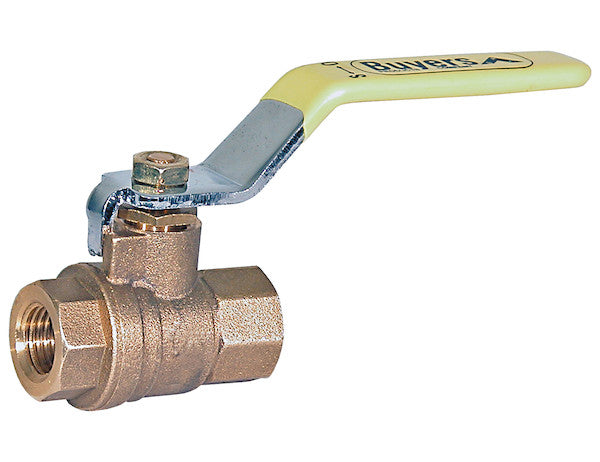
The Brass Body Ball Valve from Buyers Products easily and reliably controls the flow of fluid in your truck's hydraulic system. The ball valve's design makes it easy to tell if it is open or closed. Simple to install and operate, the valve features sturdy forged brass construction. It's built to handle 600 PSI of non-shock pressure. Choose from a range of valve sizes to meet your needs. Note: The valve is not suitable for steam or potable water applications.
Specifications
| Ball Material | Hardened Steel |
|---|---|
| Body Finish | Zinc Plated Clear |
| Body Material | Brass |
| Body Style | Ball |
| Handle Material_1 | Carbon Steel |
| Maximum Pressure (Water, Oil, Gas) | 600 |
| Maximum Working Pressure | 600 |
| Pipe Size | 0.500 |
| Seat Material | Teflon |
| Thread Size | 1/2 NPT |
Advanced Technical Overview: The 1/2 Inch Brass Body Ball Valve for Hydraulic Systems
In demanding industrial and mobile hydraulic applications, the integrity and reliability of fluid control components are paramount. The 1/2 Inch Brass Body Ball Valve from Buyers Products represents a meticulously engineered solution designed to deliver exceptional performance and longevity within truck hydraulic systems. This comprehensive overview delves into the technical specifications, material science, operational principles, and application benefits of this critical component, offering a detailed perspective for engineers, system designers, and maintenance professionals.
Precision Flow Control in Hydraulic Circuits
At its core, a ball valve serves as a quarter-turn isolation valve, utilizing a rotating ball with a bore to control the flow of media. When the valve is open, the bore is aligned with the pipeline, allowing unimpeded flow. A 90-degree rotation of the handle positions the bore perpendicular to the pipeline, effectively blocking the flow. This instantaneous ON/OFF capability is crucial in hydraulic systems where precise and rapid fluid stoppage or redirection is often required. The intuitive design of this valve, with its visible handle orientation, provides immediate visual confirmation of the valve's open or closed status, enhancing operational safety and efficiency.
Material Science and Construction Excellence
The robust construction of the 1/2 Inch Brass Body Ball Valve is a testament to its design for arduous hydraulic environments. Each material choice is deliberate, contributing to the valve's overall durability and functional integrity.
Forged Brass Body: The Foundation of Durability
The primary structural component, the valve body, is constructed from forged brass. Forging is a manufacturing process that uses localized compressive forces to shape metal, resulting in a grain structure that follows the contour of the part. This process significantly enhances the mechanical properties of the brass, including its tensile strength, yield strength, and fatigue resistance, compared to cast alternatives. This makes the valve exceptionally resilient against the stresses inherent in high-pressure hydraulic systems, including pressure pulsations and mechanical vibrations encountered during vehicle operation.
- Corrosion Resistance: Brass, an alloy primarily of copper and zinc, exhibits excellent resistance to corrosion, particularly from hydraulic oils and environmental factors. This property is vital for maintaining the internal integrity of the valve and preventing contamination of the hydraulic fluid, which can compromise system performance and longevity.
- Pressure Handling: The inherent strength of forged brass allows the valve to confidently handle a maximum non-shock working pressure of 600 PSI (approximately 41.37 bar). This rating ensures reliable operation under the typical operating pressures found in medium-duty truck hydraulic applications.
- Thermal Stability: Brass maintains its mechanical properties across a wide range of operating temperatures, which is critical for hydraulic systems that can experience significant temperature fluctuations due to ambient conditions and fluid friction.
- Chemical Compatibility: The brass body demonstrates broad compatibility with standard petroleum-based and synthetic hydraulic fluids, preventing material degradation and ensuring long-term seal integrity.
Hardened Steel Ball: Precision and Longevity
Central to the valve's operation is the hardened steel ball. Steel, subjected to a hardening process, acquires superior surface hardness and wear resistance. This is crucial for the ball, which repeatedly rotates against the valve seats, enduring abrasive forces from fluid flow and mechanical contact. The hardened surface minimizes wear, ensuring smooth operation and a tight seal over thousands of actuation cycles, thereby extending the valve's service life and maintaining its sealing capability under pressure.
Teflon (PTFE) Seats: Superior Sealing and Low Friction
The valve utilizes Teflon (Polytetrafluoroethylene, PTFE) for its seat material. PTFE is an exceptionally high-performance fluoropolymer renowned for its unique combination of properties, making it an ideal choice for valve seats:
- Exceptional Chemical Resistance: PTFE is virtually inert to most chemicals, including a vast array of hydraulic fluids, acids, and bases. This prevents seat degradation due to chemical attack, ensuring consistent sealing performance.
- Low Coefficient of Friction: PTFE boasts one of the lowest coefficients of friction of any solid material. This property facilitates smooth, low-torque operation of the valve, reducing wear on the ball and stem, and making actuation effortless even under pressure.
- Wide Temperature Range: PTFE maintains its physical and sealing properties across a broad temperature spectrum, typically from cryogenic temperatures up to approximately 500°F (260°C). While specific application temperatures may be limited by other components, the PTFE seats contribute significantly to the valve's thermal operational envelope.
- Non-Aging and Non-Contaminating: PTFE does not age or harden over time, ensuring consistent sealing performance throughout the valve's lifespan. Its non-stick properties also prevent the buildup of deposits and minimize the potential for fluid contamination.
- Resilient Sealing: PTFE seats deform slightly under compressive force, conforming precisely to the ball's surface to create a bubble-tight seal. This resilience is key to preventing internal leakage and maintaining system pressure.
Zinc Plated Clear Finish: Enhanced Protection
The brass body features a zinc plated clear finish. Zinc plating provides a sacrificial corrosion barrier, protecting the underlying brass from oxidation and environmental degradation. The "clear" aspect refers to the chromate conversion coating applied over the zinc, which enhances its corrosion resistance and provides a clean, aesthetically pleasing finish. This protective layer is particularly beneficial in outdoor or harsh operating environments typical of mobile hydraulic equipment, where exposure to moisture, road salt, and other corrosive agents is common.
Carbon Steel Handle: Robust Actuation
The valve's handle is constructed from carbon steel, a material chosen for its high strength and rigidity. This ensures that the handle can withstand the mechanical forces of repeated actuation without bending or fracturing, even when operating the valve under system pressure. The robust handle design contributes to the valve's overall reliability and ease of use, providing a positive and secure grip for operators.
Understanding Pressure Ratings and Thread Specifications
The technical specifications for pressure and connection types are crucial for proper system integration and safety.
600 PSI Non-Shock Working Pressure
The specified maximum working pressure of 600 PSI (pounds per square inch) for water, oil, and gas, specifically categorized as "non-shock pressure," is a critical parameter. Non-shock pressure refers to the maximum continuous operating pressure that the valve can safely withstand without experiencing sudden, severe pressure spikes (water hammer) or rapid pressure changes. In hydraulic systems, pressure surges can exceed normal operating pressures by several multiples. While this valve is robust for its stated rating, systems prone to significant pressure shocks may require additional surge protection or valves specifically rated for shock conditions. This 600 PSI rating makes the valve suitable for a wide range of auxiliary hydraulic functions in trucks, where sustained, moderate to high pressures are common.
1/2 Inch NPT Thread Size: Industry Standard Connectivity
The valve features 1/2 NPT (National Pipe Taper) thread connections. NPT is a widely recognized and utilized standard for tapered threads on pipes and fittings in North America. The tapered design allows for a mechanical interference fit between the male and female threads, creating a robust, leak-resistant seal when properly installed with an appropriate thread sealant (e.g., PTFE tape or pipe dope). The 1/2 inch nominal pipe size denotes the internal diameter of the pipe it is designed to connect to, making it a common choice for various fluid lines in mobile equipment.
- Reliable Sealing: The tapered nature of NPT threads means that as the male and female threads engage, they compress against each other, forming a seal. This seal is further enhanced by thread sealants, which fill any remaining helical leak paths.
- Ease of Integration: The ubiquity of NPT threads ensures compatibility with a vast array of hydraulic fittings, hoses, and other components, simplifying system design and assembly.
- Versatility: The 1/2 inch size offers a good balance between flow capacity and compact installation, suitable for numerous hydraulic control points.
Applications in Truck Hydraulic Systems
This 1/2 Inch Brass Body Ball Valve is specifically engineered for and finds extensive application within the complex hydraulic systems of commercial trucks and mobile equipment. Its robust construction and reliable performance are ideal for the harsh, dynamic environments these vehicles operate in.
- Dump Truck Hydraulics: Essential for controlling the flow of hydraulic fluid to cylinders that raise and lower dump beds, ensuring precise and safe operation.
- Snow Plow and Salt Spreader Systems: Used to isolate or direct hydraulic fluid to operate plow lift, angle, and spreader motors, enabling effective winter maintenance.
- Lift Gates and Cranes: Provides critical ON/OFF control for hydraulic cylinders and motors powering lift gates, articulating cranes, and other material handling equipment on utility and delivery trucks.
- Auxiliary Equipment Control: Applicable for various ancillary hydraulic functions, such as powering PTO (Power Take-Off) driven equipment, winches, or specialized tools.
- Service and Maintenance Shut-off: Can be strategically placed within hydraulic lines to allow for easy isolation of specific circuits for maintenance, repair, or troubleshooting without draining the entire system.
The valve's ability to withstand vibration, resist corrosion, and maintain a tight seal under pressure makes it an indispensable component for ensuring the safe and efficient operation of these hydraulic-dependent truck functions.
Installation Best Practices and Operational Considerations
Proper installation is paramount to achieving the specified performance and longevity of any hydraulic component.
- Thread Preparation: Ensure that both male and female NPT threads are clean and free of debris. Apply an appropriate thread sealant (e.g., PTFE thread tape or liquid pipe sealant) to the male threads. Apply sealant sparingly to prevent it from entering the fluid stream and potentially contaminating the hydraulic system.
- Tightening Torque: Hand-tighten the valve into the mating fitting, then use a wrench to tighten an additional 1 to 3 turns, or according to sealant manufacturer's recommendations. Over-tightening can damage threads or crack the valve body; under-tightening can lead to leaks.
- Alignment: Ensure the valve is installed without inducing undue stress or misalignment in the piping system. Proper alignment prevents premature wear and potential leakage.
- Flow Direction: While ball valves are generally bi-directional, it's good practice to install them in a manner that allows for easy access to the handle for actuation and visual confirmation.
- Post-Installation Check: After installation, pressurize the system and carefully inspect all connections for leaks. Rectify any leaks immediately.
Due to its robust design and material selection, this brass ball valve requires minimal maintenance. Regular visual inspections for external damage, corrosion, or leaks are generally sufficient. The self-lubricating properties of PTFE seats contribute to sustained smooth operation without the need for periodic lubrication.
Exclusions and Specific Application Guidance
The current description explicitly states that "The valve is not suitable for steam or potable water applications." This is a critical technical distinction:
- Steam Applications: Steam, particularly high-pressure or superheated steam, presents unique challenges that exceed the design parameters of this general-purpose brass ball valve.
- High Temperatures: Steam operates at significantly higher temperatures than typical hydraulic fluids. While brass itself has good thermal stability, the PTFE seat material has a temperature limit. Exposure to sustained high temperatures can lead to accelerated degradation, softening, or deformation of the PTFE seats, compromising the valve's sealing integrity and potentially leading to catastrophic failure.
- Thermal Cycling: Steam systems often experience rapid heating and cooling cycles, leading to thermal expansion and contraction stresses on valve components. Specialized valve designs and materials (e.g., metal-seated valves, specific high-temperature alloys) are required to withstand these dynamic thermal stresses without leakage or failure.
- Erosion: High-velocity steam can be highly erosive, particularly if it contains condensate droplets, which can rapidly wear away valve internals not designed for such conditions.
- Potable Water Applications: The unsuitability for potable water is primarily related to material composition and regulatory compliance.
- Lead Content: Traditional brass alloys may contain trace amounts of lead (typically to improve machinability). While safe for hydraulic oils, the leaching of lead into drinking water is a serious public health concern regulated by stringent standards (e.g., NSF/ANSI 61 in North America, or local plumbing codes). Valves intended for potable water must be certified as "lead-free" or conform to specific low-lead brass compositions. This valve, being a general-purpose hydraulic component, is not certified for potable water contact.
- Regulatory Compliance: Potable water systems require components to meet specific health and safety certifications that this industrial hydraulic valve does not possess. Using non-certified components in potable water systems is generally prohibited by plumbing codes.
Adhering to these explicit exclusions is essential for ensuring both operational safety and compliance with relevant industry standards and regulations.
Engineering for Reliability: The Buyers Products Advantage
Buyers Products is renowned for its commitment to delivering high-quality, durable components for the work truck industry. This 1/2 Inch Brass Body Ball Valve embodies that commitment through its meticulous design, selection of premium materials, and robust manufacturing processes. Engineers and maintenance personnel can trust in the reliability of this valve to perform consistently in critical fluid control applications, minimizing downtime and maximizing operational efficiency.
The combination of a forged brass body, hardened steel ball, and high-performance PTFE seats, complemented by a protective zinc-plated finish and a strong carbon steel handle, creates a valve that offers superior resistance to pressure, wear, and corrosion. Its ease of installation, intuitive operation, and specific design for truck hydraulic systems make it an optimal choice for new installations and replacement applications alike.
By understanding the detailed technical specifications and the rationale behind each material and design choice, users can confidently integrate this 1/2 Inch Brass Body Ball Valve into their hydraulic systems, ensuring long-term, reliable control of fluid flow under demanding operational conditions. Its proven performance characteristics and adherence to professional engineering principles underscore its value as a fundamental component in modern mobile hydraulic circuitry.