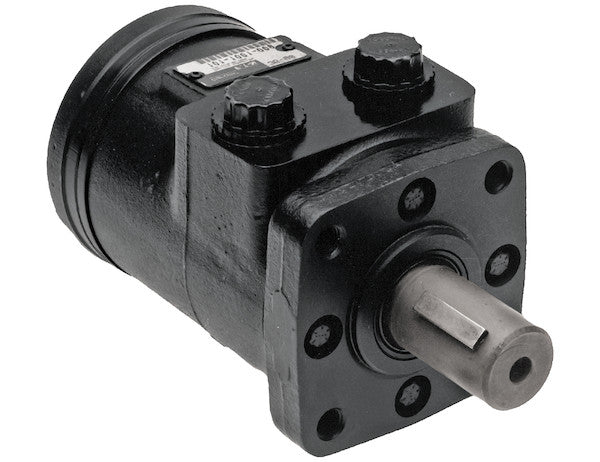
Char-Lynn Hydraulic Motors from Buyers Products are designed to be economical, efficient, compact, and powerful. They are a great solution for powering medium-duty applications like compressors, augers, winches, cranes, and spreaders. The motors have an industry-proven spool valve design combined with state-of-the-art gerotors. They excel at jobs that need a high degree of start-up torque or just the right mixture of torque and flow rate. Choose from a wide range of motors depending on your needs for flow rates, torque, and starting torque. Each model is available with either a 2-bolt or 4-bolt mount. The last digit of the part number (2 or 4) will indicate the number of bolts.
Specifications
| Compares To | 101-1007-009 |
|---|---|
| Displacement | 17.9 |
| Flow (Continuous) | 15 |
| Flow (Intermittent) | 20 |
| Input Mount Type | 4 Bolt |
| Material | Cast Iron |
| Maximum Case Pressure (Without Case Drain) | 1500 |
| Maximum Speed (Continuous) | 192 |
| Maximum Speed at Continuous Flow | 192 |
| Maximum Speed at Intermittent Flow | 256 |
| Minimum Starting Torque (Continuous Pressure) | 2500 |
| Minimum Starting Torque (Intermittent Pressure) | 3430 |
| Pilot Diameter | 1.75 |
| Port Size | 1/2 NPT |
| Pressure ? Bar (Continuous) | 1350 |
| Pressure ? Bar (Intermittent) | 1800 |
| Shaft Keyway | 0.25 |
| Shaft Size | 1.00 |
| Shaft Type | Straight |
| Torque Rating (Continuous) | 3110 |
| Torque Rating (Intermittent) | 3430 |
Advanced Technical Overview: Char-Lynn Hydraulic Motor with 17.9 Cubic Inches Displacement
This detailed technical description focuses on the Hydraulic Motor featuring a 4-Bolt Mount, NPT Threads, and a displacement of 17.9 cubic inches, a product synonymous with robust performance and reliability in demanding hydraulic applications. Manufactured by Buyers Products, these Char-Lynn style motors are engineered to deliver a superior blend of economy, efficiency, compactness, and power, making them an optimal choice for medium-duty industrial and mobile hydraulic systems.
Core Hydraulic Principles and Gerotor Design
At the heart of this hydraulic motor's exceptional performance lies its innovative design, combining an industry-proven spool valve mechanism with state-of-the-art gerotor technology. Gerotor motors, a specific type of orbital motor, are renowned for their compact size, high volumetric efficiency, and exceptional starting torque capabilities. The gerotor set comprises an inner rotor with N teeth and an outer rotor (or stator) with N+1 teeth. As hydraulic fluid is introduced under pressure, it acts upon the exposed surfaces of the gerotor elements, causing the inner rotor to orbit and rotate within the outer rotor. This rotational motion is then transmitted to the output shaft.
The inherent advantages of gerotor designs include smooth operation across a wide speed range, high power density, and a notable resistance to wear due to the continuous, rolling contact between the rotor and stator, which minimizes localized stress. Furthermore, the multi-lobed configuration of the gerotor creates multiple pressure chambers, leading to more continuous torque generation and reduced pressure ripple compared to simpler designs. The integration of a sophisticated spool valve ensures precise control over the flow of hydraulic fluid to these chambers, enabling optimal performance characteristics, particularly a high degree of start-up torque and the flexibility to achieve the ideal balance of torque and flow rate for varied application requirements.
Displacement: 17.9 Cubic Inches – Engineering for Optimal Output
The volumetric displacement of 17.9 cubic inches (in³) per revolution is a critical parameter defining this hydraulic motor's operational characteristics. Displacement quantifies the volume of hydraulic fluid required to complete one full revolution of the motor's output shaft. A displacement of 17.9 in³ signifies a motor designed to produce substantial torque at moderate speeds, making it exceptionally well-suited for applications demanding consistent rotational force rather than exceedingly high rotational velocities. This specific displacement value, when combined with the motor's pressure ratings, directly dictates the maximum achievable torque. The selection of this displacement is a result of meticulous engineering to provide a motor that excels in medium-duty tasks, offering a harmonious blend of power and efficiency without excessive energy consumption or heat generation.
Pressure Ratings: Continuous and Intermittent Performance
The motor's pressure ratings are fundamental to understanding its power capabilities and operational limits. With a continuous pressure rating of 1350 PSI (Pressure ? Bar), this motor is designed for sustained operation under significant load without compromising its integrity or longevity. The intermittent pressure rating of 1800 PSI allows the motor to handle transient peak loads that exceed the continuous rating for short durations, providing an essential safety margin and enhancing its versatility in dynamic applications. These pressure specifications are indicative of the motor's robust construction and the high-quality materials used in its manufacturing, particularly the cast iron housing, which offers excellent strength and resistance to internal hydraulic pressures. The maximum case pressure of 1500 PSI (without a case drain) further illustrates the robust design, indicating the permissible pressure within the motor's housing without requiring an external drain line, simplifying system plumbing in certain configurations.
Flow Rates: Managing Hydraulic Fluid Dynamics
Flow rate is directly proportional to the motor's speed, given a constant displacement. This motor is rated for a continuous flow of 15 GPM (Gallons Per Minute) and an intermittent flow of 20 GPM. These figures are crucial for system designers, as they dictate the pump size and the hydraulic circuit's capacity. A continuous flow of 15 GPM, combined with the 17.9 in³ displacement, enables a steady and predictable rotational speed under sustained load. The intermittent flow of 20 GPM provides the capability for bursts of higher speed or power when an application temporarily requires it, such as accelerating a load or overcoming a momentary resistance. The ability to manage these flow rates effectively is a testament to the motor's efficient internal fluid passages and the precision of its spool valve mechanism, ensuring minimal pressure drop and optimal hydraulic energy conversion.
Torque Characteristics: Powering Demanding Applications
Torque is the rotational force produced by the motor, a critical metric for driving mechanical loads. This motor boasts impressive torque ratings, designed to meet the rigorous demands of medium-duty applications:
- Continuous Torque Rating: 3110 in-lb. This represents the maximum torque the motor can consistently deliver without exceeding its thermal or mechanical limits, ensuring reliable performance during extended operation.
- Intermittent Torque Rating: 3430 in-lb. This higher torque capacity is available for short periods, allowing the motor to handle peak loads or momentary overloads without damage. This is particularly valuable for applications with variable load profiles.
- Minimum Starting Torque (Continuous Pressure): 2500 in-lb. This specifies the minimum torque the motor can generate from a standstill when operating at continuous pressure. High starting torque is a hallmark of gerotor motors and is essential for overcoming static friction and initiating movement in heavy loads.
- Minimum Starting Torque (Intermittent Pressure): 3430 in-lb. This demonstrates the motor's exceptional ability to initiate movement under the most challenging conditions, utilizing the full intermittent pressure capacity to break away stubborn loads.
The remarkable starting torque capabilities are directly attributable to the gerotor and spool valve design, which efficiently applies hydraulic pressure to maximize initial rotational force. This makes the motor highly effective in applications like winches and augers where overcoming initial resistance is paramount.
Speed Performance: Precision and Range
The motor’s speed characteristics are directly tied to its displacement and the supplied flow rate:
- Maximum Speed (Continuous) / Maximum Speed at Continuous Flow: 192 RPM. This is the maximum rotational speed the motor can maintain reliably during continuous operation at the specified continuous flow rate.
- Maximum Speed at Intermittent Flow: 256 RPM. This indicates the higher rotational speed achievable during intermittent periods when the hydraulic system can supply the maximum intermittent flow rate.
These speed ranges, from 0 to 256 RPM, underscore the motor's versatility, allowing for precise control of rotational velocity. The ability to operate effectively at lower speeds while generating high torque, combined with the capacity for higher intermittent speeds, makes it adaptable to a broad spectrum of operational demands. The smooth operation inherent to gerotor designs further ensures stable speed control, even under fluctuating loads.
Construction and Mounting: Durability and Integration
The motor's physical attributes are engineered for durability, ease of integration, and reliable power transmission:
Material: Cast Iron
Constructed from high-grade cast iron, the motor housing provides exceptional structural rigidity, resistance to fatigue, and superior vibration dampening characteristics. Cast iron's inherent properties make it an ideal material for hydraulic components, capable of withstanding the significant internal pressures and external stresses encountered in demanding operational environments. This choice of material contributes significantly to the motor's longevity and robust performance.
Input Mount Type: 4-Bolt Mount
The inclusion of a 4-bolt mount is a testament to the motor's design for secure and stable integration into various machinery. A 4-bolt mounting pattern provides superior rigidity and load distribution compared to 2-bolt configurations, minimizing the risk of misalignment or structural fatigue under dynamic loads. This robust mounting interface ensures the motor remains firmly coupled to the driven equipment, maintaining operational efficiency and safety, especially in applications subject to high torque, vibration, or shock loads. The pilot diameter of 1.75 inches ensures precise centering during installation, further enhancing connection integrity.
Port Size: 1/2 NPT Threads
The use of 1/2 NPT (National Pipe Taper) threads for the hydraulic ports offers a widely accepted and reliable method for connecting the motor to the hydraulic circuit. NPT threads are designed to create a pressure-tight seal when properly assembled, crucial for maintaining system efficiency and preventing leaks in high-pressure hydraulic applications. The 1/2 inch size is appropriate for managing the continuous and intermittent flow rates of 15 GPM and 20 GPM, balancing flow capacity with compact port dimensions.
Shaft Specifications: Power Transmission Integrity
The output shaft is the critical interface for transmitting mechanical power from the hydraulic motor to the driven load. This motor features a 1.00-inch straight shaft with a 0.25-inch keyway.
- Shaft Size (1.00 inch): A 1-inch diameter shaft provides sufficient strength and torsional rigidity to handle the substantial torque ratings (up to 3430 in-lb intermittent) without excessive deflection or failure.
- Shaft Type (Straight): A straight shaft is a versatile and common type, simplifying the attachment of various coupling devices, sprockets, pulleys, or gears.
- Shaft Keyway (0.25 inch): The 0.25-inch keyway is machined to accept a standard parallel key, which provides a positive, non-slip connection between the shaft and the driven component. This ensures that the full rotational torque is efficiently transferred, preventing slippage and potential damage to the shaft or hub.
These shaft specifications are engineered to provide a durable and reliable power transmission interface, capable of withstanding the dynamic forces generated by the motor during its operation.
Applications: Engineered for Medium-Duty Versatility
The design and specifications of this hydraulic motor make it exceptionally well-suited for a broad range of medium-duty applications where reliability, power, and precise control are essential. Its high starting torque, combined with efficient operation across varying speeds and loads, makes it an ideal power source for:
- Compressors: Providing the consistent rotational power needed for sustained air compression.
- Augers: Delivering the necessary high torque to bore into various materials, especially with high breakaway torque for starting.
- Winches: Offering powerful pulling force and precise speed control for lifting and lowering operations, critical in construction and marine environments.
- Cranes: Enabling controlled rotation and movement of crane mechanisms, demanding both high torque and fine control.
- Spreaders: Ensuring uniform and consistent material distribution, often requiring variable speed and robust torque.
- Conveyor Drives: Providing steady, controlled motion for material handling systems.
- Mixers: Delivering the continuous torque required for agitation and mixing processes.
- Agricultural Equipment: Powering various implements where robust, reliable rotational power is needed.
The motor's compact form factor further facilitates its integration into confined spaces, common in mobile equipment and specialized machinery.
System Integration and Maintenance Considerations
For optimal performance and longevity of this hydraulic motor, careful consideration of its integration into the overall hydraulic system is paramount. This includes:
- Hydraulic Fluid Selection: Utilizing high-quality hydraulic fluid with appropriate viscosity and anti-wear additives is crucial for lubrication, heat dissipation, and corrosion protection.
- Filtration: Implementing robust filtration systems to maintain fluid cleanliness is vital. Contaminants are a leading cause of hydraulic component wear and failure.
- Heat Management: Ensuring adequate cooling of the hydraulic fluid prevents thermal degradation of the fluid and internal motor components, especially during continuous operation at higher loads.
- System Pressure Relief: Proper sizing and setting of relief valves are essential to protect the motor and the entire system from over-pressurization.
- Case Drain (Optional): While the motor is rated for 1500 PSI maximum case pressure without a case drain, for applications with higher back pressures or where maximum longevity is desired, routing a case drain line back to the reservoir is often recommended to prevent excessive pressure buildup within the motor housing.
Routine maintenance, including fluid checks, filter replacement, and inspection of connections, will ensure the continued reliable operation of this high-quality hydraulic motor.
Conclusion
The Char-Lynn Hydraulic Motor from Buyers Products, with its 4-bolt mount, NPT threads, and 17.9 cubic inches of displacement, represents a meticulously engineered solution for demanding medium-duty hydraulic power requirements. Its foundation in advanced gerotor technology, coupled with a precision spool valve design, delivers an unparalleled combination of efficiency, compactness, high starting torque, and robust continuous performance. From its cast iron construction to its precise shaft and port specifications, every aspect of this motor is designed for durability, ease of integration, and reliable operation across a diverse array of industrial and mobile applications. This motor is not merely a component; it is a vital contributor to the productivity and efficiency of any hydraulic system it powers, embodying technical excellence and unwavering performance.