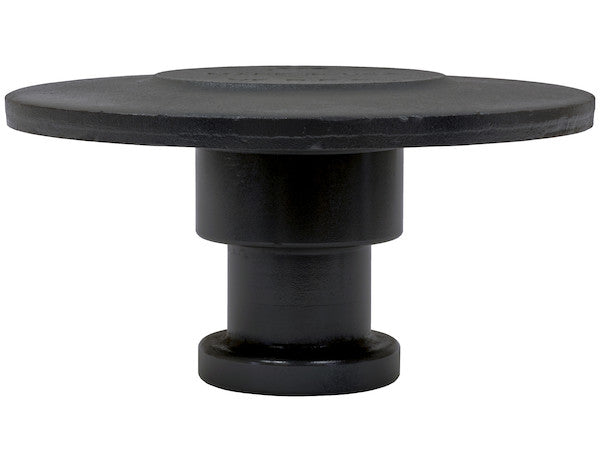
Trailer King Pins from Buyers Products provide strength and reliability in coupling your fifth wheel. They are forged from AISI 8630 steel and heat-treated to maintain a hardness of 302-363 BHN and 150,000 PSI in ultimate strength. They're available in several weldable bolster plate thicknesses. An 8 hole bolt-on version is also available.
Specifications
| Bolster Plate Thickness (in.) | 0.25 |
|---|---|
| Brinell Hardness | 302-363 BHN |
| Finish | Plain |
| Material | Forged Steel |
| Mount Type | Weld |
The 2 Inch Forged SAE Trailer King Pins with a 1/4 Inch Bolster Plate, engineered for weld-on installation, represent a pinnacle in heavy-duty trailer coupling technology. This component is not merely a pin; it is a critical safety and performance linchpin, meticulously designed and manufactured to withstand the most demanding operational stresses encountered in commercial transportation. Understanding the intricate engineering and material science behind this product underscores its unparalleled reliability and robust construction, making it an indispensable asset for various trailer applications.
At the core of any fifth-wheel coupling system lies the king pin, a component that serves as the mechanical interface between the tractor’s fifth wheel and the trailer. Its primary function is to transmit all longitudinal forces (acceleration, braking), lateral forces (cornering), and vertical forces (weight of the trailer and cargo) from the trailer to the tractor. A failure in the king pin can lead to catastrophic decoupling, resulting in severe accidents, cargo loss, and significant downtime. Consequently, the design, material selection, and manufacturing processes for king pins are subject to stringent industry standards and rigorous quality control protocols.
Adherence to SAE J848 Standard
The "SAE" designation in the product title signifies adherence to the standards set forth by the Society of Automotive Engineers, specifically SAE J848, which governs king pin dimensions and performance requirements. SAE J848 specifies critical dimensions such as the 2-inch diameter of the king pin, ensuring universal compatibility and interchangeability with all fifth wheels designed to this standard. This standardization is paramount for safety and efficiency across the transportation industry, preventing mismatches and guaranteeing reliable coupling. Compliance with SAE J848 is a testament to the product’s engineered precision and its ability to integrate seamlessly into existing heavy-duty transport ecosystems, providing users with the assurance of a globally recognized and approved component.
Superior Forged Construction
The choice of "forged steel" as the manufacturing method is a cornerstone of this king pin’s superior performance. Forging is a manufacturing process where metal is shaped through localized compressive forces using hammers or dies. Unlike casting, which involves pouring molten metal into a mold, or machining from bar stock, forging inherently enhances the material’s properties. The process refines the grain structure of the steel, aligning the grains along the lines of maximum stress. This results in a continuous grain flow that significantly increases the material’s strength, toughness, and fatigue resistance, particularly in critical areas where stress concentration is highest. Forged components are inherently stronger and more durable than their cast or machined counterparts, exhibiting superior resistance to impact, shock loads, and cyclic loading, which are ubiquitous in trailer operations. This means a king pin forged from steel will have a longer service life and a much higher safety margin under extreme conditions compared to alternatives.
Advanced Material Science: AISI 8630 Alloy Steel
The specified material, AISI 8630 alloy steel, is a crucial element contributing to the exceptional performance characteristics of these king pins. AISI 8630 is a low-alloy steel known for its excellent combination of strength, toughness, and hardenability. Its chemical composition typically includes:
- Carbon (C): 0.28-0.33% - Provides strength and hardness.
- Manganese (Mn): 0.70-0.90% - Enhances strength and hardenability, improves hot working properties.
- Silicon (Si): 0.15-0.35% - Deoxidizer, increases strength and hardenability.
- Nickel (Ni): 0.40-0.70% - Improves toughness and strength, especially at low temperatures.
- Chromium (Cr): 0.40-0.60% - Increases hardenability, wear resistance, and corrosion resistance.
- Molybdenum (Mo): 0.15-0.25% - Significantly improves hardenability, strength at elevated temperatures, and reduces temper embrittlement.
This precise alloying strategy renders AISI 8630 particularly suitable for applications requiring high surface hardness for wear resistance and a tough core to resist impact and fatigue. The nickel content contributes to toughness, while chromium and molybdenum enhance the steel's response to heat treatment, allowing for the desired through-hardening and consistent mechanical properties across the component’s cross-section. The selection of AISI 8630 is a deliberate engineering choice to ensure the king pin can withstand the dynamic, multi-directional forces and abrasive wear inherent in fifth-wheel coupling operations for extended periods without degradation.
Precision Heat Treatment: Optimizing Mechanical Properties
The performance of the AISI 8630 forged steel is further optimized through a meticulously controlled heat treatment process. Heat treatment involves a sequence of heating and cooling operations applied to the steel to modify its microstructure and, consequently, its mechanical properties. For these king pins, the goal is to achieve a specific balance of hardness, strength, and toughness. The stated properties are:
- Brinell Hardness (BHN): 302-363 BHN
- Ultimate Strength: 150,000 PSI (Pounds per Square Inch)
This range of Brinell Hardness (BHN) indicates a robust surface that is highly resistant to abrasive wear, which is critical in the constant rotational and sliding contact zone between the king pin and the fifth wheel’s jaws. A hardness of 302-363 BHN ensures that the pin will maintain its dimensional integrity and resist premature wear, thereby extending its service life and maintaining the integrity of the coupling. The heat treatment process typically involves austenitizing (heating the steel to a high temperature), quenching (rapid cooling to form martensite, a very hard microstructure), and then tempering (reheating to a lower temperature to improve toughness and ductility while reducing brittleness). This precise tempering operation is crucial in achieving the specific BHN range, ensuring that while the surface is hard, the core retains sufficient toughness to prevent brittle fracture under impact or sudden shock loads.
An ultimate tensile strength of 150,000 PSI signifies the maximum stress the material can withstand before fracturing. This high ultimate strength is vital for absorbing the immense pulling forces during acceleration, the compressive forces during braking, and the complex shear forces during cornering. It provides a substantial safety margin against failure, even under conditions of extreme load and dynamic stress. The combination of high hardness and high ultimate strength, achieved through optimized heat treatment of AISI 8630 forged steel, ensures that the king pin not only resists wear but also maintains its structural integrity under peak operational demands, safeguarding the entire trailer system.
Bolster Plate: Integral Structural Support
The inclusion of a 1/4 inch (0.25 inch) bolster plate is fundamental to the structural integrity and proper installation of this weld-on king pin. The bolster plate serves several critical functions:
- Load Distribution: It acts as a transitional element, distributing the concentrated forces from the king pin over a larger area of the trailer’s frame or sub-structure. This prevents localized stress concentrations that could lead to cracking or deformation in the trailer’s main structural members.
- Welding Surface: The bolster plate provides a robust and expansive surface for welding, facilitating a strong and reliable attachment to the trailer. Its thickness and material properties are optimized for effective fusion welding, ensuring that the connection is as strong as the components themselves.
- Structural Reinforcement: By integrating the king pin into a wider plate, the bolster plate effectively reinforces the front section of the trailer, enhancing its resistance to the various forces exerted by the tractor.
The precise 1/4 inch thickness is engineered to provide sufficient strength for load transfer while remaining compatible with standard welding practices and trailer frame designs. The selection of the correct bolster plate thickness is critical for ensuring proper load transfer and maintaining structural integrity throughout the life of the trailer.
Weld-On Installation: Permanent and Robust Attachment
The "weld-on" mount type is specifically chosen for applications requiring the most robust and permanent integration of the king pin into the trailer structure. This method of attachment offers several distinct advantages:
- Maximum Strength and Rigidity: Welding creates a metallurgical bond between the king pin's bolster plate and the trailer frame, effectively making them a single, monolithic structure. This eliminates any potential for movement, slippage, or bolt fatigue that might occur with a bolt-on system, providing superior rigidity and maximum load transfer efficiency.
- Custom Integration: Weld-on king pins offer greater flexibility in custom trailer fabrication or repairs, allowing for precise positioning and integration into unique frame designs.
- Reduced Maintenance: Once properly welded, the connection is permanent and typically requires less routine inspection for loosening compared to bolted connections.
However, weld-on installation requires skilled technicians and adherence to proper welding procedures. Considerations include:
- Pre-heat and Post-weld Treatment: Depending on the base material of the trailer frame, pre-heating the area to be welded might be necessary to prevent cracking and ensure proper fusion. Post-weld cooling control may also be important.
- Filler Material Selection: Appropriate welding electrodes or wire must be selected to be compatible with both the king pin's AISI 8630 bolster plate and the trailer's structural steel.
- Welding Technique: Certified welders employing appropriate techniques (e.g., shielded metal arc welding (SMAW), gas metal arc welding (GMAW)) are essential to achieve full penetration welds with minimal defects, ensuring the integrity of the connection.
- Inspection: Non-destructive testing methods, such as visual inspection, magnetic particle inspection, or ultrasonic testing, should be employed to verify the quality and integrity of the welds.
The secure, permanent connection provided by a properly executed weld-on installation ensures that the king pin performs optimally under the most strenuous operating conditions, directly contributing to the safety and longevity of the trailer system.
Durability, Longevity, and Plain Finish
The inherent durability of these king pins is a direct result of the synergistic combination of high-quality AISI 8630 forged steel, precision heat treatment, and robust design. These factors collectively contribute to an extended service life characterized by:
- Exceptional Wear Resistance: The high Brinell hardness prevents material loss in the critical contact areas.
- Superior Fatigue Life: The forged grain structure and controlled heat treatment significantly increase resistance to fatigue cracking caused by repetitive loading cycles.
- Impact Resistance: The balanced toughness of the AISI 8630 steel prevents brittle fracture under sudden impacts or shock loads.
The "Plain" finish implies that the king pin is supplied without any additional surface coating, such as paint or plating. This is a common practice for components that are designed to be welded, as coatings can interfere with the welding process and introduce contaminants. For the active surface of the king pin that engages the fifth wheel, lubrication (grease) applied during coupling protects against corrosion and further reduces wear. For exposed areas of the bolster plate post-welding, end-users typically apply appropriate protective coatings as part of the trailer’s finishing process to prevent atmospheric corrosion.
Quality Assurance and Applications
Buyers Products maintains a rigorous commitment to quality assurance throughout the manufacturing process, from raw material inspection to final product verification. Each king pin is subjected to stringent quality control measures to ensure it meets the specified dimensions, material properties, and mechanical performance requirements. This dedication to excellence ensures that every king pin delivered provides consistent, reliable, and safe performance in the field.
These 2-inch forged SAE trailer king pins with 1/4 inch bolster plates are suitable for a wide array of heavy-duty trailer applications, including:
- Commercial Semi-Trailers: Dry vans, refrigerated trailers, flatbeds, and curtain-side trailers used in general freight transport.
- Specialized Trailers: Lowboy trailers, heavy haul trailers, and other custom-built trailers requiring maximum strength and secure coupling for oversized or extremely heavy loads.
- Agricultural Trailers: Large agricultural equipment transport.
- Construction Trailers: Trailers for transporting excavators, bulldozers, and other heavy machinery.
Their robust construction makes them ideal for environments where reliability, safety, and longevity are paramount, minimizing the risk of costly failures and maximizing operational uptime.
Maintenance and Inspection Protocol
Even with superior engineering, regular maintenance and inspection are critical for ensuring the continued safe operation of the king pin and the entire fifth-wheel coupling system. A recommended protocol includes:
- Visual Inspection: Regularly inspect the king pin for signs of wear, deformation, cracks, gouges, or any other damage. Pay close attention to the area where the king pin contacts the fifth wheel jaws and the weld areas of the bolster plate.
- Lubrication: Ensure the fifth wheel’s contact surface and jaws are adequately greased to minimize friction and wear on the king pin.
- Bolster Plate and Frame Integrity: Inspect the bolster plate and the surrounding trailer frame for any signs of cracking, distortion, or weld failure. Early detection of these issues can prevent more severe structural damage.
- Dimensional Checks: Periodically, the king pin diameter should be checked for excessive wear, which could compromise the security of the coupling.
Adherence to these maintenance practices significantly contributes to the longevity and safe operation of the trailer, complementing the inherent durability of the Buyers Products king pin.
Conclusion
The 2 Inch Forged SAE Trailer King Pin with a 1/4 Inch Bolster Plate, designed for weld-on installation, stands as a testament to engineering excellence in heavy-duty components. Its foundation in SAE J848 standards, combined with the superior material properties of AISI 8630 forged steel and precise heat treatment to achieve a hardness of 302-363 BHN and an ultimate strength of 150,000 PSI, ensures unparalleled strength, durability, and resistance to the rigors of commercial hauling. The integrated 1/4 inch bolster plate facilitates robust weld-on attachment and effective load distribution, further enhancing the structural integrity of the trailer. This product is more than a mere coupling device; it is a critical safety component, meticulously engineered to provide maximum reliability, exceptional longevity, and peace of mind for operators in the demanding world of heavy-duty transportation. Choosing this king pin signifies an investment in safety, performance, and the uninterrupted operation of your fleet.