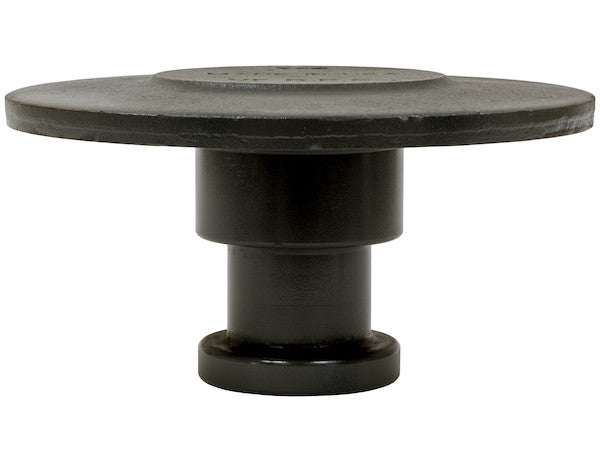
Trailer King Pins from Buyers Products provide strength and reliability in coupling your fifth wheel. They are forged from AISI 8630 steel and heat-treated to maintain a hardness of 302-363 BHN and 150,000 PSI in ultimate strength. They're available in several weldable bolster plate thicknesses. An 8 hole bolt-on version is also available.
Specifications
| Bolster Plate Thickness (in.) | 0.312 |
|---|---|
| Brinell Hardness | 302-363 BHN |
| Finish | Plain |
| Material | Forged Steel |
| Mount Type | Weld |
Advanced Engineering and Performance of the 2-Inch Forged SAE Trailer King Pin with 5/16-Inch Bolster Plate
In the demanding world of commercial trucking and heavy-duty transport, the reliability and structural integrity of every component are paramount. Central to the safe and efficient operation of any fifth wheel coupling system is the king pin. This document provides a comprehensive, technical exposition on the 2-inch Forged SAE Trailer King Pin with a 5/16-inch Bolster Plate, specifically designed for weld-on applications. This product represents the pinnacle of engineering for critical load-bearing components, ensuring unparalleled strength, durability, and compliance with industry standards.
The Critical Role of the King Pin in Fifth Wheel Coupling Systems
The king pin is the indispensable connection point that mechanically links a semi-trailer to the tractor's fifth wheel hitch. This seemingly simple component bears the entire dynamic and static load transfer between the two vehicles. It must withstand colossal forces, including vertical compression, longitudinal tension and compression during acceleration and braking, lateral shear forces during turning, and significant torsional stresses. Any compromise in the king pin's structural integrity or dimensional precision can lead to catastrophic failure, resulting in severe safety hazards, extensive downtime, and financial losses. Therefore, the selection of a king pin manufactured to exacting standards, like the one presented here, is not merely a choice but a critical operational imperative.
Material Science Excellence: AISI 8630 Forged Steel
The foundation of this king pin's superior performance lies in its material specification: AISI 8630 alloy steel, precisely shaped through a forging process. AISI 8630 is a low-alloy steel known for its excellent combination of toughness, strength, and hardenability, making it ideally suited for highly stressed parts requiring robust mechanical properties. Its chemical composition typically includes chromium, nickel, and molybdenum, which impart crucial characteristics:
- Chromium: Enhances hardenability and corrosion resistance.
- Nickel: Improves toughness, especially at low temperatures, and strength without sacrificing ductility.
- Molybdenum: Further increases hardenability and contributes to high-temperature strength and creep resistance.
The choice of AISI 8630 over other steel grades for this application is strategic, providing a balanced material profile that responds exceptionally well to heat treatment, yielding the desired mechanical properties necessary for a long service life under arduous conditions.
The Advantage of Forging: Enhanced Microstructure and Strength
The manufacturing process—forging—is pivotal to the king pin's inherent strength and reliability. Unlike casting or machining from rolled plate, forging involves plastically deforming the steel under immense pressure and heat. This process achieves several critical metallurgical benefits:
- Grain Flow Orientation: Forging refines and aligns the internal grain structure of the steel along the contours of the king pin. This directed grain flow significantly enhances the component's resistance to impact, fatigue, and shear forces in the directions of principal stress, which are precisely where they are needed most in a king pin application.
- Elimination of Internal Defects: The high pressure involved in forging closes up internal voids, porosity, and shrinkage defects that can be present in cast components. This results in a denser, more homogeneous material structure, eliminating potential weak points that could initiate cracks under stress.
- Improved Mechanical Properties: Forging inherently increases the tensile strength, yield strength, ductility, and fatigue resistance of the material. This creates a component that is not only stronger on paper but genuinely more robust in real-world operational scenarios.
The term "Forged Steel" is therefore not merely a descriptor but a guarantee of a superior material foundation, engineered for maximum performance and longevity.
Precision Heat Treatment: Achieving Optimal Hardness and Ultimate Strength
Following the forging process, each king pin undergoes a meticulously controlled heat treatment regimen. This critical secondary process further refines the microstructure of the AISI 8630 steel, enhancing its mechanical properties to meet stringent performance requirements. The heat treatment typically involves quenching and tempering:
- Quenching: The forged steel is heated to a specific austenitizing temperature and then rapidly cooled, usually in oil. This process transforms the steel's microstructure into a hard, brittle martensitic structure.
- Tempering: The quenched steel is then reheated to an intermediate temperature and held for a specified duration, followed by controlled cooling. Tempering reduces brittleness, increases toughness, and adjusts the hardness to the desired range, ensuring optimal balance between strength and ductility.
Through this precise heat treatment, our 2-inch king pins achieve a Brinell Hardness Number (BHN) of 302-363 and an ultimate tensile strength of 150,000 PSI (pounds per square inch). These values are critical for the king pin's performance:
- Hardness (302-363 BHN): This elevated hardness provides exceptional wear resistance, crucial for the surface that constantly pivots and slides within the fifth wheel plate. It ensures the king pin maintains its dimensional integrity over countless coupling and uncoupling cycles, extending its service life and minimizing wear on the fifth wheel.
- Ultimate Strength (150,000 PSI): This high ultimate tensile strength indicates the maximum stress the material can withstand before fracture. It provides a substantial safety margin against the extreme dynamic and static loads encountered in heavy-duty towing, preventing plastic deformation and catastrophic failure.
The combination of superior material, forging, and precise heat treatment results in a king pin that not only meets but often exceeds the rigorous demands of the most challenging transport applications.
Dimensional Compliance: The 2-Inch SAE Standard
The specification of a "2-inch SAE" king pin is fundamental to its interoperability and safety within the North American trucking industry. The Society of Automotive Engineers (SAE) J700 standard dictates the critical dimensions, tolerances, and performance requirements for king pins used in fifth wheel coupling systems. The 2-inch nominal diameter refers to the cylindrical portion of the king pin that engages with the fifth wheel's jaws. Adherence to this standard ensures:
- Universal Compatibility: Any tractor equipped with an SAE-compliant fifth wheel hitch can safely and securely couple with a trailer fitted with this 2-inch king pin. This standardization is vital for fleet operations and interchangeability of trailers.
- Optimized Engagement: The precise 2-inch diameter, coupled with specified tolerances, ensures a secure and minimal-play fit within the fifth wheel jaws. This reduces wear, minimizes stresses from excessive movement, and enhances the stability of the tractor-trailer combination.
- Safety: Compliance with SAE J700 is not merely a technical detail; it is a critical safety measure. It guarantees that the king pin's geometry and strength are designed to withstand the forces it will encounter, preventing accidental uncoupling or structural failure.
This product's strict adherence to SAE standards underscores its suitability for professional heavy-duty applications where safety and compatibility are non-negotiable.
The 5/16-Inch Bolster Plate: Structural Interface for Weld-On Applications
The integral 5/16-inch (0.312-inch) bolster plate is a critical design feature for the weld-on king pin. This plate serves multiple functions:
- Load Distribution: The bolster plate acts as a robust intermediary, distributing the immense forces transmitted through the king pin over a larger area of the trailer's fifth wheel plate. This prevents localized stress concentrations that could lead to cracking or deformation of the trailer's structural components.
- Welding Interface: It provides a strong, flat, and precisely dimensioned surface for welding the king pin assembly directly to the trailer's sub-frame or upper coupler plate. The 5/16-inch thickness is carefully selected to offer ample material for strong, deep-penetration welds without being excessively heavy or difficult to weld.
- Structural Reinforcement: The bolster plate itself contributes significantly to the overall structural integrity of the king pin assembly, forming a unified, rigid connection to the trailer.
Weld-On Mounting: Advantages and Best Practices
The "Weld On" mounting type for this king pin offers distinct advantages and specific considerations:
- Permanent and High-Strength Connection: Welding creates a metallurgical bond between the king pin bolster plate and the trailer's structural steel, resulting in an exceptionally strong and permanent connection. This method often provides higher load transfer capabilities than bolted connections, particularly in applications subject to severe dynamic loading and vibration.
- Custom Fit and Integration: Weld-on king pins allow for custom placement and seamless integration into the trailer's design, offering flexibility during manufacturing or repair when exact hole patterns for bolt-on versions may not be present or desired.
- Reduced Maintenance: Once properly welded, the connection is generally maintenance-free regarding tightening, unlike bolted connections which may require periodic torque checks.
However, successful weld-on installation requires adherence to stringent best practices:
- Qualified Welders: All welding should be performed by certified welders proficient in heavy structural welding, particularly with alloy steels.
- Proper Welding Procedures: Specific welding procedures (e.g., GMAW, SMAW) with appropriate filler metals compatible with AISI 8630 and the trailer’s structural steel must be followed. Preheat and post-weld heat treatment (or controlled cooling) may be necessary to prevent hydrogen embrittlement and achieve optimal weldment properties.
- Surface Preparation: The welding surfaces on both the bolster plate and the trailer structure must be thoroughly cleaned, free of rust, paint, oil, and other contaminants to ensure full penetration and sound welds.
- Fit-Up and Alignment: Accurate positioning and alignment of the king pin are crucial before welding to ensure proper engagement with the fifth wheel and to prevent undue stress during operation.
- Inspection: Post-weld inspection, including visual inspection for weld quality, proper bead profile, and freedom from defects, is essential. Non-destructive testing methods (e.g., magnetic particle inspection) can be employed for critical applications to verify internal soundness of welds.
When these practices are observed, the weld-on king pin provides an exceptionally robust and reliable trailer connection.
Performance and Durability in Demanding Environments
The design and material specifications of this 2-inch Forged SAE King Pin are optimized for sustained performance in the most arduous operating conditions. It is engineered to withstand:
- Dynamic Loading: Continuous cycles of acceleration, braking, and turning impose significant dynamic forces. The high fatigue resistance of the heat-treated AISI 8630 forged steel ensures the king pin endures these cycles without developing fatigue cracks.
- Impact Resistance: Accidental impacts or sudden loading events are handled effectively due to the material's inherent toughness and ductility.
- Environmental Factors: While the plain finish requires protection in corrosive environments, the underlying steel and its robust mechanical properties are resilient to temperature fluctuations, vibrations, and road shock inherent to heavy transport.
- Wear Resistance: The precise hardness range ensures optimal wear characteristics against the mating surfaces of the fifth wheel, minimizing friction and extending the life of both components.
Quality Assurance and Manufacturing Excellence
Buyers Products maintains stringent quality control protocols throughout the manufacturing process of these king pins. From the selection of raw AISI 8630 steel to the final heat treatment and dimensional verification, every step is carefully monitored. This commitment to quality ensures that each king pin meets the specified mechanical properties, dimensional tolerances, and surface finish requirements. Manufacturers are expected to adhere to ISO 9001 certified quality management systems, ensuring consistent product excellence and traceability of materials and processes. Regular testing, including hardness checks (Brinell), tensile strength verification, and dimensional inspections, confirms that every king pin delivered is ready for its critical role.
Installation, Inspection, and Maintenance for Longevity
Proper installation and ongoing maintenance are vital to maximizing the service life and safety of the king pin. Beyond the welding best practices previously mentioned, operators should:
- Regular Inspection: Conduct routine visual inspections of the king pin and its surrounding bolster plate and welds. Look for signs of wear, pitting, grooving, cracking, or deformation. Any anomaly should prompt immediate investigation and necessary repairs or replacement.
- Fifth Wheel Maintenance: Ensure the fifth wheel coupling is properly lubricated, adjusted, and free of excessive wear. A well-maintained fifth wheel reduces undue stress and wear on the king pin.
- Awareness of Wear Limits: King pins, like all wear parts, have a service life. While designed for extreme durability, prolonged use under severe conditions will eventually lead to wear. Consult industry guidelines and manufacturers’ recommendations for wear limits and replacement criteria.
Proactive maintenance and timely replacement of worn components are essential for maintaining operational safety and preventing costly breakdowns.
Conclusion: Uncompromising Reliability for Heavy-Duty Transport
The 2-inch Forged SAE Trailer King Pin with a 5/16-inch Bolster Plate for weld-on applications from Buyers Products stands as an exemplary component for the heavy-duty trucking industry. Its meticulous design, premium AISI 8630 forged steel construction, precision heat treatment to achieve superior hardness and ultimate strength, and strict adherence to SAE standards collectively deliver a product of uncompromising reliability. This king pin is engineered not just to connect a trailer to a tractor, but to ensure the safety, efficiency, and longevity of the entire transport operation. For those demanding the highest levels of performance and security in their fifth wheel coupling systems, this technically superior king pin offers an intelligent and durable solution, minimizing downtime and maximizing operational integrity under the most rigorous conditions.