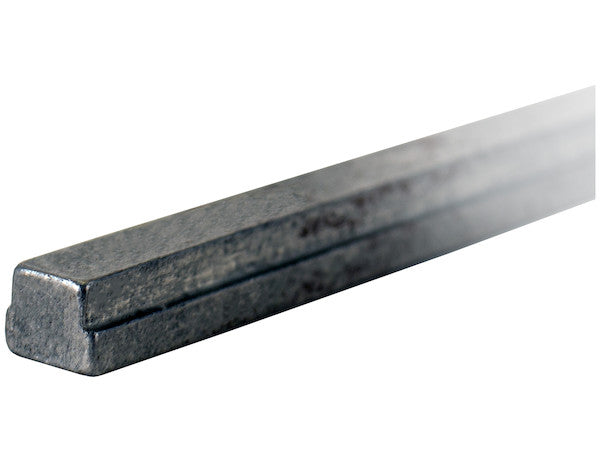
Specifications
| Finish | Plain |
|---|---|
| Key Length | 12.000 |
| Key Size (Width) | 0.375 |
| Key Type | Step |
| Material | Carbon Steel |
| Step Key Small Width | 0.312 |
Precision Engineering: An In-Depth Examination of the Step Key Stock 5/16 x 3/8 x 12 Inch
In the vast landscape of mechanical power transmission, components of seemingly modest stature often bear disproportionately critical responsibilities. Among these, key stock stands as a foundational element, ensuring the synchronous rotation and efficient torque transfer between shafts and their coupled components. The Step Key Stock, specifically in its 5/16 x 3/8 x 12 inch configuration, represents a specialized solution engineered to address unique challenges in industrial applications, offering robust performance and critical adaptability. This detailed technical description will delve into the intrinsic properties, design advantages, material science, and diverse applications of this particular key stock, underscoring its indispensable role in maintaining operational integrity and efficiency across numerous sectors.
Fundamental Principles of Keyed Connections in Mechanical Systems
A keyed connection is a positive displacement coupling mechanism designed to prevent relative rotation between a shaft and a rotating machine element, such as a gear, pulley, sprocket, or coupling half. This connection relies on a precisely machined key, inserted into corresponding grooves (keyways) in both the shaft and the hub of the rotating component. When torque is applied to the shaft, the key transmits this rotational force to the hub through shear stress across its cross-section and compressive stress against the keyway walls. The efficacy and longevity of such a connection are directly proportional to the key's material strength, dimensional accuracy, and the quality of the fit within its keyways.
While various key types exist—including square, rectangular, gib head, taper, and Woodruff keys—each serves distinct purposes. Standard square or rectangular keys are ubiquitous for their simplicity and effectiveness in transmitting unidirectional or reversing torque. However, certain applications present scenarios where a uniform key width is insufficient or impractical. This is precisely where the specialized design of a step key, like the 5/16 x 3/8 x 12 inch model, demonstrates its engineering superiority by accommodating varying keyway dimensions within a single component, often simplifying assembly, repair, or adaptation challenges.
Unpacking the Step Key Design: Dimensional Specifications and Functional Significance
The nomenclature "Step Key Stock 5/16 x 3/8 x 12 Inch" precisely defines the physical attributes and intended application of this product. Let us dissect these dimensions and their mechanical implications:
- Length: 12.000 inches (1 foot) The generous 12-inch length provides significant versatility. Key stock is typically supplied in longer lengths, allowing the end-user to cut it to the exact required dimension for their specific application. This mitigates waste and offers flexibility for a wide range of keyway lengths. The precision of this length ensures that, even after multiple cuts, sufficient material remains for various projects, emphasizing its utility as a bulk stock item.
- Step Key Small Width: 5/16 inch (0.312 inches) This dimension refers to the narrower section of the step key. The 5/16-inch (0.312") width is engineered to fit into a correspondingly smaller keyway, typically found on the shaft. This precise sizing is crucial for establishing the initial mechanical engagement and ensuring a secure fit without excessive play.
- Key Size (Width - larger part): 3/8 inch (0.375 inches) This represents the wider section of the step key, which typically engages with the keyway of the hub or mating component. The 3/8-inch (0.375") width allows for a larger contact area within the hub, which can be critical for transmitting higher torque or accommodating a worn or oversized hub keyway.
The "step" feature itself is the defining characteristic. Instead of a uniform cross-section, this key transitions from a 5/16-inch width to a 3/8-inch width along its length. This asymmetrical design is not merely an aesthetic choice but a highly functional engineering solution. Its primary applications include:
- Repair of Worn Keyways: Over extended periods of operation, particularly under conditions of shock loading, misalignment, or inadequate fit, keyways can become damaged or widened through fretting, crushing, or shearing. A step key provides an elegant solution by allowing the narrower end (5/16") to fit into the original (or slightly re-machined) shaft keyway, while the wider end (3/8") can engage with a hub keyway that has been re-machined to a larger, uniform size, thereby restoring the integrity of the connection without replacing expensive shaft or hub components.
- Accommodation of Mismatched Keyways: In certain assembly scenarios, particularly when combining components from different manufacturers or generations, the keyway dimensions of the shaft and hub may not perfectly align. A step key acts as a transition piece, effectively coupling components with differing keyway widths, streamlining assembly and minimizing custom fabrication.
- Axial Positioning and Anti-Walk Features: The step itself can act as an axial stop or a shoulder, preventing unintentional axial movement of the key within one of the keyways. This design can be leveraged to ensure precise positioning of the key relative to a specific component or to prevent the key from "walking out" under dynamic operating conditions.
The precision in these dimensions (0.312" and 0.375") is paramount. Deviations, even marginal ones, can lead to poor fit, localized stress concentrations, premature wear, and eventual failure of the keyed connection. Therefore, this key stock is manufactured to stringent dimensional tolerances, ensuring reliable performance upon installation.
Material Science: The Robustness of Carbon Steel in Key Stock Applications
The material specified for this Step Key Stock is Carbon Steel. This choice is deliberate and rooted in the fundamental requirements for mechanical keys: high strength, excellent shear resistance, and good machinability. Carbon steel, broadly defined, is an alloy of iron and carbon, with varying small amounts of other elements. The mechanical properties of carbon steel are significantly influenced by its carbon content and subsequent thermal or mechanical processing.
For key stock applications, low to medium carbon steels are typically employed. While specific grades are not detailed (e.g., AISI 1018, 1045), a general discussion of carbon steel properties is pertinent:
- High Shear Strength: Keys transmit torque primarily through shear. Carbon steel exhibits excellent shear strength, resisting the tendency to deform plastically or fracture under the tangential forces exerted during power transmission.
- Good Hardness and Wear Resistance: The carbon content contributes to the steel's hardness, which is crucial for resisting abrasive wear and localized crushing forces within the keyways. A harder key will maintain its dimensional integrity longer, reducing play and extending the life of the connection.
- Ductility and Toughness: While hard, key stock must also possess sufficient ductility to absorb shock loads without brittle fracture. Carbon steel offers a balance of hardness and toughness, preventing catastrophic failure under dynamic loading conditions.
- Machinability: Keys often require cutting to length and sometimes minor fitting. Carbon steel is highly machinable, allowing for precise cutting and filing with standard workshop tools, which is advantageous for customization and field repairs.
- Cost-Effectiveness: Carbon steel is one of the most widely produced and cost-effective engineering materials. Its widespread availability and ease of processing make it an economical choice for key stock, enabling manufacturers to provide high-quality products at competitive prices without compromising performance.
- Fatigue Resistance: In applications involving cyclic loading, fatigue resistance is critical. Properly selected and manufactured carbon steel key stock can withstand millions of load cycles, provided the connection is correctly designed and installed to minimize stress concentrations.
The "Carbon Steel" designation implies a robust and reliable material engineered to withstand the demanding operational stresses inherent in keyed mechanical connections. Its inherent properties make it an ideal choice for ensuring dependable torque transmission and long service life.
The Plain Finish: Practicality and Performance
This Step Key Stock is supplied with a "Plain" finish. A plain finish, in the context of metal products, means the material is supplied without any additional surface coatings, plating, or treatments beyond its primary manufacturing process (e.g., cold drawing or hot rolling). This finish offers several practical and performance-related advantages:
- Cost Efficiency: Eliminating secondary finishing operations reduces manufacturing costs, translating into a more economical product for the end-user.
- Versatility for Secondary Processing: A plain finish provides a clean, unadulterated surface ready for a variety of post-purchase treatments. Users can apply their own protective coatings (e.g., paint, lacquer, rust preventative oils) tailored to their specific environmental requirements, or opt for specialized platings (e.g., zinc, chrome, nickel) if enhanced corrosion resistance or aesthetic properties are desired. Heat treatment by the end-user for increased surface hardness in specific applications is also more feasible with a plain finish.
- Direct Material Contact: For critical fits, a plain finish ensures direct metal-to-metal contact, which can be advantageous for maintaining precise tolerances and maximizing frictional engagement (in cases of interference fits) or minimizing clearance.
- Ease of Machining/Fitting: The absence of a hard surface coating simplifies any required filing, grinding, or re-machining during installation, allowing for easier fine-tuning of the fit.
While a plain finish is cost-effective and versatile, it's important to note that carbon steel, in its untreated state, is susceptible to oxidation and corrosion, especially in humid or aggressive chemical environments. Therefore, for applications exposed to such conditions, proper lubrication or the application of a suitable protective coating by the user is recommended to ensure long-term integrity and prevent rust formation that could impede future disassembly or compromise performance.
Advanced Applications and Industry Relevance
The Step Key Stock 5/16 x 3/8 x 12 Inch finds its utility across a broad spectrum of industrial and mechanical applications where reliable torque transmission and component integration are paramount. Its unique stepped geometry makes it particularly valuable in scenarios beyond the scope of conventional keys:
- Industrial Machinery: Essential in gearboxes, pumps, compressors, conveyor systems, and agitators where shafts and hubs with varying keyway widths need to be reliably coupled. It's often used in maintenance departments for repairing older equipment where replacement shafts or hubs might have slightly different keyway dimensions from the original.
- Agricultural Equipment: Tractors, harvesters, and various implements frequently utilize keyed connections. Step keys can be crucial for coupling power take-off (PTO) shafts to implements, especially in scenarios involving legacy equipment or custom modifications.
- Machine Tools: Lathes, milling machines, and drill presses rely on precise power transmission for their spindles and feed mechanisms. A step key can be invaluable for coupling components, particularly when custom tooling or rebuilt assemblies are involved.
- Power Generation and Distribution: In power plants, substations, and other energy infrastructure, the integrity of rotating machinery is non-negotiable. Step keys might be employed in generators, turbines, or associated auxiliary equipment where robust and adaptable keying solutions are required.
- Marine Applications: Within shipbuilding and marine maintenance, equipment often endures harsh, corrosive environments. While the plain finish may require user-applied protection, the mechanical adaptability of the step key is highly valued for coupling propeller shafts, pump impellers, and auxiliary machinery.
- HVAC Systems: Large industrial heating, ventilation, and air conditioning units often contain complex drive systems. Step keys can facilitate the integration of motors, blowers, and pumps, especially during repairs or upgrades where original specifications may not perfectly match replacement parts.
- Mining and Construction Equipment: Heavy-duty excavators, loaders, and crushing equipment operate under extreme conditions. The robust carbon steel construction of this key stock, combined with its adaptable step design, makes it suitable for critical drive components where durability and repair flexibility are key.
Beyond these industries, the fundamental advantage of the step key – its ability to bridge dimensional discrepancies – makes it a go-to solution for engineering shops, custom fabricators, and repair facilities that encounter a diverse range of shaft and hub keyway configurations on a daily basis. It offers a practical and cost-effective alternative to costly re-machining of original components or custom fabrication of unique keys.
Installation, Fit, and Performance Optimization
Optimal performance of a keyed connection hinges not only on the quality of the key stock but also critically on the precision of its installation and the fit between the key and its keyways. For the Step Key Stock 5/16 x 3/8 x 12 Inch, meticulous attention to detail during assembly is paramount:
- Keyway Tolerances: Both the shaft and hub keyways must be machined to appropriate tolerances. Typically, keyways are specified with either a sliding fit (for easy assembly and disassembly) or a transition fit (a slight interference fit providing a more secure connection). For heavy-duty or shock-loaded applications, an interference fit may be preferred, ensuring maximum contact and minimizing backlash. The specific 5/16" and 3/8" widths of this step key demand that the corresponding keyways are accurately sized to prevent excessive clearance, which can lead to fretting corrosion, pounding, and premature key failure, or too tight an interference, which can damage components during assembly.
- Surface Finish of Keyways: A smooth, well-machined surface on the keyway walls is essential. Rough surfaces can lead to stress concentrations, accelerate wear, and impede proper key seating.
- Key Seating: The key must seat firmly at the bottom of the keyway, ensuring that the primary contact stresses are distributed evenly across the side faces of the key. If the key "rocks" or makes primary contact at its top or bottom surfaces, it indicates an improper fit, leading to concentrated loads and potential failure.
- Material Hardness Relationship: Ideally, the key material (carbon steel) should be slightly softer than the shaft and hub materials to act as a sacrificial element. This ensures that in the event of an overload, the relatively inexpensive key shears or deforms before the more costly shaft or hub components are damaged. However, the carbon steel used for key stock is selected for sufficient hardness to prevent crushing under normal operating loads.
- Prevention of Fretting Corrosion: This phenomenon occurs when minute relative motion between contacting surfaces leads to abrasive wear and oxidation. A precise fit, proper lubrication, and adequate loading that prevents relative movement are crucial for mitigating fretting corrosion in keyed connections.
- Lubrication: While key stock primarily relies on positive mechanical engagement, a thin layer of anti-seize compound or grease during installation can facilitate assembly, protect against corrosion, and minimize galling, especially for interference fits.
- Stress Concentrations: Sharp corners at the base of keyways or inadequate chamfers on the key itself can create stress concentration points, significantly reducing the fatigue life of the shaft and key. Proper radii in the keyway corners and appropriate edge treatment on the key stock are critical for distributing stresses evenly.
Adherence to established engineering standards (such as ASME B17.1 for keys and keyways, even if not explicitly certified for this specific product, implies best practices) in both key stock manufacturing and keyway machining is fundamental for achieving a robust and reliable keyed connection with this Step Key Stock.
Quality Assurance and Manufacturing Excellence
The manufacturing process of key stock, including this 5/16 x 3/8 x 12 inch Step Key Stock, is designed to ensure stringent dimensional accuracy, material integrity, and consistent mechanical properties. High-quality key stock is typically produced through processes such as cold drawing or precision machining:
- Cold Drawing: This process involves pulling hot-rolled steel bars through a die at room temperature. Cold drawing imparts several benefits: it improves dimensional accuracy and surface finish, increases tensile and yield strength, and enhances machinability. This results in key stock with tighter tolerances on its critical dimensions (width and height), which is essential for proper fit.
- Precision Machining: For specialized profiles like step keys, precision machining (milling or grinding) is often employed to achieve the distinct step geometry and maintain precise control over the two different widths (0.312" and 0.375").
- Dimensional Tolerances: Quality key stock adheres to very tight dimensional tolerances, often within a few thousandths of an inch (e.g., +/- 0.002 inches on width and height). This precision is non-negotiable for proper fit and torque transmission.
- Straightness and Flatness: The key stock must be consistently straight and flat along its 12-inch length to ensure uniform contact within the keyways and prevent bending stresses.
- Material Traceability and Certification: Reputable manufacturers provide material certifications, assuring that the carbon steel meets specified chemical compositions and mechanical properties. This traceability is crucial for critical applications where material integrity must be verified.
- Surface Quality: A smooth, clean surface free from defects, burrs, or decarburization (a loss of carbon from the surface during heat treatment, which can reduce surface hardness) is vital for minimizing stress concentrations and ensuring reliable performance.
By investing in high-quality key stock, engineers and maintenance professionals minimize the risks associated with component failure, reduce downtime, and ensure the long-term operational efficiency of their machinery.
Lifecycle Considerations: Maintenance, Longevity, and Economic Value
The operational lifespan of a keyed connection is a function of numerous variables, including the quality of the key stock, the precision of installation, the magnitude and nature of transmitted loads, the operating environment, and the frequency of maintenance. While the Step Key Stock 5/16 x 3/8 x 12 Inch is designed for durability, proactive measures can significantly extend its service life and optimize its economic value:
- Load Management: Operating within the design torque limits is crucial. Overloading can lead to plastic deformation or shear failure of the key, or crushing of the keyway walls.
- Environmental Protection: As a plain carbon steel product, it is susceptible to corrosion. In corrosive or humid environments, ensuring that the keyway area is adequately sealed and lubricated, or applying a suitable protective coating, is essential to prevent rust that could compromise the connection's integrity or hinder disassembly.
- Vibration and Shock: Applications with high vibration or repetitive shock loads can accelerate wear and induce fatigue. Proper design of the keyway fit and periodic inspection are vital in such environments.
- Routine Inspection: Regular visual inspection of keyed connections during scheduled maintenance can help identify early signs of wear, fretting, or cracking. Addressing these issues promptly can prevent more extensive damage to shafts and hubs.
- Lubrication: While keys are not continuously lubricated like bearings, proper lubrication during assembly (e.g., using anti-seize compounds) can facilitate smoother installation and provide initial protection against galling and corrosion.
- Economic Value: The economic benefit of using high-quality, precision-engineered key stock like this 5/16 x 3/8 x 12 inch Step Key is substantial. By providing a reliable and adaptable connection, it reduces the likelihood of costly downtime, minimizes the need for expensive shaft or hub replacements through its repair capabilities, and contributes to the overall longevity and efficiency of mechanical systems. Stocking this versatile key stock also allows for rapid repairs, further reducing operational interruptions and associated costs.
Conclusion: The Unwavering Reliability of the Step Key Stock 5/16 x 3/8 x 12 Inch
The Step Key Stock 5/16 x 3/8 x 12 Inch is far more than a simple metallic component; it is a meticulously engineered solution designed to meet demanding challenges in mechanical power transmission. Its unique stepped geometry, precisely dimensioned at 5/16 inch and 3/8 inch widths, provides unparalleled adaptability for repairing worn keyways, bridging mismatched component specifications, and ensuring secure axial positioning. Fabricated from robust carbon steel and offered with a versatile plain finish, this key stock embodies the critical balance of strength, machinability, and cost-effectiveness essential for industrial applications.
From heavy industrial machinery and agricultural equipment to precision machine tools and critical power generation systems, this step key stock serves as an indispensable link, guaranteeing synchronous rotation and efficient torque transfer. Its adherence to high manufacturing standards ensures dimensional accuracy and material integrity, while its inherent design mitigates common challenges associated with keyed connections. By specifying and utilizing this premium Step Key Stock, engineers and maintenance professionals are investing in reliability, minimizing downtime, and securing the long-term operational efficiency and structural integrity of their vital mechanical assets. It stands as a testament to the enduring importance of precision components in the seamless functioning of modern industrial infrastructure.