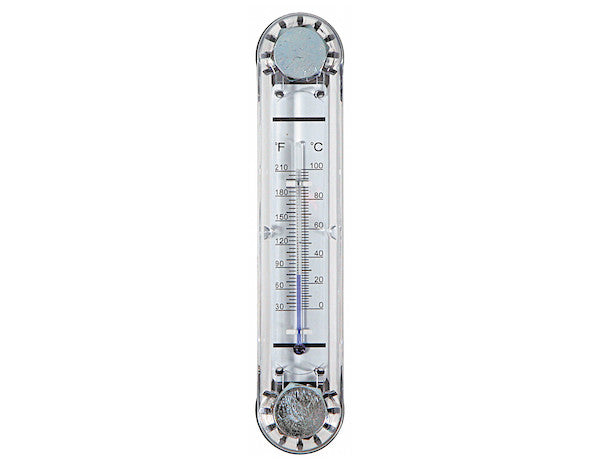
The Oil Level Gauge With Temperature Indicator from Buyers Products helps protect your hydraulic system from damage caused by low fluid or overheating. This handy sight gauge features a polycarbonate body and window for quick assessment.
Specifications
| Mount Center to Center | 5 |
|---|---|
| Mount Thread | 1/2-13 |
| Style | Level Gauge |
| Temperature Indicator | Yes |
In modern industrial and mobile hydraulic systems, the sustained operational efficiency and longevity of critical components hinge on meticulous fluid management and thermal control. The Oil Level Gauge With Temperature Sight Gauge from Buyers Products represents a fundamental yet highly effective instrument engineered to provide essential real-time diagnostic data. This robust component integrates two vital monitoring functions—fluid level assessment and temperature indication—into a single, easily interpretable unit, thereby offering a crucial layer of protection against common hydraulic system failures stemming from inadequate fluid volume or thermal excursions.
Hydraulic systems are complex energy transfer mechanisms reliant on the incompressible nature of fluid to transmit force and motion. Any deviation from optimal operating parameters, particularly concerning fluid level and temperature, can precipitate a cascade of detrimental effects, leading to premature component wear, diminished performance, and ultimately, catastrophic system failure. Proactive monitoring, facilitated by reliable instruments like this sight gauge, is not merely a best practice; it is an economic imperative, safeguarding significant capital investments in machinery and mitigating costly unscheduled downtime.
Criticality of Hydraulic Fluid Level and Temperature
The Dangers of Insufficient Fluid Level
An insufficient hydraulic fluid level within the reservoir poses severe risks to the entire system. When the fluid level drops below the minimum operational threshold, several critical issues can arise. Foremost among these is pump cavitation, a phenomenon where air pockets form and collapse within the pump's inlet, leading to extreme pressure surges, noise, and rapid internal erosion of pump components. This not only significantly reduces pump efficiency and output but also contaminates the fluid with metallic particles, accelerating wear throughout the entire system. Low fluid levels can also lead to inadequate heat dissipation, as the reservoir acts as a primary cooling component, and can expose critical components, such as suction filters, to air ingestion, further compromising system integrity and operational safety.
The Perils of Overheating
Conversely, excessive hydraulic fluid temperature is equally, if not more, destructive. Hydraulic fluids are carefully formulated with specific viscosity characteristics and an array of additives that optimize their performance across a defined temperature range. When fluid temperatures exceed recommended limits, the fluid's viscosity decreases, reducing its lubricating properties and increasing internal leakage, which diminishes system efficiency and increases heat generation in a vicious cycle. Prolonged exposure to high temperatures accelerates the oxidation of the fluid, leading to the formation of sludge, varnish, and acidic by-products that attack seals, hoses, and metal components. This chemical degradation consumes critical additives, reduces the fluid's effective lifespan, and necessitates premature fluid replacement, incurring significant operational costs and environmental impact.
Technical Deep Dive: The Integrated Monitoring Solution
The Oil Level Sight Gauge Mechanism
The core of this product's level monitoring capability lies in its simple yet effective sight gauge design. This transparent window, typically installed on the side of the hydraulic reservoir, allows for direct, visual inspection of the fluid level. The principle is straightforward: the fluid inside the reservoir rises to an equilibrium height, which is then visibly represented within the gauge's window. This method provides immediate, unambiguous feedback to operators and maintenance personnel without requiring complex electrical sensors or digital readouts. For many applications, particularly those requiring robust, low-maintenance solutions, visual sight gauges offer unparalleled reliability and ease of use, making them a cornerstone of preventative maintenance strategies.
Advanced Polycarbonate Construction
A pivotal feature highlighted in the product's description is the utilization of a polycarbonate body and window. Polycarbonate is a high-performance thermoplastic polymer known for its exceptional properties, making it an ideal material for hydraulic system components. Its primary advantage is its outstanding impact resistance, rendering it virtually unbreakable under typical operating conditions, significantly outperforming traditional glass or less robust plastics. This durability ensures the gauge can withstand mechanical shocks and vibrations inherent in industrial and mobile applications. Furthermore, polycarbonate offers excellent optical clarity, ensuring an unobstructed view of the fluid level and color, which can be an indicator of fluid contamination. Its resistance to a wide range of hydraulic fluids and chemicals, coupled with good thermal stability, ensures the gauge maintains its integrity and functionality over its operational lifespan, even when exposed to varying environmental and system conditions.
Precision Temperature Indication
The integrated temperature indicator is a critical enhancement to the basic level gauge, providing a comprehensive diagnostic tool. While the exact mechanism of the temperature indicator (e.g., bimetallic strip, liquid-in-glass thermometer) is not specified, its purpose is universally to display the fluid's current temperature. Typically, these indicators are calibrated to provide accurate readings within the common operating range of hydraulic systems. This immediate temperature feedback allows operators to quickly ascertain if the system is running within its specified thermal parameters or if there is an incipient overheating condition. Early detection of temperature anomalies can prompt investigations into potential issues such such as clogged coolers, malfunctioning relief valves, or excessive system load, enabling corrective action before significant damage occurs.
Mechanical Specifications and Installation Guidelines
Mount Center to Center: 5 Inches
The "Mount Center to Center: 5 inches" specification refers to the precise distance between the mounting bolts or threaded connections that secure the gauge to the hydraulic reservoir. This dimension is crucial for ensuring compatibility with existing reservoir designs and for facilitating standardized installation in new equipment. A common center-to-center measurement like 5 inches often aligns with industry standards for visual level gauges, allowing for straightforward replacement or integration into a wide array of hydraulic power units and machinery. Accurate adherence to this specification during manufacturing ensures proper alignment, a secure seal, and ease of installation for technicians, minimizing potential for leaks or improper seating.
Mount Thread: 1/2-13
The "Mount Thread: 1/2-13" specification denotes the type and size of the threaded connection used to secure the sight gauge to the reservoir. "1/2" refers to the nominal diameter of the bolt or threaded hole in inches, while "13" indicates 13 threads per inch (TPI). This is a standard Unified National Coarse (UNC) thread size, widely adopted in North American industrial applications for its strength and ease of assembly. The choice of a robust thread like 1/2-13 ensures a secure mechanical attachment capable of withstanding operational vibrations and pressures without loosening. Proper installation requires mating this thread with a corresponding tapped hole in the reservoir, typically using appropriate thread sealant (e.g., PTFE tape or liquid sealant) to ensure a leak-free connection and prevent fluid egress.
Installation Best Practices
For optimal performance and longevity, the installation of the Oil Level Gauge With Temperature Sight Gauge must adhere to best practices. Prior to installation, ensure the reservoir port is clean, free of burrs, and correctly tapped to match the 1/2-13 thread. Apply a suitable hydraulic-compatible thread sealant to the gauge's mounting threads to create a hermetic seal, preventing both fluid leaks and air ingress. Care should be taken not to overtighten the gauge, as excessive torque can damage the threads on either the gauge or the reservoir, or compromise the polycarbonate body. The gauge should be oriented to provide a clear, unobstructed view of both the fluid level and the temperature indicator under normal operating conditions. After installation, a system leak check should be performed to confirm the integrity of the seal, and initial readings should be recorded to establish a baseline for future monitoring.
Strategic Benefits and Diverse Applications
Enhancing Preventative Maintenance and System Reliability
The integration of an oil level gauge with a temperature indicator is a cornerstone of effective preventative maintenance. By providing readily available visual data, it enables operators and maintenance personnel to conduct quick, routine checks without the need for specialized tools or system shutdowns. Consistent monitoring allows for early identification of potential issues, such as a gradual drop in fluid level indicating a leak, or an abnormal temperature spike signaling a cooling system malfunction or excessive load. This proactive approach significantly reduces the likelihood of unexpected breakdowns, transforming reactive repairs into scheduled maintenance and thereby maximizing equipment uptime and operational reliability.
Optimizing Performance and Extending Component Lifespan
Maintaining hydraulic fluid within optimal level and temperature ranges directly translates to sustained system performance and an extended lifespan for expensive components. Correct fluid levels ensure adequate lubrication and prevent cavitation, safeguarding pumps, motors, and cylinders from premature wear. Proper thermal management prevents fluid degradation, preserving the integrity of seals, hoses, and internal metallic surfaces. By allowing precise control over these parameters, the Oil Level Gauge With Temperature Sight Gauge ensures that hydraulic machinery operates at its peak efficiency, minimizes energy waste due to fluid shear and friction, and ultimately defers the need for costly component replacements and major overhauls.
Cost Savings and Return on Investment
The initial investment in a high-quality monitoring component like this sight gauge yields substantial long-term cost savings. By preventing catastrophic failures and extending the service life of hydraulic fluid and components, it dramatically reduces expenditures on replacement parts, labor for emergency repairs, and disposal of degraded fluid. Furthermore, by minimizing downtime, it protects revenue generation in production environments where equipment availability is critical. The return on investment (ROI) is realized through enhanced operational efficiency, reduced maintenance overheads, and increased asset utilization, making it an indispensable component for any responsible hydraulic system owner or operator.
Applications Across Industries
The versatility and robustness of this Oil Level Gauge With Temperature Sight Gauge make it suitable for a vast array of hydraulic applications across numerous industries. In mobile hydraulics, it is vital for construction equipment (excavators, loaders), agricultural machinery (tractors, harvesters), forestry equipment, and refuse vehicles, where systems operate under dynamic conditions and often in harsh environments. For industrial applications, it is an essential component for hydraulic power units driving presses, injection molding machines, machine tools, and automation systems, ensuring continuous, reliable operation in manufacturing and processing plants. Its simple, durable design makes it ideal for situations where sophisticated electronic sensors might be overkill or impractical, providing reliable visual monitoring in diverse operational contexts.
Hydraulic Fluid Dynamics and Thermal Management
The Intricacies of Hydraulic Fluid Properties
Hydraulic fluid is not merely a medium for power transmission; it is a complex engineering component performing multiple functions: transmitting power, lubricating moving parts, sealing clearances, and transferring heat. Its viscosity is a critical property, defining its resistance to flow and directly impacting its ability to lubricate and create hydrodynamic films. Both excessively high and low temperatures detrimentally affect viscosity, compromising its fundamental roles. Low temperatures can lead to sluggish operation and poor pumpability, while high temperatures thin the fluid, reducing its film strength and increasing internal leakage, leading to reduced efficiency and increased wear.
Thermal Degradation and Fluid Life Extension
The chemical stability of hydraulic fluid is profoundly influenced by temperature. Elevated temperatures accelerate oxidation, a process where oxygen reacts with hydrocarbons in the fluid, producing harmful acids, sludge, and varnish. These by-products attack seals, clog filters, and corrode metal surfaces, severely shortening the fluid's useful life and leading to component damage. The additives blended into hydraulic fluids (e.g., anti-wear agents, rust inhibitors, anti-foaming agents) also degrade more rapidly at higher temperatures. By providing a clear temperature indication, this sight gauge enables operators to maintain the fluid within its optimal thermal window, significantly extending the fluid's service intervals and preserving the effectiveness of its critical additives, thereby contributing to the overall longevity and health of the hydraulic system.
Maintenance, Longevity, and Troubleshooting
Routine Inspection and Cleaning
To ensure the continued accuracy and functionality of the Oil Level Gauge With Temperature Sight Gauge, routine inspection and cleaning are recommended. Periodically check the polycarbonate window for any signs of clouding, discoloration, or minor scratches that might impede visibility. The exterior of the gauge can be cleaned with a mild detergent and water, avoiding harsh solvents that could potentially degrade the polycarbonate material. Regular visual checks for fluid levels and temperature readings, comparing them against established baselines, are key to identifying deviations early. Any persistent abnormalities should prompt further investigation into the hydraulic system’s health.
Troubleshooting and Replacement Considerations
Should the gauge become damaged, develop leaks, or if the temperature indicator becomes inaccurate or difficult to read, prompt replacement is advised. While polycarbonate is highly durable, extreme impacts or prolonged exposure to incompatible chemicals could eventually compromise its integrity. Similarly, the internal mechanism of the temperature indicator, while robust, may eventually lose accuracy over extended periods or due to extreme thermal cycling. Replacement is a straightforward process, utilizing the specified 5-inch mount center-to-center dimension and 1/2-13 thread to ensure a perfect fit and quick return to reliable monitoring. Maintaining a spare unit can further minimize downtime in critical applications.
Conclusion
The Oil Level Gauge With Temperature Sight Gauge from Buyers Products is an indispensable component for any hydraulic system where reliability, longevity, and operational efficiency are paramount. By offering clear, immediate visual feedback on both fluid level and temperature, this instrument empowers operators and maintenance professionals with the critical data needed for proactive system management. Its robust polycarbonate construction, coupled with precise mechanical specifications for seamless integration, makes it a durable and cost-effective solution for preventing costly system failures, extending component life, and ensuring the continuous, optimal performance of hydraulic machinery across a wide spectrum of industrial and mobile applications. It represents a foundational element in a comprehensive strategy for hydraulic system health and preventative maintenance.