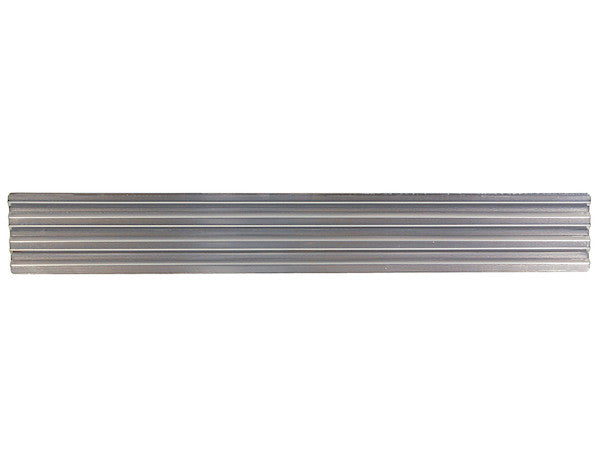
The Liner Slat for stake body trucks from Buyers Products is constructed with durable 16 Ga steel for use on all stake body trucks. Long edges of the slats are rolled over and the corners are rounded for easier installation and application on any stake body vehicle.
Specifications
| Finish | Plain |
|---|---|
| Gauge | 16 |
| Length (in.) | 71.25 |
| Material | Carbon Steel |
| Width (in.) | 6.50 |
Advanced Technical Overview: The Buyers Products 16 Ga Carbon Steel Liner Slat (6.5 x 71.25 Inch)
The Liner Slat, meticulously engineered by Buyers Products, represents a critical component in optimizing the functionality, durability, and safety of stake body truck fleets. This specific model, measuring 6.5 x 71.25 inches and fabricated from robust 16 gauge carbon steel, is designed to serve as an indispensable reinforcement and protective barrier for the interior walls of stake body vehicles. Its precise dimensions, coupled with a strategic design incorporating rolled edges and rounded corners, underscore a commitment to both ease of installation and long-term operational integrity in demanding commercial and industrial environments.
Precision Engineering and Material Excellence: 16 Gauge Carbon Steel
Understanding 16 Gauge Steel
The specification of 16 gauge (16 Ga) steel is a fundamental aspect of this product's performance profile. In the standardized American Wire Gauge (AWG) system, 16 gauge steel corresponds to a nominal thickness of approximately 0.0598 inches, or 1.519 millimeters. This thickness strikes an optimal balance between material rigidity, impact resistance, and manageability. For liner slat applications, 16 gauge steel provides substantial structural integrity to withstand significant lateral forces exerted by shifting cargo, resist penetration from sharp objects, and absorb localized impacts, all without imparting excessive weight to the vehicle, which could negatively impact payload capacity or fuel efficiency. The consistent application of this gauge across the product line ensures uniform performance characteristics and simplified integration into diverse fleet configurations.
Properties of Carbon Steel in Commercial Applications
The selection of carbon steel as the primary material is a deliberate engineering choice driven by its superior mechanical properties and cost-effectiveness for the intended application. Carbon steel, primarily an alloy of iron and carbon (typically up to 2.1% by weight), offers an exceptional combination of strength, hardness, and ductility. Specifically, the carbon steel used in these liner slats exhibits:
- High Tensile Strength: The ability to withstand significant pulling or stretching forces before fracturing, crucial for retaining bulk cargo.
- Excellent Yield Strength: The resistance to permanent deformation under stress, ensuring the slat maintains its form even after repeated impacts or pressures.
- Superior Hardness: Resistance to abrasion and surface wear, extending the lifespan when exposed to rough materials like aggregates, construction debris, or landscaping supplies.
- Good Ductility: While strong, carbon steel retains sufficient ductility to absorb energy from impacts without brittle fracture, deforming locally rather than failing catastrophically.
- Weldability and Formability: Carbon steel is highly amenable to various manufacturing processes, including shearing, bending, and welding, facilitating precise fabrication and potential on-site customization or repair.
- Cost-Effectiveness: Compared to alternative high-strength alloys, carbon steel provides an economical solution without compromising performance, contributing to a lower total cost of ownership for fleet operators.
Advantages Over Alternative Materials
While other materials such as aluminum, stainless steel, or various polymer composites exist, carbon steel offers distinct advantages for liner slat applications. Aluminum, though lighter, typically requires a significantly greater thickness to achieve comparable strength and impact resistance, often leading to a higher initial material cost and potential challenges with localized deformation under heavy loads. Stainless steel provides excellent corrosion resistance but comes at a considerably higher material cost, which is often prohibitive for large-scale fleet applications where protective coatings can effectively mitigate corrosion on carbon steel. Polymer composites, while offering excellent chemical resistance and light weight, may lack the shear strength, impact resistance, and structural rigidity required to contain abrasive or heavy bulk materials effectively, and their repair characteristics can be more complex. Carbon steel, therefore, presents the most balanced solution, providing robust mechanical performance, excellent durability, and economic viability for the primary function of a protective liner slat.
Dimensional Specifics: 6.5 x 71.25 Inch for Optimized Fitment
Standardization and Versatility
The precise dimensions of 6.5 inches in width and 71.25 inches in length are carefully selected to provide optimal coverage and modularity within the standardized framework of commercial stake body truck designs. These dimensions accommodate a broad spectrum of vehicle manufacturers and body builders, allowing for seamless integration across various truck sizes, from light-duty utility vehicles to heavier-duty commercial trucks. The 6.5-inch width provides substantial vertical coverage, effectively shielding a significant portion of the stake body's internal sidewall, while the 71.25-inch length is suitable for direct application or can be easily cut and adapted for shorter sections, allowing for highly customized and continuous liner coverage. This standardization minimizes the need for extensive modification during installation, streamlining the outfitting process and reducing labor costs.
Impact on Structural Integrity and Load Management
Beyond simple surface protection, the precise dimensions of these liner slats contribute significantly to the overall structural integrity of the stake body. When securely fastened to the interior walls, these steel slats act as a distributed reinforcement system. They help to:
- Distribute Localized Loads: Instead of cargo pressure being concentrated at specific points on the underlying stake body walls, the slats effectively spread these forces over a larger area, reducing stress concentrations and preventing premature wear or damage to the primary structure.
- Resist Bulging and Deformation: For bulk materials like sand, gravel, wood chips, or loose agricultural products, internal pressure can cause the side walls to bulge. The rigid steel slats provide essential counter-pressure, maintaining the integrity of the stake body profile.
- Enhance Overall Rigidity: By creating a stiffer inner lining, the slats contribute to the torsional rigidity of the stake body, which can be beneficial in resisting twisting forces experienced during transport over uneven terrain.
Manufacturing Precision for Consistent Fit
The manufacturing process employs advanced techniques to ensure that each 6.5 x 71.25 inch slat adheres to stringent dimensional tolerances. Utilizing precision shearing, forming, and punching machinery, Buyers Products guarantees that every slat is uniform in size and shape. This precision is critical for:
- Ease of Installation: Consistent dimensions mean predictable fit, reducing the need for on-site adjustments, cutting, or shimming.
- Modular Integration: When multiple slats are installed side-by-side or stacked, their uniform dimensions ensure a flush and continuous protective surface.
- Minimized Gaps: Precision prevents large gaps between slats, which could otherwise trap debris, moisture, or allow small cargo to escape.
Ergonomic and Safety-Conscious Design: Rolled Edges and Rounded Corners
Mitigating Workplace Hazards
One of the most critical aspects of the Liner Slat's design, beyond its material strength, is the incorporation of rolled long edges and rounded corners. This feature is not merely an aesthetic choice but a fundamental safety and ergonomic enhancement. Raw, cut steel edges can be extremely sharp, posing a significant laceration hazard to personnel during installation, loading, and unloading operations. By rolling the long edges, the potentially hazardous sharp interface is eliminated, significantly reducing the risk of cuts and scrapes to hands, arms, and clothing. Similarly, the rounded corners prevent snagging on cargo, clothing, or other equipment, further contributing to a safer work environment. Adherence to these design principles demonstrates a commitment to operational safety and helps businesses comply with workplace safety standards, minimizing the potential for costly injuries and lost work time.
Cargo Protection and Operational Efficiency
The smooth, rolled edges and rounded corners also provide substantial benefits in terms of cargo protection. When materials, especially delicate items or those packaged in bags or cardboard, rub against the interior walls of a truck, sharp edges can cause abrasion, tearing, or puncture damage. The smooth profile of these slats prevents such damage, ensuring that cargo arrives at its destination in optimal condition. This is particularly important for industries transporting agricultural products, construction materials, or consumer goods. Furthermore, the absence of sharp protrusions makes the loading and unloading processes more efficient and less prone to snagging equipment like pallet jacks, forklifts, or manual handling tools, ultimately improving turnaround times and reducing the likelihood of equipment damage.
Enhanced Durability and Structural Integrity of the Slat Itself
Beyond safety and cargo considerations, the rolled edges contribute to the intrinsic durability of the slat itself. A raw, cut edge is inherently weaker and more susceptible to bending, chipping, or corrosion initiation. The process of rolling the edge effectively doubles the material thickness at that critical interface, significantly increasing its resistance to deformation from impacts or lateral forces. This enhanced rigidity at the perimeter prevents premature bending or crimping of the slat edges, maintaining the slat's overall structural integrity throughout its operational life. Additionally, a smooth, continuous surface is less likely to trap moisture or debris, which can accelerate localized corrosion, thus contributing to a longer service life for the slat itself.
Application in Stake Body Truck Systems: Reinforcement and Protection
The Anatomy of a Stake Body Truck
A stake body truck is characterized by a flat platform bed equipped with vertical pockets (stakes) into which removable side and rear panels (stakes or slats) are inserted. This design offers immense versatility for transporting a wide variety of cargo, from bulk materials to palletized goods, due to its adaptable perimeter. The primary structural components typically include a heavy-duty frame, chassis, crossmembers supporting the bed, and often a robust subframe. The side walls, while providing containment, are frequently subjected to significant lateral pressures from cargo and external impacts. Liner slats integrate directly into this ecosystem to bolster and protect these essential containment structures.
Integral Role of Liner Slats in Structural Support
The Liner Slat serves as a critical secondary layer of structural support and protection for the primary side walls of a stake body truck. When installed, these 16 Ga carbon steel slats form a rigid, continuous barrier along the interior perimeter. This configuration provides several key advantages:
- Load Containment Enhancement: For loose, bulk materials like gravel, sand, demolition debris, or landscaping aggregates, the liner slats prevent the outward bulging of the primary side panels. This maintains the structural integrity of the truck bed, preventing permanent deformation and ensuring secure containment of the payload.
- Impact Absorption: In operations where heavy or abrasive items are loaded via forklift or dumped directly, the slats absorb and distribute impact energy, shielding the underlying (often softer or thinner) truck body material from direct damage.
- Shear Force Resistance: Shifting loads generate significant shear forces. The installed slats, particularly when securely bolted or welded, resist these forces, preventing the primary wall material from tearing or failing under dynamic stresses during transit.
- Fatigue Life Extension: By distributing stresses and preventing localized damage, the liner slats significantly extend the fatigue life of the entire stake body structure, pushing back the onset of stress cracks and material degradation.
Protecting Against Wear, Impact, and Environmental Factors
The operational environment for stake body trucks is inherently harsh, exposing the vehicle's interior to a constant barrage of challenges:
- Abrasive Wear: Continuous contact with rough, granular materials (e.g., sand, gravel, rock) causes abrasive wear. The hardened steel surface of the liner slat offers superior resistance to this wear, protecting the more vulnerable primary truck bed materials.
- Puncture and Impact Damage: Sharp edges of construction debris, tools, or even irregularly shaped cargo can cause punctures or concentrated impact damage to truck walls. The 16 Ga steel acts as a robust shield against such incidents.
- Chemical Exposure: While the "Plain" finish requires post-installation protection, once properly coated, the steel barrier provides a robust defense against chemical spills, fertilizers, or other corrosive substances that could otherwise degrade the primary body material.
- Moisture and UV Degradation: The liner slat creates an additional barrier against moisture ingress and UV radiation, protecting any underlying wooden or composite components of the stake body from rot, decay, or degradation over time.
- Material Adhesion Prevention: For sticky materials like wet soil or concrete, a smooth, protected steel surface is easier to clean than a rougher, corroded, or damaged underlying surface, which can lead to material buildup and increased cleaning times.
Extending Vehicle Lifespan and Reducing Total Cost of Ownership (TCO)
By effectively mitigating these diverse forms of damage and wear, the Buyers Products Liner Slat plays a pivotal role in extending the operational lifespan of stake body trucks. Preventing structural damage to the primary truck bed means fewer costly repairs, reduced downtime for maintenance, and the preservation of the vehicle's resale value. This proactive protection strategy translates directly into a lower Total Cost of Ownership (TCO) for fleet managers and owners, delivering a significant return on investment through enhanced asset longevity and sustained operational readiness.
The "Plain" Finish: A Foundation for Customization and Longevity
Understanding Plain Carbon Steel Finish
The term "Plain" finish for this liner slat refers to the raw, uncoated state of the carbon steel immediately following its fabrication. This means the material is supplied without any factory-applied primers, paints, or galvanized coatings. Typically, plain carbon steel, often referred to as "black steel" or "mill finish," may exhibit a light layer of mill scale (a blue-gray oxide layer formed during hot rolling), surface rust (a thin, reddish-brown iron oxide layer resulting from atmospheric exposure), or a light oil residue applied for temporary corrosion protection during transit and storage. This raw state is a deliberate choice, offering significant advantages for specific industrial applications.
Advantages of an Uncoated Surface for Fabrication
An uncoated, plain steel finish is highly advantageous for environments where further fabrication or specific coating processes are planned post-purchase:
- Optimal for Welding: The absence of any coating eliminates the need for grinding or chemical stripping before welding, ensuring clean, strong, and consistent weld beads. Coatings like paint or galvanization can produce toxic fumes during welding and interfere with weld quality.
- Superior Surface Preparation: A plain finish allows the end-user to implement their preferred surface preparation methods (e.g., sandblasting, abrasive blasting, chemical cleaning) to achieve the exact profile required for their chosen protective coating. This ensures optimal adhesion and longevity of the subsequent finish.
- Cost-Effectiveness: Omitting a factory-applied finish reduces the initial manufacturing cost, passing savings directly to the customer who may have specific, more advanced coating requirements for their application.
- Flexibility in Customization: The plain finish provides maximum flexibility for custom painting to match fleet colors, applying specialized anti-corrosion treatments, or even performing additional bending or cutting operations without compromising a pre-existing coating.
Comprehensive Post-Installation Finishing Options for Enhanced Durability
While supplied plain, it is strongly recommended that the liner slats be treated with a suitable protective coating post-installation to maximize their lifespan, especially when exposed to moisture, chemicals, or other corrosive elements. Several high-performance options are available:
Zinc-Rich Primers and Epoxy Coatings
These are foundational for corrosion protection. Zinc-rich primers contain a high percentage of zinc dust, which provides galvanic (sacrificial) protection to the steel, much like galvanization. Epoxy coatings, known for their excellent adhesion, hardness, and chemical resistance, are typically applied over a primer layer. They form a tough, impenetrable barrier that resists moisture, chemicals, and abrasion, ideal for the demanding environment of a truck bed.
Polyurethane Topcoats
Applied over epoxy or primer layers, polyurethane topcoats offer superior UV resistance, color retention, and an attractive aesthetic finish. They are highly resistant to chipping, scratching, and general wear, providing a durable exterior layer that maintains its appearance and protective qualities even under constant sunlight exposure and physical abuse.
Hot-Dip Galvanization
This process involves immersing the fabricated steel component into a bath of molten zinc. The zinc metallurgically bonds with the steel, forming a series of highly durable zinc-iron alloy layers and a pure zinc outer layer. Hot-dip galvanization provides exceptional, long-lasting corrosion protection through both barrier and sacrificial mechanisms. It offers comprehensive coverage, including inside rolled edges, making it ideal for extreme corrosive environments, though it may alter the surface for subsequent painting and is typically more suited for components pre-fabricated to final form.
Electrophoretic Deposition (E-Coat)
E-coat is a process where the steel component is submerged in a paint bath and an electric current is passed through it, causing paint particles to adhere evenly to all surfaces, including complex geometries and interior cavities. E-coat provides excellent uniform coverage, superb adhesion, and a robust primer layer that offers significant corrosion protection. It's an environmentally friendly process widely used in the automotive industry for its high-quality finish and protective properties.
Powder Coating
Powder coating involves applying a dry powder (a mixture of finely ground plastic particles) electrostatically to the steel, which is then cured under heat to form a hard, durable finish. Powder coatings offer excellent chip, scratch, and chemical resistance, and are available in a vast array of colors and textures. They are also environmentally friendly, emitting no volatile organic compounds (VOCs). While highly durable, achieving full coverage on complex internal geometries might be challenging compared to liquid paint or E-coat, and it requires specialized equipment for application.
The choice of post-installation finish should be carefully considered based on the specific operational environment, budget, and desired lifespan, with proper surface preparation being paramount for the success of any coating system.
Installation Protocols and Maintenance Best Practices
Securement Methods for Optimal Performance
Proper installation of the liner slats is crucial for realizing their full protective and structural benefits. Several securement methods are commonly employed, each with its own advantages:
- Bolting: This is a highly versatile and common method. High-strength steel bolts, nuts, and washers (preferably self-locking or with locking washers) should be used. Pre-drilled holes in the slat, matched to the truck body, ensure precise alignment. Bolting allows for easy replacement or removal if necessary for maintenance or repair. Ensure appropriate torque specifications are met to prevent loosening under vibration.
- Welding: For permanent and extremely robust installation, welding the slats directly to the stake body structure offers maximum strength and eliminates protrusions. However, welding requires skilled personnel and can be more difficult to remove if replacement is needed. It also requires careful consideration of the underlying truck body material and any existing coatings.
- Riveting: Structural rivets (e.g., Huck bolts or equivalent) provide a strong, vibration-resistant, and tamper-proof connection. Riveting is faster than bolting in high-volume applications and does not require access to both sides for tightening, making it suitable for enclosed spaces.
Preparation and Alignment Techniques
Prior to securement, proper preparation and alignment are critical. The truck body's internal surfaces should be cleaned thoroughly to remove any dirt, grease, or loose debris. If multiple slats are being installed, precise measurements and marking are essential to ensure a continuous and flush protective surface. Utilizing levels, plumb lines, and temporary clamps can assist in maintaining alignment during the fastening process. Any cutting or drilling required for custom fits should be done with appropriate tools, ensuring clean cuts and burr-free holes to prevent stress concentrations.
Long-Term Maintenance and Inspection Regimen
Even with robust installation, a regular maintenance and inspection regimen is vital for maximizing the lifespan of the liner slats and the overall truck body:
- Routine Visual Inspection: Regularly check for signs of wear, deformation, cracks, or loose fasteners. Pay particular attention to edges, corners, and areas subjected to high impact or abrasion.
- Corrosion Monitoring: If the slats have been coated, inspect the coating for chips, scratches, or bubbling, which can indicate underlying corrosion. Promptly touch up damaged coatings. For uncoated or minimally coated slats, active rust management is paramount.
- Fastener Integrity: Periodically check all bolts, rivets, or welds for tightness and integrity. Retighten loose bolts to specification.
- Cleaning: Regularly clean the slats to remove accumulated dirt, debris, or chemical residues that could promote corrosion or harbor moisture.
- Damage Repair: Small dents or superficial damage can often be repaired by local flattening or grinding. Significant damage warrants replacement of the affected slat section to maintain structural integrity and appearance.
The Buyers Products Commitment to Quality and Performance
Engineering Excellence and Manufacturing Standards
Buyers Products is renowned for its unwavering commitment to engineering excellence and adherence to rigorous manufacturing standards. Each Liner Slat is produced under stringent quality control protocols, leveraging advanced fabrication technologies and materials sourced from reputable suppliers. This meticulous approach ensures that every slat meets precise dimensional specifications, material composition standards, and exhibits the expected mechanical properties. Compliance with relevant industry standards and internal quality assurance processes guarantees that customers receive a product designed for reliable, long-term performance in the most demanding commercial applications. This dedication to quality minimizes product variation, simplifies installation, and instills confidence in the durability and functionality of the component.
Economic Advantages and Return on Investment
Investing in the Buyers Products Liner Slat represents a sound economic decision for fleet operators and truck owners. While it is an upfront investment, the benefits accrue significantly over the operational life of the vehicle. By providing superior protection against cargo damage, impacts, and environmental wear, the slats dramatically reduce the need for costly repairs to the primary truck body. This translates into less vehicle downtime, increased operational efficiency, and extended service life for the entire fleet asset. The preserved structural integrity and aesthetic condition of the truck also contribute to a higher resale value. The return on investment (ROI) is realized through reduced maintenance expenses, optimized vehicle availability, and sustained asset value, making these liner slats an economically prudent choice for any commercial operation.
Compliance and Industry Relevance
The design and construction of the Buyers Products Liner Slat not only meet but often exceed industry expectations for durability and safety in commercial vehicle components. By incorporating features such as robust 16 Ga carbon steel construction, and safety-conscious rolled edges and rounded corners, the product aligns with best practices for fleet equipment. Its integration contributes to overall vehicle safety by improving cargo containment and protecting personnel during loading and unloading, indirectly supporting compliance with various transportation and workplace safety regulations. This relevance to industry standards and operational demands reinforces the product's position as a premium, high-value solution for stake body truck enhancement.
Conclusion: An Indispensable Component for Modern Stake Body Operations
The Buyers Products 16 Ga Carbon Steel Liner Slat, with its precise 6.5 x 71.25 inch dimensions, represents more than just a steel panel; it is a meticulously engineered solution designed to significantly enhance the operational capabilities, longevity, and safety of stake body trucks. From its robust carbon steel construction providing unparalleled impact and wear resistance, to its safety-conscious design featuring rolled edges and rounded corners, every aspect is optimized for the rigorous demands of commercial use. The strategic decision to offer a "Plain" finish empowers fleet managers with ultimate flexibility for tailored protective coatings, ensuring maximum durability in specific operating environments. By investing in these superior liner slats, businesses can expect reduced maintenance costs, extended vehicle lifespan, improved cargo protection, and enhanced workplace safety, culminating in a demonstrably lower total cost of ownership and a consistently high standard of fleet performance. This product is an essential upgrade for any stake body truck operator committed to optimizing their assets and ensuring reliable, safe, and efficient operations.