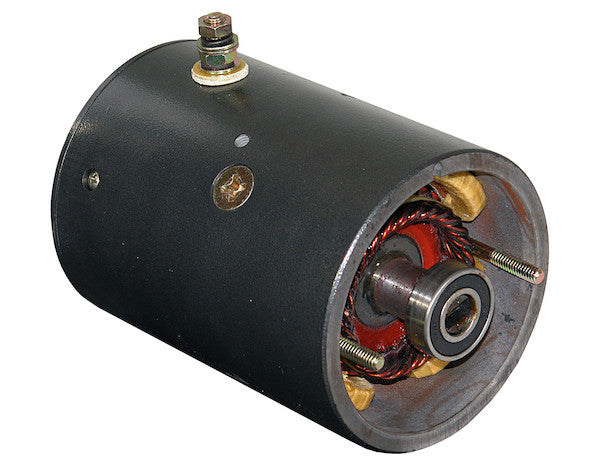
Operate your plow or liftgate with the power output generated by the Counter-Clockwise Rotation Motor from Buyers Products. Featuring a 12V DC motor, less drive end, and a counter-clockwise motor with tang shaft, this unit offers a maximum output of 2HP at 12V.
Specifications
| Case Grounded (y/n) | Yes |
|---|---|
| Diameter | 4.5 |
| Gear Ratio | - |
| Max Current | 200 |
| Mounting Pattern | 2 Stud |
| Power | 1.6 |
| Replaces | Monarch 08111 |
| Rotation | Counterclockwise |
| Shaft Diameter | 1.000 |
| Shaft Type | Tang |
| Speed | 2550 |
| Voltage | 12 |
| Warranty | - |
| Wattage | 2400 |
Comprehensive Technical Overview: DC Hydraulic Power Unit Replacement Motor for Light Duty Applications (Replaces Monarch 08111)
This detailed exposition provides an in-depth technical analysis of the Buyers Products Counter-Clockwise Rotation Motor, specifically engineered as a direct replacement for the Monarch 08111 motor in DC hydraulic power units. Designed for light-duty applications such as snow plows and liftgates, this motor embodies a critical component in ensuring the reliable and efficient operation of mobile hydraulic systems. Understanding its technical specifications, operational principles, and integration considerations is paramount for maintenance professionals, system integrators, and equipment operators seeking optimal performance and longevity.
Fundamental Operational Principles of DC Motors in Hydraulic Systems
The motor functions as the prime mover in a hydraulic power unit, converting electrical energy from a direct current (DC) source into mechanical rotational energy. This mechanical energy is subsequently coupled to a hydraulic pump, which then pressurizes hydraulic fluid to actuate cylinders or other hydraulic components. The efficiency and power output of the electric motor directly correlate with the overall performance and responsiveness of the hydraulic system.
This particular unit operates on a 12V DC electrical supply, a standard voltage in automotive and light commercial vehicle applications, deriving power typically from a vehicle's battery system. The design emphasizes robustness and consistent performance under intermittent, high-demand operational cycles characteristic of light-duty hydraulic tasks.
Key Technical Specifications and Their Implications
Voltage (12V DC) and Electrical Power Input (2400W Max)
The 12V DC operating voltage is a cornerstone of its design, ensuring compatibility with a vast array of vehicle electrical systems without the need for voltage converters. This standardization simplifies integration and reduces installation complexity. The specified maximum wattage of 2400W (2.4 kW) indicates the peak electrical power draw the motor can sustain. Given a 12V input, this implies a maximum current draw of 200 Amperes (P = V * I, so I = P / V = 2400W / 12V = 200A), aligning perfectly with the 'Max Current' specification in the table. Proper wiring, circuit protection (fuses or circuit breakers), and battery capacity are crucial considerations to accommodate this significant current draw, particularly during peak load conditions such as initial lift or severe resistance.
Adequate cable sizing is critical to minimize voltage drop and prevent overheating, which can degrade motor performance and lead to premature failure. For a 200A load, heavy-gauge copper wiring, typically 0 AWG or thicker, is recommended for most light-duty applications, depending on cable length and ambient temperature. Moreover, the vehicle's alternator and battery system must be capable of continuously replenishing the energy consumed, especially if the hydraulic system is frequently activated.
Mechanical Power Output (2 HP Max, 1.6 kW Rated) and Efficiency
The motor delivers a maximum output of 2 horsepower (HP) at 12V. Converting HP to kilowatts (kW), 1 HP is approximately equal to 0.746 kW, thus 2 HP equates to approximately 1.492 kW. The specification table also lists 'Power' as 1.6 kW. This typically represents a nominal or continuous rated power output, implying the motor can sustain 1.6 kW output mechanically for extended periods under specified conditions, while 2 HP (1.492 kW) refers to its peak or momentary power capability. This slight variance between 2 HP and 1.6 kW might denote different measurement standards (e.g., peak versus continuous) or minor rounding. For practical purposes, users can expect substantial mechanical power suitable for demanding light-duty operations.
Comparing the electrical input (2.4 kW) to the mechanical output (1.492 kW to 1.6 kW), we can infer the motor's efficiency. If we consider the peak mechanical output of 1.492 kW from 2.4 kW electrical input, the efficiency is approximately (1.492 / 2.4) * 100% ≈ 62%. This efficiency is typical for brush-type DC motors of this power class operating under full load. Factors affecting efficiency include internal resistance, friction losses, and magnetic losses, which generate heat. Effective thermal management, therefore, is an inherent design consideration, although not explicitly detailed in the specifications.
Rotation Direction (Counterclockwise) and Shaft Configuration (Tang, 1.000" Diameter)
The counterclockwise (CCW) rotation is a critical specification. The direction of rotation must match the input requirements of the hydraulic pump it is paired with. Mismatched rotation will prevent the pump from generating pressure and could damage the hydraulic system components. The tang shaft type, with a precise diameter of 1.000 inch, is a standard mechanical interface for coupling to specific hydraulic pump models. The tang design ensures positive engagement, transmitting torque efficiently while allowing for a degree of axial play during assembly. The exact shaft diameter ensures a snug fit with compatible pump splines or couplers, minimizing backlash and wear, which are critical for longevity and consistent power transmission.
The design 'less drive end' signifies that the motor is supplied without an integrated coupling or gear reduction mechanism. This configuration allows for greater flexibility in system design, enabling the installer to select the appropriate drive end components (e.g., a specific coupler or gearbox) that perfectly match the hydraulic pump's input requirements. This modular approach is common in industrial and mobile hydraulic applications, allowing for tailored system integration.
Mounting Pattern (2 Stud) and Diameter (4.5 inches)
The 2-stud mounting pattern is a widely recognized and standardized interface for DC hydraulic pump motors, ensuring compatibility with many existing hydraulic power unit reservoirs and pump mounting flanges. The 4.5-inch diameter refers to the motor's housing size, which is standard for this class of DC motors. These dimensions are crucial for fitment within confined spaces often found in vehicle-mounted applications and ensure direct interchangeability with the Monarch 08111 and other similar motors. The precise alignment facilitated by standardized mounting patterns is vital for preventing shaft misalignment, which can lead to excessive vibration, premature bearing wear, and coupler failure.
Speed (2550 RPM)
The motor's operational speed of 2550 Revolutions Per Minute (RPM) directly influences the flow rate of the hydraulic pump. For a given pump displacement, a higher RPM results in a higher volumetric flow rate, thereby increasing the speed at which hydraulic cylinders extend or retract, or hydraulic motors operate. This speed is optimized for light-duty applications to provide a balance between rapid system response and manageable fluid velocities, preventing cavitation and excessive heat generation within the hydraulic circuit. Maintaining this speed under load is indicative of a well-designed motor for its intended purpose.
Case Grounded (Yes)
The 'Case Grounded' specification means that the motor's external metallic housing is internally connected to the negative terminal of the DC power supply. This design feature simplifies wiring, as one side of the electrical circuit (typically the negative/ground) can be directly connected to the vehicle chassis or the hydraulic power unit's metal frame, which serves as a common ground. This reduces the need for a separate negative wire running directly to the battery, streamlining installation and reducing potential wiring complexity. It also contributes to electrical safety by providing a direct path for fault currents if an internal insulation failure occurs, protecting both the motor and the operator.
Designed as a Direct Replacement: Monarch 08111 Interchangeability
A significant advantage of this motor is its explicit design as a direct replacement for the Monarch 08111 model. This ensures a seamless transition during maintenance or repair operations. Direct replacement capability implies that the new motor matches the original's critical dimensions (diameter, shaft type, shaft diameter, mounting pattern), electrical characteristics (voltage, current, power output), and operational parameters (rotation direction, speed). This eliminates the need for modifications to the existing hydraulic power unit, such as re-drilling mounting holes, adapting electrical connectors, or adjusting pump coupling mechanisms. The precision in interchangeability minimizes downtime, reduces labor costs, and maintains the integrity of the original system design, making it an ideal choice for fleet managers and service technicians.
Applications and Operational Environment Considerations
This DC hydraulic motor is primarily intended for light-duty applications where intermittent operation and reliable power are critical. Typical applications include:
- Snow Plows: Providing the motive force for lifting, lowering, and angling snow plow blades, where rapid and consistent response is essential for efficient snow removal.
- Liftgates: Powering the hydraulic cylinders that raise and lower cargo platforms on trucks and vans, requiring smooth, controlled operation under varying loads.
- Dump Trailers (Light Duty): Actuating the hydraulic cylinder for small dump trailers used in landscaping or utility work.
- Small Material Handling Equipment: Enabling hydraulic functions on compact forklifts or scissor lifts that operate on DC power.
The operational environment for such equipment can be challenging, involving exposure to moisture, dust, temperature extremes, and vibration. While specific environmental ratings (e.g., IP rating) are not provided, products from reputable manufacturers like Buyers Products are generally constructed with appropriate materials and sealing to withstand typical outdoor and demanding mobile applications. Users should ensure that the motor's environment aligns with its design parameters to guarantee optimal performance and lifespan.
Installation and Maintenance Best Practices
Proper installation and routine maintenance are crucial for maximizing the lifespan and performance of any hydraulic motor. For this unit:
- Electrical Connections: Ensure all electrical connections are clean, secure, and properly sized. Use appropriate terminals and crimping tools. Dielectric grease can be applied to terminals to prevent corrosion in harsh environments.
- Grounding: Verify a robust chassis ground connection for the case-grounded motor to ensure safe and efficient operation.
- Coupling: Carefully align the motor's tang shaft with the hydraulic pump's input. Any misalignment can induce undue stress on bearings and couplers, leading to premature failure.
- Mounting: Securely fasten the motor using the 2-stud mounting pattern. Use appropriate torque settings for fasteners to prevent loosening from vibration.
- System Integration: Confirm that the hydraulic reservoir has sufficient fluid, the hydraulic lines are free of obstructions, and all valves are operating correctly. Bleed air from the hydraulic system after installation.
- Regular Inspection: Periodically inspect electrical connections for corrosion or looseness, check for abnormal noise or excessive heat during operation, and monitor the condition of the motor housing for any signs of damage.
While this motor is designed for durability, it contains wear components such as carbon brushes, which will eventually require replacement over the motor's operational lifetime. The 'less drive end' design often facilitates easier access for such internal maintenance if the motor is designed for serviceability, although for light-duty replacement motors, unit replacement is often the more cost-effective strategy.
Conclusion: Reliability and Performance for Demanding Applications
The Buyers Products DC Hydraulic Power Unit Replacement Motor is a robust and technically sound solution engineered to provide reliable motive power for light-duty hydraulic applications. Its precise specifications—including a 12V DC operating voltage, 2 HP peak output, counterclockwise rotation, and 1.000-inch tang shaft—are meticulously matched to the demanding requirements of equipment such as snow plows and liftgates. As a direct replacement for the Monarch 08111, it offers an unparalleled level of compatibility and ease of integration, minimizing service complexity and maximizing operational uptime. Professionals in the mobile hydraulics sector can confidently select this motor to restore or enhance the performance of their critical equipment, ensuring efficient and sustained operation through its intelligent design and adherence to industry standards.