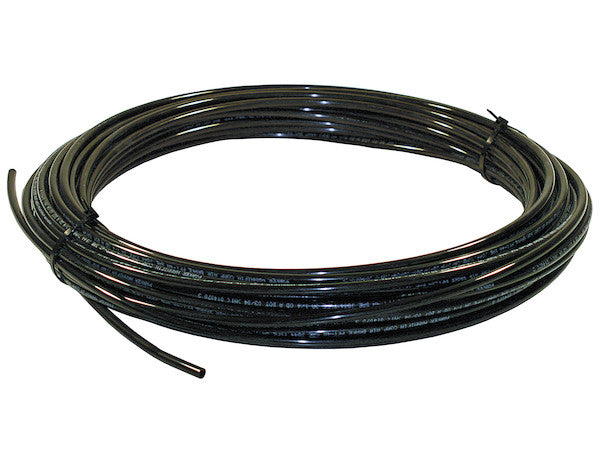
Buyers Products DOT Nylon Air Tubing is made of durable nylon for flexibility and performance. It's available in a variety of lengths, colors, and hole diameters to address any application.
Specifications
| Color | Black |
|---|---|
| Finish | Plain |
| Length | 250 |
| Material | Nylon |
| Tube Outer Diameter | 1/4 |
The 1/4 Inch Black DOT Nylon Air Tubing, supplied in a substantial 250-foot length, represents a critical component for pneumatic systems demanding both reliability and regulatory compliance, particularly within the transportation sector. Engineered for optimal performance in air brake and auxiliary air systems, this product is manufactured from premium-grade nylon, a robust polymer known for its exceptional mechanical and thermal properties. Its adherence to Department of Transportation (DOT) standards, specifically FMVSS 106 (Federal Motor Vehicle Safety Standard 106), signifies its suitability for applications where safety and operational integrity are paramount. This detailed exposition will delve into the material science, technical specifications, performance characteristics, application considerations, and installation protocols associated with this high-performance air tubing.
Material Science and Properties of Nylon (Polyamide)
Nylon, a synthetic polyamide, is extensively utilized in demanding industrial applications due to its superior balance of properties. The specific grade of nylon employed in DOT air tubing is typically Nylon 11 or Nylon 12, chosen for their inherent resistance to impact, abrasion, and a wide array of chemicals. The molecular structure of these polyamides, characterized by strong hydrogen bonding between polymer chains, imparts excellent tensile strength, making the tubing highly resistant to stretching and rupture under pressure. Furthermore, nylon exhibits a low coefficient of friction, which reduces wear in dynamic applications and facilitates the smooth passage of air. Its inherent flexibility, even at low temperatures, ensures ease of routing and installation, allowing the tubing to conform to complex vehicle chassis configurations without kinking or compromising structural integrity. This combination of strength, flexibility, and resistance to environmental degradation contributes significantly to the long service life and reliable performance of DOT nylon air tubing.
DOT Compliance: FMVSS 106 Explained
Compliance with FMVSS 106 is a non-negotiable requirement for air brake tubing used in commercial vehicles within the United States. This standard dictates stringent performance criteria to ensure the safety and reliability of pneumatic braking systems. Key aspects of FMVSS 106 compliance include:
- Pressure Resistance: The tubing must withstand specified internal pressures without bursting or leaking. This involves rigorous testing at room temperature, elevated temperatures, and after exposure to various environmental conditions.
- Kink Resistance: Tubing must not kink or collapse under tight bending radii, which could restrict airflow and impair brake function.
- Low-Temperature Flexibility: Performance must be maintained across a broad temperature spectrum, including extreme cold, where materials can become brittle. FMVSS 106 requires testing to ensure flexibility and pressure integrity down to -40°C (-40°F).
- High-Temperature Performance: The tubing must retain its mechanical properties and pressure integrity at elevated operating temperatures, such as those encountered near engine compartments or brake components.
- Chemical Resistance: Resistance to common automotive fluids, including oils, fuels, and brake fluid, is critical to prevent material degradation and potential system failures.
- Abrasion Resistance: The outer surface of the tubing must resist wear from rubbing against other vehicle components or road debris, maintaining its protective outer layer.
- Dimensional Stability: Precise outer diameter (OD) and wall thickness must be maintained to ensure proper fitting engagement and consistent performance.
- Marking Requirements: Each length of tubing must be permanently marked with the manufacturer's name, the date of manufacture, and the designation "DOT" to ensure traceability and verify compliance.
The 1/4 inch Black DOT Nylon Air Tubing specifically adheres to these exhaustive criteria, providing peace of mind regarding its suitability for safety-critical air brake circuits.
Technical Specifications and Dimensional Precision
The 1/4 inch outer diameter (OD) of this air tubing is a standard specification designed for compatibility with a vast array of pneumatic fittings, including push-to-connect (PTC) and compression fittings. Precision in manufacturing the OD is crucial; any deviation can lead to improper sealing, increased risk of leaks, and potential system failure. The internal diameter (ID) is directly related to the OD and wall thickness, influencing airflow capacity and pressure drop across the line. A consistently maintained wall thickness not only contributes to the burst pressure rating but also provides the necessary structural rigidity to resist crushing and external damage.
The chosen black color is not merely aesthetic; it typically signifies enhanced UV stabilization, providing superior resistance to degradation from prolonged exposure to sunlight. This is particularly important for tubing routed externally on vehicles or in outdoor industrial environments. The 250-foot spool length offers significant advantages for bulk users and large-scale installations, minimizing the need for multiple splices, reducing material waste, and streamlining procurement processes. It allows for longer continuous runs, which can improve system reliability by reducing potential leak points associated with fittings.
Performance Characteristics in Operation
Understanding the operational performance limits of air tubing is vital for correct application and system design:
- Operating Pressure: While the burst pressure of DOT nylon tubing is significantly higher, typically ranging from 1000 to 1500 PSI, the rated working pressure is usually around 150 to 250 PSI. This provides a substantial safety factor, critical for dynamic applications where pressure spikes can occur. The 1/4 inch tubing is designed to comfortably operate within the typical 120-140 PSI range of commercial vehicle air brake systems.
- Temperature Range: This nylon tubing is engineered to operate effectively within a broad temperature range, typically from -40°F (-40°C) to +200°F (+93°C). At the lower end, it retains its flexibility and resistance to cracking, while at the higher end, it maintains its dimensional stability and pressure integrity, preventing softening or deformation that could lead to leaks.
- Chemical Compatibility: Nylon's resistance to a wide array of chemicals is a significant advantage. It performs robustly when exposed to common automotive fluids such as diesel fuel, gasoline, engine oil, hydraulic fluid, and certain brake fluids. However, it's essential to verify compatibility with specific concentrations of strong acids, alkalis, or highly aggressive solvents, as these can potentially degrade the material over extended exposure.
- Vibration and Fatigue Resistance: In mobile applications, constant vibration and dynamic stresses are inherent. The inherent flexibility and fatigue resistance of nylon tubing enable it to withstand continuous flexing and vibration cycles without developing stress cracks or embrittlement, ensuring long-term integrity in harsh operating conditions.
Diverse Applications of DOT Nylon Air Tubing
While its primary designation is for air brake systems, the robust characteristics of this DOT nylon air tubing make it suitable for a broader spectrum of pneumatic applications:
- Commercial Vehicle Air Brake Systems: This is the quintessential application, connecting components such as the air compressor, air reservoirs, brake valves, air dryer, and brake chambers on trucks, trailers, buses, and other heavy-duty vehicles. Its DOT compliance is mandatory here.
- Auxiliary Air Systems: Beyond braking, air is used for various auxiliary functions in commercial vehicles, including air ride suspensions, air horns, pneumatic door mechanisms, air-actuated fifth wheels, and operating pneumatic tools onboard.
- Industrial Pneumatics: In certain industrial settings, particularly those requiring robust, flexible, and chemically resistant air lines, DOT-rated nylon tubing can be employed for general pneumatic control systems, material handling equipment, and automated machinery, even where DOT compliance isn't legally mandated, but the quality and performance are desired.
- Agricultural Equipment: Air systems on agricultural machinery, such as seeders or sprayers, can benefit from the durability and chemical resistance of nylon tubing.
- Off-Highway and Construction Equipment: Similar to commercial vehicles, heavy construction machinery often utilizes pneumatic systems for various functions, where the tubing's resistance to abrasion and impact is highly valued.
Installation Best Practices for Optimal Performance
Proper installation is crucial for maximizing the lifespan and ensuring the safe operation of air tubing. Adhering to best practices is essential:
- Clean and Square Cuts: Always use a specialized tube cutter designed for plastic tubing to ensure a clean, burr-free, and perfectly square cut. Irregular or angled cuts can compromise the seal with push-to-connect fittings, leading to leaks.
- Fitting Compatibility: Ensure that the selected fittings (push-to-connect or compression) are specifically designed for use with nylon tubing and match the 1/4 inch OD. For push-to-connect fittings, the tubing must be fully inserted until it bottoms out, ensuring proper engagement of the collet and O-ring seal.
- Proper Routing: Route tubing to minimize sharp bends, kinks, and points of abrasion. Avoid routing near heat sources, sharp edges, or moving parts. Use conduit or protective sleeves in areas of high wear or exposure.
- Support and Clamping: Secure the tubing with appropriate clamps at regular intervals to prevent excessive movement, vibration fatigue, and chafing. Ensure clamps do not overtighten and deform the tubing.
- Minimum Bend Radius: Adhere to the manufacturer's specified minimum bend radius to prevent kinking or material stress, which can lead to premature failure. For 1/4 inch nylon tubing, this radius is relatively small but must be respected.
- Pressure Testing: After installation, thoroughly pressure test the entire system using a leak detection solution (e.g., soapy water) to identify and rectify any leaks before putting the system into service.
- Avoid Contamination: Keep the tubing ends and internal bore clean during installation to prevent ingress of dirt or debris into the pneumatic system.
Maintenance and Ensuring Longevity
While DOT nylon air tubing is inherently durable, regular inspection and adherence to maintenance guidelines will significantly extend its service life:
- Visual Inspection: Periodically inspect all visible tubing runs for signs of damage, including cracks, abrasions, chafing, kinking, discoloration (indicating UV degradation), or signs of chemical attack.
- Leak Detection: Routinely check all connections and fittings for air leaks, which can lead to inefficient system operation and increased compressor workload.
- Environmental Protection: Ensure that any protective conduits or sleeves are intact, particularly in areas susceptible to physical damage or harsh environmental exposure.
- Fluid Contamination: If the air supply is known to contain oil, moisture, or other contaminants, ensure that appropriate air filtration and drying equipment is in place and regularly serviced. Contaminants can degrade tubing over time.
- Replacement Protocols: Even without visible damage, tubing in high-stress or safety-critical applications may have a recommended service life. Consult vehicle or equipment manufacturer guidelines for replacement intervals. Replace any tubing that shows signs of significant wear, damage, or degradation immediately.
Advantages Over Alternative Tubing Materials
Compared to other materials often used for air lines, such as copper, steel, or rubber hose, nylon tubing offers distinct advantages:
- Corrosion Resistance: Unlike metal tubing, nylon does not corrode internally or externally, eliminating concerns about rust flakes contaminating the system or weakening the line.
- Weight Reduction: Nylon is significantly lighter than metal tubing, contributing to overall vehicle weight reduction, which can improve fuel efficiency and payload capacity.
- Ease of Installation: Its flexibility and lighter weight make it far easier to route and install than rigid metal lines or heavier rubber hoses, reducing installation time and labor costs.
- Vibration Damping: Nylon possesses natural vibration damping characteristics, which can contribute to quieter operation and reduce stress on connected components.
- Cost-Effectiveness: Often, nylon tubing provides a more cost-effective solution without compromising performance or safety, especially when considering installation labor.
Manufacturing Excellence and Quality Assurance
The production of high-quality DOT nylon air tubing involves sophisticated extrusion processes. Manufacturers typically employ virgin nylon resins to ensure consistent material properties and purity. During extrusion, precise control over temperature, pressure, and drawing speed is maintained to achieve the exact 1/4 inch outer diameter and consistent wall thickness required for DOT compliance. Continuous in-line monitoring systems often verify these dimensions. Post-extrusion, the tubing undergoes rigorous testing protocols, including hydrostatic burst tests, kink resistance tests, low-temperature impact tests, and dimensional checks, all in accordance with FMVSS 106. This meticulous quality assurance process ensures that every foot of the 250-foot spool meets the exacting standards expected of safety-critical pneumatic components.
Conclusion
The 1/4 Inch Black DOT Nylon Air Tubing in a 250-foot length is a meticulously engineered product designed for the demanding requirements of air brake and auxiliary pneumatic systems. Its foundation in advanced nylon polymer science, coupled with unwavering adherence to DOT FMVSS 106 standards, guarantees a solution that is not only highly durable and flexible but also supremely safe and reliable. From its inherent resistance to abrasion, chemicals, and extreme temperatures to its ease of installation and maintenance, this tubing represents an optimal choice for applications where performance integrity cannot be compromised. Investing in this DOT-compliant nylon air tubing ensures long-term operational excellence and peace of mind for critical air system infrastructure.