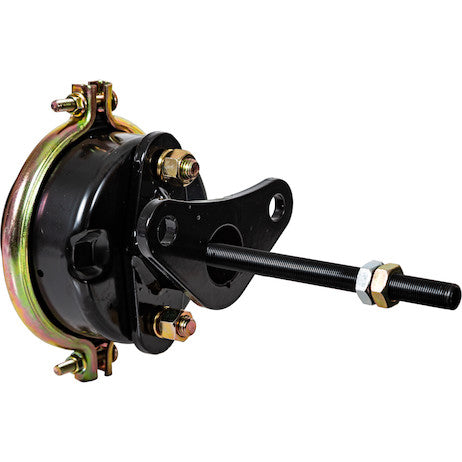
Brake Chamber Mount Kit for P45AC4
Specifications
| For Use With | Brake Chamber Mount Kit for P45AC4 45 Ton Air Compensated Pintle Hook |
|---|
Advanced Braking Systems: The Essential Role of the Brake Chamber and Mounting Kit for P45AC4 45 Ton Air Compensated Pintle Hook Systems
In the demanding world of heavy-duty transportation, where loads can reach tens of thousands of pounds, the integrity and reliability of the braking system are paramount. This detailed technical description focuses on the critical componentry comprising the Brake Chamber and Mounting Kit, specifically engineered for seamless integration with the formidable P45AC4 45 Ton Air Compensated Pintle Hook. This kit is not merely a collection of parts; it represents a meticulously designed solution that underpins the safety, compliance, and operational efficiency of heavy-duty towing applications. Understanding its intricacies requires a deep dive into the principles of air braking, the mechanics of force transmission, and the engineering considerations vital for extreme load conditions.
The Core of Air Braking: Principles and Components
Heavy-duty vehicles, particularly those operating with pintle hook connections and carrying significant payloads, rely almost exclusively on air brake systems due to their inherent reliability, power, and scalability. Unlike hydraulic systems that transmit force via incompressible fluid, air brake systems leverage the expansive properties of compressed air. The fundamental operational cycle begins with an air compressor, typically engine-driven, which pressurizes ambient air. This compressed air is then directed through an air dryer, crucial for removing moisture and contaminants that could compromise system integrity, before being stored in one or more primary air reservoirs. These reservoirs act as energy accumulators, providing a constant supply of pressurized air to meet braking demands. From the reservoirs, air travels through a network of robust air lines, controlled by various valves—including the foot valve (treadle valve), which the operator actuates to apply the brakes, and relay valves, which accelerate air delivery to distant brake chambers. The entire system is orchestrated to deliver precise and proportional braking force across multiple axles, a necessity for stable and controlled deceleration of massive combinations of vehicles.
The Brake Chamber: Translating Air Pressure into Mechanical Force
At the heart of the air brake's mechanical action lies the brake chamber, a robust component responsible for converting pneumatic pressure into the linear mechanical force required to engage the foundation brakes. This device is an engineering marvel in its simplicity and effectiveness. Typically constructed from durable steel, a brake chamber consists of two primary sections separated by a flexible, high-strength rubber diaphragm. When the driver presses the brake pedal, compressed air is routed from the air reservoirs, through the foot valve and relay valve, into the brake chamber's pressure side, forcing the diaphragm to move. This movement is then transferred to a pushrod, which extends outwards. The pushrod is mechanically linked to a slack adjuster, which in turn rotates the cam shaft, thereby spreading the brake shoes against the brake drum (or activating the caliper on disc brakes). When air pressure is released, a powerful return spring within the chamber retracts the diaphragm and pushrod, disengaging the brakes. This process is immediate and highly responsive, providing the driver with granular control over braking force.
Types of Brake Chambers
Brake chambers are primarily categorized into two main types, often found in combination on heavy vehicles:
- Service Brake Chambers: These are the standard chambers described above, responsible for the primary braking action during normal driving. They typically contain only the diaphragm, pushrod, and return spring. Different sizes (e.g., Type 30, Type 24, Type 20) refer to the effective area of the diaphragm, directly influencing the maximum force generated.
- Spring Brake Chambers (Parking/Emergency Brakes): These chambers integrate an additional, powerful spring mechanism designed to apply the brakes automatically when air pressure is lost (emergency braking) or intentionally released (parking brake). The spring is held compressed by air pressure during normal operation. When air pressure is removed, the spring expands, pushing against a separate diaphragm or piston, which then actuates the brakes.
- Combination Chambers: Also known as "piggyback" chambers, these units combine both a service brake chamber and a spring brake chamber into a single, compact housing. The service chamber component is typically at the front, with the spring brake section mounted directly behind it. This design optimizes space and simplifies plumbing, making it the prevalent choice for most commercial vehicles. The specific Brake Chamber and Mounting Kit for the P45AC4 system would typically be designed to accommodate a combination chamber, given the stringent safety requirements of heavy hauling.
The mechanical advantage provided by the diaphragm's area and the slack adjuster's lever arm ensures that even modest air pressures can generate immense clamping forces, capable of bringing a 45-ton load to a controlled stop. Precision in manufacturing, material selection, and assembly of these chambers is non-negotiable, as any failure can have catastrophic consequences.
The Mounting Kit: Engineering for Strength and Stability
While the brake chamber itself is the actuator, its functionality is entirely dependent on its secure and precise attachment to the vehicle's axle or brake spider. This is where the Mounting Kit becomes indispensable. Far more than just nuts and bolts, a properly engineered mounting kit is a sophisticated assembly designed to withstand immense dynamic forces, continuous vibration, and harsh environmental conditions over the lifespan of the vehicle.
Components and Design Considerations
A typical Brake Chamber Mounting Kit includes:
-
High-Strength Brackets: These are the primary structural components, typically forged or fabricated from heavy-gauge steel. Their design must precisely match the brake chamber's geometry and the vehicle's specific axle or brake spider mounting points. Key design criteria include:
- Material Specification: Often high-carbon or alloy steel for superior tensile strength and fatigue resistance.
- Form and Fit: Precision-stamped or laser-cut profiles ensuring exact alignment of the brake chamber for optimal pushrod travel and angle relative to the slack adjuster. Misalignment can lead to uneven brake wear, reduced efficiency, or premature component failure.
- Reinforcement: Gussets, flanges, and strategic bending add rigidity to resist twisting and bending stresses, especially during severe braking events.
- Corrosion Protection: Heavy-duty coatings such as galvanization, powder coating, or electrophoresis are applied to resist rust and environmental degradation, critical given their exposure to road salt, moisture, and debris.
-
Fasteners: High-grade bolts, nuts, and washers are supplied, typically conforming to SAE Grade 8 or equivalent metric strength classes. These fasteners are engineered for high shear strength and clamping force to prevent loosening under vibration.
- Locking Mechanisms: Self-locking nuts, cotter pins, or chemical thread lockers may be incorporated to ensure fasteners remain secure despite extreme operational stresses and thermal cycling.
- Specific Dimensions: Lengths and thread pitches are meticulously specified to ensure full thread engagement without bottoming out, providing maximum clamping force.
- Grommets and Bushings (if applicable): Some kits may include rubber or polyurethane isolators to dampen vibrations transmitted between the chassis and the brake chamber, extending the lifespan of both components and reducing noise.
The engineering behind these mounting kits focuses on distributing loads evenly, preventing stress concentrations, and maintaining the critical geometry of the braking system. Improperly mounted brake chambers can experience premature failure, contribute to uneven braking, or even detach, leading to a complete loss of braking on that wheel end.
Interfacing with the P45AC4 45 Ton Air Compensated Pintle Hook System
The designation "Brake Chamber and Mounting Kit for P45AC4 45 Ton Air Compensated Pintle Hook" signifies a crucial synergy between the towing connection and the braking capability. To fully appreciate this, we must understand the P45AC4 itself.
The P45AC4 Pintle Hook: A Heavy-Duty Towing Nexus
A pintle hook is a specialized coupling device extensively used in commercial, military, and heavy industrial applications for towing trailers, particularly those with a lunette eye (a heavy-duty ring). Unlike ball hitches, pintle hooks are designed to handle extreme vertical and horizontal loads, offering robust articulation over uneven terrain. The P45AC4 is a model within this category, and its specifications are highly indicative of its intended use:
- 45 Ton Capacity: This rating indicates the maximum gross trailer weight (GTW) the pintle hook is designed to safely tow. A 45-ton capacity (equivalent to 90,000 lbs or approximately 40,800 kg) places this pintle hook firmly in the super heavy-duty class, used for transporting large construction equipment, military vehicles, or multi-trailer combinations. This immense capacity necessitates an equally robust and reliable braking system.
-
Air Compensated: This term can have a few interpretations in the context of pintle hooks, but for a brake chamber kit, it most critically implies that the pintle hook system is designed to operate seamlessly with air-braked trailers.
- Air-Assisted Latching/Unlatching: Some advanced pintle hooks incorporate pneumatic assistance for opening and closing the locking mechanism, making coupling and uncoupling heavy trailers easier and safer for the operator.
- Air Cushioning: Certain designs may use air springs or dampers to absorb shock and reduce wear on both the towing vehicle and trailer during dynamic towing conditions.
- Integration with Trailer Air Brakes (Most Relevant): For a "Brake Chamber and Mounting Kit" associated with a "45 Ton Air Compensated Pintle Hook," the most critical interpretation is that the entire towing system is engineered for compatibility with air-braked trailers. The "air compensated" aspect emphasizes that the towing vehicle is equipped with a full air brake system, capable of supplying and controlling the air brakes on the towed trailer. This makes the brake chamber and its mounting kit an integral part of the trailer's braking system, connected and controlled by the towing vehicle's air supply. It ensures that trailers rated for a 45-ton load and coupled via this specialized pintle hook can have their air brakes properly actuated, safely and efficiently.
The Brake Chamber and Mounting Kit, therefore, is an essential component for the trailer being towed by a vehicle equipped with a P45AC4 pintle hook, ensuring that the trailer's braking system is robust, compatible, and compliant with the demands of such heavy loads. It is either a replacement part for an existing air-braked trailer or part of an upgrade/custom build for a trailer intended for such heavy use.
Criticality of Component Specification and Compatibility
The phrase "for P45AC4" is not merely a marketing tag; it is a precise technical specification. In heavy-duty applications, generic or ill-fitting components are not just suboptimal; they are dangerous. This specific kit is designed to ensure:
- Optimal Performance: The dimensions, materials, and structural integrity of the mounting kit are tailored to the forces and stresses associated with a 45-ton rated towing system. This ensures the brake chamber operates at its peak efficiency, delivering consistent and powerful braking.
- Durability and Longevity: Compatibility ensures that the kit can withstand the extreme loads, vibrations, and environmental exposure characteristic of heavy hauling without premature wear or failure. Components are selected for their resistance to fatigue, corrosion, and impact.
- Regulatory Compliance: Braking systems on commercial vehicles are subject to stringent regulations (e.g., FMVSS 121 in the United States, ECE R13 in Europe). Using a specifically designed and tested kit helps ensure the entire braking assembly meets these critical safety standards, protecting both the operator and other road users.
- Ease of Installation and Maintenance: An OEM-specified or direct-fit kit simplifies installation, reducing labor time and the potential for errors. Furthermore, it ensures that routine inspections and maintenance can be performed efficiently, contributing to sustained system reliability.
Safety, Regulations, and Performance
The ramifications of a robust brake chamber and mounting system extend directly to safety and operational performance:
- Enhanced Stopping Power: Properly functioning brake chambers, securely mounted, translate into optimal brake shoe-to-drum (or pad-to-rotor) contact, maximizing friction and minimizing stopping distances—a critical factor for heavy loads.
- Stability and Control: Balanced braking across all axles, facilitated by consistent brake chamber performance, prevents wheel lock-up, jack-knifing, or trailer sway, maintaining vehicle stability under diverse road conditions.
- Regulatory Adherence: Compliance with national and international standards for commercial vehicle braking systems is mandatory. This kit contributes to meeting requirements for brake efficiency, air system integrity, and parking brake functionality.
- Reduced Wear and Tear: Correctly aligned and mounted brake chambers ensure even wear on brake components, prolonging the life of drums, shoes, and tires, thereby reducing maintenance costs and downtime.
Material Science and Durability
The construction materials of both the brake chamber and its mounting kit are chosen for their resilience in demanding environments. High-strength steels, often alloyed for enhanced fatigue resistance, form the structural core. Components exposed to the elements undergo rigorous surface treatments, including electrocoating (e-coating), powder coating, or hot-dip galvanization, providing superior corrosion resistance against moisture, road salts, and chemical exposure. Rubber diaphragms within the brake chambers are engineered from specialized elastomers that maintain flexibility and integrity across wide temperature ranges and resist degradation from oils and ozone. Fasteners are typically grade 8 or 10.9, ensuring high tensile and shear strength, often with proprietary coatings for added corrosion protection. These material selections are not arbitrary; they are the result of extensive metallurgical research and testing, guaranteeing an engineered lifespan that meets or exceeds industry expectations for heavy-duty components.
Conclusion
The Brake Chamber and Mounting Kit for the P45AC4 45 Ton Air Compensated Pintle Hook represents a confluence of precise engineering and critical safety functionality. It is a testament to the fact that in heavy-duty towing, every component plays an indispensable role. By ensuring the reliable conversion of air pressure into mechanical braking force and securing this vital mechanism with unwavering stability, this kit directly contributes to the safe, compliant, and efficient operation of formidable towing systems. It is an investment in safety, durability, and operational excellence for any fleet utilizing the P45AC4 pintle hook for its most demanding hauling requirements.