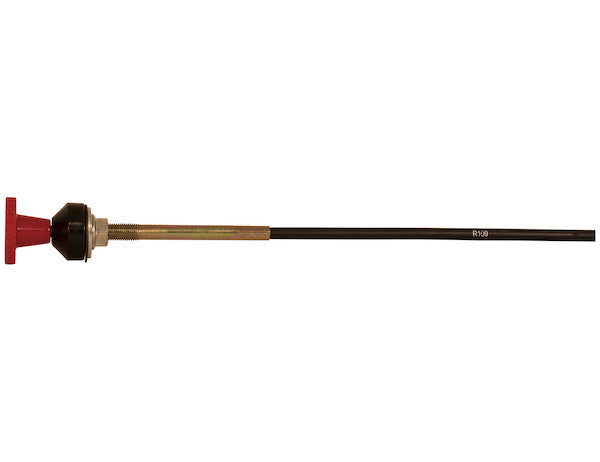
Buyers Products Mack?? Replacement Throttle Cable is a standalone cable that is ready to use with most Mack?? Truck applications. The cable is a generous 108 in. long and can be easily trimmed to your desired length. It's designed for panels with a 5/8 in. square mounting hole.
Specifications
| Cable Length (ft.) | 9.00 ' |
| Cable Diameter (in.) | .054 " |
Buyers Products Mack® Replacement Throttle Cable: An In-Depth Technical Analysis
The Buyers Products Mack® Replacement Throttle Cable represents a critical component in the operational integrity and responsiveness of heavy-duty Mack® truck applications. This technical description will delve into the engineering specifications, material science, functional mechanics, installation considerations, and operational advantages of this essential replacement part. Designed as a standalone unit, it offers a direct and efficient solution for maintaining precise throttle control in a demanding commercial environment.
Core Functionality and Importance in Vehicle Operation
A throttle cable, fundamentally, is a mechanical linkage that translates the driver's input from the accelerator pedal to the throttle body or fuel injection pump, regulating the engine's RPM and, consequently, the vehicle's speed and power output. In Mack® trucks, which often operate under significant loads and in varying conditions, the reliability and precision of this linkage are paramount. A worn, damaged, or improperly functioning throttle cable can lead to delayed throttle response, inconsistent engine speed, reduced fuel efficiency, and, in severe cases, a complete loss of throttle control, posing significant safety risks and operational inefficiencies. The Buyers Products replacement cable is engineered to restore this critical functionality with OEM-level or superior performance.
Material Science and Construction
The durability and performance of a throttle cable are largely dictated by its material composition and construction. The core of this cable is specified with a diameter of 0.054 inches. This dimension suggests the use of a high-tensile strength, multi-strand steel wire. Typically, such cables are constructed from galvanized or stainless steel to provide excellent resistance to corrosion, a common issue in vehicle undercarriages exposed to moisture, road salts, and various contaminants. Galvanization involves coating the steel with a layer of zinc, which acts as a sacrificial anode, protecting the underlying steel from rust. Stainless steel, an alloy of iron with a minimum of 10.5% chromium, offers inherent corrosion resistance due to the formation of a passive chromium oxide layer. The specific choice of material impacts flexibility, fatigue life, and ultimate tensile strength, all crucial factors for a component subjected to repeated cycles of tension and release.
The outer sheath protecting the inner cable is equally important. While not explicitly detailed, standard industry practice for throttle cables involves a durable, low-friction polymer housing, often composed of high-density polyethylene (HDPE), polypropylene (PP), or a similar thermoplastic elastomer. This housing serves multiple purposes: it protects the internal wire from abrasion, moisture ingress, and chemical exposure; it provides a smooth conduit for the cable's movement, minimizing friction and ensuring a consistent pedal feel; and it contributes to the overall structural integrity of the assembly. Within this housing, a liner, typically made from a low-friction material like PTFE (polytetrafluoroethylene), is often incorporated to further reduce sliding resistance between the wire and the housing, ensuring smooth and effortless throttle modulation. The quality of this sheath and liner directly impacts the longevity and responsiveness of the cable.
Dimensions and Adaptability
The cable's length is a significant feature, specified at a generous 108 inches (9.00 feet). This extended length offers substantial versatility, accommodating a wide array of Mack® Truck applications where routing paths may vary due to chassis configurations, engine types, or aftermarket modifications. The ability to "easily trim to your desired length" is a key advantage. This feature minimizes the need for stocking multiple cable lengths, simplifying inventory management for service centers and fleet operators. Trimming typically involves cutting the outer sheath and inner wire to the required dimension and then properly terminating the cable end with a suitable crimp or fitting to ensure secure attachment and prevent fraying. Precise cutting tools and proper termination techniques are essential to maintain the cable's integrity and performance after trimming.
Mounting compatibility is another crucial aspect. The cable is designed for panels with a 5/8 inch square mounting hole. This standardized dimension ensures a secure and stable installation into the vehicle's firewall or other mounting brackets. The square profile prevents rotation, maintaining the cable's orientation and preventing stress concentrations that could lead to premature wear or failure. Proper seating and securing of the mounting end are vital for accurate throttle input transmission and to prevent any unintended movement or slack in the system.
Functional Mechanics and Performance Characteristics
The mechanical operation of the throttle cable relies on simple yet effective principles:
- Tensile Force Transmission: When the accelerator pedal is depressed, it pulls on one end of the inner cable, creating a tensile force.
- Friction Reduction: The smooth, lubricated internal housing allows this tensile force to be transmitted efficiently to the throttle body or fuel pump with minimal energy loss due to friction.
- Return Mechanism: A spring mechanism (typically located at the throttle body/pump end) ensures that when the pedal is released, the cable is pushed back, returning the throttle to its idle position.
Installation Procedures and Considerations
While the cable is described as "ready to use," proper installation is paramount to its long-term performance and safety.
- Routing: The replacement cable must be routed along the identical path as the original cable to avoid kinks, sharp bends, or contact with moving parts or high-heat components. Proper routing prevents premature wear, binding, and potential damage to the cable.
- Trimming: If trimming is necessary, it must be performed with specialized cable cutters to ensure a clean, fray-free cut. The outer sheath should be cut cleanly, and the inner wire should be cut to the precise length required.
- Termination: After trimming, the cable end must be properly terminated. This usually involves crimping a new end fitting (e.g., a barrel nipple or clevis) onto the inner wire. The crimp must be secure and meet specified pull-out strength requirements to prevent detachment during operation.
- Mounting: The 5/8 inch square mounting hole interface must be clean and free of burrs. The cable end should be securely fastened, ensuring no slack that could lead to inconsistent throttle response.
- Adjustment: After installation, the cable tension and travel must be meticulously adjusted. This typically involves setting the correct amount of free play at the accelerator pedal and ensuring full throttle opening when the pedal is fully depressed, without putting excessive stress on the cable or throttle mechanism. Improper adjustment can lead to either sluggish response or premature cable stretch/failure.
- Lubrication: While the inner liner provides low friction, a light application of a suitable cable lubricant during installation can further enhance smoothness and extend the cable's life.
Advantages of the Buyers Products Replacement Cable
- Direct Replacement: Designed specifically for Mack® applications, ensuring compatibility and simplifying the replacement process.
- Versatility: The 108-inch length provides extensive adaptability for various truck models and configurations, reducing the need for multiple part numbers.
- Durability: Constructed with robust materials and precise engineering to withstand the harsh operating conditions encountered by heavy-duty trucks, offering excellent resistance to wear, fatigue, and environmental degradation.
- Cost-Effectiveness: As a standalone replacement, it offers a more economical solution compared to replacing an entire assembly if only the cable is compromised.
- Enhanced Performance: Restores precise and responsive throttle control, contributing to improved fuel efficiency, smoother acceleration, and enhanced operational safety.
- Ease of Trimming: Simplifies inventory and allows for custom fitment on-site, saving time and resources.
Quality Assurance and Compliance
For critical components like a throttle cable, adherence to industry standards and rigorous quality control is essential. While not explicitly stated, Buyers Products, as a reputable manufacturer, is expected to design and produce this cable to meet or exceed relevant SAE (Society of Automotive Engineers) standards for mechanical control cables. These standards define requirements for materials, construction, load ratings, fatigue life, and environmental resistance. Each cable should undergo thorough testing, including tensile strength tests, fatigue cycling tests, and environmental exposure tests, to ensure it delivers reliable performance throughout its intended service life. The consistent diameter and length, combined with the capability for trimming, underscore a commitment to providing a robust and adaptable solution for maintaining peak engine performance in Mack® trucks.
Conclusion
The Buyers Products Mack® Replacement Throttle Cable is more than just a simple wire; it is a precisely engineered mechanical control system component. Its specified length, diameter, and mounting configuration, coupled with the inherent quality of materials and construction, make it an indispensable part for the maintenance and repair of Mack® heavy-duty trucks. By ensuring accurate and responsive transmission of throttle input, this cable plays a vital role in the vehicle's operational efficiency, safety, and overall driving experience. Understanding its technical specifications, proper installation protocols, and functional advantages is key to appreciating its value in the demanding world of commercial trucking.