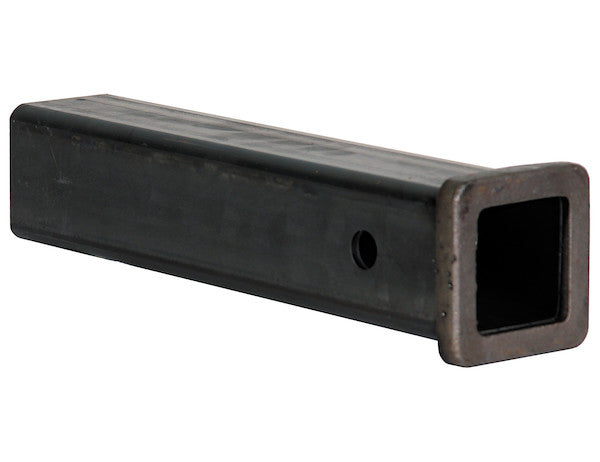
Receiver Tubes from Buyers Products are available in a variety of lengths, dimensions, and finishes to match your towing needs. The 2, 2-1/2, and 3 in. tubes have a cast steel collar. All tubes feature a solid stress collar opening. The 2, 2-1/2, and 3 in. tubes have a 5/8 in. hitch pin hole.
Specifications
| Finish | Plain |
|---|---|
| Length (in.) | 10.00 |
| Material | Carbon Steel |
| Mount Type | Weld On |
| Mounting Hole Size (in.) | 0.656 |
| Receiver Size (in.) | 2.00 |
The 2 Inch Plain Receiver Tube with a 10 Inch Shank from Buyers Products represents a critical structural component engineered for robust and versatile towing and accessory integration applications. This meticulously designed receiver tube serves as the foundational element for custom hitch fabrication, utility vehicle modifications, industrial equipment integration, and specialized towing setups where standard bolt-on solutions are insufficient. Its inherent strength, precise dimensions, and "weld-on" mounting methodology ensure a permanent and structurally sound connection, making it an indispensable choice for professionals requiring ultimate reliability and adaptability in their vehicle or equipment designs.
Central to its utility is the 2.00-inch receiver size. This dimension adheres to the widely recognized Class III/IV hitch standard, making it compatible with an expansive array of towing accessories and implements. This includes, but is not limited to, drawbar inserts, ball mounts, cargo carriers, bicycle racks, and various specialized attachments that utilize the 2-inch square tube interface. The precision engineering of the internal receiver dimensions ensures a snug yet functional fit for these accessories, minimizing play and enhancing stability during operation. Adherence to this industry standard guarantees broad interoperability, allowing users to leverage an extensive ecosystem of towing and hauling solutions without concern for proprietary sizing. The internal tolerance is critical to both the operational safety and user experience, ensuring that accessories can be easily inserted and removed while minimizing dynamic movement that could lead to wear or structural fatigue over time.
The 10.00-inch shank length is a significant design parameter, offering substantial flexibility in mounting and integration. This extended length provides engineers and fabricators with ample material for integration into diverse chassis configurations, frame rails, or custom mounting plates. A longer shank can be crucial for achieving optimal tongue weight distribution, clearing obstacles such as spare tires or fuel tanks, and ensuring proper hitch alignment relative to the vehicle's rear axle. It facilitates deep penetration into structural members, allowing for a more distributed load transfer and a more robust weld footprint. Furthermore, this length can be precisely cut to meet specific application requirements, enabling tailored installations that optimize strength and functionality while minimizing excess material. The ability to customize the shank length on-site provides an unparalleled level of adaptability for bespoke fabrication projects.
Constructed from high-grade Carbon Steel, this receiver tube is engineered for exceptional mechanical performance and durability under strenuous conditions. Carbon steel is selected for its superior strength-to-weight ratio, excellent fatigue resistance, and inherent ductility, which is critical for absorbing dynamic loads encountered during towing. The material's composition provides a robust framework capable of withstanding significant tensile, compressive, and shear forces without permanent deformation. Specifically, structural carbon steels often exhibit minimum yield strengths in the range of 36,000 to 50,000 psi (250-345 MPa) and ultimate tensile strengths exceeding 58,000 psi (400 MPa), ensuring that the receiver tube can reliably manage the substantial forces exerted by heavy trailers or cargo. The material's weldability is also a paramount consideration, facilitating the secure and permanent attachment required for its "weld-on" mount type. Furthermore, carbon steel offers a cost-effective solution without compromising on the structural integrity demanded by high-load applications, providing a balance of performance and economic viability.
The Plain Finish of the receiver tube is a deliberate choice for applications requiring custom post-processing. A plain finish, often indicative of a mill finish, means the component is delivered without any protective coatings such as paint, powder coat, or galvanization. This allows fabricators to prepare the surface optimally for welding, ensuring superior weld penetration and adhesion without needing to remove pre-applied finishes that could interfere with the welding process or release hazardous fumes. Following installation, the plain surface is ideal for applying a custom protective coating tailored to the specific operational environment, whether it be a heavy-duty industrial primer and paint system, a corrosion-resistant powder coat, or galvanization for marine and highly corrosive conditions. This flexibility ensures maximum longevity and aesthetic integration with the final assembly, allowing for a bespoke corrosion protection strategy that precisely matches the end-use requirements and environmental exposure, thereby maximizing the product's lifespan and maintaining structural integrity over decades of service.
The designation as a Weld On Mount Type underscores the permanent and high-strength nature of this receiver tube. Unlike bolt-on hitches that rely on mechanical fasteners and specific chassis drill points, a weld-on receiver tube integrates directly into the vehicle's frame or a custom structural crossmember. This method provides the highest possible load transfer efficiency and structural rigidity, making it the preferred choice for heavy-duty towing, commercial applications, and situations where custom frame modifications are necessary. The welding process, typically performed by certified professionals using techniques such as Gas Metal Arc Welding (GMAW/MIG), Shielded Metal Arc Welding (SMAW/Stick), or Gas Tungsten Arc Welding (GTAW/TIG), creates a molecular bond between the receiver tube and the host structure. This bond effectively makes the receiver an integral part of the vehicle's chassis, eliminating potential points of failure associated with bolted connections, such as loosening over time or shear stress on fasteners. Proper weld preparation, including beveling and cleaning, is crucial to achieving full penetration welds that meet or exceed industry standards for structural integrity and fatigue resistance. This permanent integration provides unparalleled strength and reliability, critical for sustained high-load applications.
The Mounting Hole Size of 0.656 inches, corresponding to a nominal 5/8-inch (0.625 in.) hitch pin, is engineered for optimal functionality and compatibility. The slight oversizing from 0.625 inches to 0.656 inches (approximately 17/32 inch) is a deliberate design feature known as a clearance fit. This provides essential tolerance for ease of hitch pin insertion and removal, accommodating minor manufacturing variances in hitch pins, thermal expansion/contraction, and preventing binding due to paint or surface finishes on the pin itself. While ensuring easy operation, this clearance is carefully controlled to minimize excessive play when the hitch pin is inserted, thereby reducing dynamic impact loads and preventing premature wear on both the pin and the receiver tube hole. The 5/8-inch standard is ubiquitous for Class III and Class IV hitches, guaranteeing compatibility with a vast array of standard hitch pins, locks, and anti-rattle devices available on the market. The robust design around this critical pivot point ensures that the shear forces exerted by the trailer tongue are safely and efficiently transferred through the pin to the receiver tube and ultimately to the vehicle's frame, maintaining structural integrity even under sudden braking or acceleration forces.
The inclusion of a solid stress collar opening and a cast steel collar for 2, 2-1/2, and 3-inch tubes is a testament to the engineering focus on durability and load distribution. The collar is strategically positioned at the opening of the receiver tube, which is typically the highest stress concentration point due to repeated insertion and removal of accessories and the dynamic leverage exerted by the trailer tongue. By reinforcing this area, the cast steel collar effectively distributes stresses across a larger surface area, mitigating the risk of localized deformation, cracking, or fatigue failure. Cast steel is particularly advantageous here due to its isotropic properties and superior rigidity compared to formed or welded steel plate collars. The casting process allows for complex geometries that can optimize load paths and strengthen critical zones without introducing additional weld seams. This robust reinforcement is crucial for maintaining the precise internal dimensions of the receiver opening over time, ensuring a consistent and secure fit for accessories throughout the lifespan of the product. The solid nature of the collar further enhances its resistance to buckling or crushing under heavy vertical loads, contributing significantly to the overall safety factor and operational longevity of the towing system.
From an Engineering and Design Perspective, the 2 Inch Plain Receiver Tube is not merely a piece of metal, but a meticulously engineered component. The manufacturing process involves high-precision cutting, forming, and potentially some machining to achieve the critical internal and external dimensions. Quality control measures ensure that the internal 2.00-inch square dimension maintains tight tolerances to prevent excessive slop with hitch accessories while allowing for easy engagement. The exterior profile is designed for optimal weldability, with consistent material thickness and surface finish conducive to strong, clean welds. Dynamic load analysis and finite element analysis (FEA) are often employed during the design phase to predict stress concentrations and ensure that the component can withstand the complex forces of towing, including torsional loads, vertical tongue weight, and horizontal towing forces. Compliance with relevant industry standards, such as those outlined by the Society of Automotive Engineers (SAE J684 for trailer hitches), guides the design to ensure safety and performance criteria are met. The overall design prioritizes both functional utility and long-term structural integrity, acknowledging its role as a key link in a safety-critical towing chain.
The versatility of this receiver tube extends to a wide array of Applications and Installations. Beyond conventional trailer hitches, it is frequently employed in specialized vehicle builds for off-road enthusiasts, emergency services, and construction fleets. Fabricators use it to create front-mount receivers for mounting winches, snow plows, or cargo platforms, enhancing vehicle functionality. In the agricultural sector, it can be integrated into custom implements or tractor modifications for attaching various tools. Industrial machinery can incorporate these receiver tubes for modular tooling attachments or transport solutions. Its weld-on nature is particularly beneficial for custom trailer fabrication, allowing designers to precisely position the receiver relative to the trailer's frame and axle configuration for optimal balance and load distribution. From utility carts and ATV attachments to custom recovery vehicles and mobile workshops, the 2 Inch Plain Receiver Tube provides a robust and adaptable interface for an endless spectrum of functional additions, limited only by the imagination of the fabricator.
Installation and Maintenance of a weld-on receiver tube are paramount to its long-term performance and safety. Professional installation by a certified welder is strongly recommended due to the structural importance of the component. Proper pre-weld preparation includes ensuring mating surfaces are clean, free of rust, grease, and mill scale. Correct fit-up, adequate penetration, and adherence to specified welding procedures (e.g., using appropriate filler metals and heat input) are critical to forming a sound, durable weld joint. Post-welding, the area should be inspected for defects, and slag should be removed. Given the plain finish, immediate application of a suitable corrosion protection system (e.g., priming, painting, or coating) is essential to prevent rust and maintain the structural integrity of both the receiver tube and the surrounding welded structure. Regular maintenance involves periodic inspection of the receiver tube and its welds for any signs of corrosion, cracks, deformation, or wear. Checking the hitch pin hole for excessive ovalization and ensuring that the internal receiver area remains clear of debris are also important steps to ensure continued safe operation and compatibility with accessories. Proactive maintenance extends the life of the component and preserves the safety of the entire towing system.
In conclusion, the 2 Inch Plain Receiver Tube with a 10 Inch Shank from Buyers Products is a meticulously engineered and highly adaptable component designed for demanding towing and accessory integration applications. Its adherence to the 2-inch industry standard, coupled with a generous 10-inch shank length, provides unparalleled versatility for custom fabrication. The use of high-strength carbon steel, a robust cast steel collar, and a precision-drilled 0.656-inch mounting hole ensures exceptional durability, load-bearing capacity, and compatibility. The weld-on mount type offers the highest degree of structural integration and strength, making it the preferred choice for heavy-duty, permanent installations. While its plain finish requires post-installation coating, this offers the advantage of custom corrosion protection tailored to specific environmental conditions. For fabricators, engineers, and end-users demanding a reliable, high-performance foundation for their towing and equipment needs, this receiver tube delivers an optimal blend of strength, precision, and adaptability, embodying Buyers Products' commitment to quality and functional excellence in the heavy-duty segment.